


Secondary sourcePaintingend of 15th century (copy); original possibly 1412–1417
Original Chinese Paintings in Safavid Albums
Tabriz artist (copyist) · end of 15th century (copy); original possibly 1412–1417
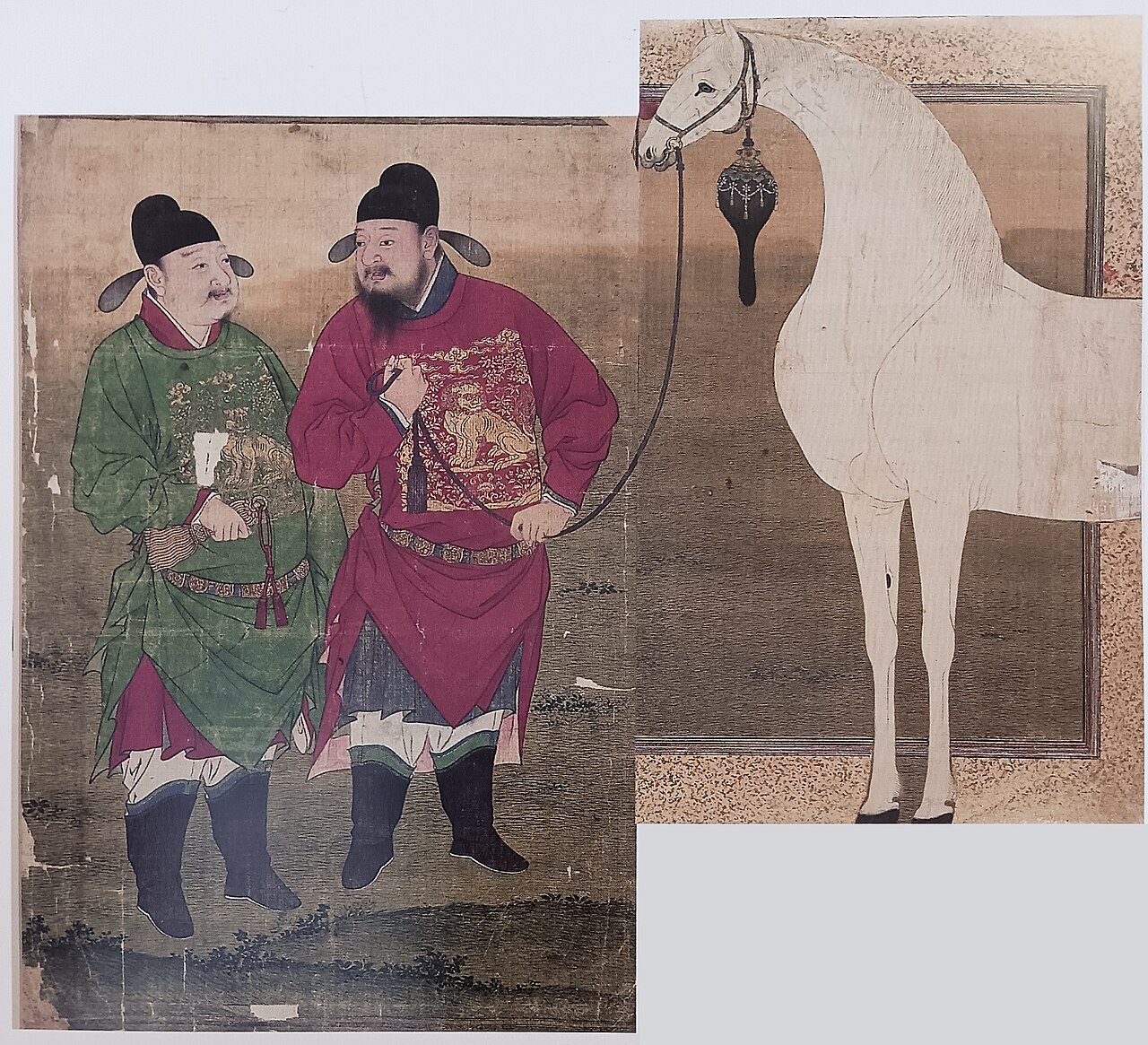
Ming-era Chinese paintings of a Chinese dignitary and a horse, preserved as copies in Persian albums, reflecting Ming-Timurid artistic exchange.
These Chinese paintings, copied into Persian albums, reflect the diplomatic and artistic exchange Yongle's court conducted with the Timurids.
About this source
What it is
These album leaves, held in the Topkapi Palace Museum Library, are copies made by a Tabriz artist in the late 15th century of earlier Chinese paintings. One shows a Chinese dignitary; the other a white horse. Scholars suggest the original painting may relate to a gift exchange between the Ming court and the Timurid ruler Shah Rukh around 1412–1417.
Why it matters
The paintings illustrate diplomatic and artistic contact between Ming China, under the Yongle Emperor, and the Timurid court of Shah Rukh, including gift-giving between the two courts. Their survival only as Persian copies shows how artworks and ideas moved along trade and diplomatic routes between empires.
Look closer
- Why do we only have a copy of this painting rather than the original?
- What might the gift of a painted horse or dignitary have meant between two rival courts?
- How does copying across cultures change a work's meaning or appearance?
This painting is part of the curated material that grounds the AI version of Yongle Emperor on Humy.ai — when students ask about related events, the AI can quote it and cite it.
More Yongle Emperor sources
Meet the AI Yongle Emperor →
Ready when you are
Start chatting with Yongle Emperor now.
20 messages free · No credit card · Available in 50+ languages.