


Primary sourcePaintingc. 1823-1824
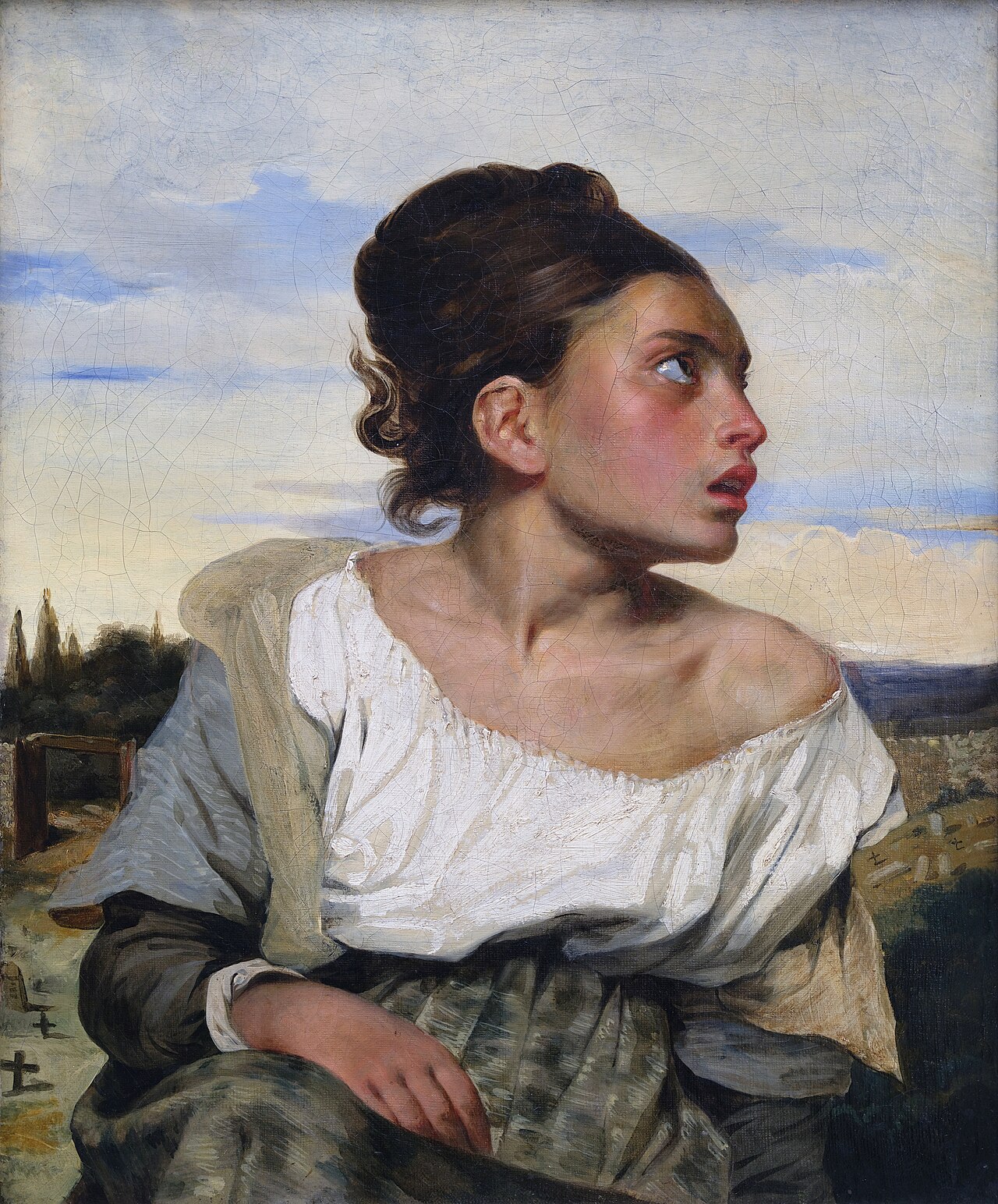
Orphan Girl at the Cemetery
Eugène Delacroix · c. 1823-1824
A sorrowful study of a grieving girl by Eugène Delacroix, linked to his later Massacre at Chios.
This early study by Delacroix shows his developing skill at expressing grief, later used in his Massacre at Chios.
About this source
What it is
This oil painting, made around 1823 or 1824 by Eugène Delacroix, shows a young girl in mourning dress seated in a cemetery, looking upward with tears in her eyes. It is held by the Louvre's Department of Paintings.
Why it matters
Believed to be a preparatory study for Delacroix's famous Massacre at Chios, this small painting is considered a masterpiece on its own. It shows his early skill at expressing strong emotion through a single figure, and his belief that colour, rather than classical form, was the most important part of painting. Delacroix admired artists like Peter Paul Rubens and the Venetians rather than ancient statues.
Look closer
- What details in the girl's pose and clothing suggest sorrow and vulnerability?
- Why might Delacroix have made this as a study before a larger painting?
- How does the setting and lighting add to the mood of the picture?
This painting is part of the curated material that grounds the AI version of Eugène Delacroix on Humy.ai — when students ask about related events, the AI can quote it and cite it.
More Eugène Delacroix sources
Browse all 95 →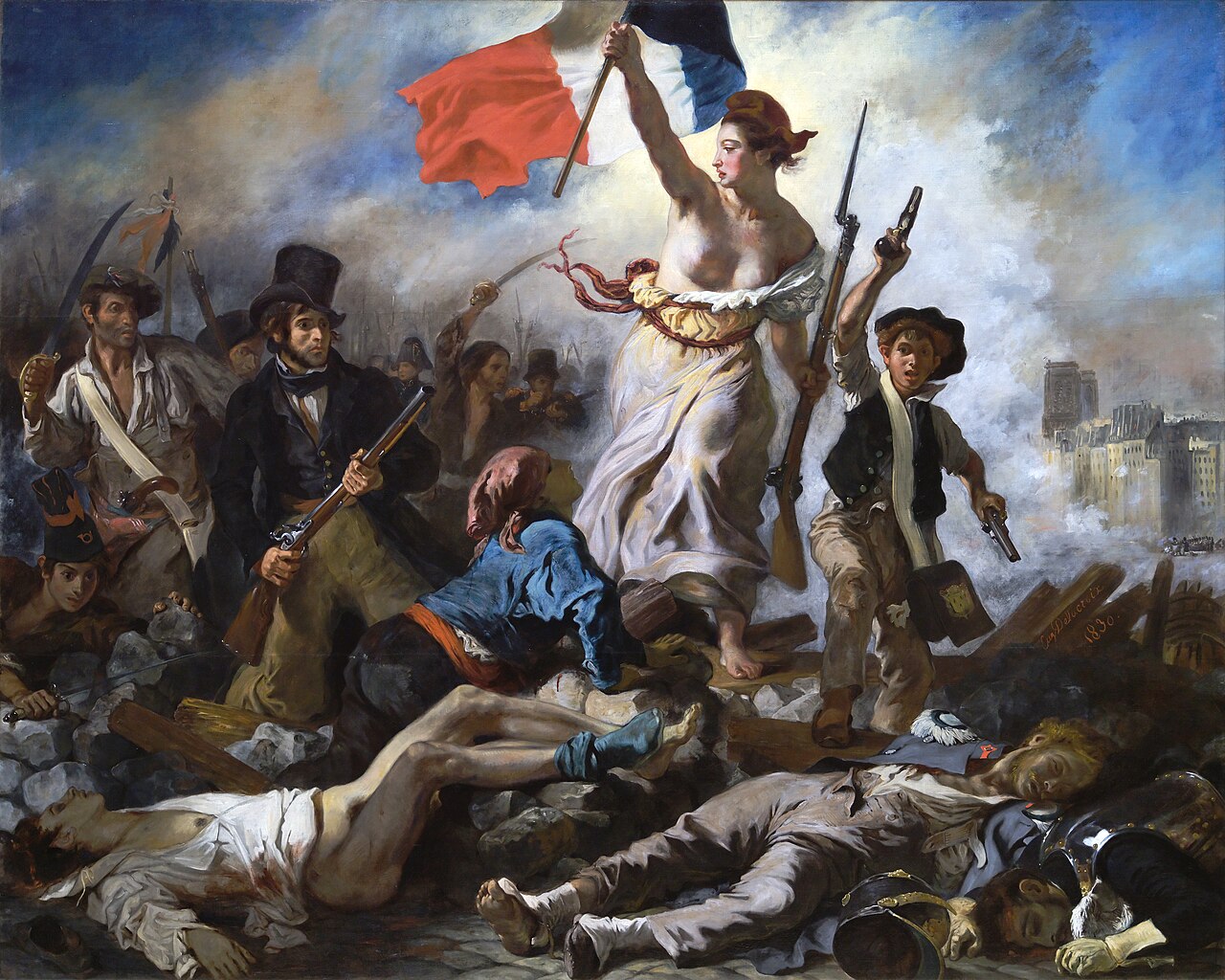 Painting
Primary source
Liberty Leading the People
Eugène Delacroix · 1830
 Painting
Secondary source
The Barque of Dante
Eugène Delacroix · 1822
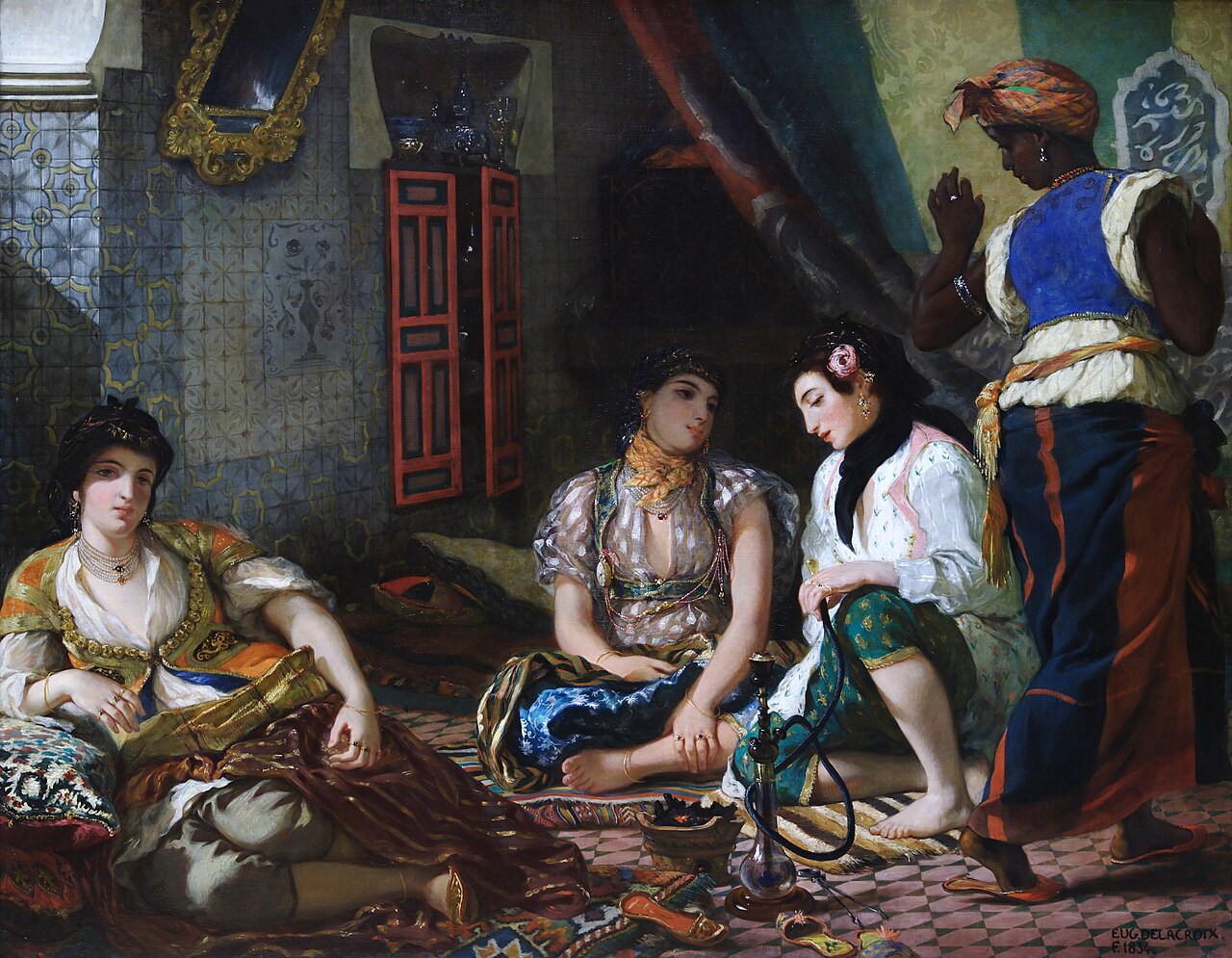 Painting
Primary source
Women of Algiers
Eugène Delacroix · 1834
Primary source
Journal of Delacroix
Eugène Delacroix · 1822–1863
Free account
Read every Eugène Delacroix source
Sign up free →
Ready when you are
Start chatting with Eugène Delacroix now.
20 messages free · No credit card · Available in 50+ languages.