


Secondary sourcePainting1822
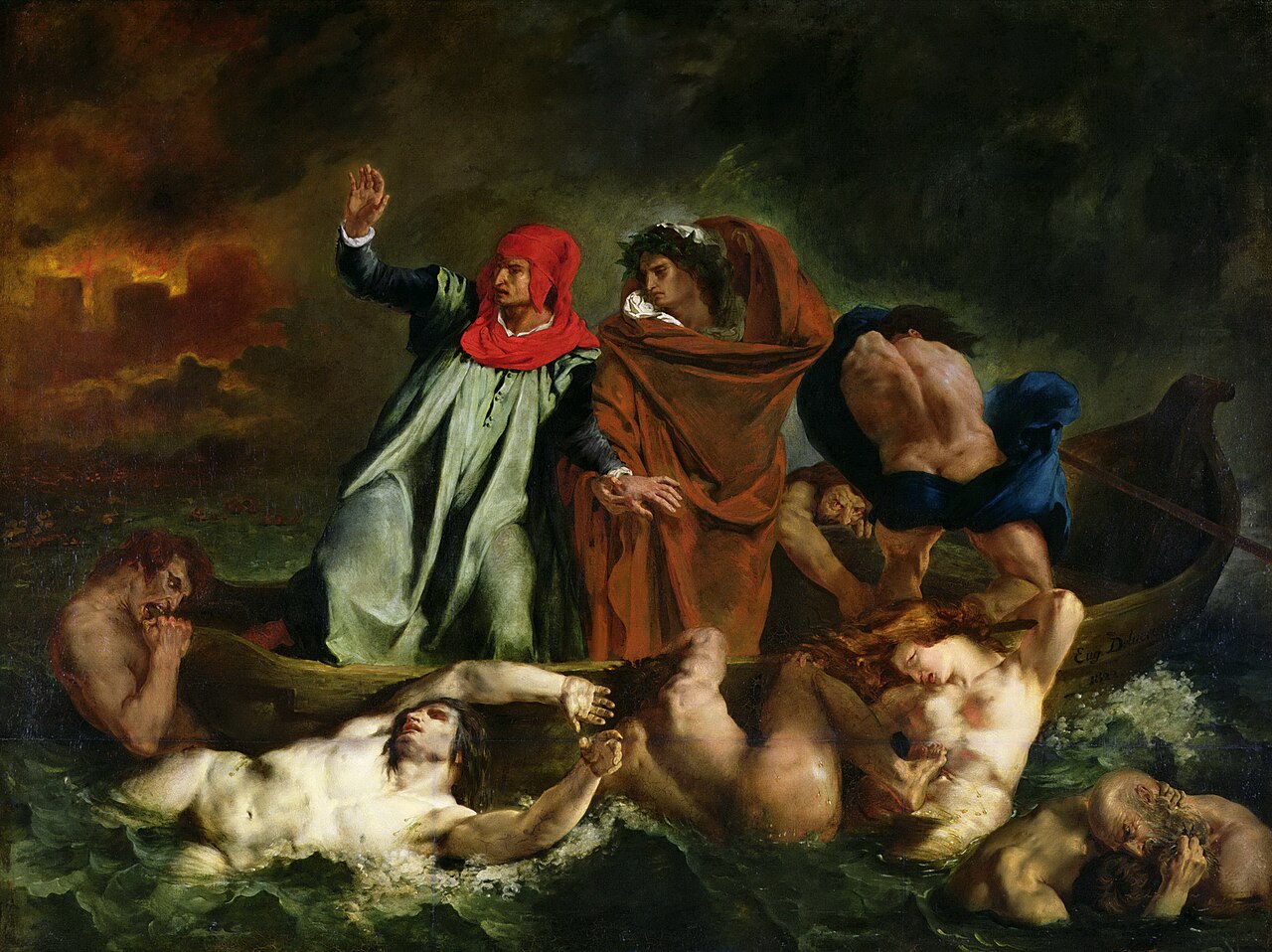
The Barque of Dante
Eugène Delacroix · 1822
Delacroix's 1822 painting shows Virgil guiding the poet Dante across the river Styx in Hell, based on Dante's Divine Comedy.
Shows Virgil centuries after his death, cast by Dante as a guide through Hell, reflecting his lasting literary legacy.
About this source
What it is
This 1822 oil painting by the French painter Eugène Delacroix shows a scene from Dante Alighieri's poem Inferno, in which Dante and his guide Virgil cross the river Styx on a boat surrounded by tormented souls. It was Delacroix's first painting shown at the Paris Salon and is now held in the Louvre.
Why it matters
The painting shows how Virgil was imagined centuries after his death, as a wise guide through the afterlife in Dante's medieval poem. It reveals how Virgil's reputation as Rome's great poet lasted long after antiquity, inspiring later writers like Dante to make him a central character. The painting is also important for Delacroix's own career and the rise of French Romantic art.
Look closer
- How does Delacroix use color and movement to show suffering and danger?
- Why might Dante have chosen Virgil, rather than a religious figure, as his guide through Hell?
- What does the calm figure of Virgil, compared to the struggling souls, suggest about his role in the story?
This painting is part of the curated material that grounds the AI version of Virgil and Dante Alighieri on Humy.ai — when students ask about related events, the AI can quote it and cite it.
Ready when you are
Start chatting with Virgil now.
20 messages free · No credit card · Available in 50+ languages.