


Primary sourcePaintingc. 1500 BCE
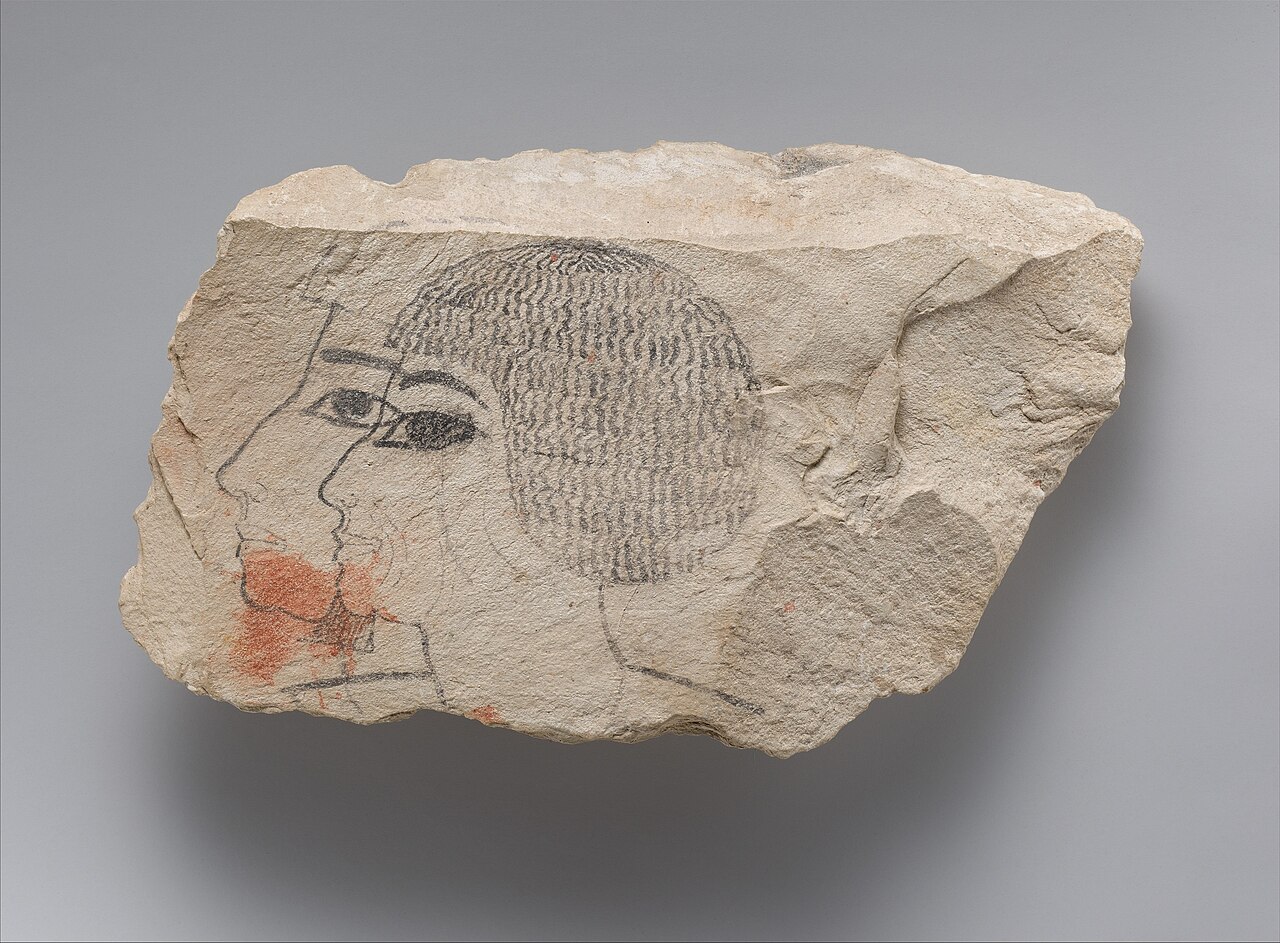
Ostracon of Senenmut
c. 1500 BCE
A limestone sketch of the face of Senenmut, Hatshepsut's favoured official, found at her mortuary temple.
Shows a courtier from Hatshepsut's own reign, giving context for the people around her rule.
About this source
What it is
This is a small limestone ostracon, a flake of stone used by ancient Egyptian artists for informal sketches. It was painted in black and red ink with the profile face of Senenmut, a courtier of Hatshepsut, and dates from her reign. It was found at Deir el-Bahari and is now held by the Metropolitan Museum of Art.
Why it matters
Ostraca like this were used for quick sketches, caricatures and practice drawing rather than formal art. This one gives a rare, informal glimpse of a real person at Hatshepsut's court, showing how an artist worked out a portrait before carving it in stone.
Look closer
- What details make this look like a quick sketch rather than a finished artwork?
- Why might an artist have practised drawing the face of a specific official?
- What does the survival of casual sketches like this tell us about daily life in Hatshepsut's court?
This painting is part of the curated material that grounds the AI version of Hatshepsut on Humy.ai — when students ask about related events, the AI can quote it and cite it.
More Hatshepsut sources
Meet the AI Hatshepsut →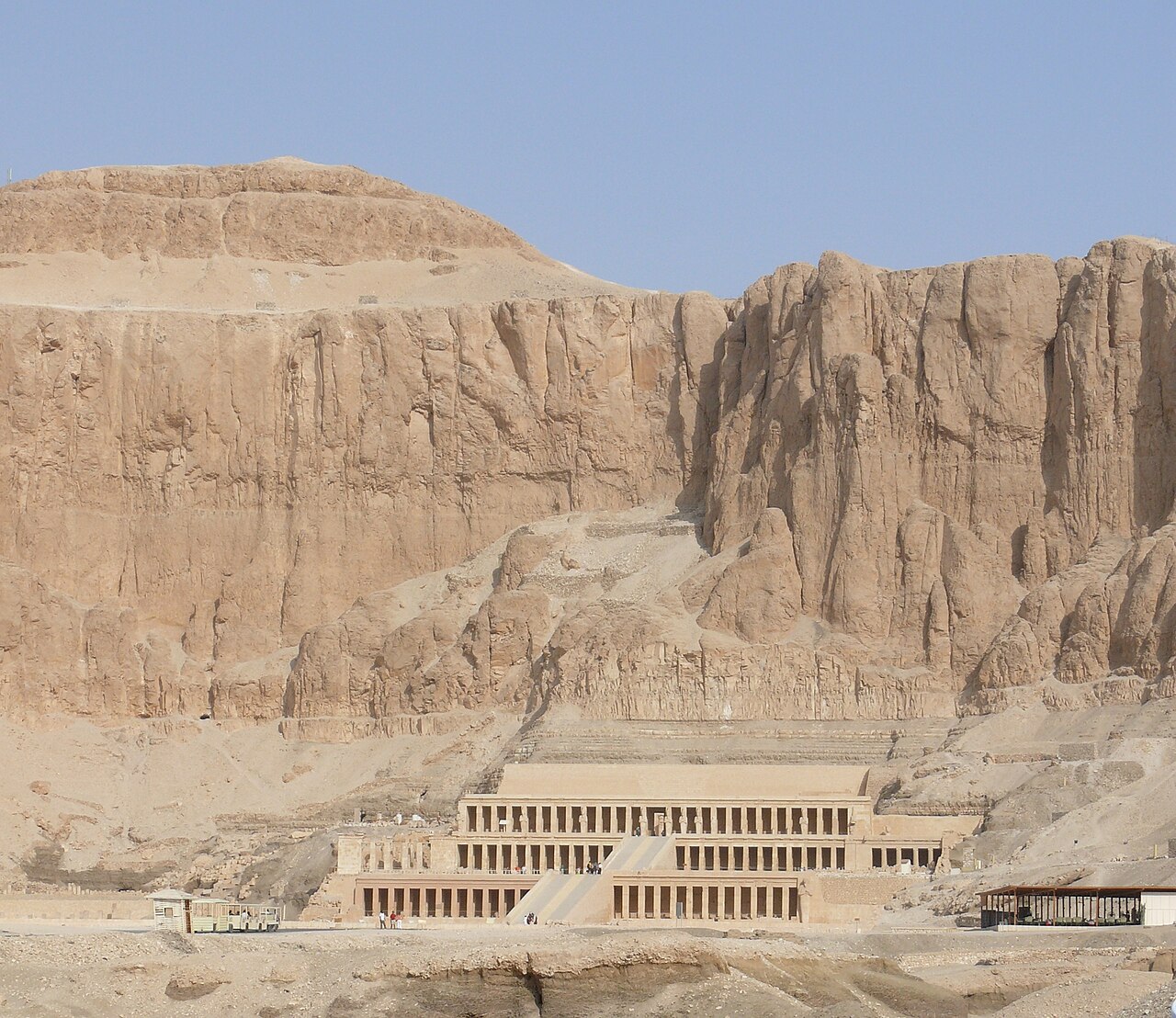 Artifact
Primary source
Mortuary Temple of Hatshepsut
Senenmut and/or Hapuseneb (attributed) · c. 1479–1458 BCE
 Photograph
Secondary source
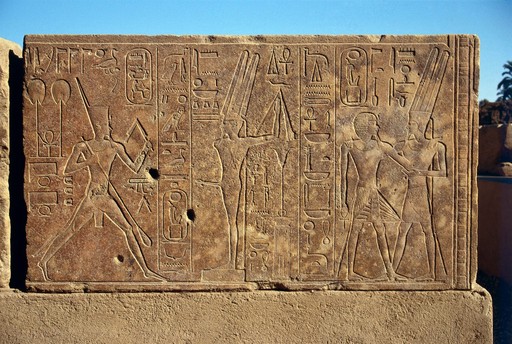
Hatshepsut Dancing Before Min, Karnak Relief
Carole Reeves · 1989
 Sculpture
Primary source
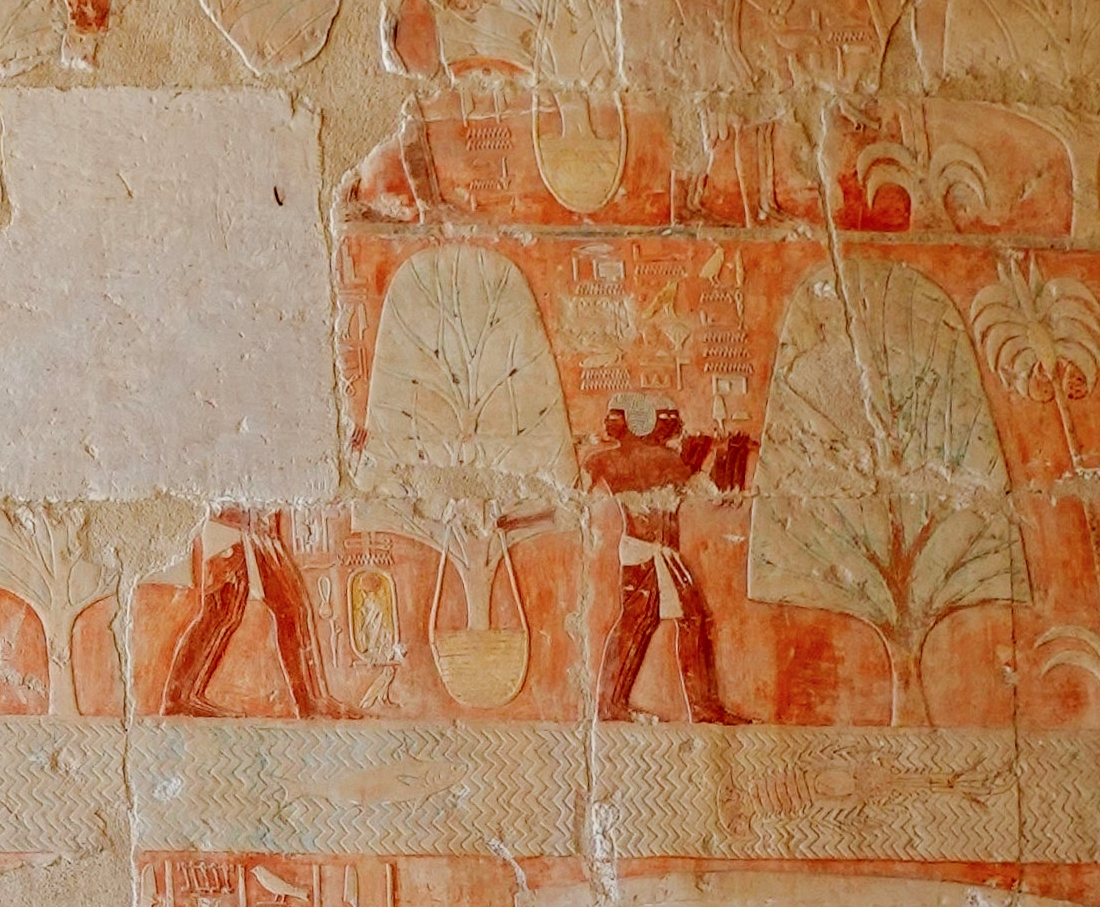
Punt Expedition Reliefs
Royal workshops of Hatshepsut · c. 1470 BCE
 Sculpture
Primary source
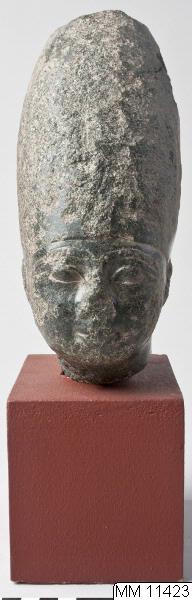
Sculpture Head Probably of Hatshepsut
 Sculpture
Primary source
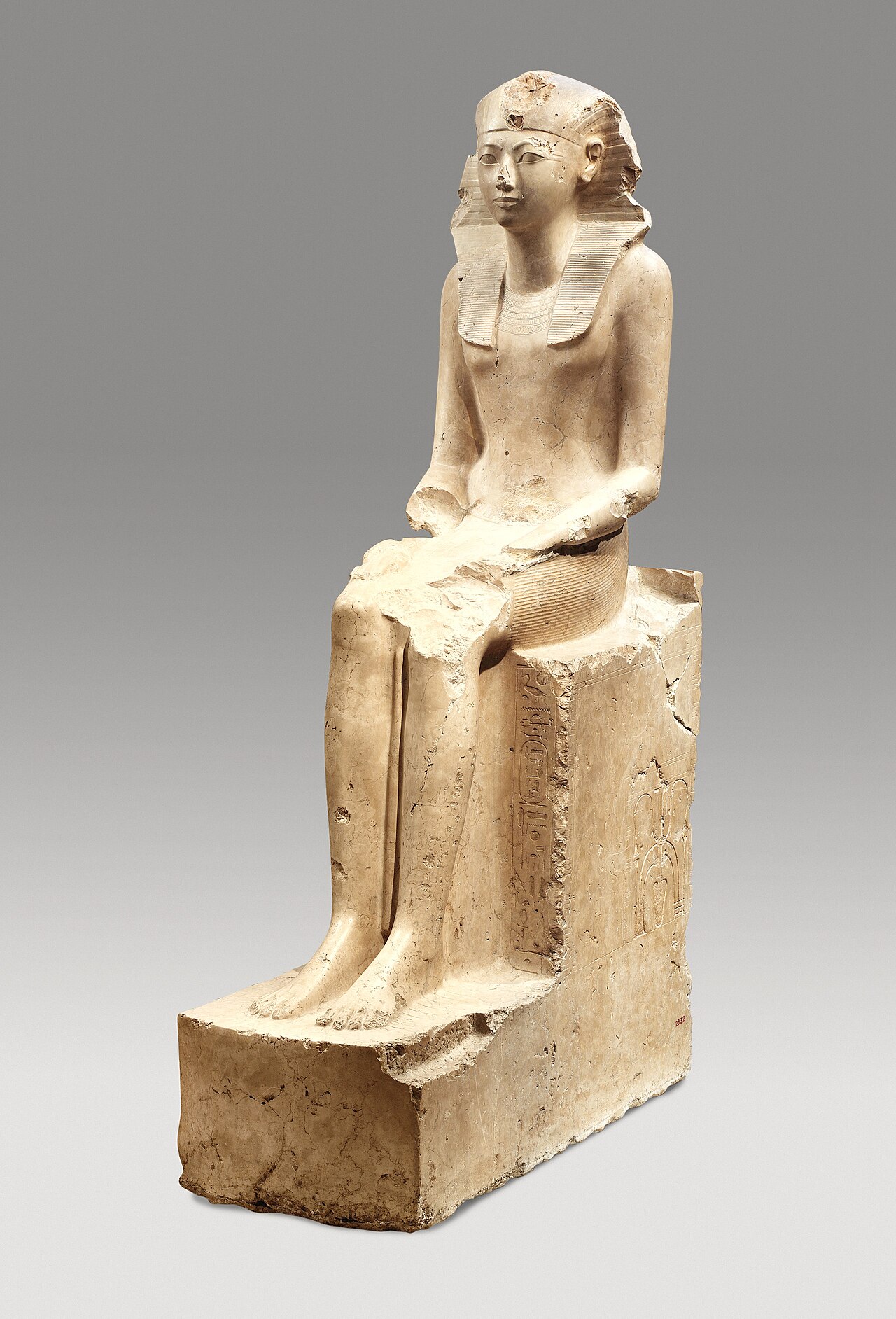
Seated Statue of Hatshepsut
c. 1466 BCE
Ready when you are
Start chatting with Hatshepsut now.
20 messages free · No credit card · Available in 50+ languages.