


Primary sourceArtifactc. 3300 BCE
Ötzi's Shoes
c. 3300 BCE
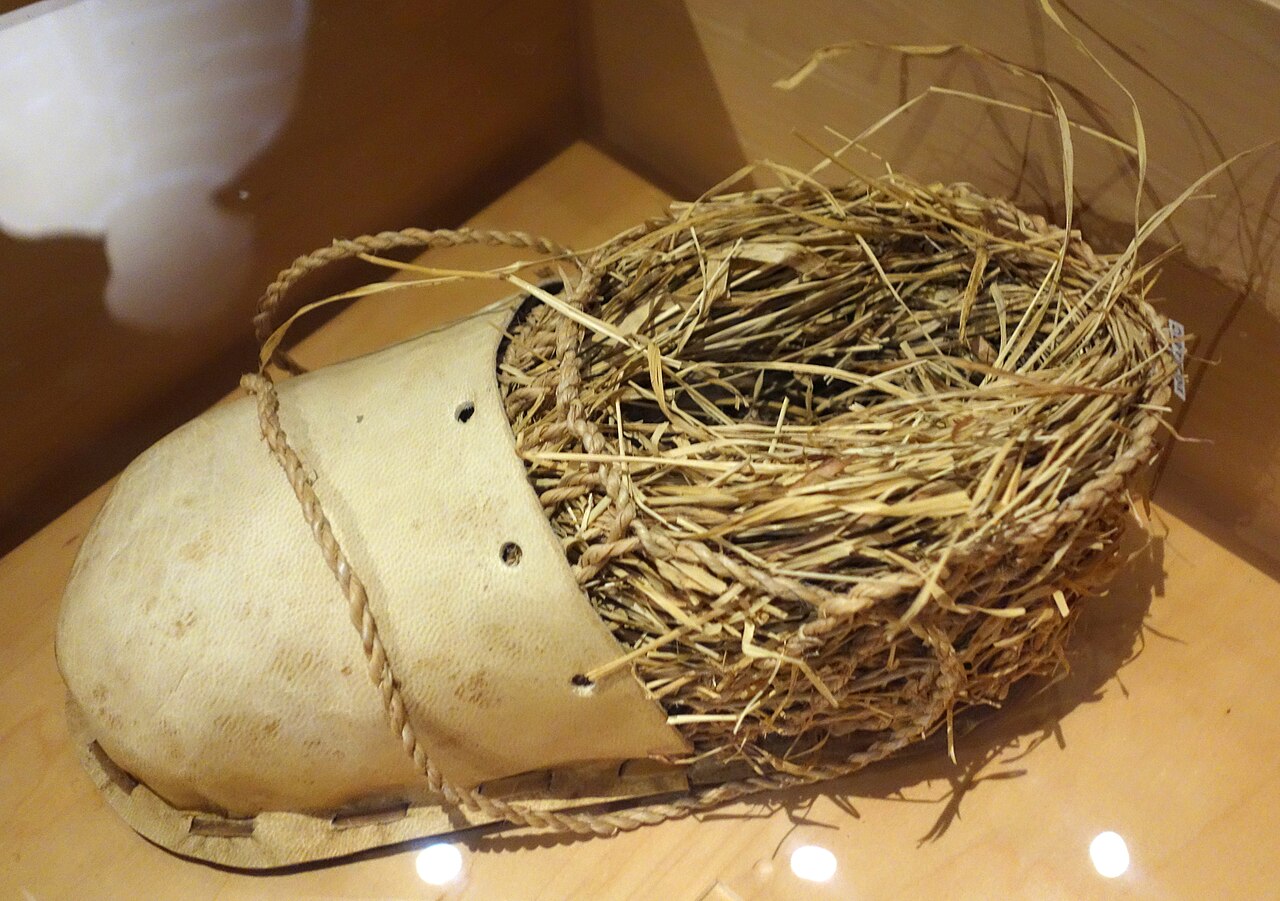
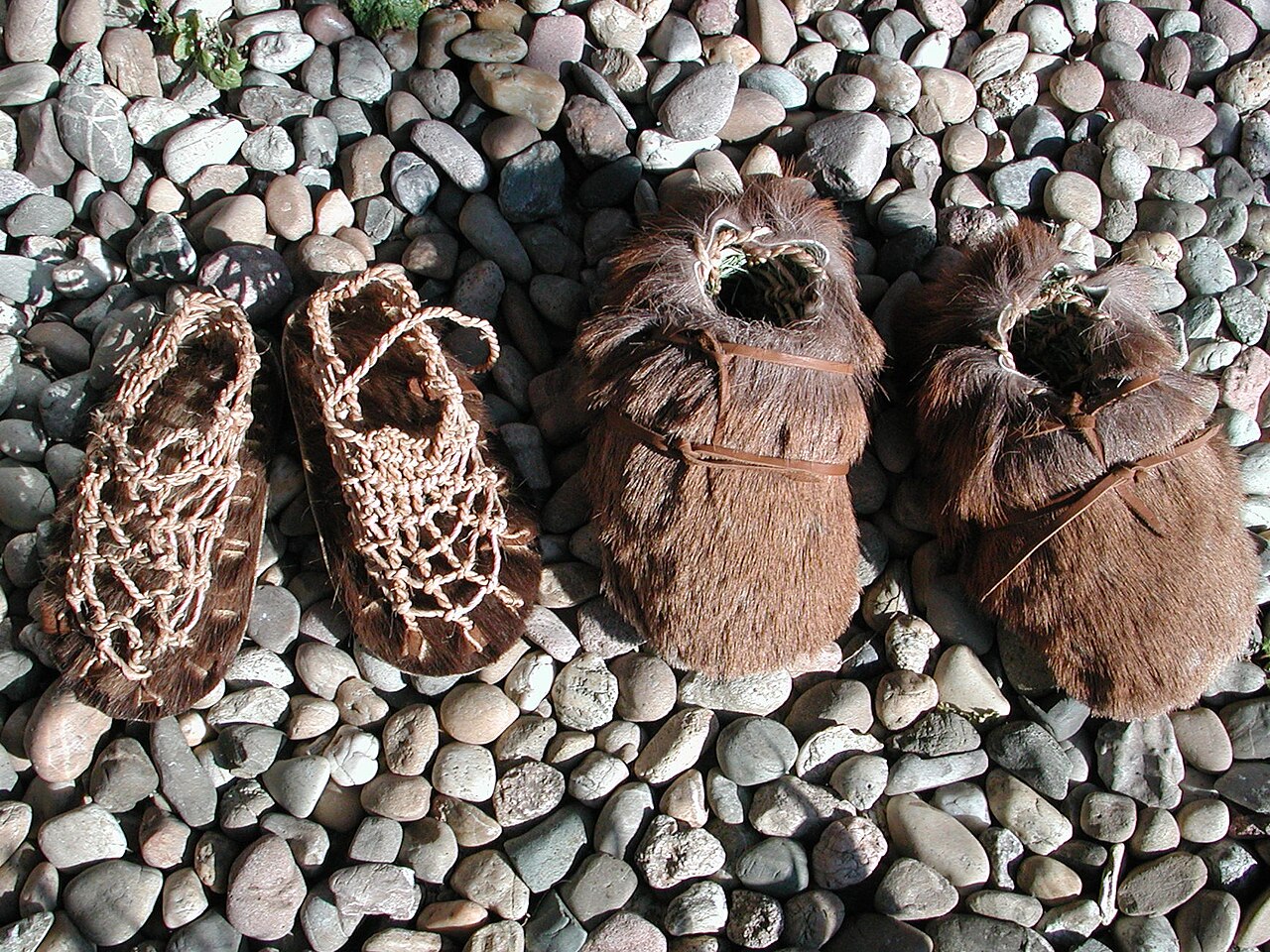
Ötzi's alpine shoes, made with bearskin soles, deer-hide uppers, bark netting and grass insulation for warmth.
These shoes belonged to Ötzi and show how he dressed for survival in the alpine environment where he was found.
About this source
What it is
These are the shoes found on Ötzi's body, built from bearskin soles, deer-hide uppers, netting made of tree bark, and grass used as insulation. The originals are kept at the South Tyrol Museum of Archaeology in Bolzano; the image here shows a museum replica.
Why it matters
The shoes' complex construction shows real skill and planning, suggesting they may have been made by a specialist rather than by Ötzi alone. They reveal how people living in the Alps during the Copper Age adapted clothing to survive cold, difficult mountain terrain.
Look closer
- What materials are combined in this shoe, and why might each one have been chosen?
- What does the shoe's construction suggest about the skills needed to survive in the Alps?
- This is a museum replica — what parts might be guesswork rather than certain fact?
This artifact is part of the curated material that grounds the AI version of Ötzi on Humy.ai — when students ask about related events, the AI can quote it and cite it.
More Ötzi sources
Meet the AI Ötzi →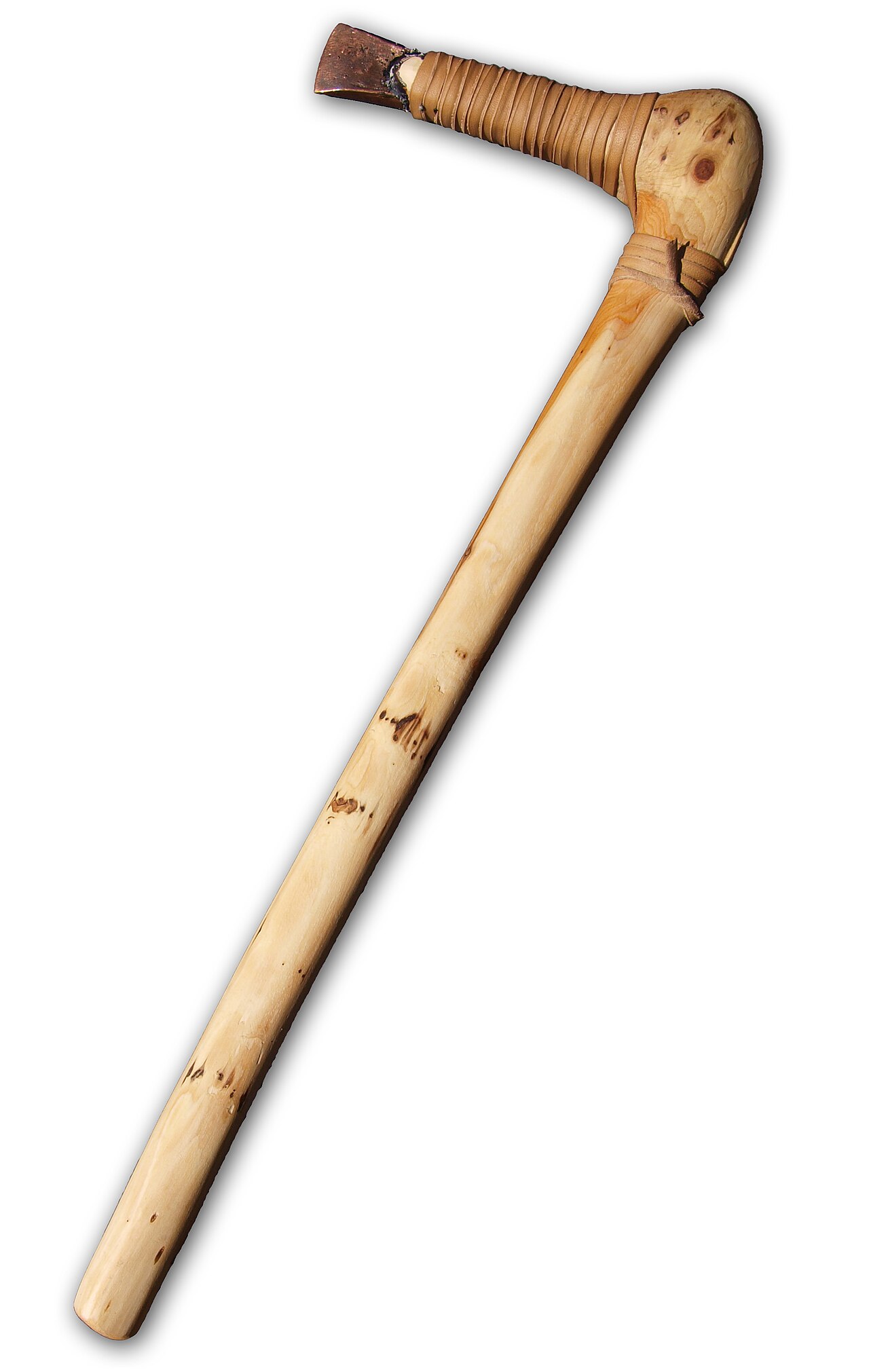 Artifact
Primary source
Ötzi's Copper Axe
c. 3300 BCE
Primary source
Treaty of Saint-Germain-en-Laye
10 September 1919
 Photograph
Tertiary source
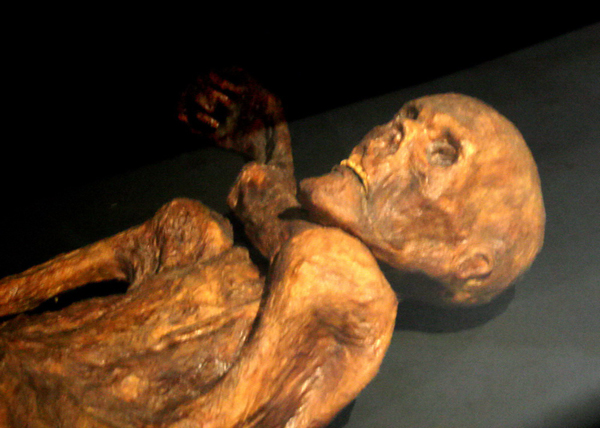
Portrait of Ötzi
 Document
Secondary source
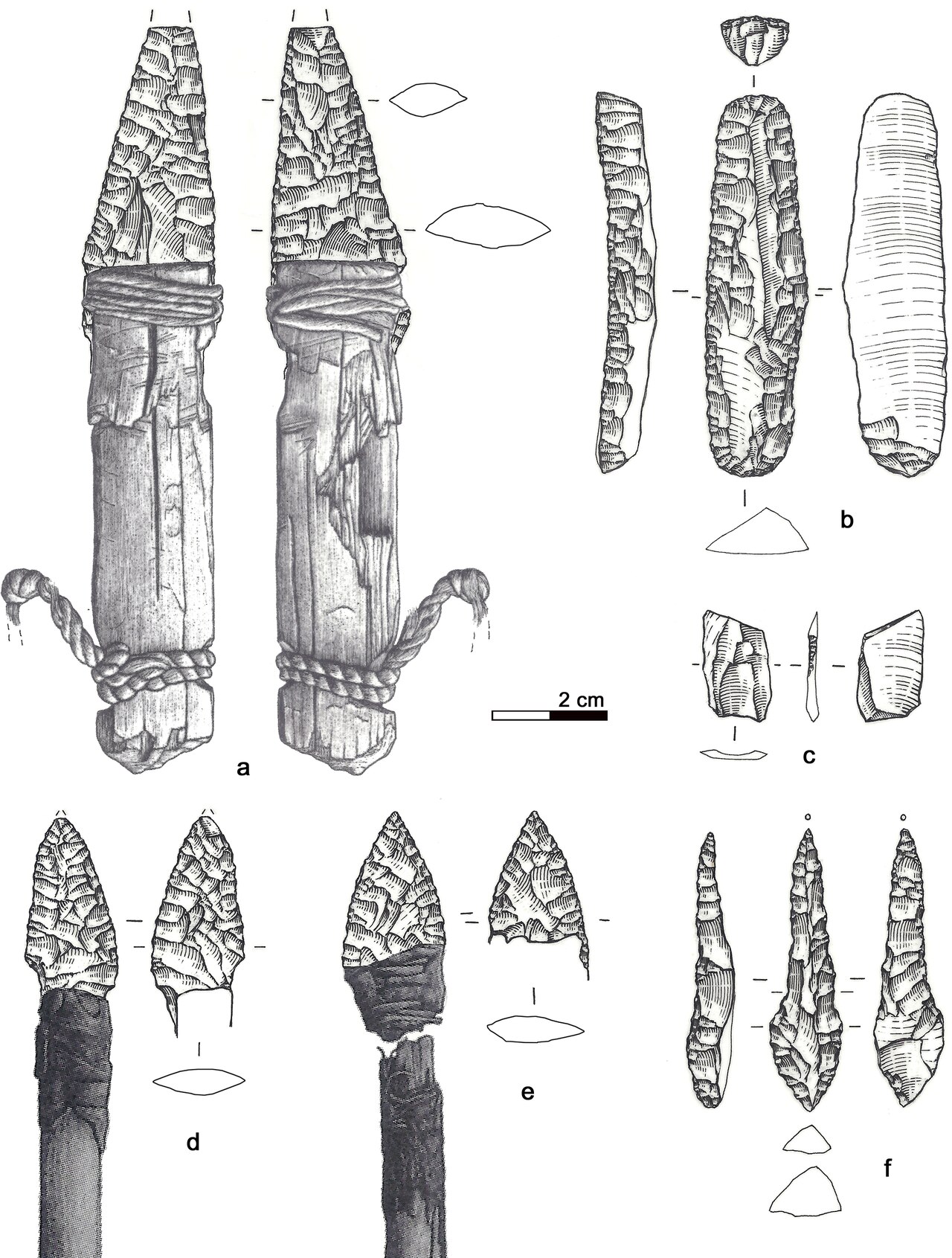
The Iceman Lithic Assemblage
Ursula Wierer, Simona Arrighi, Stefano Bertola, Günther Kaufmann, Benno Baumgart
 Artifact
Secondary source
Reconstruction of Ötzi's Shoes by Anne Reichert
Anne Reichert · 26 April 2007
Ready when you are
Start chatting with Ötzi now.
20 messages free · No credit card · Available in 50+ languages.