


Secondary sourceDocument1938-01-01
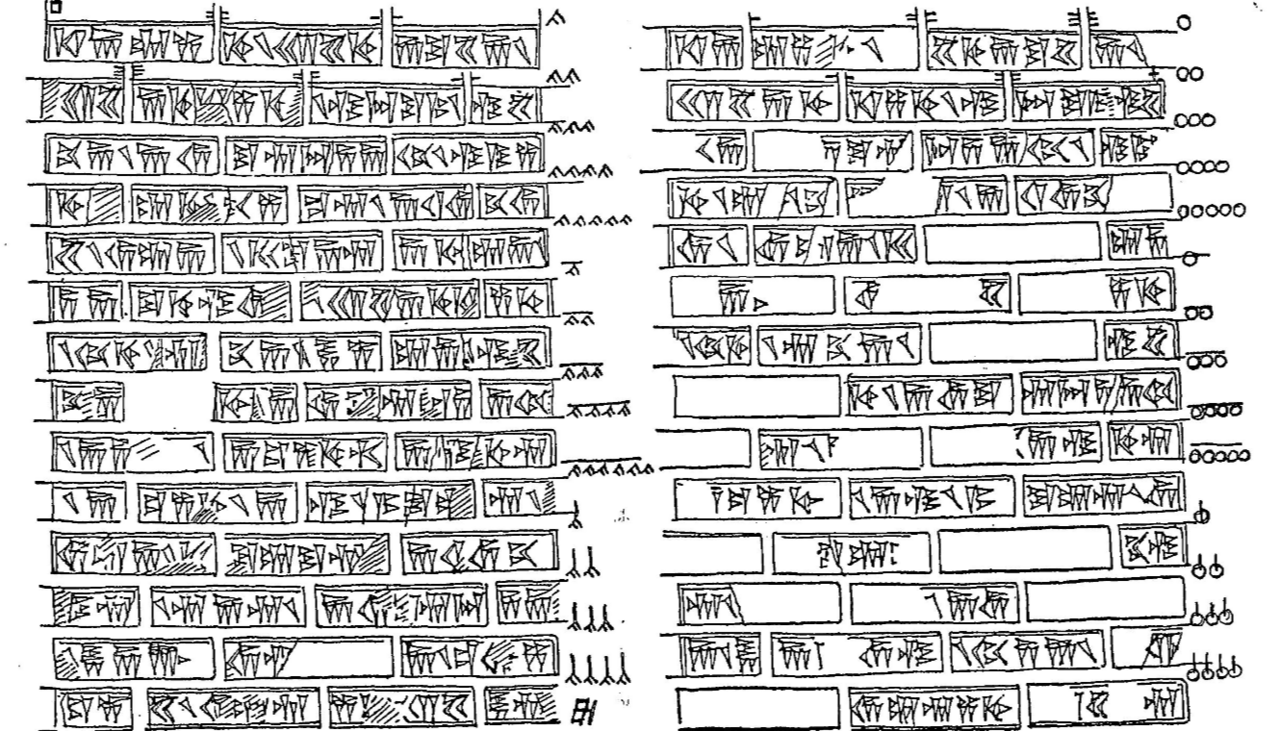
Page from Herzfeld's Old Persian Inscriptions
Ernst Herzfeld · 1938-01-01
A 1938 scholarly page from Ernst Herzfeld's study of Old Persian inscriptions, showing a facsimile of Xerxes's inscription XPg.
Records a copy of Xerxes's inscription XPg in a scholarly study, showing how his own words were preserved and read.
About this source
What it is
This is a page from Ernst Herzfeld's 1938 publication Altpersische Inschriften, published in Berlin as a supplement to the Archaeologische Mitteilungen aus Iran. It is page 39. The page is a hand-drawn facsimile of cuneiform inscription in two columns of boxed lines, with numbered marks in the right margin. The Commons record gives the file creator as Falten-Jura and the date as 1938.
Why it matters
Herzfeld was a scholar who studied the ancient inscriptions of Persia in the early twentieth century. His copies helped other scholars read the cuneiform texts left by the Achaemenid kings, including Xerxes. The page is a secondary source, so it shows how modern researchers recorded the king's words from the stone, not how the words were first carved.
Look closer
- How does a hand-drawn copy differ from a photograph of the same inscription?
- What do the numbers in the right margin suggest about how scholars organised the text?
- Whose reading of the inscription is shown here, and what might a different scholar have seen differently?
This document is part of the curated material that grounds the AI version of Xerxes I on Humy.ai — when students ask about related events, the AI can quote it and cite it.
More Xerxes I sources
Browse all 97 →
Ready when you are
Start chatting with Xerxes I now.
20 messages free · No credit card · Available in 50+ languages.