


Secondary sourcePainting
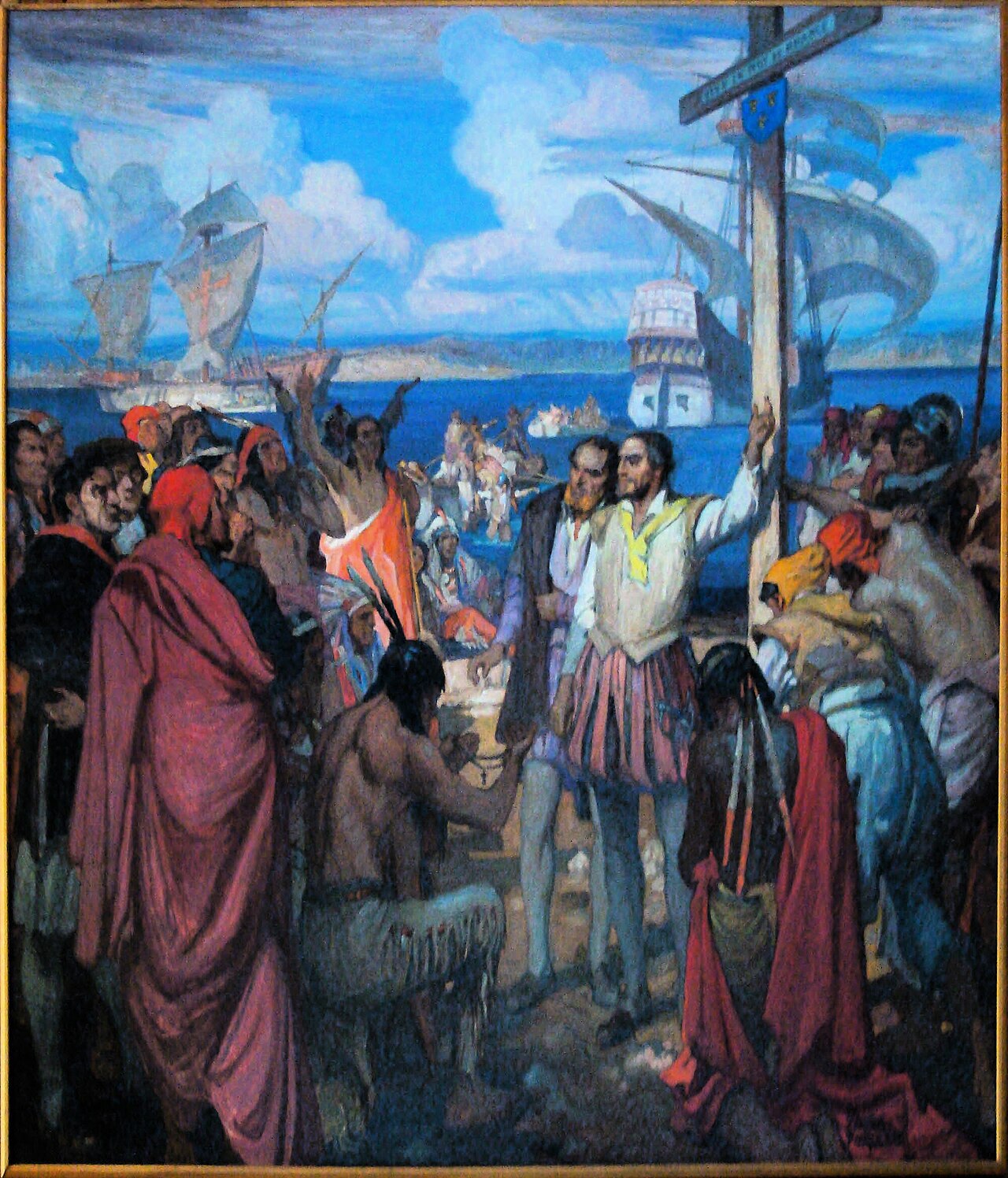
Painting of Jacques Cartier's Arrival at Gaspé, 1534
Charles Fouqueray
A commemorative painting in Gaspé Cathedral showing Cartier's 1534 landing and his meeting with Indigenous people, raising a cross.
This 20th-century painting commemorates Cartier's 1534 landing at Gaspé, a scene central to his legacy.
About this source
What it is
This is a painting by Charles Fouqueray showing the arrival of Jacques Cartier at Gaspé in 1534. It depicts sailing ships, a crowd of Europeans and Indigenous people on the shore, and a tall wooden cross marked with a shield and fleur-de-lis. It hangs in the cathedral of Gaspé.
Why it matters
The painting does not come from Cartier's own time — it was made centuries later to celebrate his landing as a founding moment of Quebec and Canada. It shows how later generations remembered and shaped the story of Cartier's voyage, turning it into a symbol of French presence in North America.
Look closer
- Who is shown as active (raising a hand, planting the cross) and who is shown kneeling or passive?
- Why might a cathedral choose this scene for its walls?
- What does the painting leave out about the Indigenous peoples already living there?
This painting is part of the curated material that grounds the AI version of Jacques Cartier on Humy.ai — when students ask about related events, the AI can quote it and cite it.
More Jacques Cartier sources
Browse all 88 →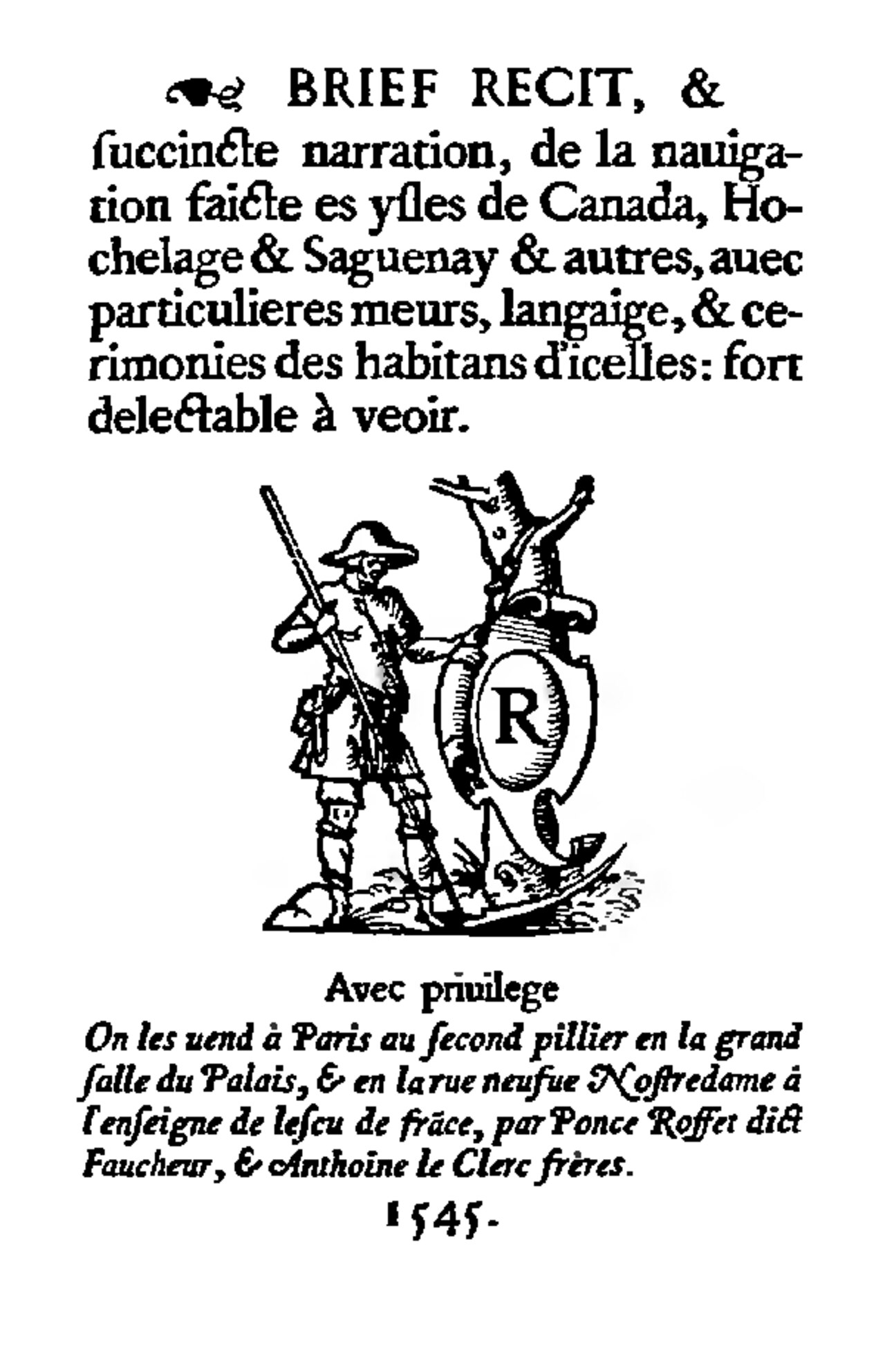 Book
Primary source
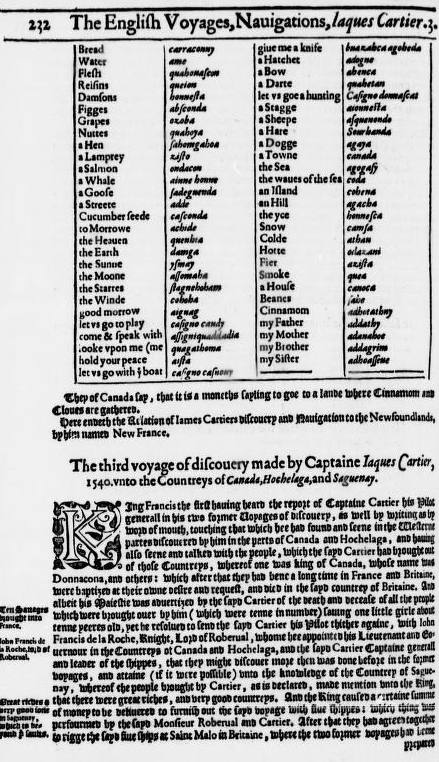
Brief recit de la navigation faicte es ysles de Canada
Jacques Cartier · 1545
 Document
Secondary source
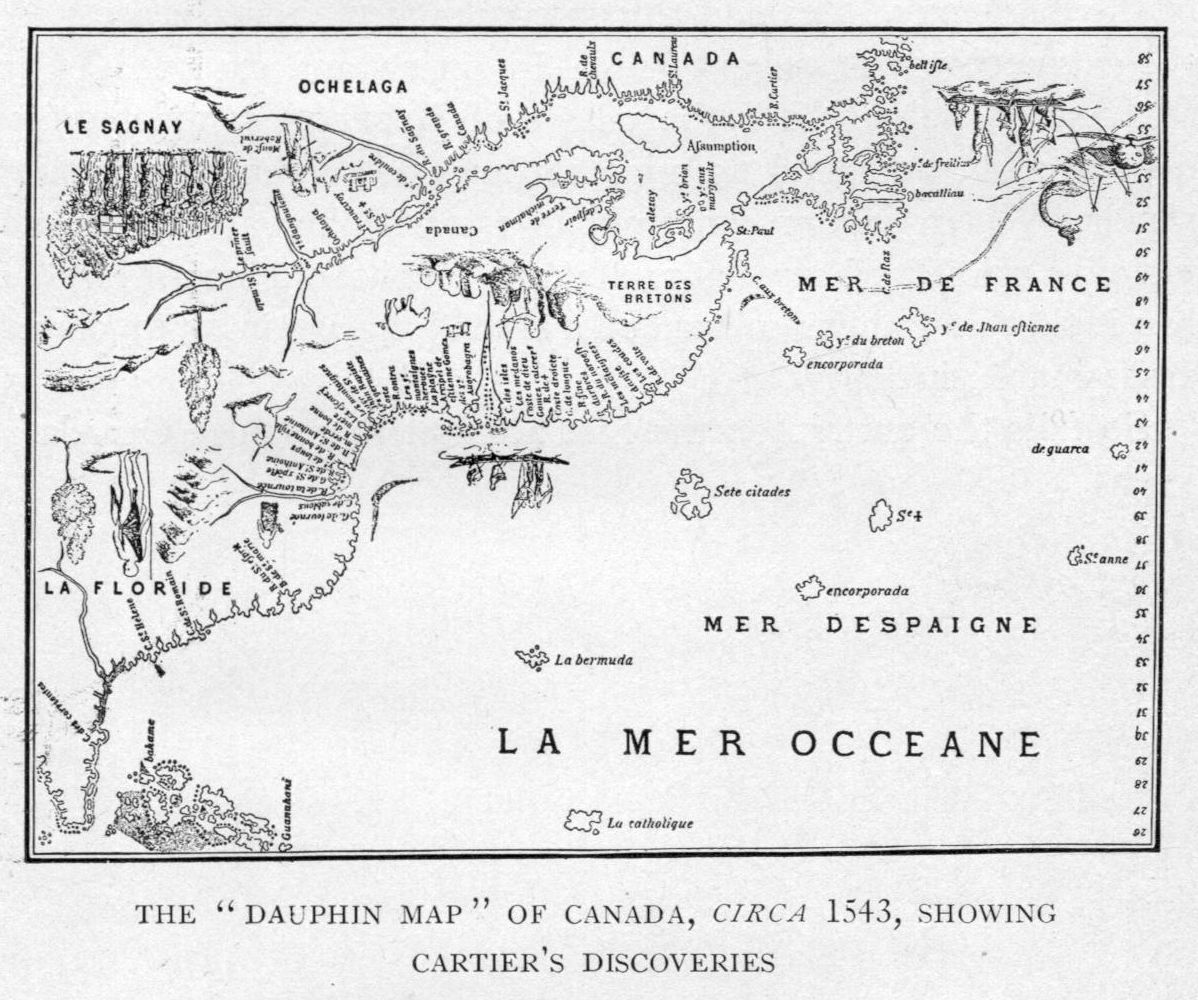
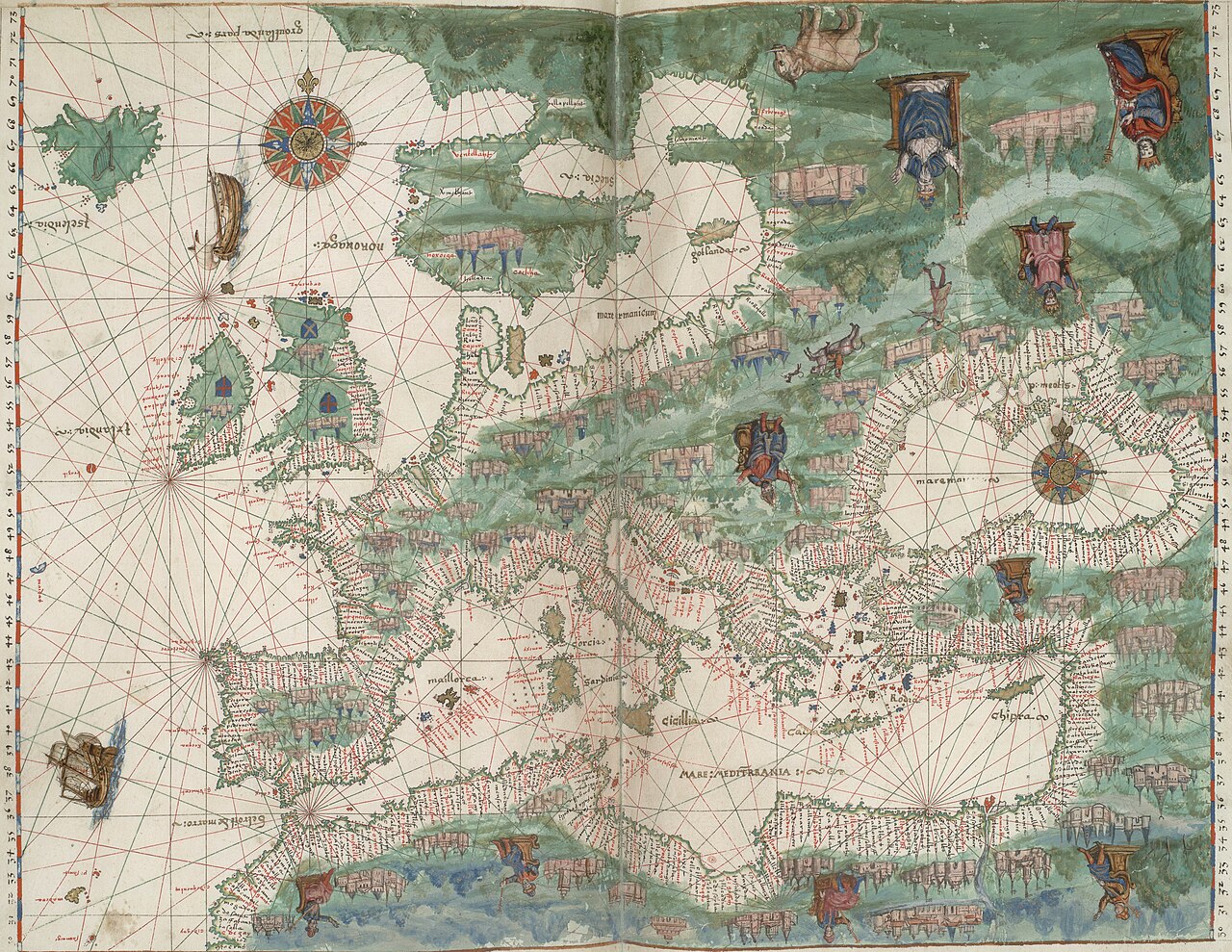
Dauphin Map of Canada
c. 1543
 Document
Primary source
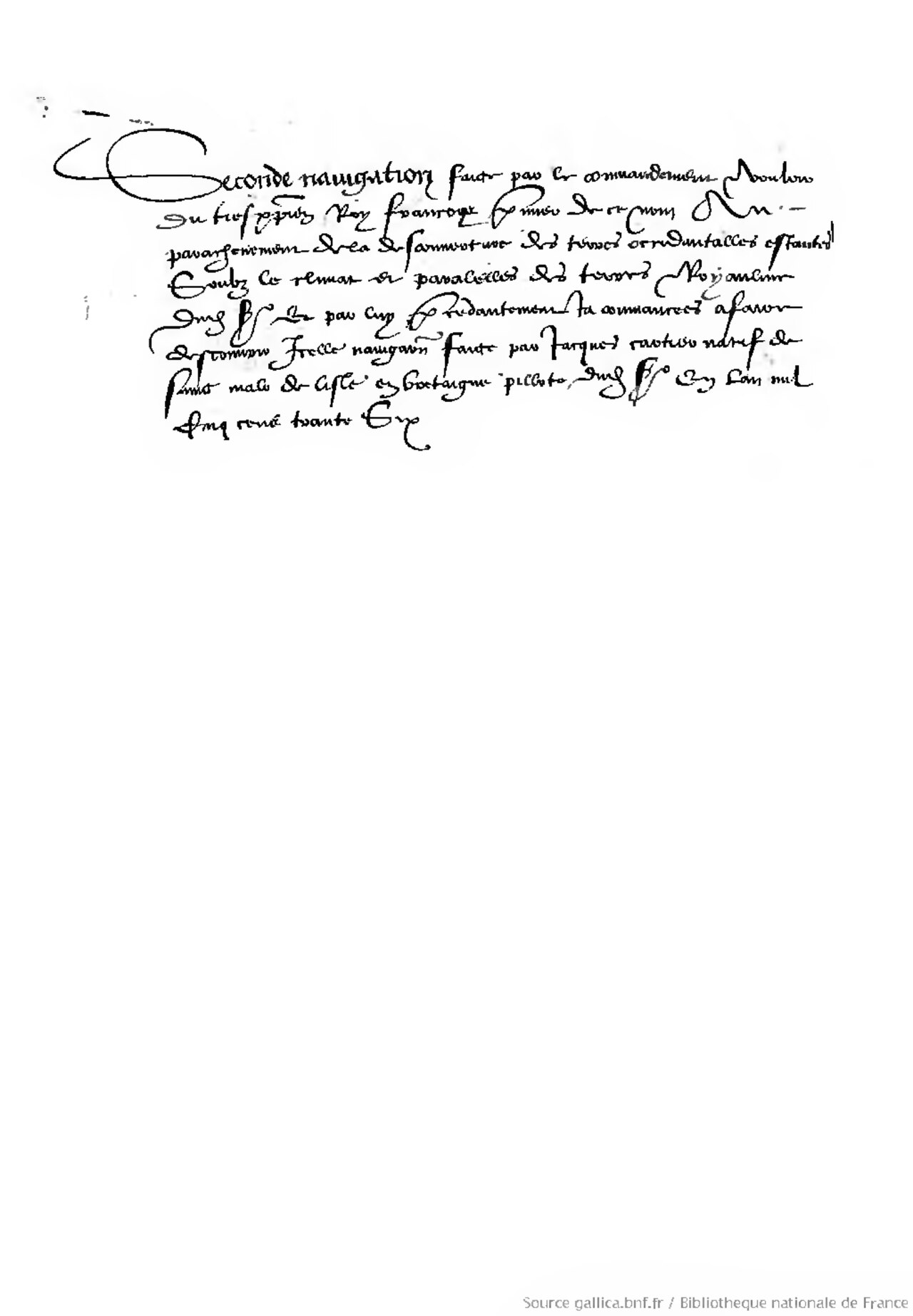
Seconde Navigation
Jacques Cartier · 1535-1536
 Document
Primary source
Signature of Jacques Cartier
Jacques Cartier
Free account
Read every Jacques Cartier source
Sign up free →
Ready when you are
Start chatting with Jacques Cartier now.
20 messages free · No credit card · Available in 50+ languages.