


Secondary sourceArtifactc. 1560s
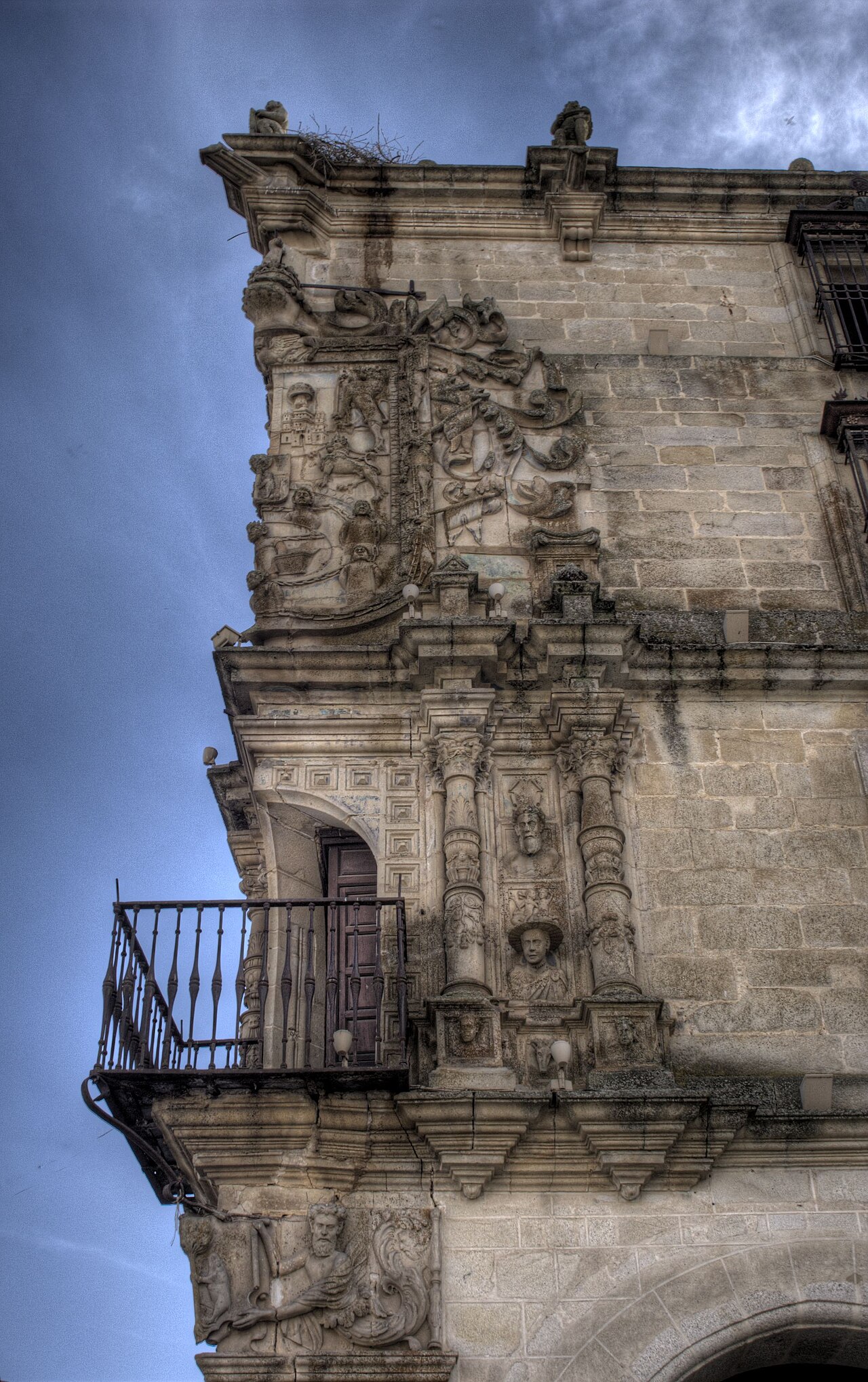
Palacio de la Conquista
Hernando Pizarro and Francisca Pizarro Yupanqui · c. 1560s
A 16th-century palace in Pizarro's hometown of Trujillo, built by his brother and daughter and decorated with his bust.
This palace, built by Pizarro's brother and daughter, honours him with a carved bust in his own hometown.
About this source
What it is
The Palacio de la Conquista is a palace built around the 1560s in Trujillo, Spain, by Hernando Pizarro and Francisca Pizarro Yupanqui, Francisco Pizarro's mestiza daughter. Its facade carries carved busts, including those of Francisco Pizarro and Inés Huaylas, along with the family's coat of arms.
Why it matters
Built in Pizarro's own hometown, the palace shows how the wealth and status gained from conquering the Inca Empire were turned into lasting monuments back in Spain. That it was built jointly by his brother and his daughter, born to an Inca noblewoman, also reflects the mixed, often fraught, family legacy the conquest created.
Look closer
- Why would the family choose to put carved busts of Pizarro and Inés Huaylas on the building's facade?
- What does the involvement of Francisca Pizarro Yupanqui tell you about the blending of Spanish and Inca families after the conquest?
- What questions does a building like this leave unanswered about the people whose labour and gold paid for it?
This artifact is part of the curated material that grounds the AI version of Francisco Pizarro on Humy.ai — when students ask about related events, the AI can quote it and cite it.
More Francisco Pizarro sources
Meet the AI Francisco Pizarro →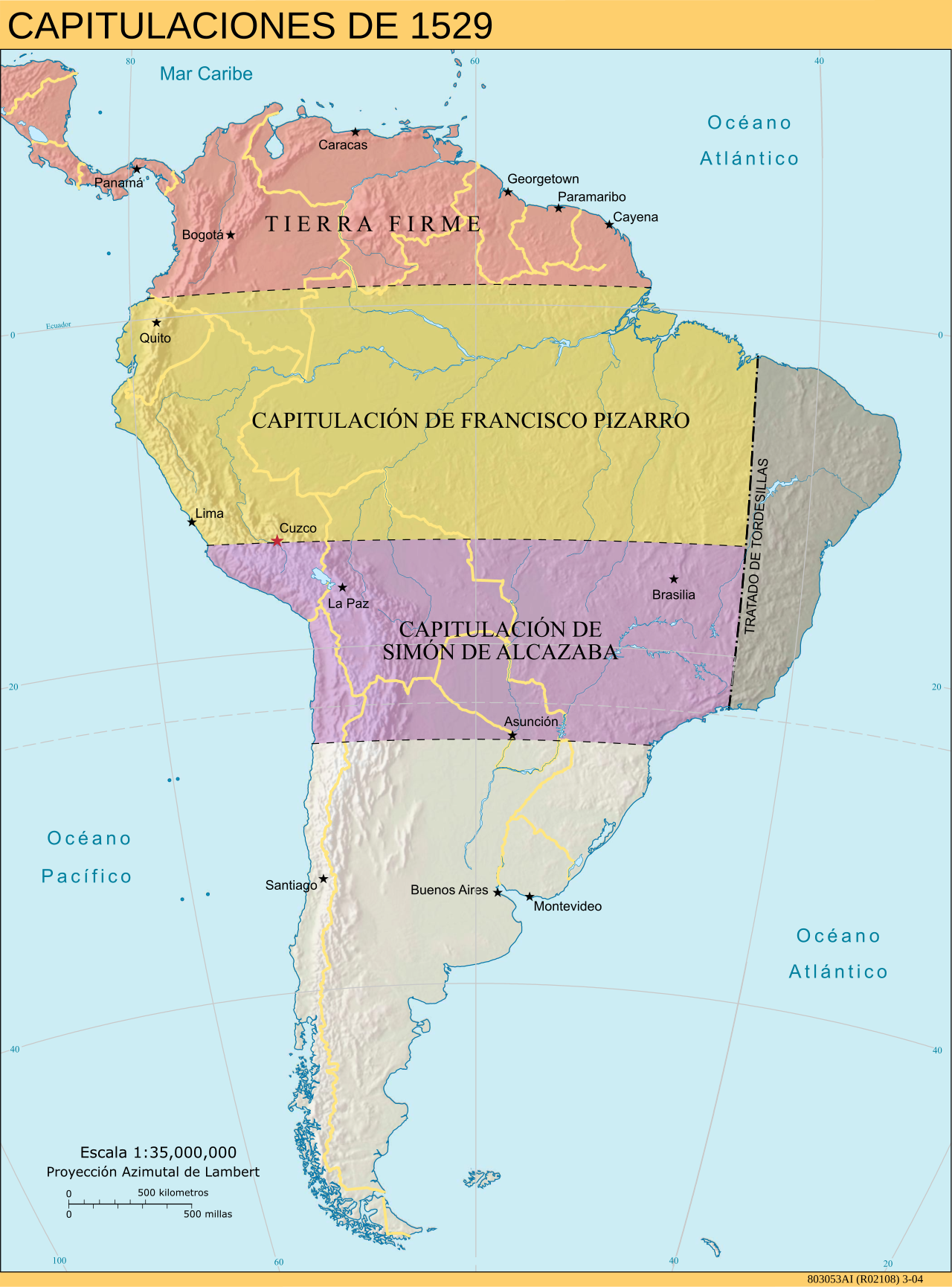 Document
Primary source
Capitulation of Toledo
Crown of Castile · 26 July 1529
 Painting
Secondary source
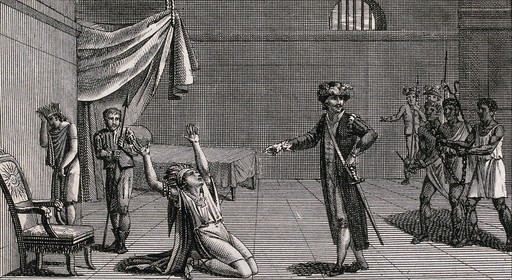
L'Ynca du Pérou aux pieds de Pizarre
A.C.F. Villerey after N. Vallain
 Painting
Secondary source
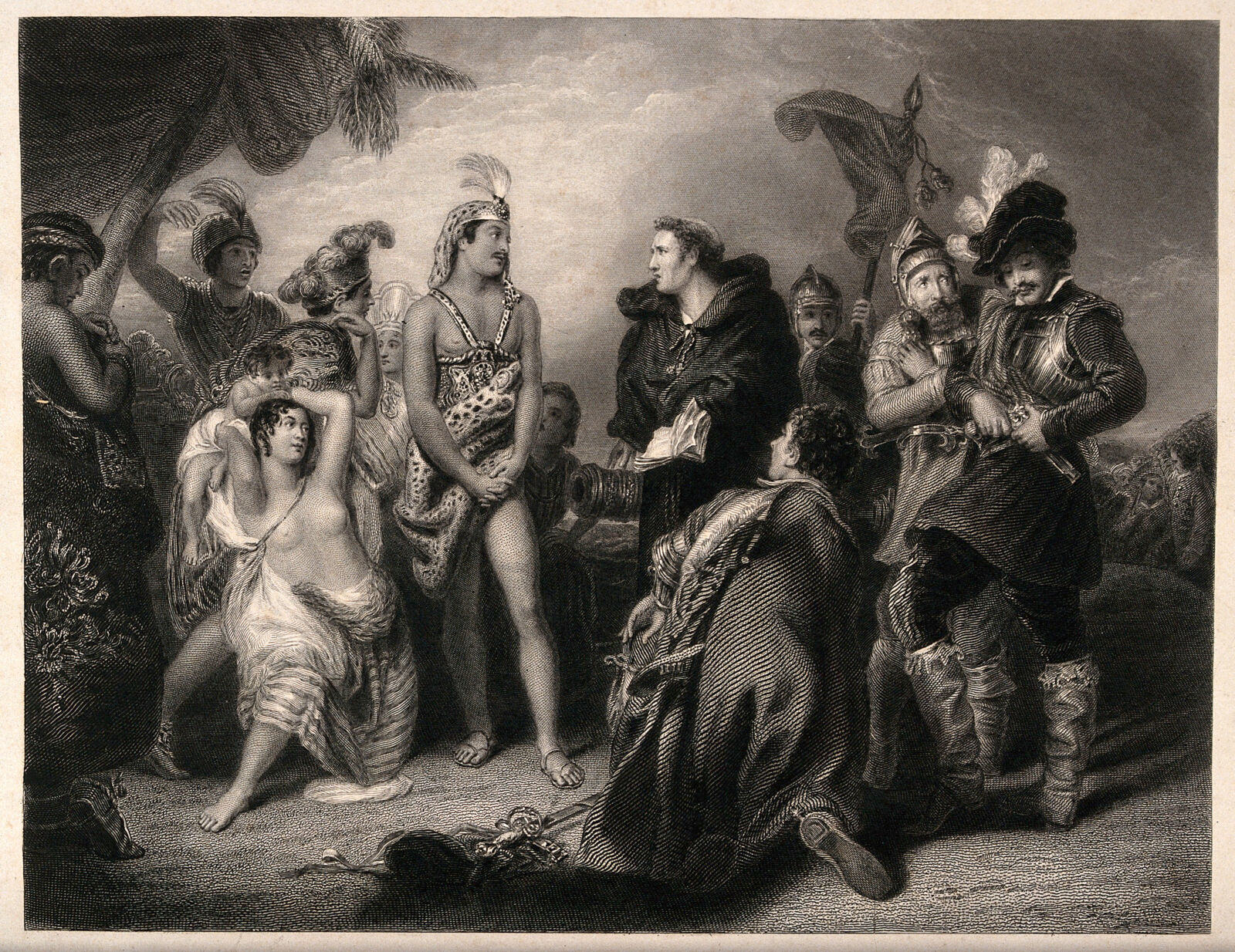
Valverde urging Atahualpa to convert
Henry Perronet Briggs (painting); engraved by W. Greatbach · 1830
 Book
Primary source
Verdadera relación de la conquista del Perú
Francisco de Jerez · 1534 (this edition 1891)
 Painting
Secondary source
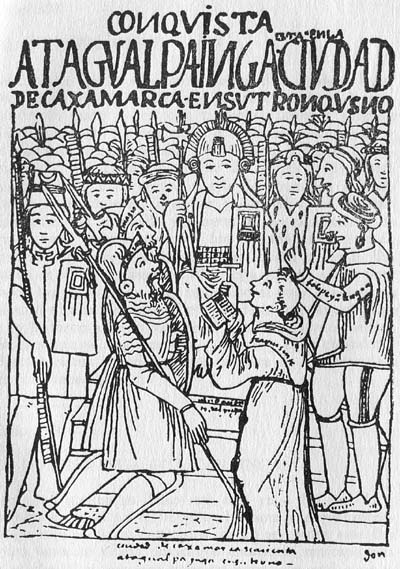
Atawallpa Pizarro tinkuy
Felipe Guaman Poma de Ayala · 1532 (depicted); drawing later
Ready when you are
Start chatting with Francisco Pizarro now.
20 messages free · No credit card · Available in 50+ languages.