


Secondary sourcePainting1631
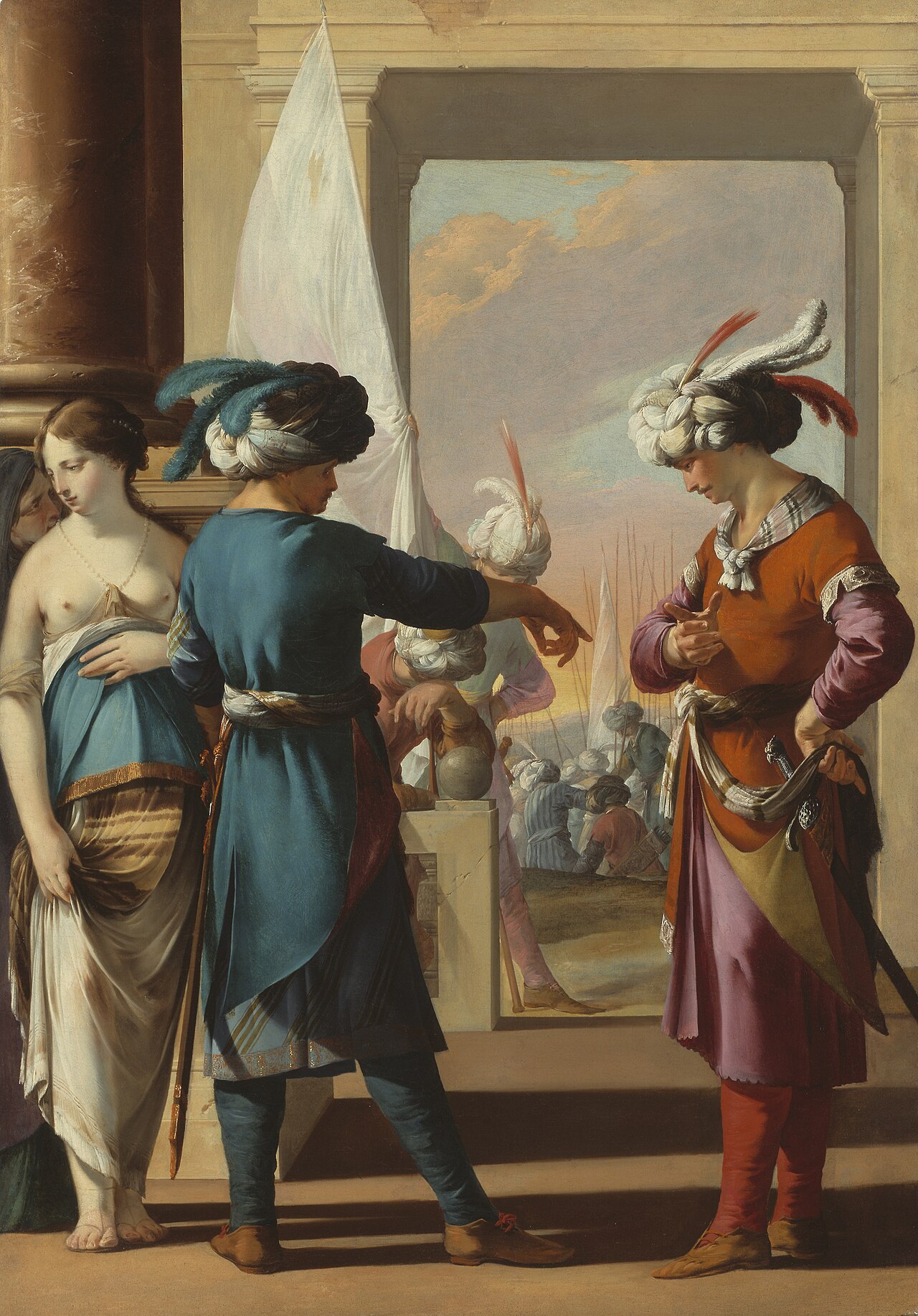
Panthea, Cyrus, and Araspas
Laurent de La Hyre · 1631
A 1631 painting showing an episode from Xenophon's Cyropaedia in which Cyrus the Great deals with the captive noblewoman Panthea.
This painting illustrates an episode from Xenophon's account of Cyrus the Great, showing his later reputation as a model of royal restraint.
About this source
What it is
This painting by Laurent de La Hyre, dated 1631, depicts a scene from Xenophon's Cyropaedia, an ancient account of Cyrus the Great's life. It is held by the Art Institute of Chicago.
Why it matters
The scene comes from a story about Panthea, a captive woman placed in the care of Cyrus's officer Araspas, and illustrates Cyrus's reputation for self-restraint and justice. By painting this episode, La Hyre shows how Xenophon's portrait of Cyrus as a model ruler continued to inspire artists and audiences in 17th-century Europe long after his empire had fallen.
Look closer
- What gestures or poses in the painting suggest tension or moral choice between the figures?
- Why might a 17th-century artist choose an ancient Persian story rather than a scene from his own time?
- What does the painting leave out or simplify about the original story?
This painting is part of the curated material that grounds the AI version of Cyrus the Great on Humy.ai — when students ask about related events, the AI can quote it and cite it.
More Cyrus the Great sources
Meet the AI Cyrus the Great →

Ready when you are
Start chatting with Cyrus the Great now.
20 messages free · No credit card · Available in 50+ languages.