


Secondary sourcePainting1773
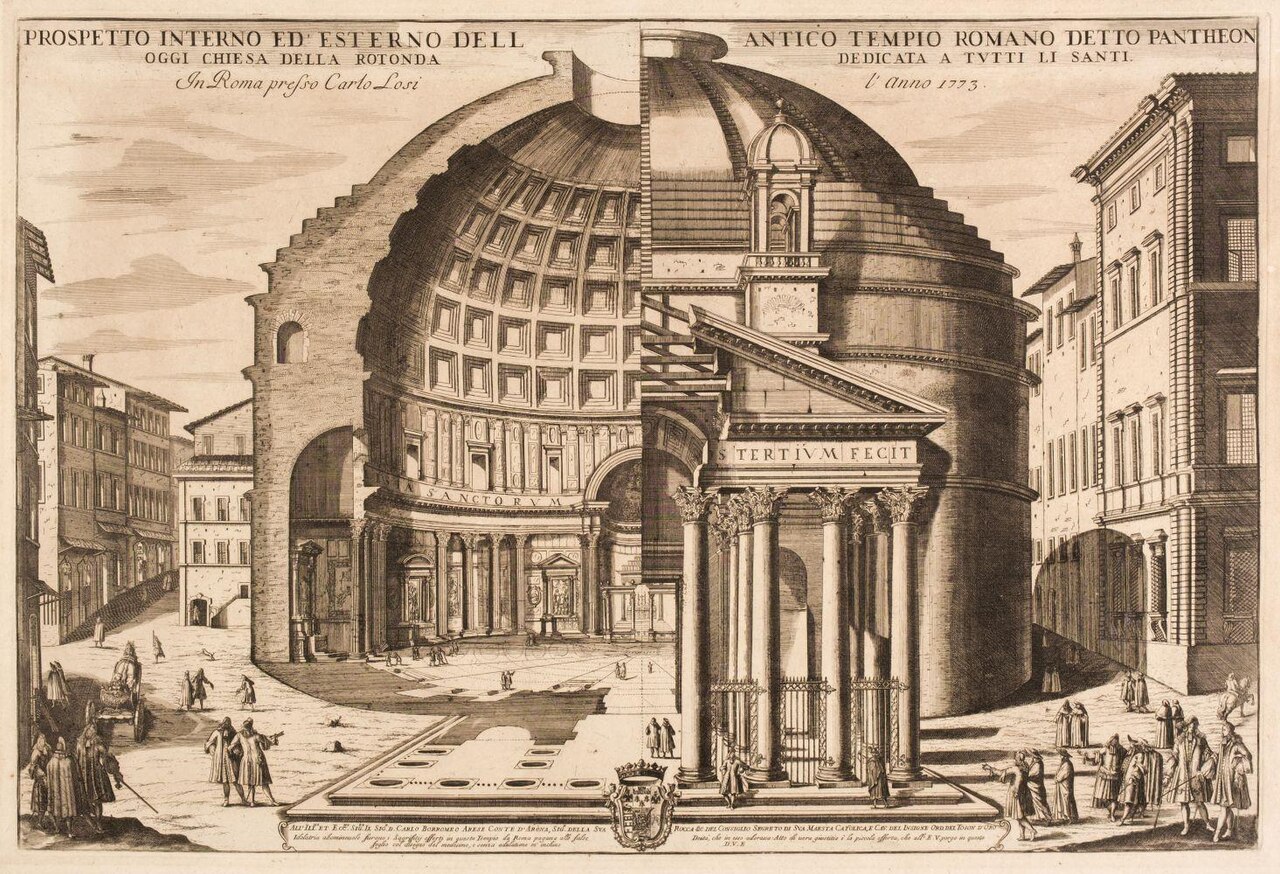
Pantheon interior and exterior elevations
Pietro Paolo Girelli · 1773
An 1773 etching showing a cross-section of the Pantheon in Rome, with its interior on one side and exterior on the other. Its inscription names Agrippa as the builder.
Shows the Pantheon, a building with an inscription naming Agrippa as its builder, as drawn in the eighteenth century.
About this source
What it is
This is an etching of the Pantheon in Rome, published in 1773 by Carlo Losi. The plate is attributed to Pietro Paolo Girelli and was made after a drawing by Giuseppe Tiburzio Vergelli. It is a split cross-section: the left half shows the coffered dome and interior, and the right half shows the exterior with its portico and columns. The exterior is inscribed 'M AGRIPPA L F COS TERTIUM FECIT'. The print is recorded on Wikimedia Commons.
Why it matters
The Pantheon is tied to Agrippa by that inscription, but this print was made long after his lifetime. It shows how eighteenth-century artists studied and reproduced ancient Roman buildings, so it tells us more about later interest in Rome's past than about Agrippa's own work. Its maker and publisher, Girelli, Vergelli and Losi, were working in Rome in a tradition of drawing and printing antiquities for scholars and collectors.
Look closer
- What does putting the inside and outside of the building side by side show that a single view could not?
- Who drew, engraved and published this image, and why might they have wanted to record an ancient building in this way?
- What does a cross-section leave out about how people used the building or who lived around it?
This painting is part of the curated material that grounds the AI version of Marcus Vipsanius Agrippa on Humy.ai — when students ask about related events, the AI can quote it and cite it.
More Marcus Vipsanius Agrippa sources
Browse all 97 →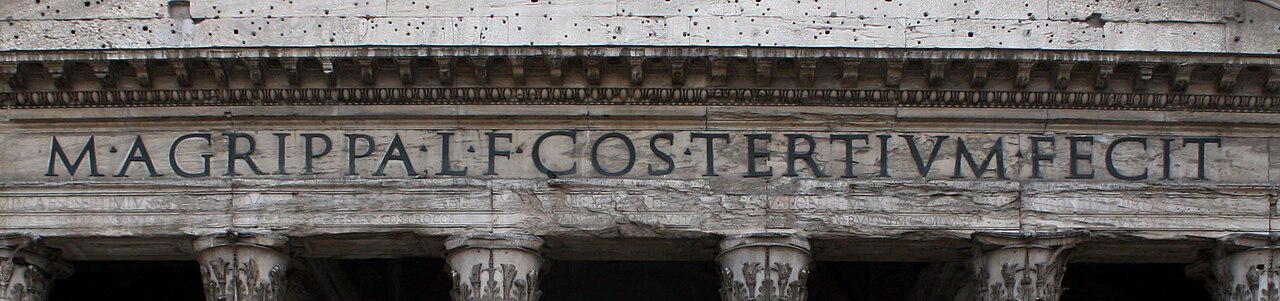 Document
Secondary source
CIL VI, 896 (Pantheon Dedication Inscription)
126 (copying text of 27 BC)
 Sculpture
Primary source
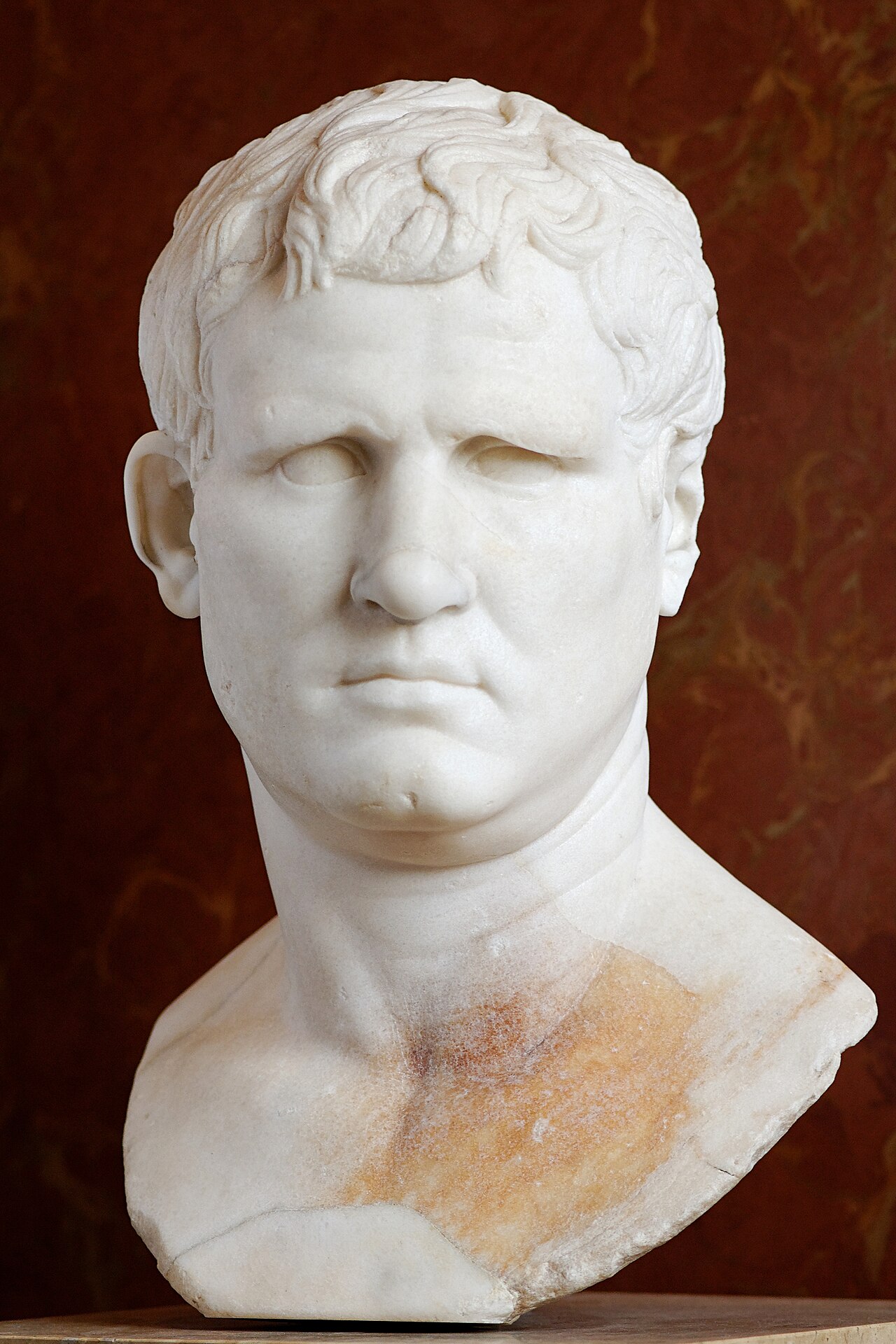
Portrait of Marcus Vipsanius Agrippa (Gabii type)
c. 25–24 BC
 Artifact
Primary source
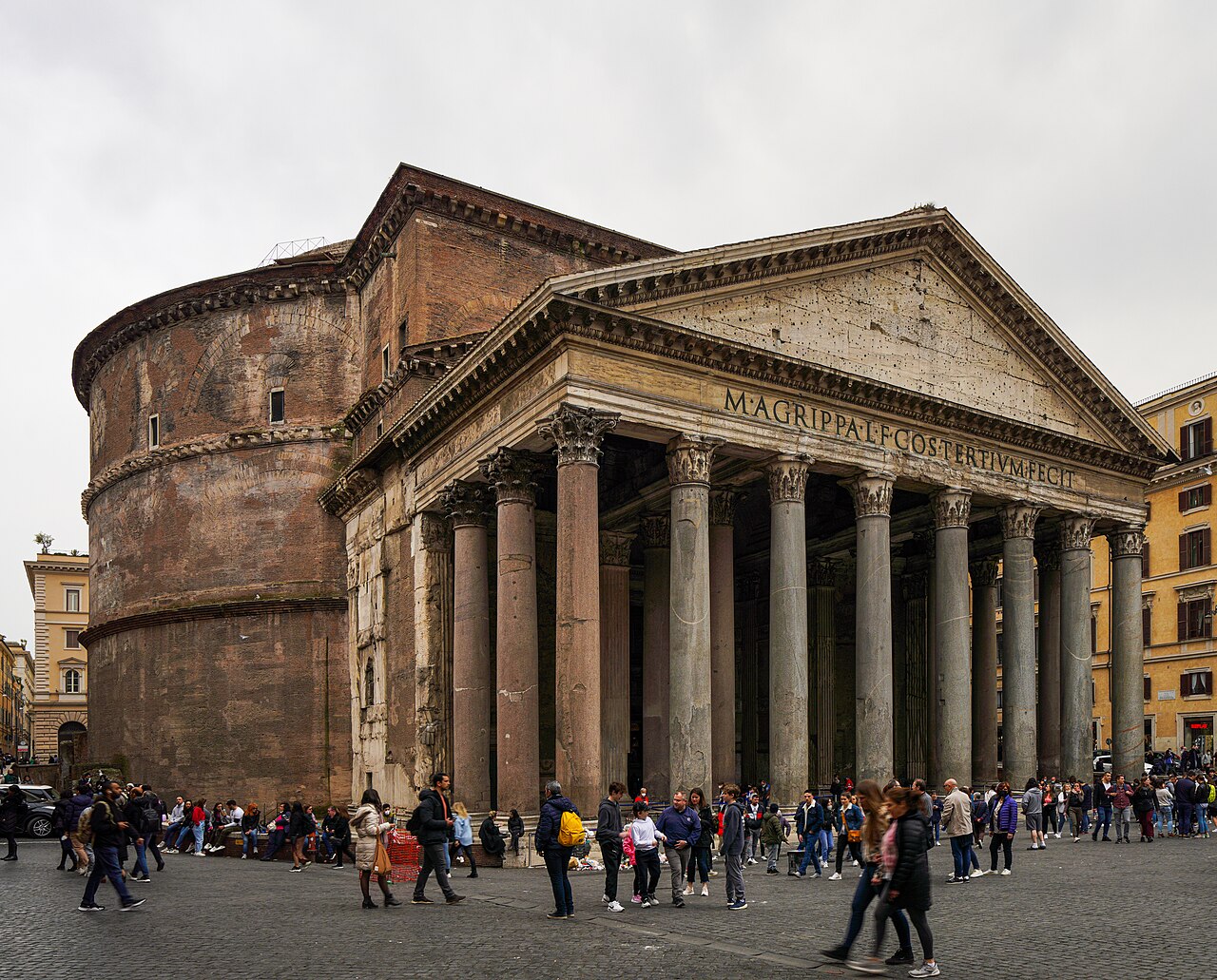
Pantheon
Hadrian · c. AD 126-128
 Document
Primary source
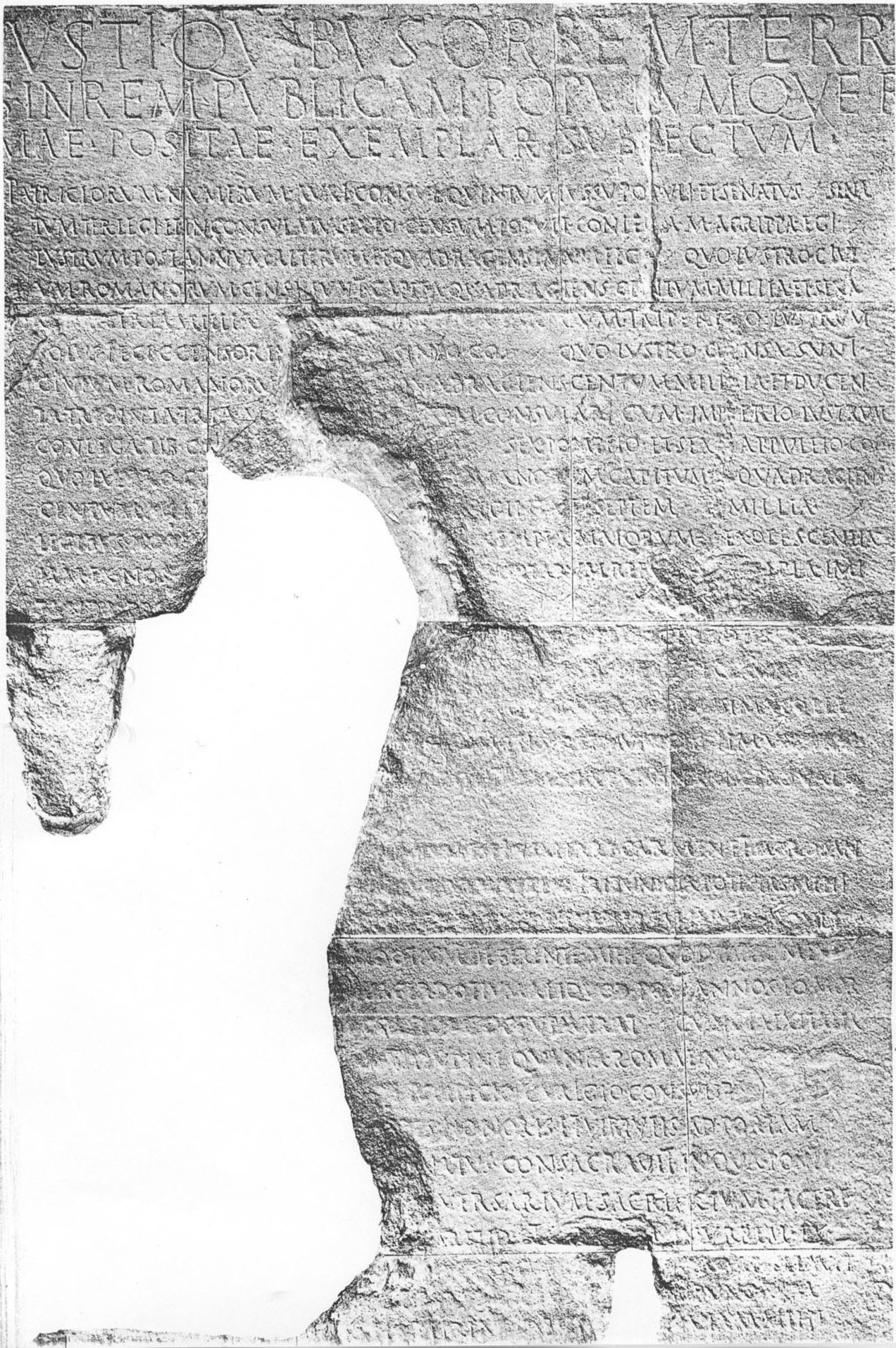
Res Gestae Divi Augusti
Augustus · 14 AD

Free account
Read every Marcus Vipsanius Agrippa source
Sign up free →
Ready when you are
Start chatting with Marcus Vipsanius Agrippa now.
20 messages free · No credit card · Available in 50+ languages.