


Primary sourceDocument1st century BCE – 1st century CE
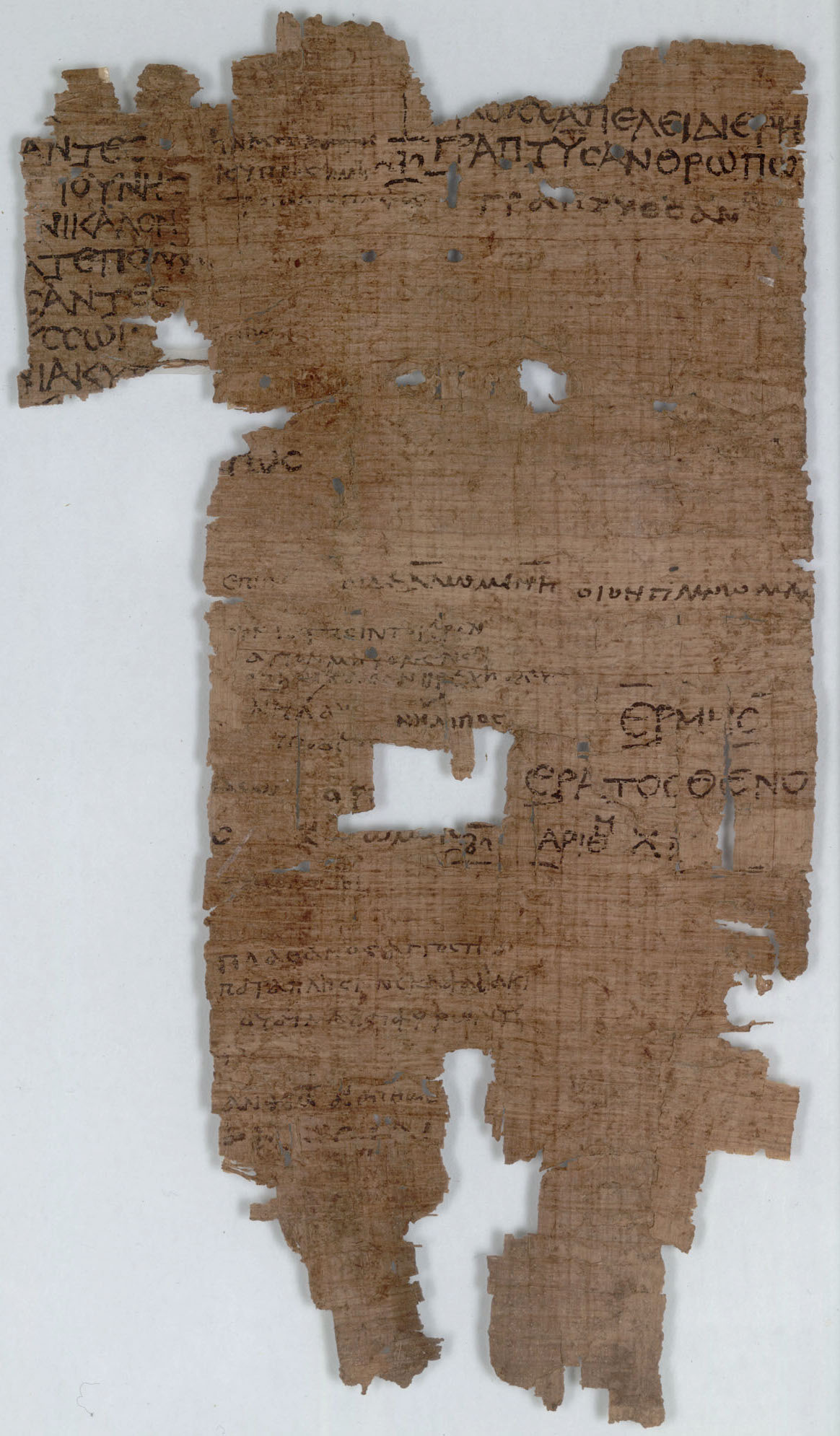
Papyrus Fragment of the Poem Hermes
Eratosthenes · 1st century BCE – 1st century CE
A fragment of papyrus bearing lines from Eratosthenes' own poem Hermes, recovered from Oxyrhynchus in Egypt.
This papyrus preserves part of Eratosthenes' own poem Hermes, a rare direct trace of his literary writing.
About this source
What it is
This is a fragmentary papyrus sheet containing part of the poem Hermes, written by Eratosthenes. It was found at Oxyrhynchus in Egypt and is dated to around the 1st century BCE to 1st century CE, several centuries after Eratosthenes lived. It is now held at the Sackler Library, Oxford.
Why it matters
Very little of Eratosthenes' own writing survives directly, so this papyrus is a rare physical trace of his poetry rather than a later copy or description by someone else. It shows that his literary work, not just his science, was being copied and read long after his death.
Look closer
- What does the torn and damaged state of the papyrus tell you about how ancient texts have survived — or failed to survive?
- Why might a poem by a famous scientist have been copied and preserved by scribes centuries later?
- What might be missing from the poem because of the gaps and holes in the papyrus?
This document is part of the curated material that grounds the AI version of Eratosthenes on Humy.ai — when students ask about related events, the AI can quote it and cite it.
More Eratosthenes sources
Browse all 52 →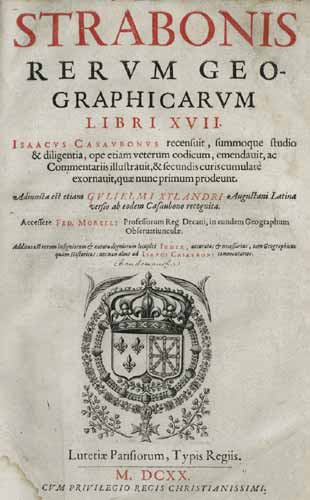 Book
Secondary source
Geography
Strabo · c. 20 AD
 Letter
Primary source
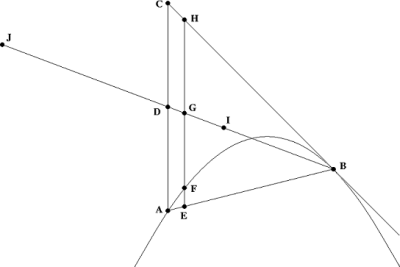
The Method of Mechanical Theorems
Archimedes · c. 250 BCE
 Document
Secondary source
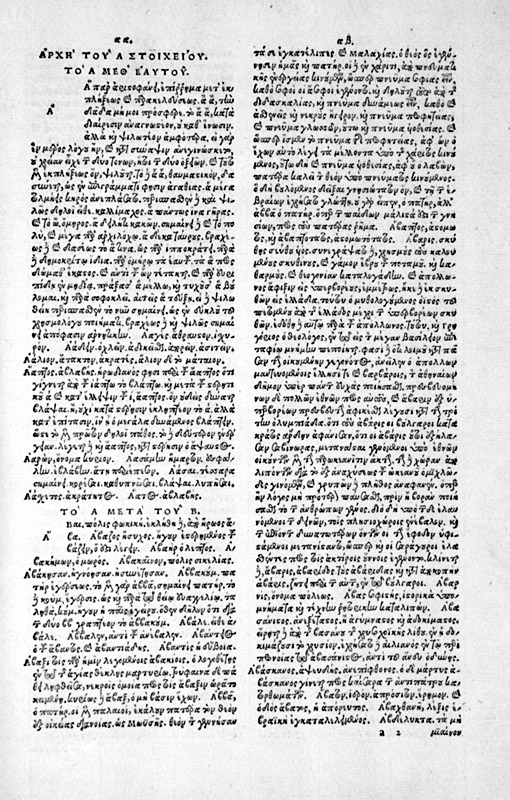
Suda
various authors · c. 1000
Secondary source
Natural History, Book 2, on Eratosthenes' Earth Measurement
Pliny the Elder · c. 77 CE
Free account
Read every Eratosthenes source
Sign up free →
Ready when you are
Start chatting with Eratosthenes now.
20 messages free · No credit card · Available in 50+ languages.