


Primary sourceDocument1812
Pauper Management Improved
Jeremy Bentham · 1812
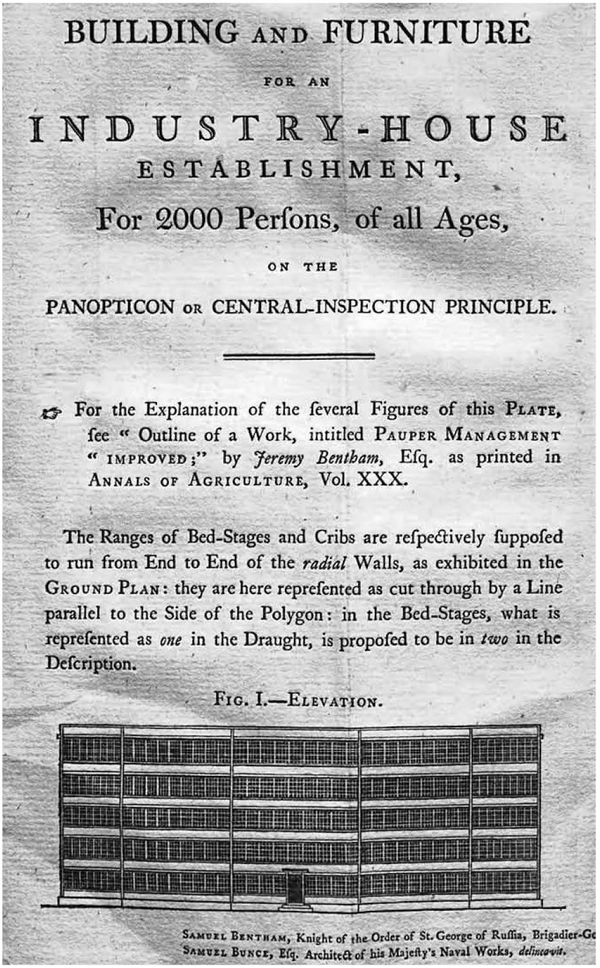
Bentham's scheme, published in 1812, for a national network of panopticon-style 'industry houses' to manage the poor.
Bentham designed this panopticon-based plan for housing the poor, showing the controlling side of his reform ideas.
About this source
What it is
This is a written work by Jeremy Bentham describing a plan for an 'industry-house establishment' built on his panopticon principle, able to hold 2000 people of all ages. It was published in 1812.
Why it matters
Bentham's panopticon idea, usually linked to prisons, is here applied to housing and managing the poor. The plan shows the harsher, more controlling side of his reform projects, revealing how his ideas about surveillance and discipline extended beyond crime to poverty and welfare.
Look closer
- Why might Bentham have thought constant observation would help manage a large group of poor people?
- What does this plan reveal about attitudes toward poverty in Bentham's time?
- Looking at the building drawing, what do the many windows suggest about its purpose?
This document is part of the curated material that grounds the AI version of Jeremy Bentham on Humy.ai — when students ask about related events, the AI can quote it and cite it.
More Jeremy Bentham sources
Meet the AI Jeremy Bentham →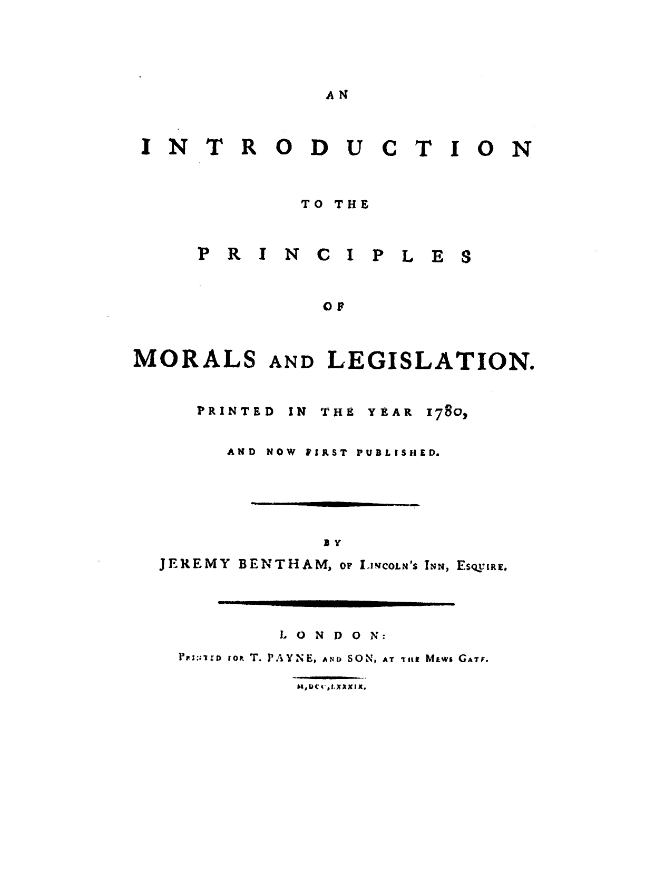 Book
Primary source
An Introduction to the Principles of Morals and Legislation
Jeremy Bentham · 1789 (printed 1780)
 Book
Primary source
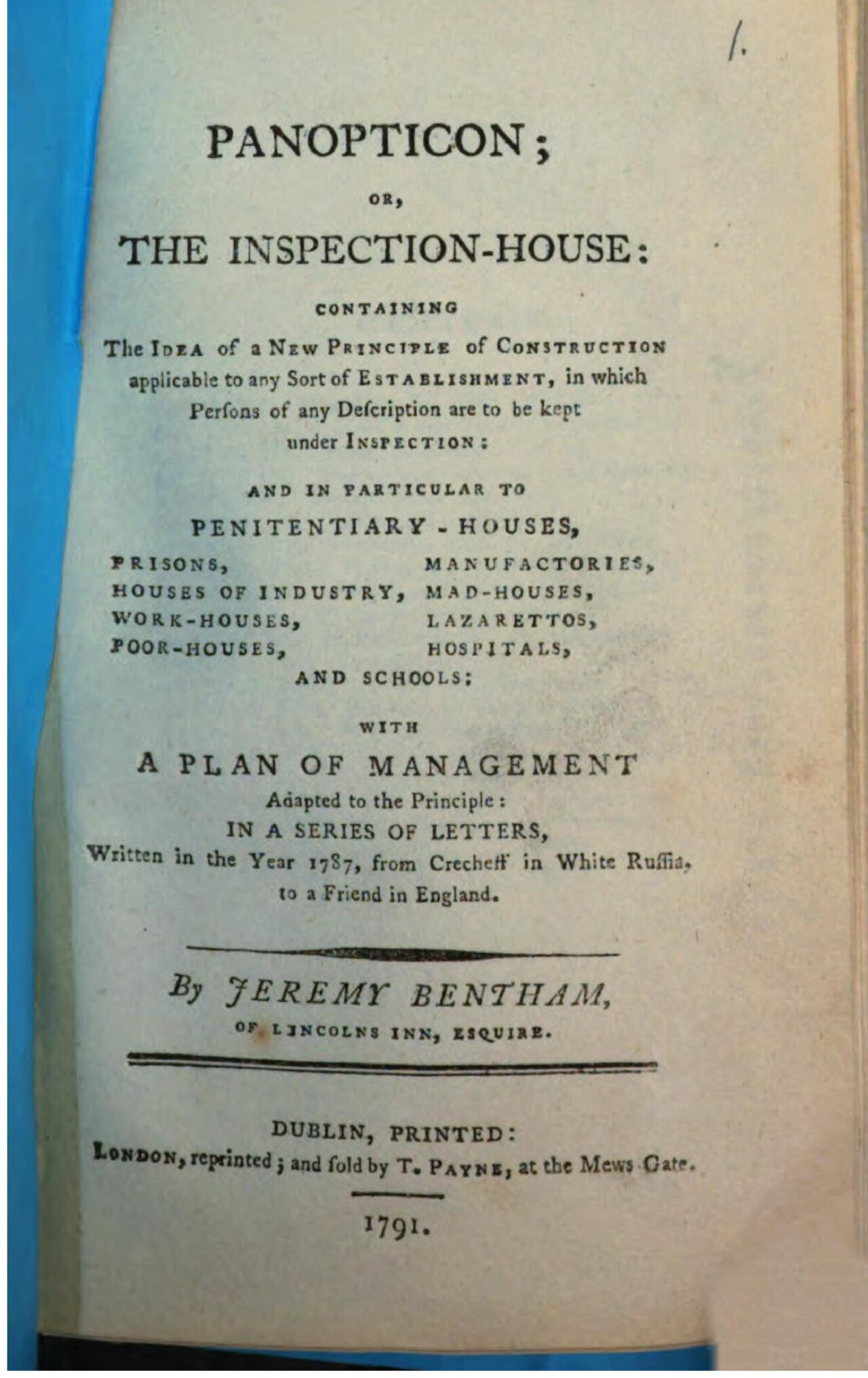
Panopticon; or, The Inspection-House
Jeremy Bentham · 1791 (letters written 1787)
 Artifact
Primary source
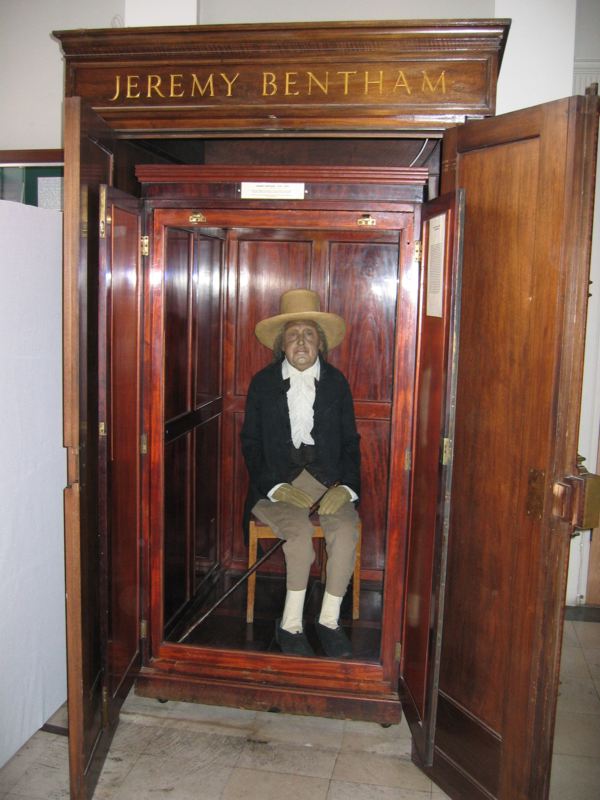
Auto-icon of Jeremy Bentham
Thomas Southwood Smith · 1832
 Book
Primary source
A Fragment on Government
Jeremy Bentham · 1776
 Painting
Primary source
Jeremy Bentham
Henry William Pickersgill · c. 1829
Ready when you are
Start chatting with Jeremy Bentham now.
20 messages free · No credit card · Available in 50+ languages.