


Secondary sourceArtifact16th century
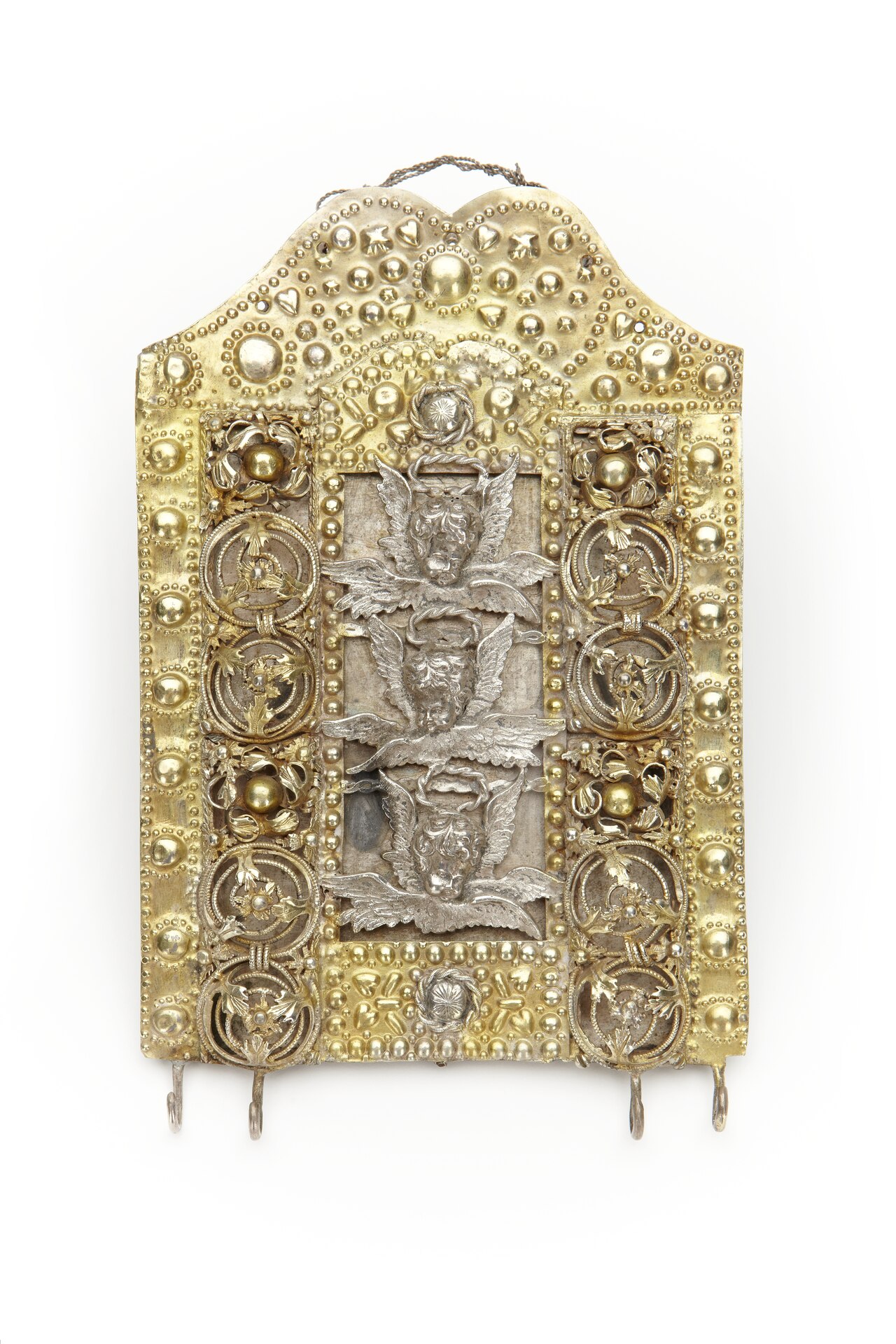
Pendant Depicting King Gustav I
Unknown · 16th century
A silver-gilt pendant decorated with filigree and studs, carrying an image connected to King Gustav I, held at Skokloster Castle.
This pendant carries an image connected to Gustav I, showing how his likeness circulated as a token of loyalty.
About this source
What it is
This is a photograph of a rectangular silver-gilt pendant with an arched top, held at Skokloster Castle in Sweden. It is covered with beaded and domed studs and filigree roundels, with a central panel showing three repeated winged mask-like figures, and hooks for hanging attachments.
Why it matters
Pendants and jewellery carrying a ruler's likeness were worn as personal, portable images of loyalty to the crown. An object like this shows how Gustav I's image circulated beyond paintings and coins, becoming a keepsake people could wear, reflecting the reach of his royal image during the Renaissance.
Look closer
- Why might someone want to wear a pendant showing the king's image?
- What details in the decoration tell you about the skill of the goldsmith who made it?
- What does the unknown maker of this piece tell us about whose names from this period survive in history and whose do not?
This artifact is part of the curated material that grounds the AI version of Gustav Vasa on Humy.ai — when students ask about related events, the AI can quote it and cite it.
More Gustav Vasa sources
Browse all 94 →
Ready when you are
Start chatting with Gustav Vasa now.
20 messages free · No credit card · Available in 50+ languages.