


Secondary sourcePaintingc. 1540
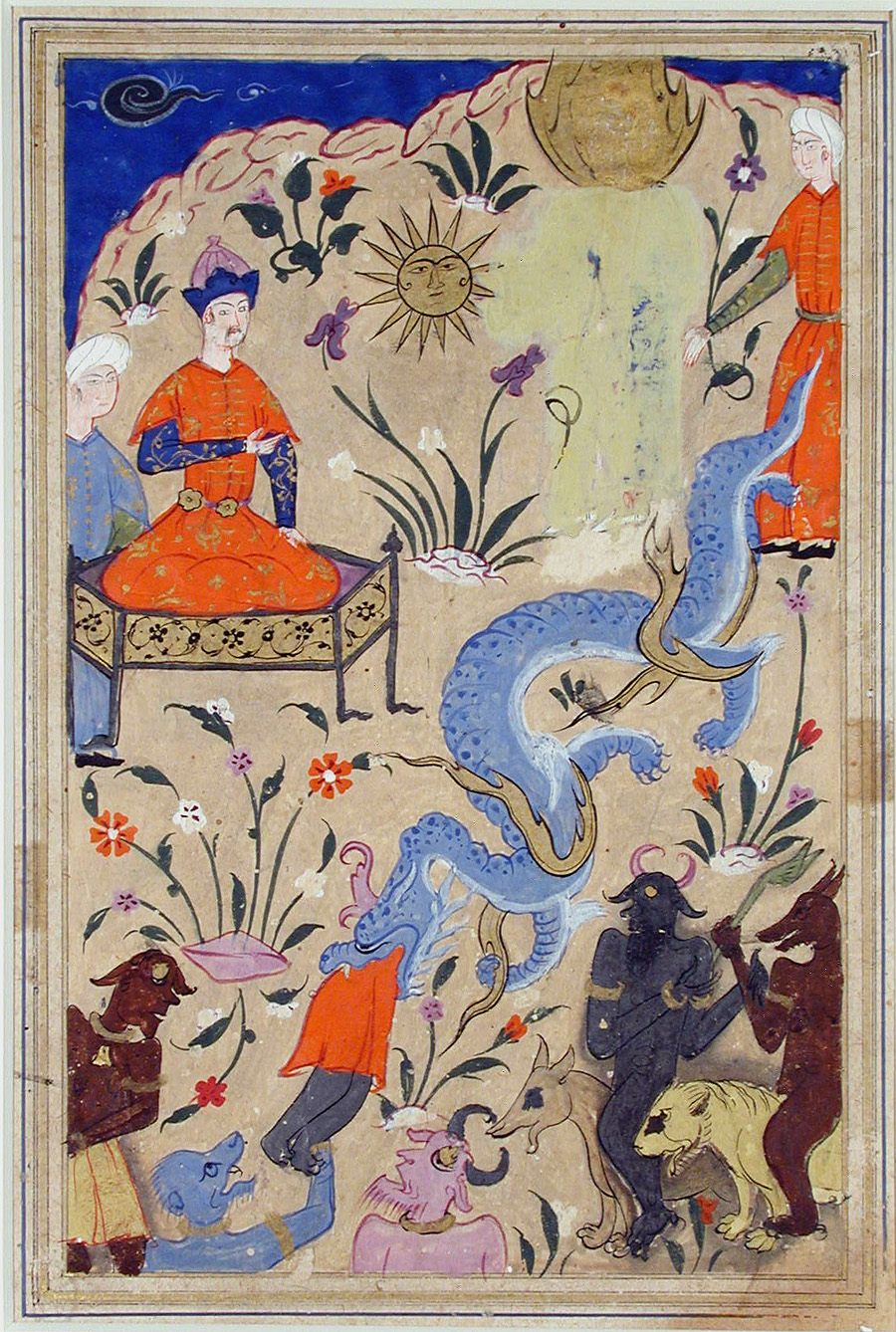
Pharaoh Watches Moses' Serpent Devour Magicians' Serpents
c. 1540
A small Persian-style miniature painting from a History of the Prophets manuscript suite, showing Moses' contest with Pharaoh's magicians. It was made about 1540, long after Moses' time.
Shows Moses in a contest with Pharaoh's magicians, the story that made him a central figure in this prophetic history.
About this source
What it is
This is a small painted miniature in a Persian style, catalogued as ca. 1540, India or Iran. It comes from the History of the Prophets suite, known as Qisas al-Anbiya. It shows a seated figure in red robes and a blue hat watching a large blue, dragon-like serpent with a golden horned head devouring a figure in red and grey. Two attendants stand on either side, and demons with horns and animal heads surround the scene. The San Diego Museum of Art holds it in the Edwin Binney 3rd Collection.
Why it matters
The painting illustrates a story from the Qur'an and Islamic prophetic tradition about Moses and Pharaoh. Its maker was not a witness to Moses' life. Like many later images, it turns an ancient story into a visual scene for a court or book audience. It shows how Moses' story was retold and pictured across centuries and cultures, with Pharaoh as the central observer.
Look closer
- Who is the seated figure, and how does the artist show his reaction to the serpent?
- Why might the artist include demons and animal-headed figures around the scene?
- What does this painting leave out about Moses, and what would a text version of the story add?
This painting is part of the curated material that grounds the AI version of Moses on Humy.ai — when students ask about related events, the AI can quote it and cite it.
More Moses sources
Browse all 85 →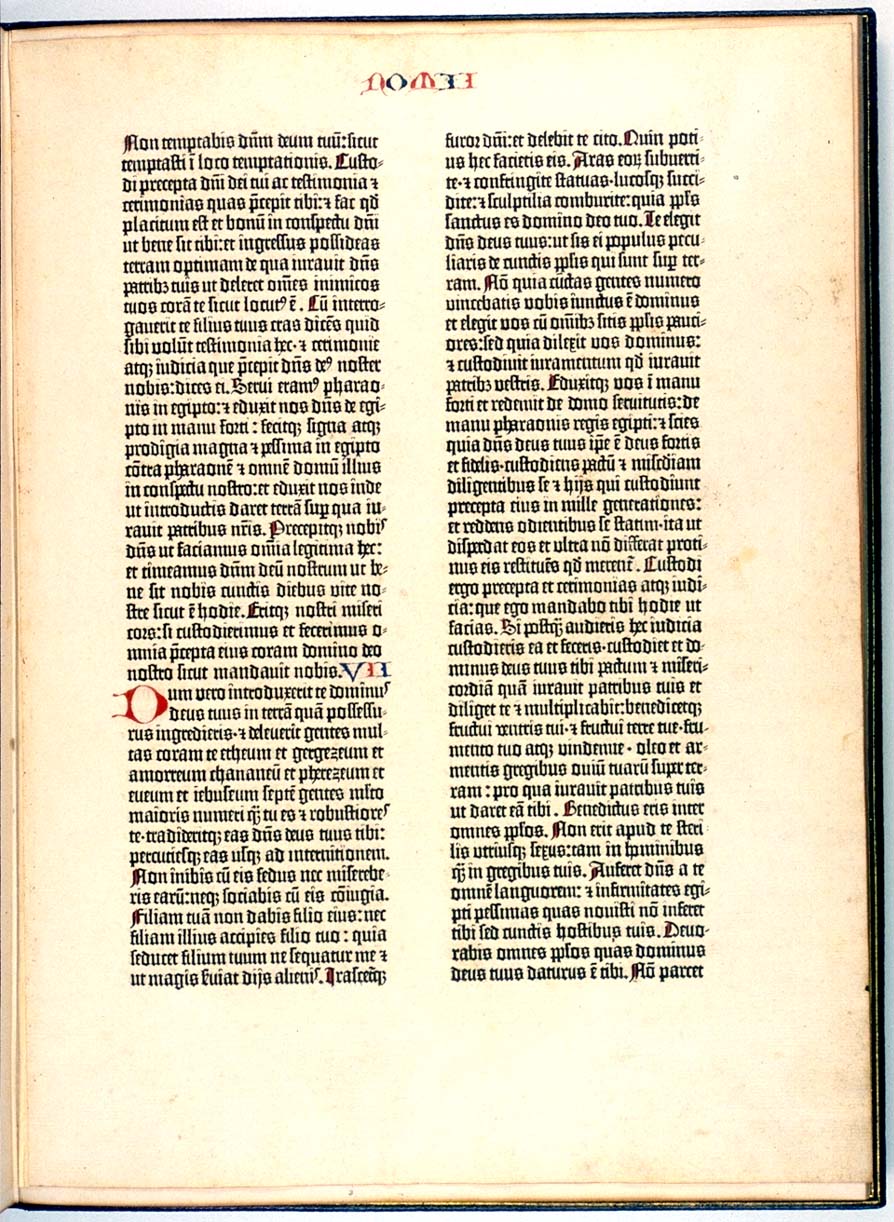 Book
Secondary source
Deuteronomy
Deuteronomist · 7th–5th century BCE
 Artifact
Primary source
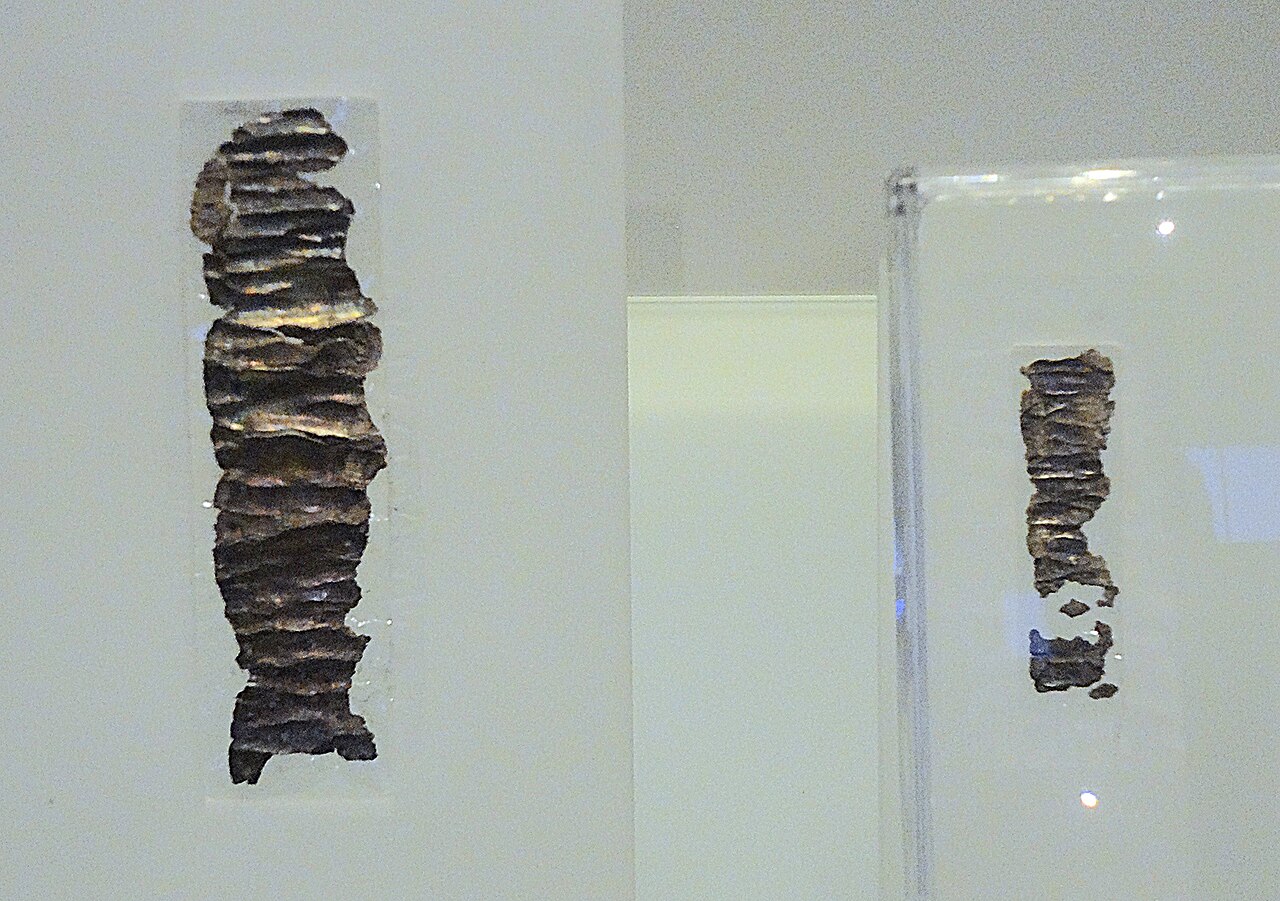
Ketef Hinnom scrolls
c. 600 BCE
 Sculpture
Primary source
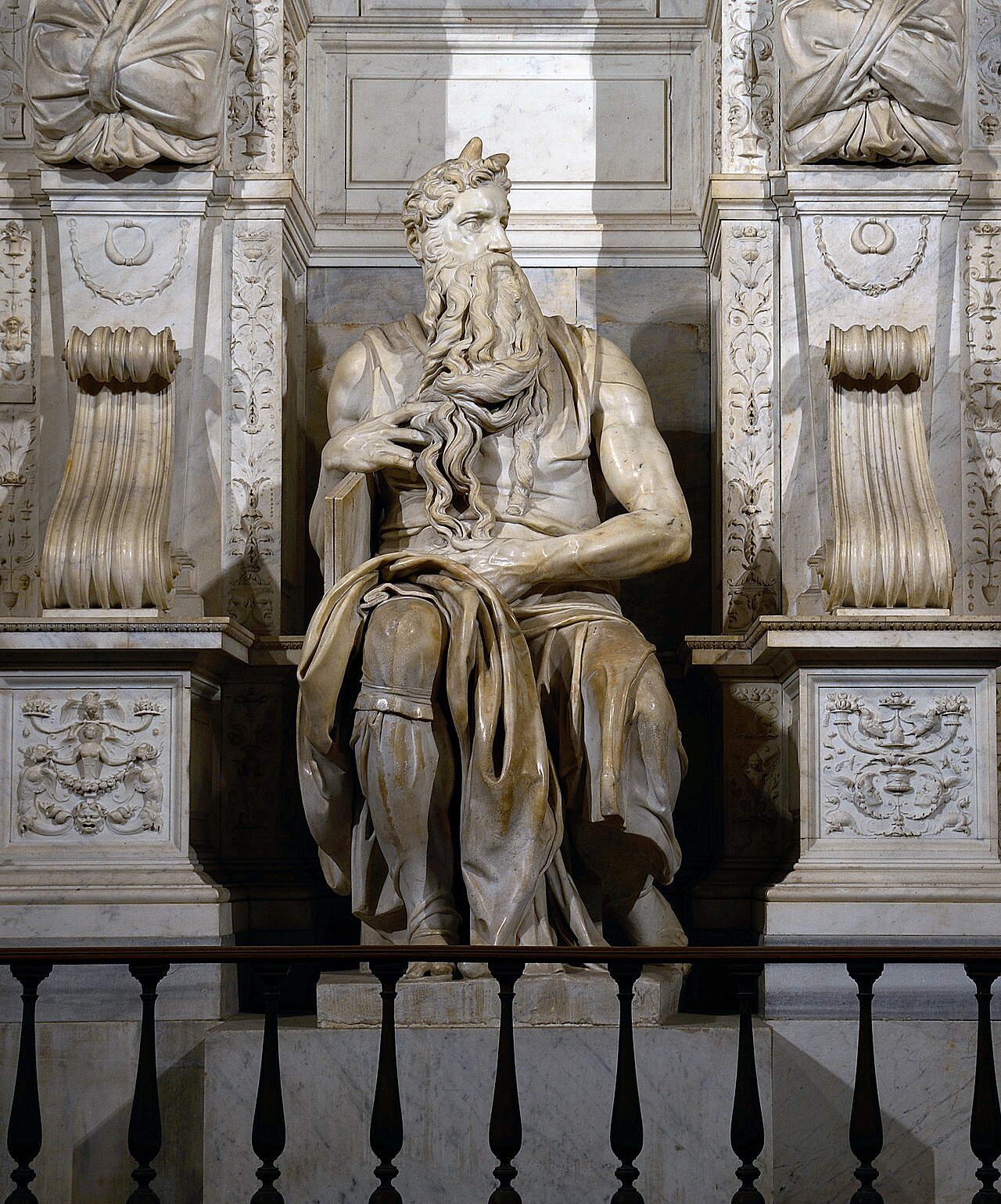
Moses
Michelangelo · c. 1513-1515
 Painting
Secondary source
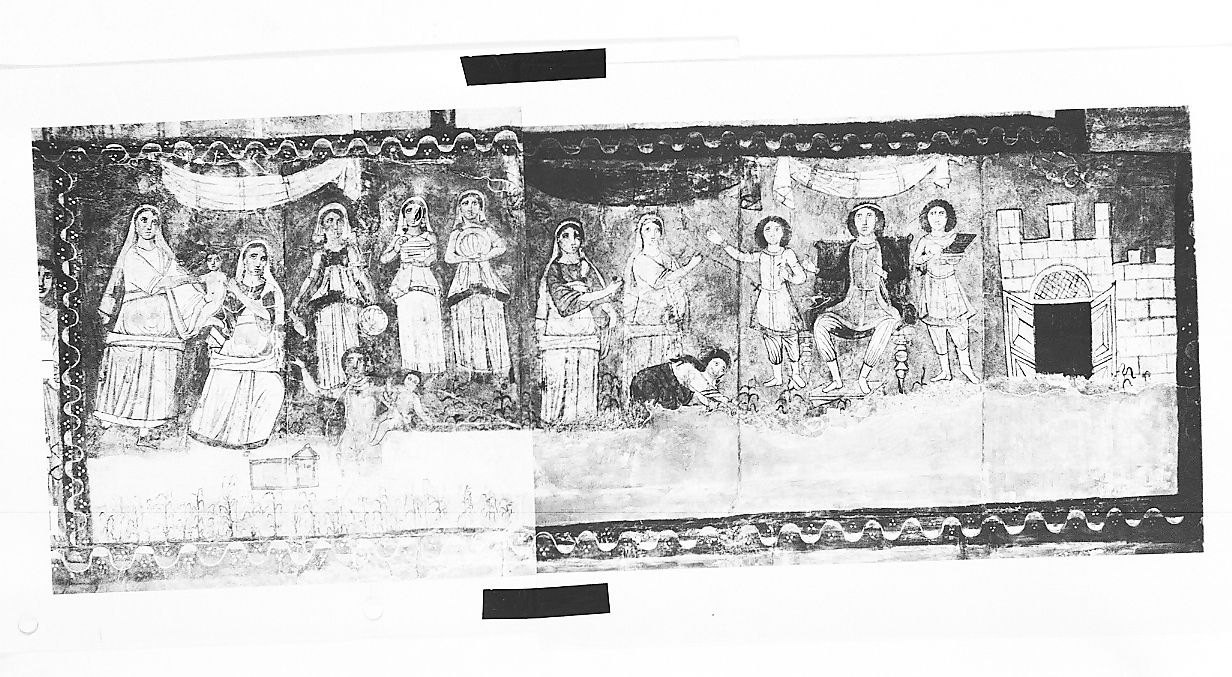
Iconographic Scene WC4, Dura-Europos Synagogue
240 CE
Free account
Read every Moses source
Sign up free →
Ready when you are
Start chatting with Moses now.
20 messages free · No credit card · Available in 50+ languages.