


Primary sourceArtifact1958
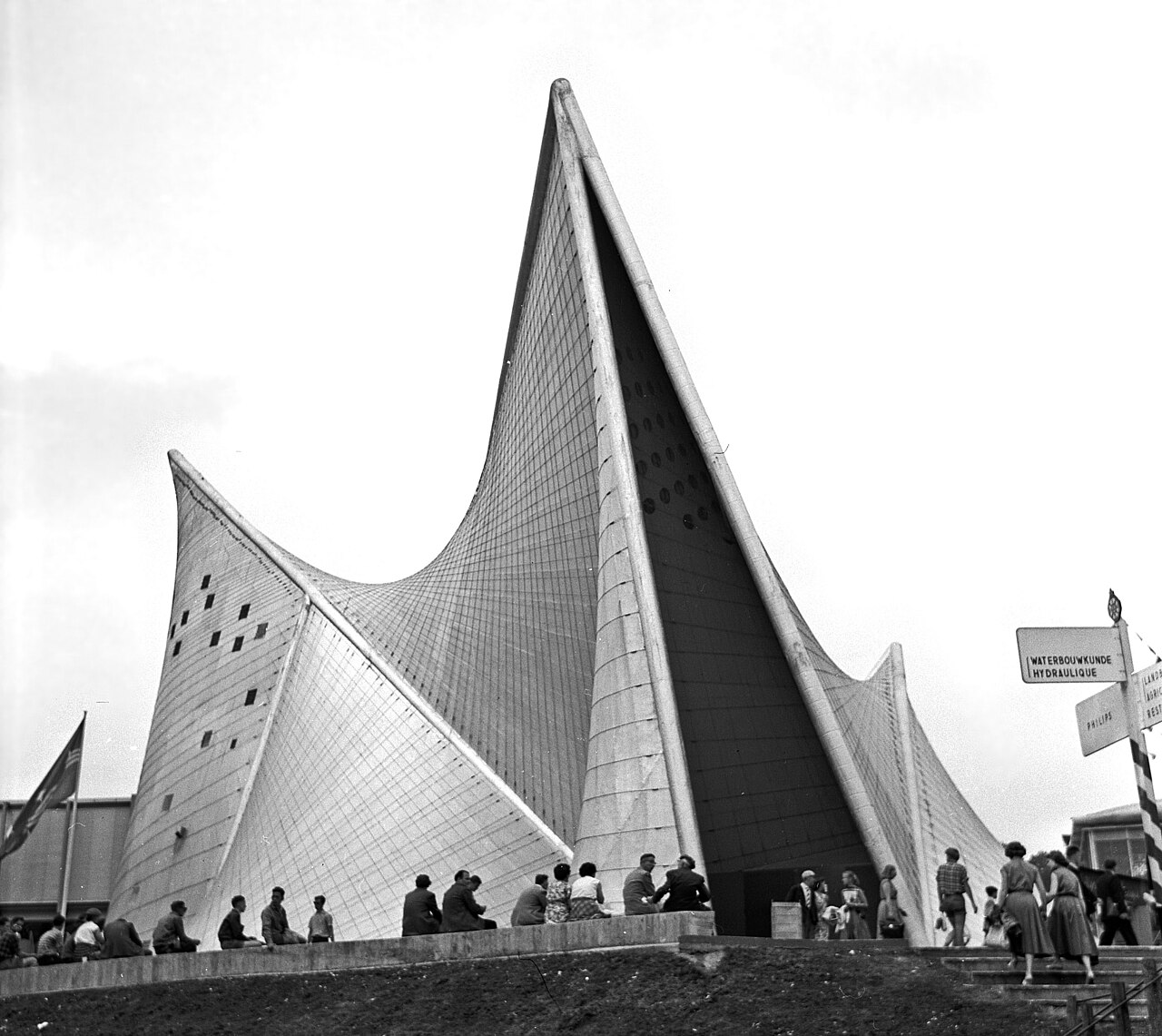
Philips Pavilion
Le Corbusier (office), with Iannis Xenakis · 1958
A temporary modernist pavilion built for Expo 58 in Brussels, designed by Le Corbusier's office with Iannis Xenakis, housing a multimedia sound-and-light spectacle.
Le Corbusier's office designed this pavilion as his experiment in total multimedia architecture.
About this source
What it is
The Philips Pavilion was a modernist building built for the 1958 Brussels World's Fair, commissioned by the electronics company Philips. It was designed by the office of Le Corbusier, though much of the design work was carried out by his assistant Iannis Xenakis, a composer as well as an architect. The reinforced concrete structure was made of hyperbolic paraboloid shapes with asbestos-coated walls holding hundreds of loudspeakers. It was demolished in 1959, shortly after the fair ended.
Why it matters
The pavilion staged a multimedia spectacle combining architecture, light and electronic music, with Edgard Varèse's piece spatialized through the building. It shows Le Corbusier experimenting with architecture as a total sensory experience, and reveals tensions between him and Xenakis, who later disputed credit for the design.
Look closer
- What does the building's unusual shape suggest it was designed for?
- Why might two creative people disagree over who designed something?
- What is lost when a building like this is demolished?
This artifact is part of the curated material that grounds the AI version of Le Corbusier on Humy.ai — when students ask about related events, the AI can quote it and cite it.
More Le Corbusier sources
Browse all 88 →Primary source
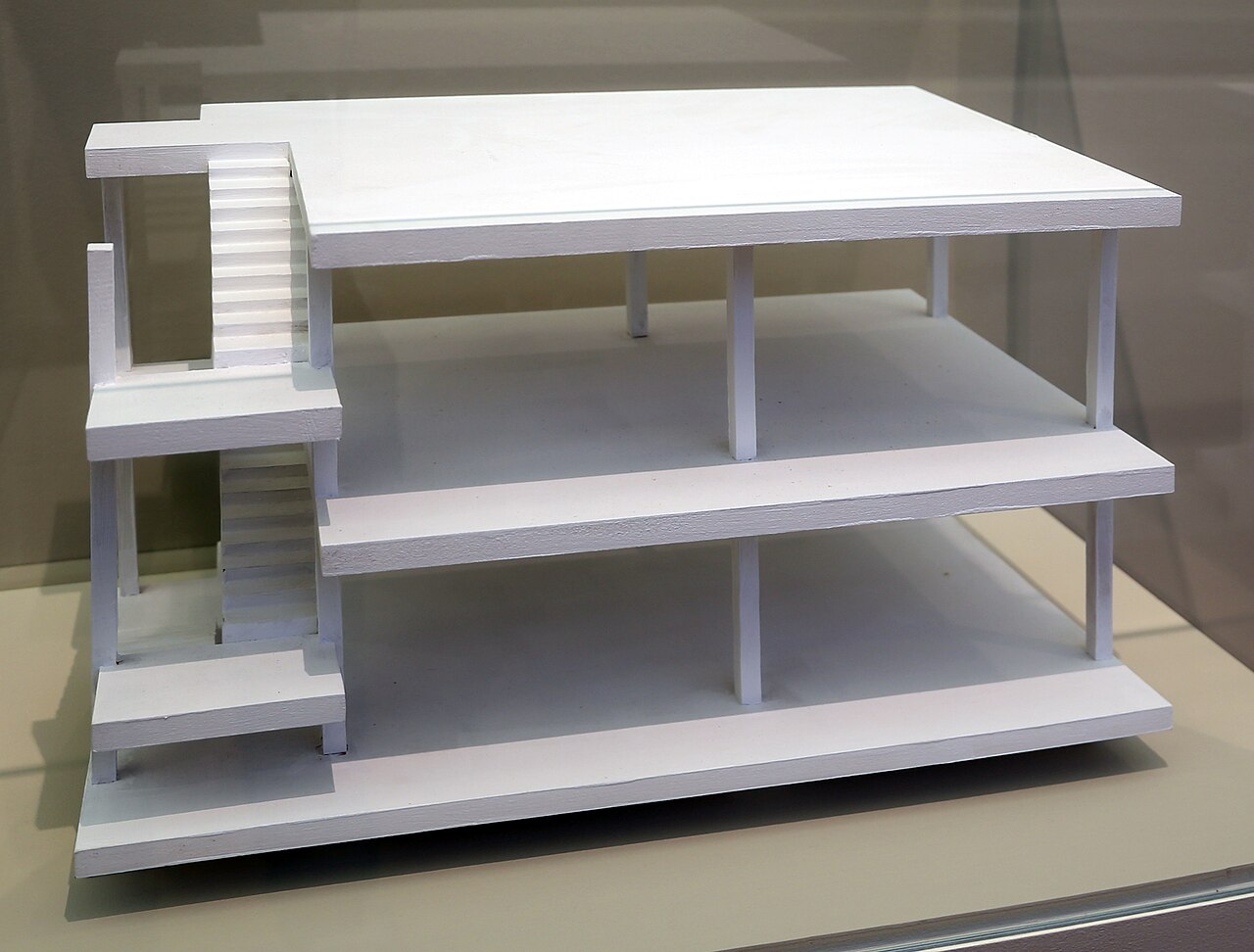
Toward an Architecture
Le Corbusier · 1923
 Artifact
Primary source
Notre-Dame du Haut
Le Corbusier · 1955
 Artifact
Primary source
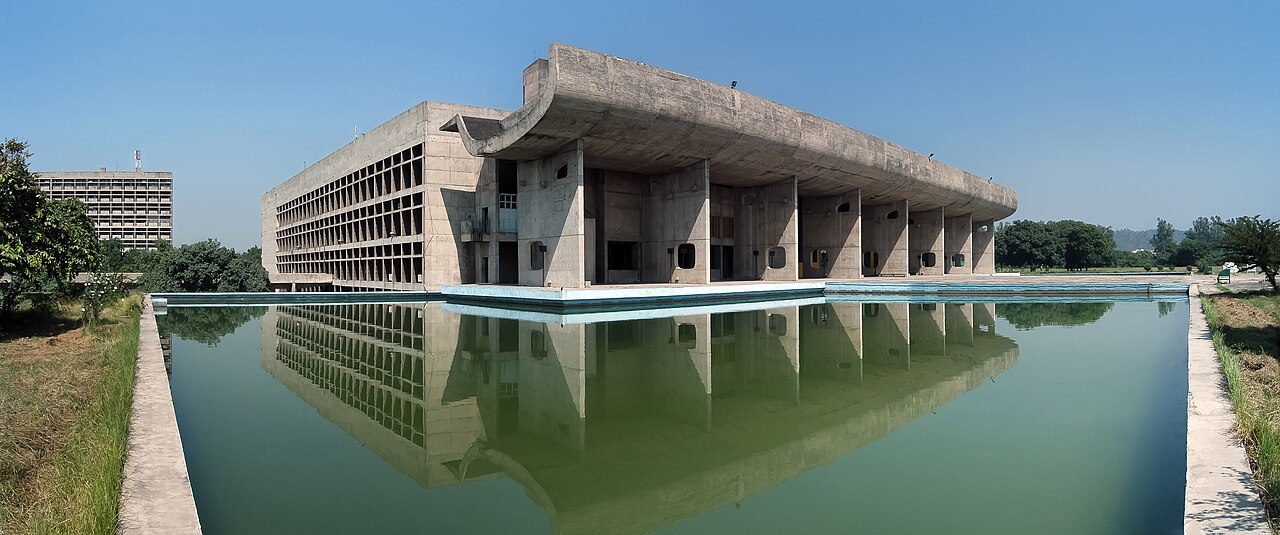
Chandigarh Capitol Complex
Le Corbusier · 1953
 Artifact
Primary source
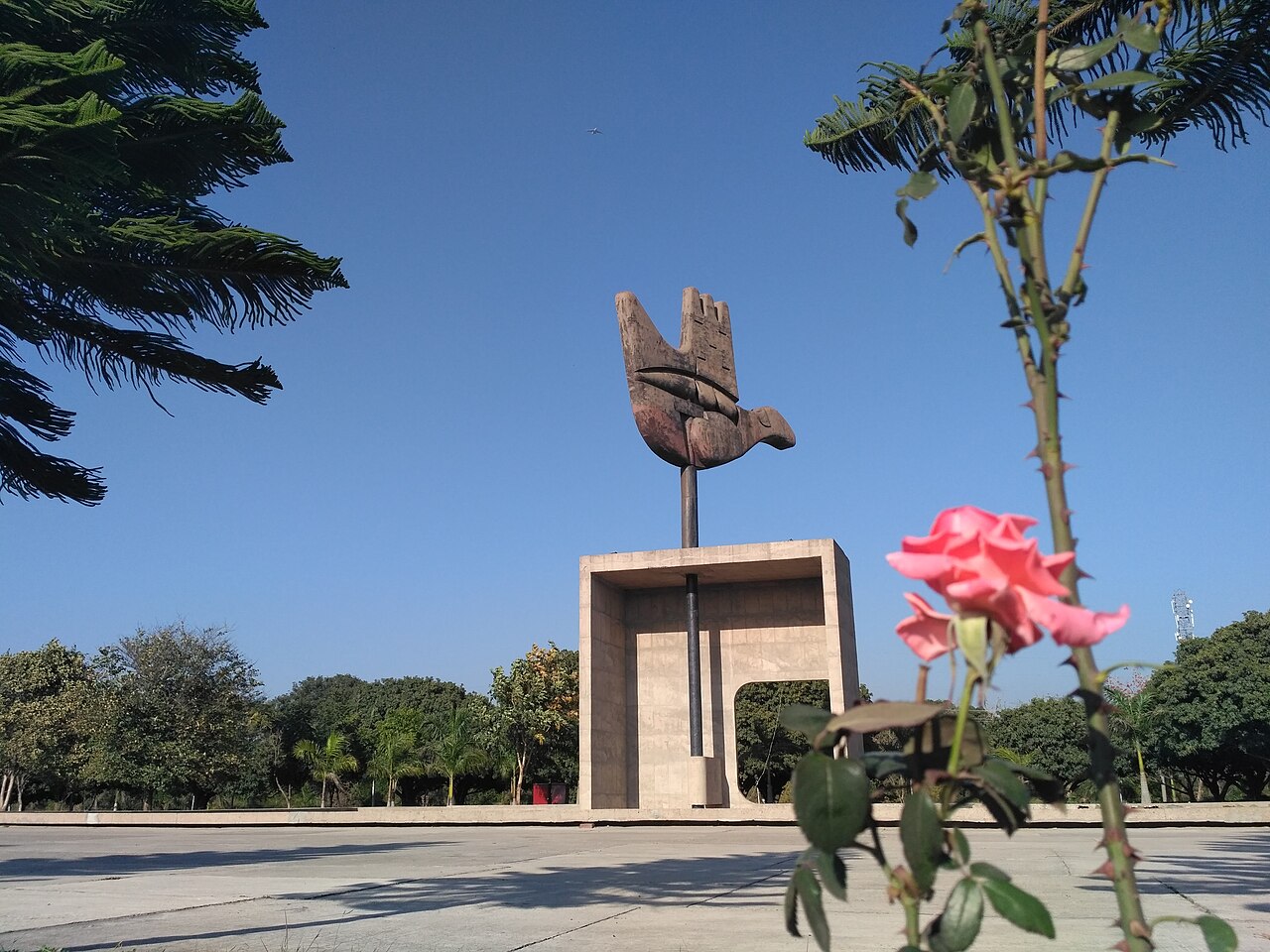
Chandigarh
Le Corbusier · 1953
Free account
Read every Le Corbusier source
Sign up free →
Ready when you are
Start chatting with Le Corbusier now.
20 messages free · No credit card · Available in 50+ languages.