


Primary sourceArtifact1403–1424
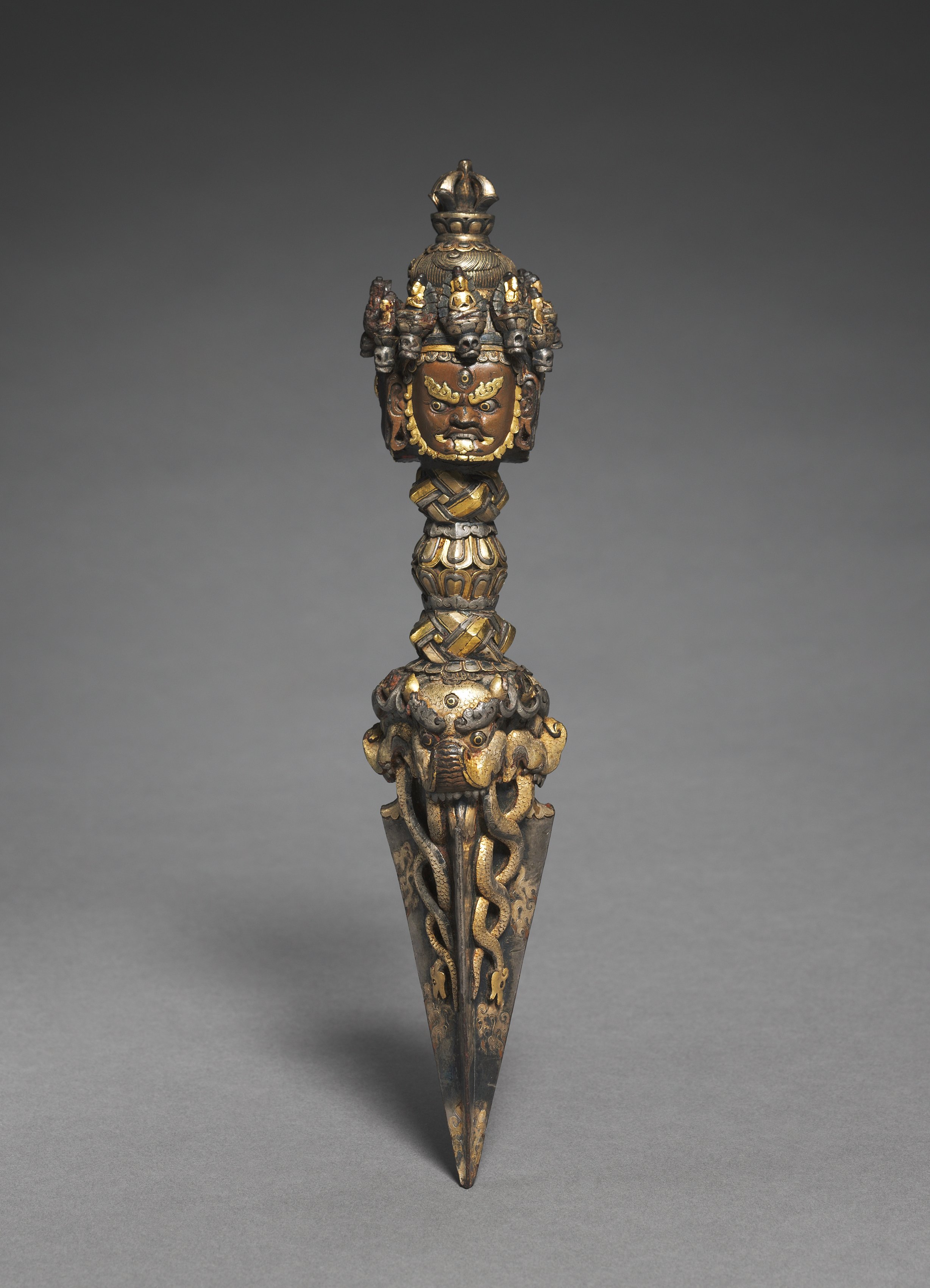
Phurbu Ritual Dagger
1403–1424
A three-bladed ritual dagger made in the imperial workshops during the Yongle Emperor's reign, reflecting his support of Tibetan Buddhist art.
Made in the imperial workshop during his reign, this dagger shows the Yongle Emperor's patronage of Tibetan Buddhist ritual art.
About this source
What it is
This gilded and silvered phurbu, a three-bladed ritual dagger used in Tibetan Buddhist tantric practice, was made during the Yongle period (1403–24) in the imperial workshop of the Ming dynasty. It is now held by the Cleveland Museum of Art.
Why it matters
The phurbu was used by Buddhist practitioners in rituals meant to transform negative substances into positive ones, topped with images of the deity Vajrakila. Its creation in the Chinese emperor's own workshop, with faces made of different metal alloys, shows how the Yongle Emperor sponsored and shaped Tibetan Buddhist ritual art as part of his religious and diplomatic policy.
Look closer
- What do the fierce faces and skull decoration suggest about the dagger's religious purpose?
- Why would an emperor's workshop produce objects for a foreign religious tradition?
- What does the fine craftsmanship tell us about the resources devoted to this religious diplomacy?
This artifact is part of the curated material that grounds the AI version of Yongle Emperor on Humy.ai — when students ask about related events, the AI can quote it and cite it.
More Yongle Emperor sources
Meet the AI Yongle Emperor →

Ready when you are
Start chatting with Yongle Emperor now.
20 messages free · No credit card · Available in 50+ languages.