


Secondary sourcePainting1780
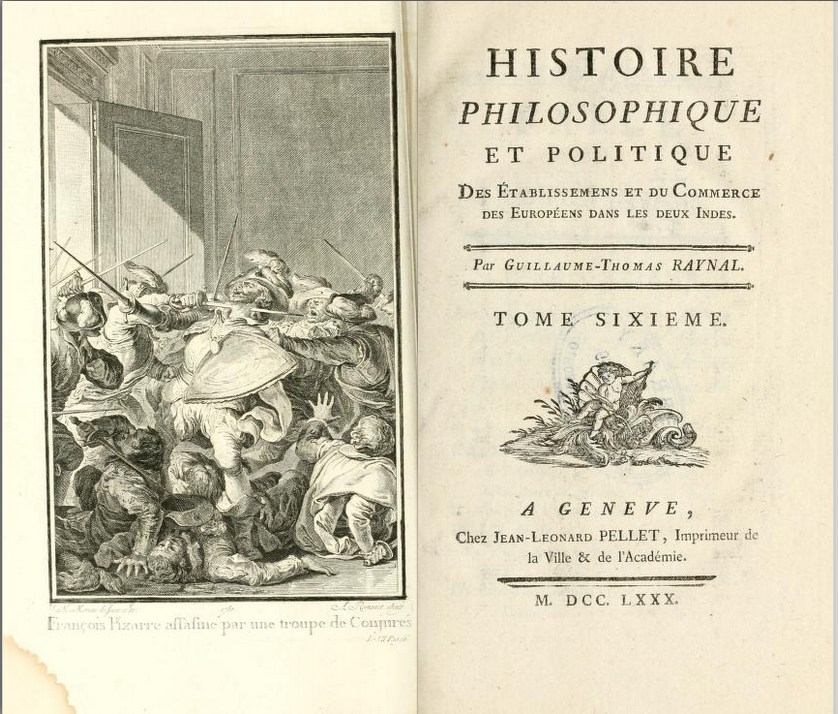
Pizarro assassinated by conspirators, frontispiece of Raynal's Histoire des deux Indes
Guillaume Thomas François Raynal · 1780
An 1780 frontispiece from Raynal's history of the European colonies in the Indies, showing the assassination of Pizarro by conspirators. It was made long after his death.
Shows how an 18th-century European history portrayed the violent death of Pizarro, the conquistador who conquered the Inca Empire.
About this source
What it is
This is an engraved frontispiece, with the title page facing it, from volume six of Guillaume-Thomas Raynal's Histoire philosophique et politique, also known as Histoire des deux Indes. It was printed in Geneva by J.-L. Pellet in 1780. The engraving is captioned 'François Pizarre assassiné par une troupe de conjurés' and shows conspirators attacking Pizarro in a room with a door, with bodies on the floor. The title page on the right reads 'Tome Sixième'.
Why it matters
Pizarro was killed in 1541 by conspirators. Raynal's book was a large 18th-century history of European expansion, and this frontispiece shows how a European writer of that time presented the conquistador's death to readers. The image was made about 240 years after the event.
Look closer
- Who are the attackers and who is being attacked, and how does the engraver show the violence?
- Why would a book on the history of European trade and empire open with a scene like this?
- What does the frontispiece leave out, such as the perspective of the Inca or the wider history of the conquest?
This painting is part of the curated material that grounds the AI version of Francisco Pizarro on Humy.ai — when students ask about related events, the AI can quote it and cite it.
More Francisco Pizarro sources
Meet the AI Francisco Pizarro →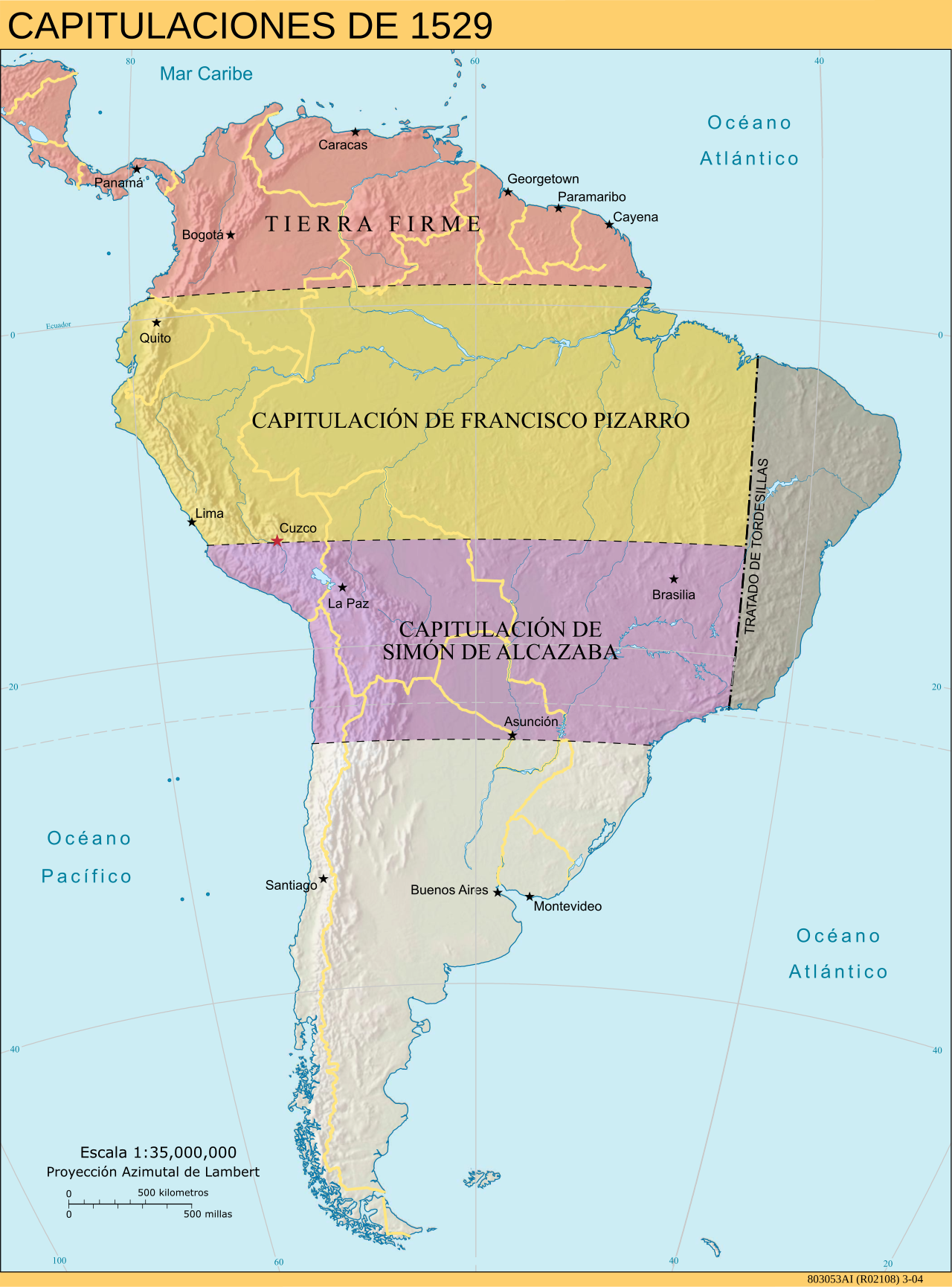 Document
Primary source
Capitulation of Toledo
Crown of Castile · 26 July 1529
 Painting
Secondary source
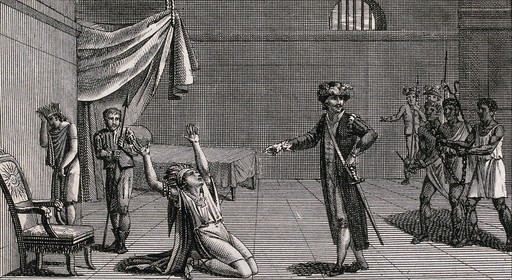
L'Ynca du Pérou aux pieds de Pizarre
A.C.F. Villerey after N. Vallain
 Painting
Secondary source
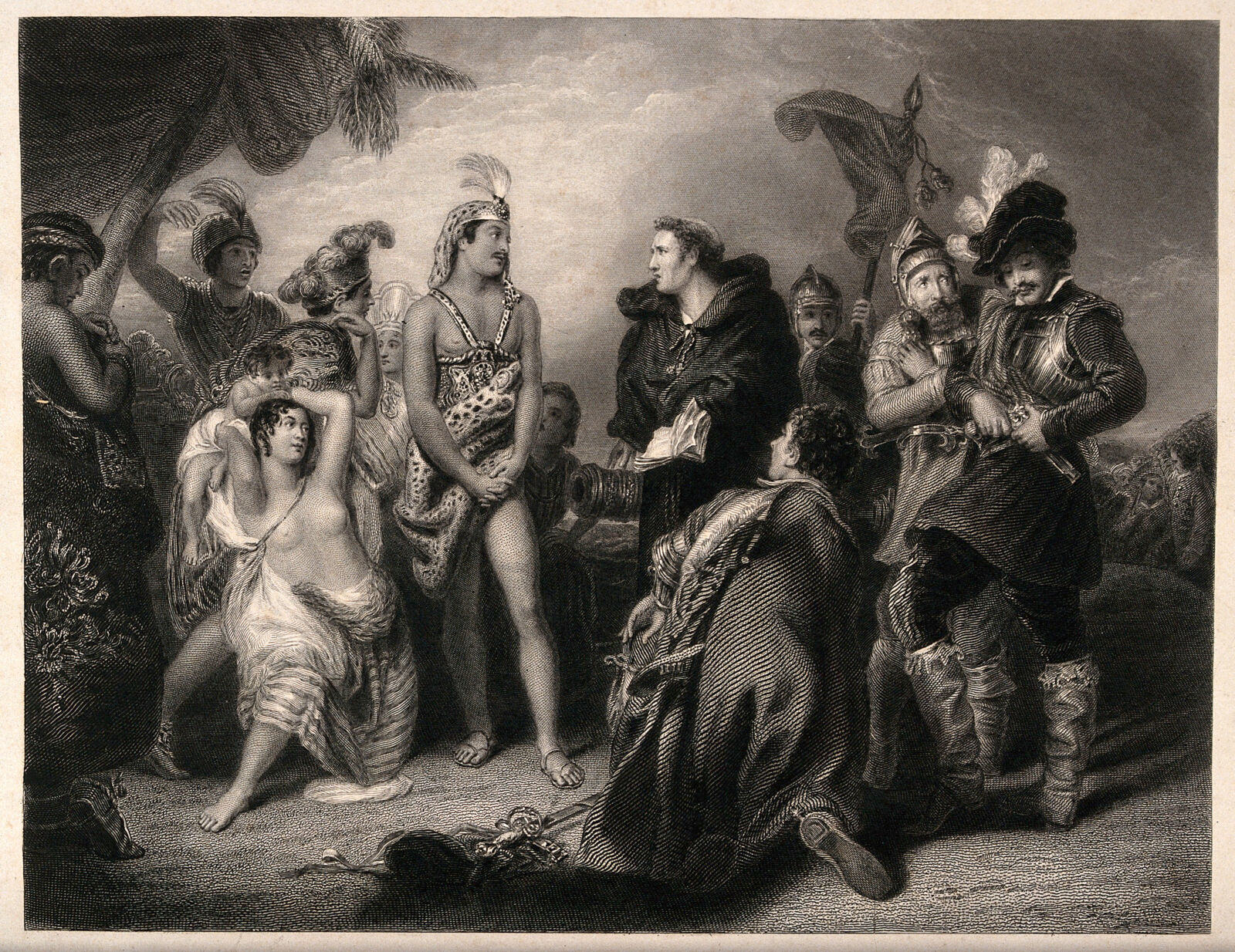
Valverde urging Atahualpa to convert
Henry Perronet Briggs (painting); engraved by W. Greatbach · 1830
 Book
Primary source
Verdadera relación de la conquista del Perú
Francisco de Jerez · 1534 (this edition 1891)
 Painting
Secondary source
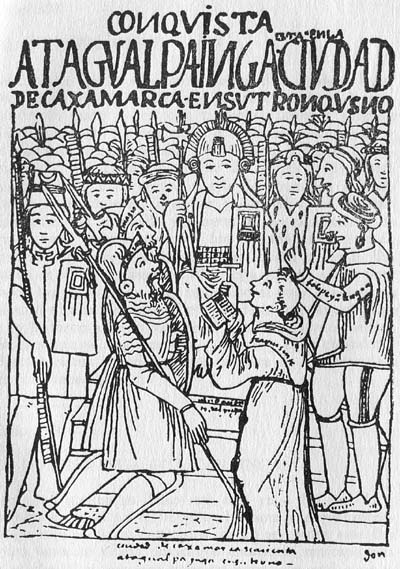
Atawallpa Pizarro tinkuy
Felipe Guaman Poma de Ayala · 1532 (depicted); drawing later
Ready when you are
Start chatting with Francisco Pizarro now.
20 messages free · No credit card · Available in 50+ languages.