


Secondary sourcePaintingcirca 1587-89
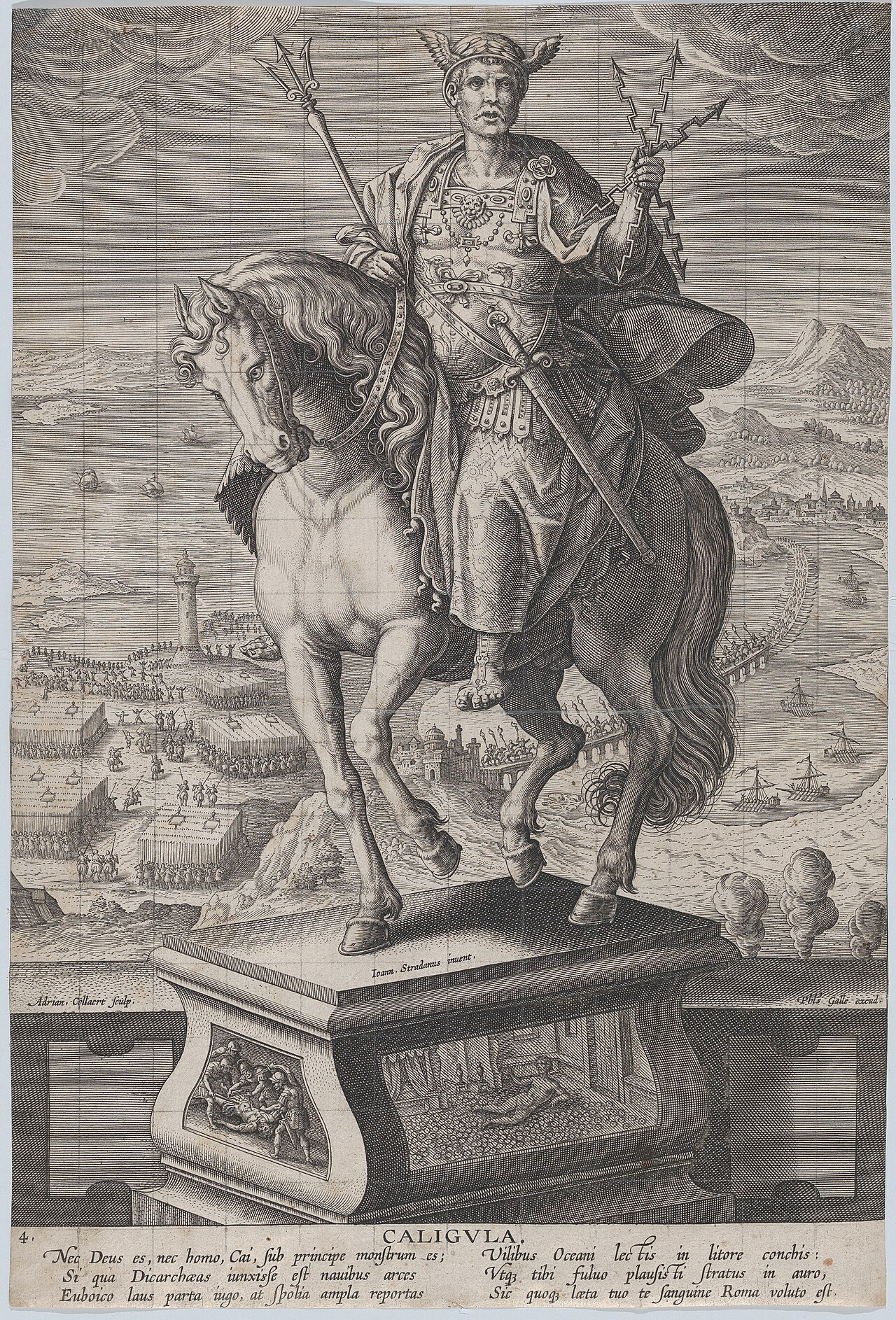
Plate 4: Equestrian Caligula
Adriaen Collaert · circa 1587-89
A print plate showing Caligula as an equestrian statue, with a harbor and military camps behind him. It is a later imagined depiction from a print series.
Shows Caligula imagined as an equestrian statue in a later print series, illustrating how his image was reshaped long after his reign.
About this source
What it is
This is an engraved print of an equestrian statue of Caligula on a pedestal. The emperor wears a winged helmet and armour and holds a double-headed staff and a sword as he rides a rearing horse. Behind him are a harbor, ships, a lighthouse and military camps. Latin verse and the caption CALIGULA appear below. The plate is attributed to Adriaen Collaert, Philip Galle and Stradanus and dates to around 1587 to 1589. It is a later imagined depiction, not an image made from life.
Why it matters
Late sixteenth-century printmakers in the Netherlands and Italy produced series of Roman emperors on horseback. Such prints show how later artists imagined Caligula as a warrior-ruler, linking him to statues and military power. The plate reveals the interests of its makers and their audience more than the facts of the emperor's life.
Look closer
- Which details, such as the helmet, weapons and harbor, make the emperor look powerful, and why?
- Who were Collaert, Galle and Stradanus, and what might their series have been meant to teach?
- What does the Latin verse say, and who would have been able to read it?
This painting is part of the curated material that grounds the AI version of Caligula on Humy.ai — when students ask about related events, the AI can quote it and cite it.
More Caligula sources
Browse all 88 →
Ready when you are
Start chatting with Caligula now.
20 messages free · No credit card · Available in 50+ languages.