


Primary sourceArtifactc. 1702-1714
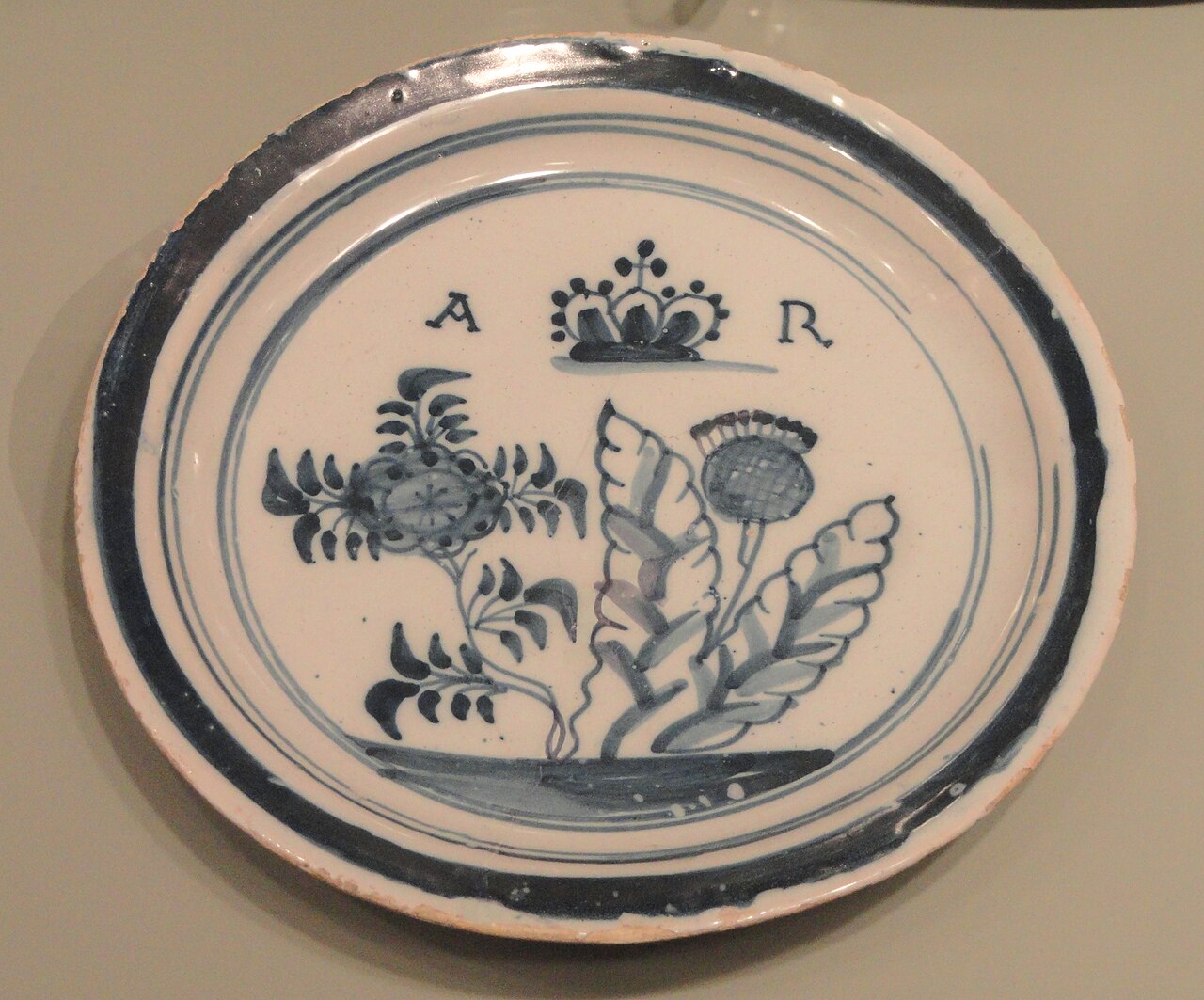
Plate Commemorating Queen Anne
c. 1702-1714
A blue and white tin-glazed earthenware plate made in Anne's reign to commemorate her, now shown at the Gardiner Museum in Toronto.
Shows how Anne was commemorated on everyday tableware made during her reign, reaching people beyond the court.
About this source
What it is
This is a blue and white tin-glazed earthenware plate on a grey surface, photographed at the Gardiner Museum in Toronto, Ontario, Canada. The centre shows the letters A and R with a crown above, flanking a pair of stylised flowering plants and a leafy plant, inside a double circular border with a dark blue rim. The plate is dated c. 1702-1714, during Anne's reign. The photograph was taken by Daderot in 2012.
Why it matters
Objects like this plate carried royal emblems into ordinary households, so people could show loyalty to the crown in their daily lives. The letters A and R stand for Anne Regina, the Latin form of her royal name.
Look closer
- What do the crown and the letters A and R show about how the queen was honoured on everyday objects?
- Why might a household want a plate that celebrated the monarch?
- What does the plate leave out about the people who made it and the lives of those who ate from it?
This artifact is part of the curated material that grounds the AI version of Anne, Queen of Great Britain on Humy.ai — when students ask about related events, the AI can quote it and cite it.
More Anne, Queen of Great Britain sources
Browse all 95 →
Ready when you are
Start chatting with Anne, Queen of Great Britain now.
20 messages free · No credit card · Available in 50+ languages.