


Primary sourceDocument1619
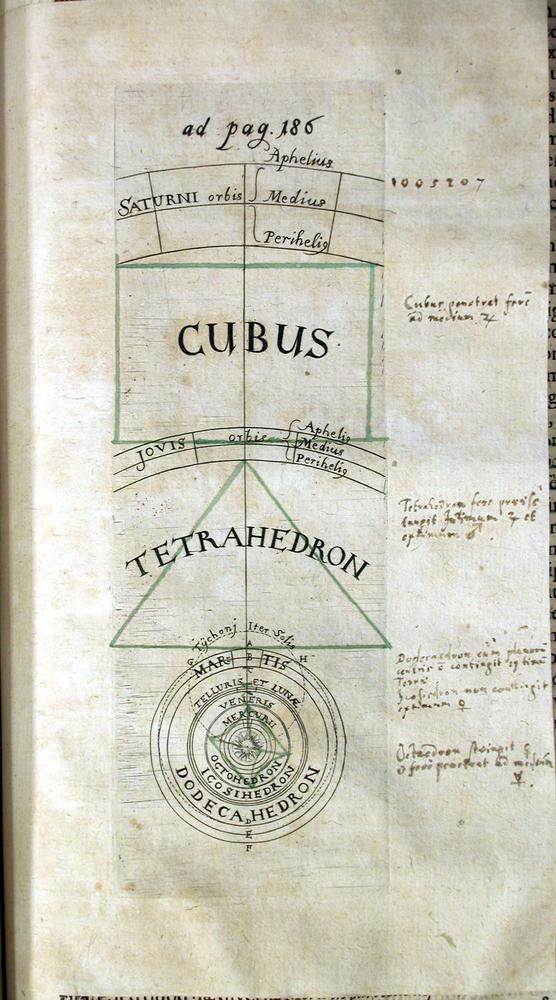
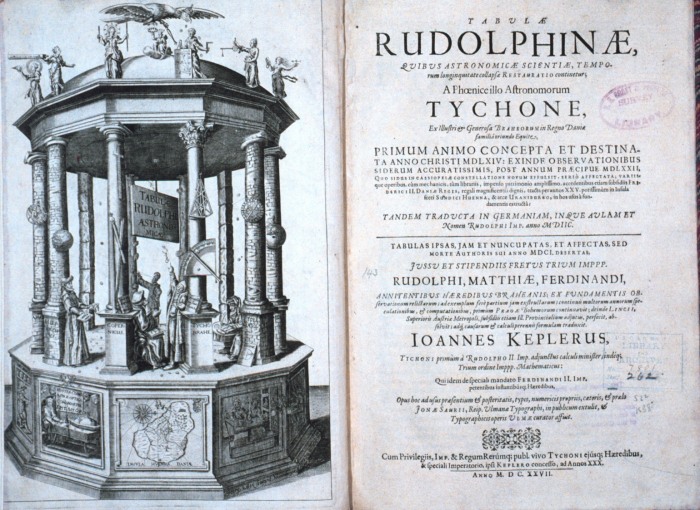
Plate of Planetary Geometry from Kepler's 1619 Work
Johannes Kepler · 1619
A diagram likely from Kepler's book Harmonices Mundi, showing his geometric model of the planetary orbits.
This diagram illustrates Kepler's geometric theory of planetary orbits from his own work.
About this source
What it is
This is a plate, likely from Johannes Kepler's 1619 book Harmonices Mundi (The Harmony of the World), showing concentric circles representing the orbits of the planets, arranged around geometric solids such as a cube, tetrahedron and dodecahedron.
Why it matters
Kepler believed the spacing of the planets followed geometric and harmonic principles, and diagrams like this show how he tried to link mathematics, geometry and astronomy into a single system. This reflects his lifelong search for an underlying order in the cosmos.
Look closer
- Why might Kepler have used geometric solids to explain the arrangement of the planets?
- What do the handwritten annotations in the margins tell you about how this copy was used?
- How does this diagram differ from how we represent the solar system today?
This document is part of the curated material that grounds the AI version of Johannes Kepler on Humy.ai — when students ask about related events, the AI can quote it and cite it.
More Johannes Kepler sources
Meet the AI Johannes Kepler →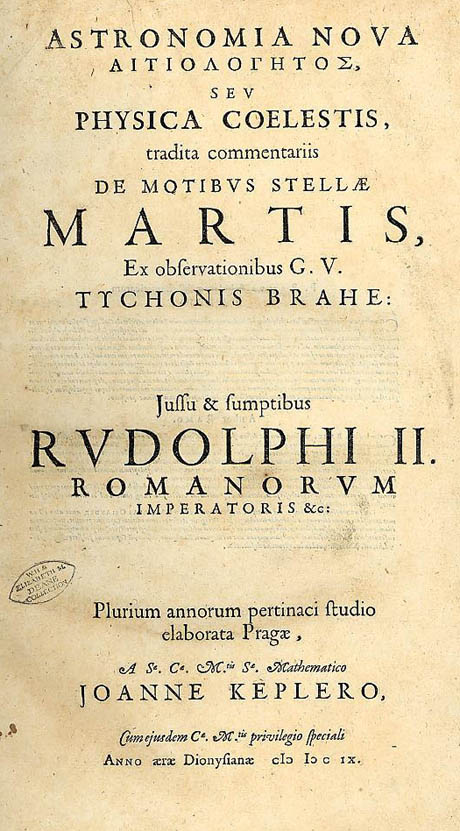 Book
Secondary source
Astronomia Nova
Johannes Kepler · 1609
 Book
Primary source
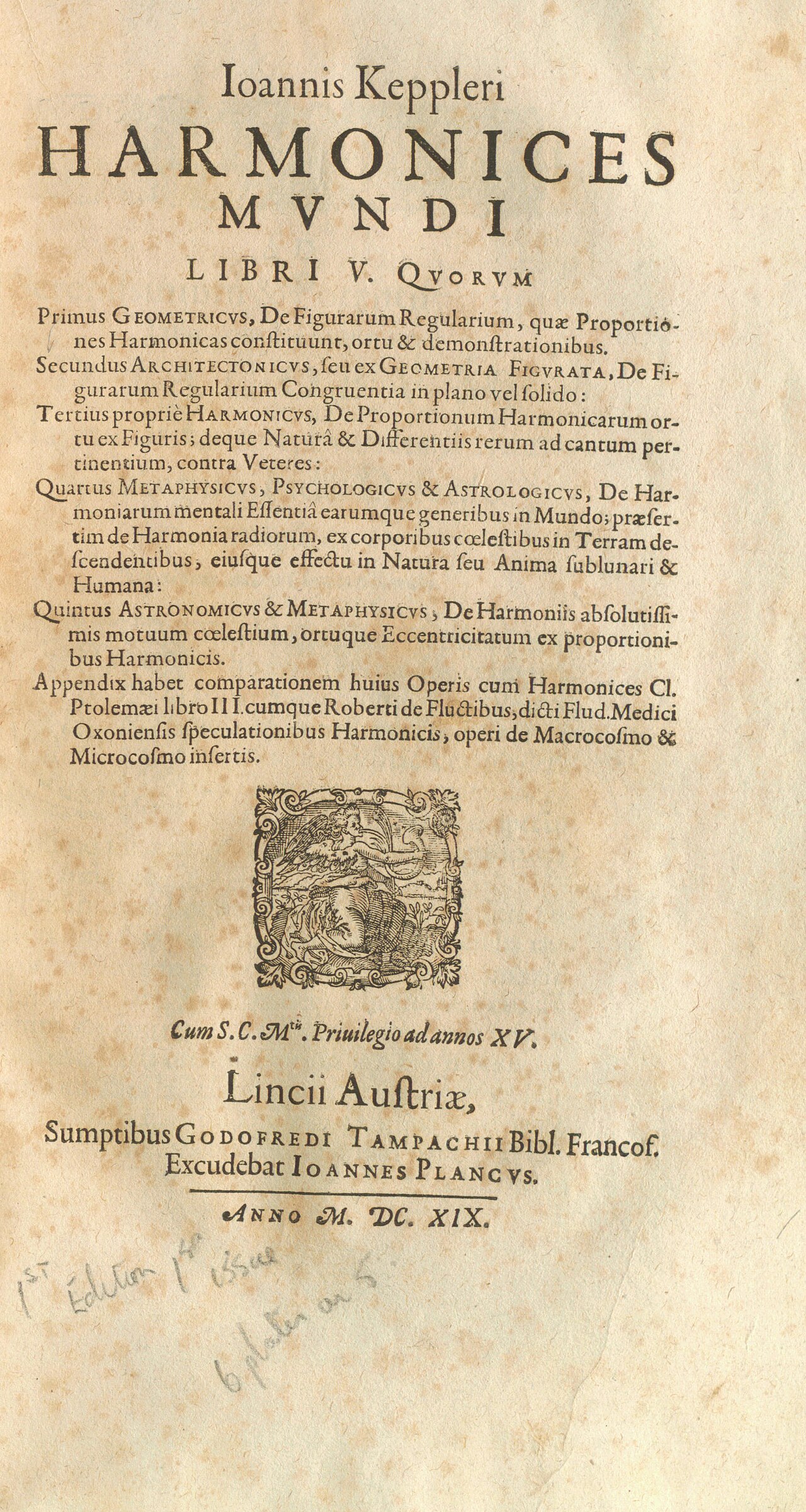
Harmonices Mundi
Johannes Kepler · 1619
 Book
Secondary source
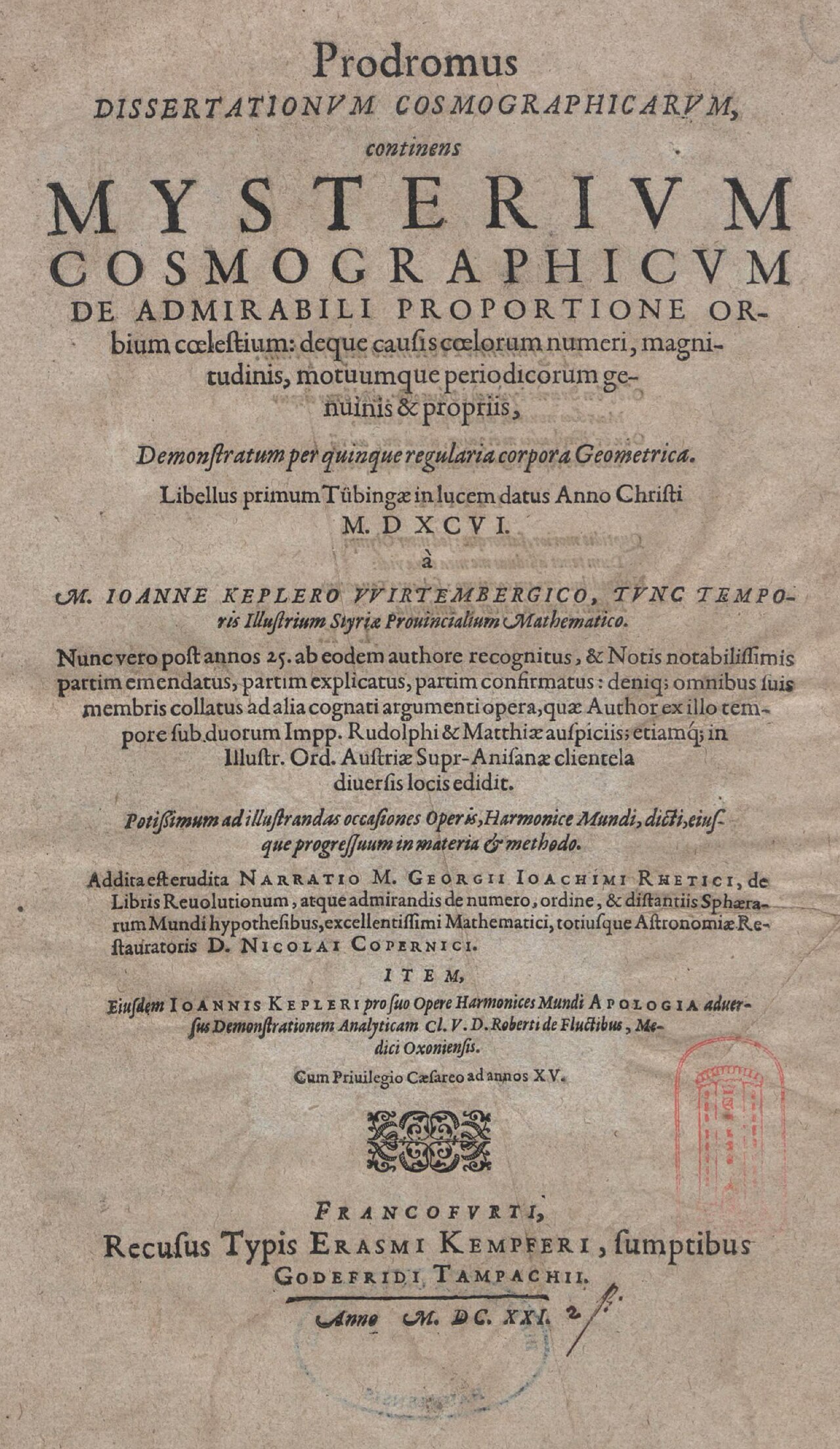
Mysterium Cosmographicum
Johannes Kepler · 1596 (2nd edition 1621)
Secondary source
The Martyrs of Science: Galileo, Tycho Brahe and Kepler
David Brewster
 Book
Secondary source
Rudolphine Tables
Johannes Kepler · 1627
Ready when you are
Start chatting with Johannes Kepler now.
20 messages free · No credit card · Available in 50+ languages.