


Primary sourceArtifact1707–1714
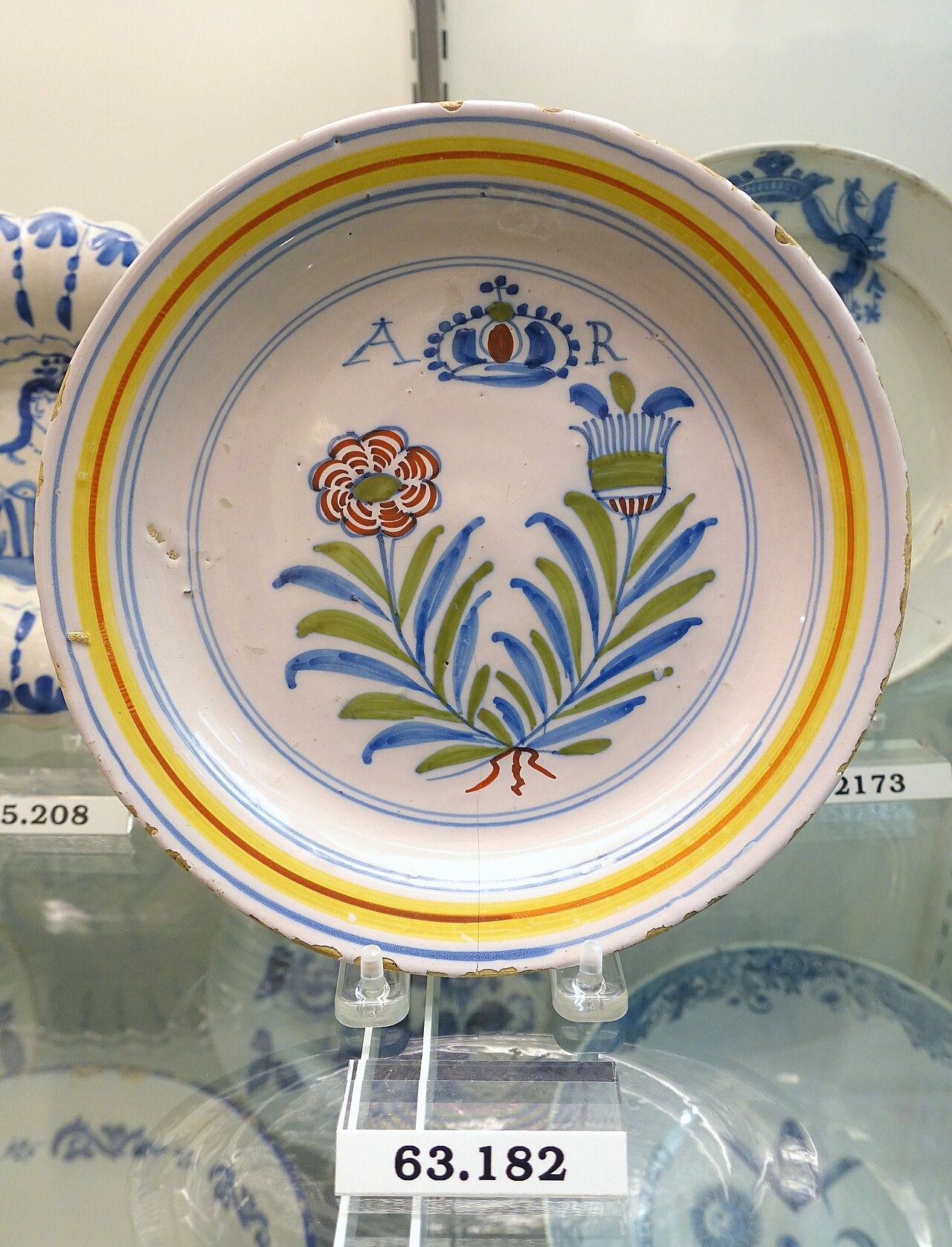
Plate with Queen Anne's Initials above Rose and Thistle
1707–1714
A tin-glazed earthenware plate made between 1707 and 1714, decorated with Queen Anne's initials above a rose and thistle marking the 1707 union.
This plate's rose-and-thistle design marks the 1707 union of England and Scotland achieved under Anne's reign.
About this source
What it is
This is a tin-glazed earthenware plate made in London between 1707 and 1714, decorated with a crown, the letters A and R for Anna Regina, and a rose and thistle design. It is held at the Flynt Center of Early New England Life in Historic Deerfield, Massachusetts.
Why it matters
The rose represents England and the thistle represents Scotland, symbols chosen to mark the 1707 Act of Union that joined the two kingdoms under Anne. This everyday object shows how political events were celebrated and spread into households far from London, even across the Atlantic.
Look closer
- Why might rose and thistle symbols be chosen together on an object like this?
- What does it suggest that this plate ended up in colonial New England?
- What does this plate tell us about how political unions were marketed to ordinary people?
This artifact is part of the curated material that grounds the AI version of Anne, Queen of Great Britain on Humy.ai — when students ask about related events, the AI can quote it and cite it.
More Anne, Queen of Great Britain sources
Browse all 95 →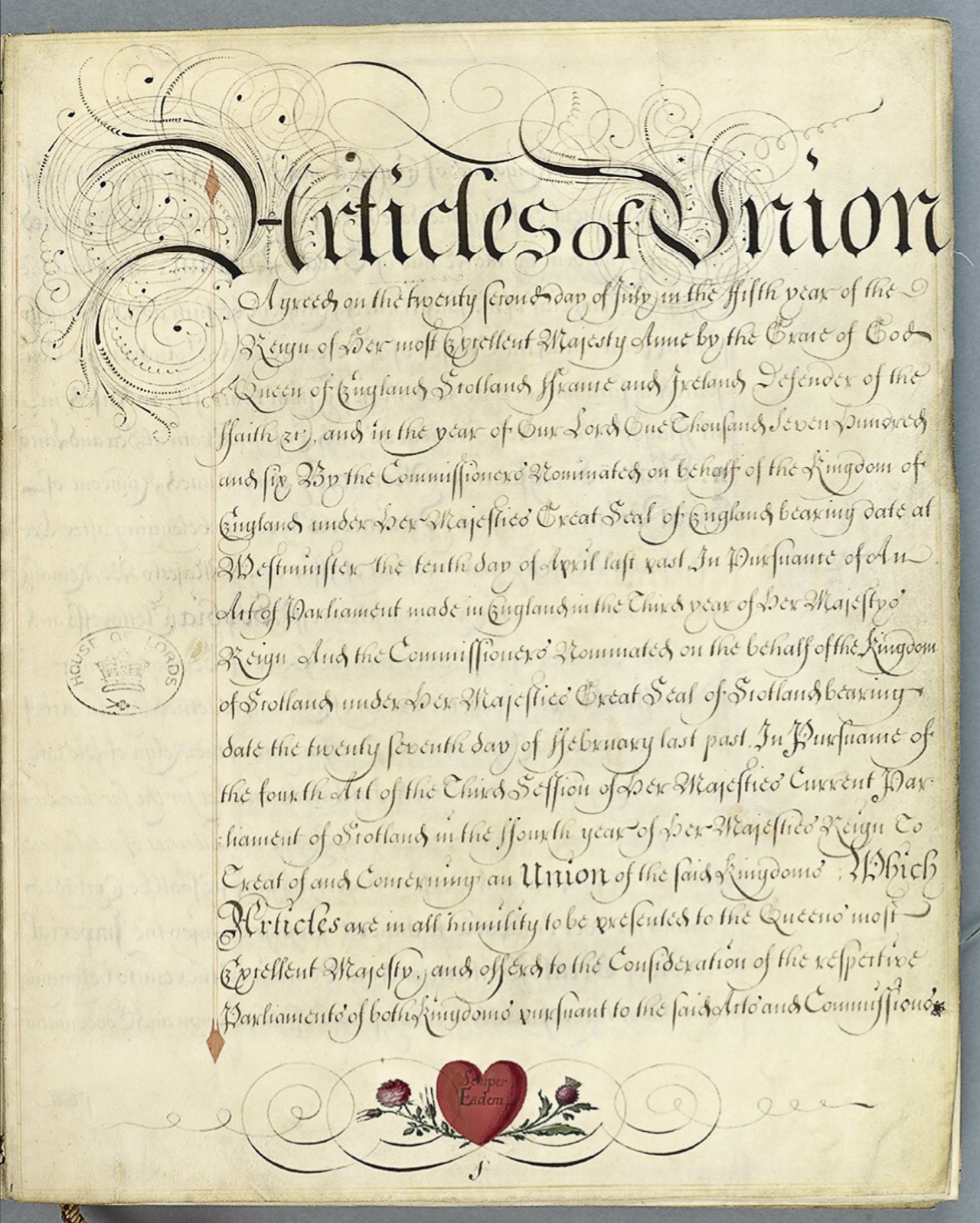
Ready when you are
Start chatting with Anne, Queen of Great Britain now.
20 messages free · No credit card · Available in 50+ languages.