


Primary sourcePhotograph1900
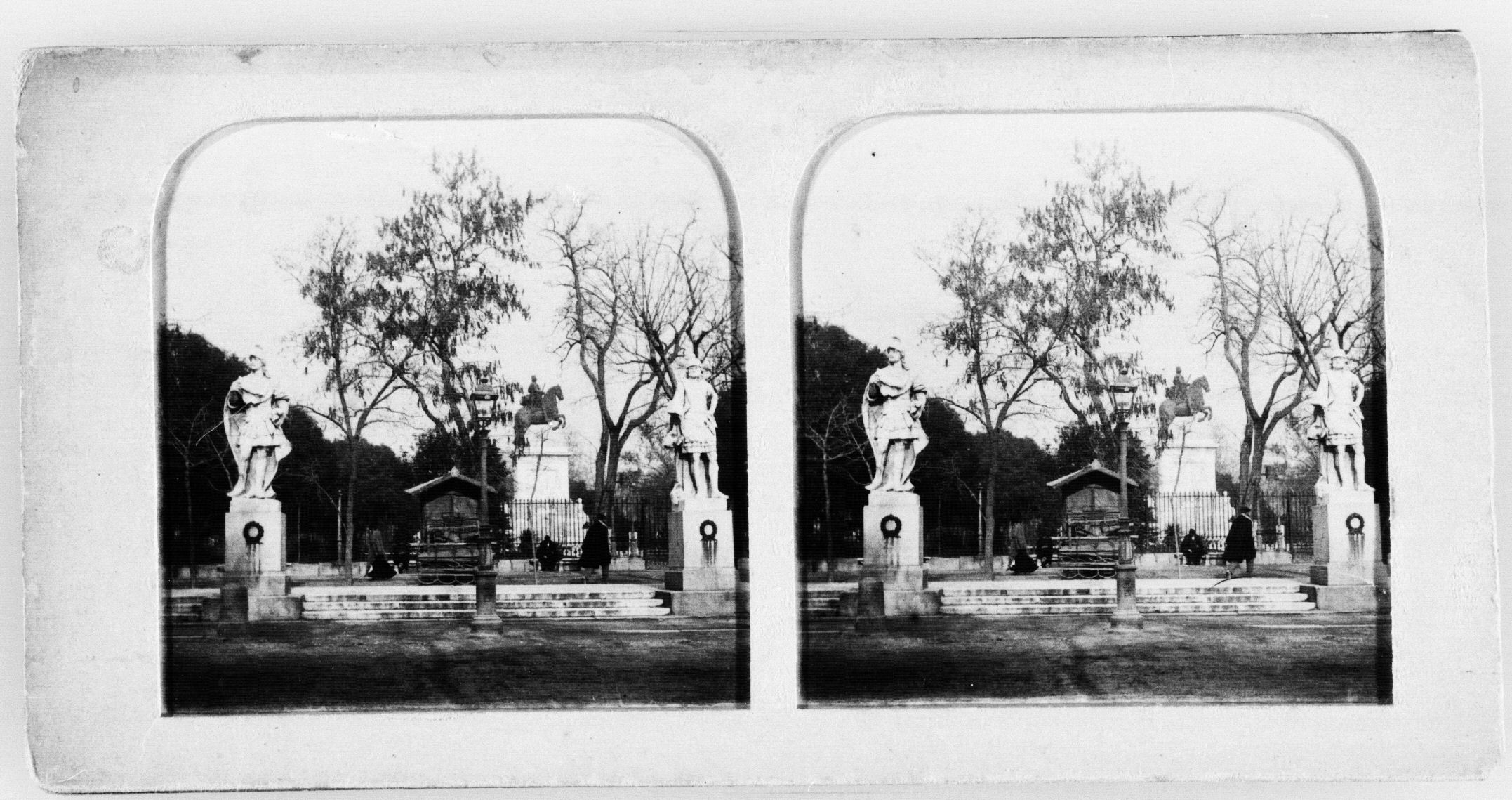
Plaza de Oriente with equestrian statue of Philip IV, photograph 1900
1900
A stereoscopic photograph from 1900 showing the equestrian monument to Philip IV in Madrid's Plaza de Oriente.
This 1900 photograph shows the equestrian monument to Philip IV as Madrid displayed it, showing how he was remembered later.
About this source
What it is
This is a black-and-white stereoscopic photograph from 1900, held by the Digital Library of Madrid. It shows the Plaza de Oriente in Madrid, with an equestrian statue of a rider on a horse atop a tall pedestal. Two white marble standing figures, a lamp post, trees, iron railings, a small kiosk and people walking are also visible.
Why it matters
The photograph records how a monument to Philip IV looked in 1900, roughly two centuries after his death. Later generations chose to honor him with public statues in the capital, so the image shows how a seventeenth-century king was remembered in a later era. It also shows the city life around the monument, which the statue itself does not capture.
Look closer
- What does the setting around the statue tell you about how people used this public space in 1900?
- Why might a city in 1900 choose to keep a monument to an earlier king?
- What parts of the monument or the plaza are hard to see in this image?
This photograph is part of the curated material that grounds the AI version of Philip IV of Spain on Humy.ai — when students ask about related events, the AI can quote it and cite it.
More Philip IV of Spain sources
Browse all 98 →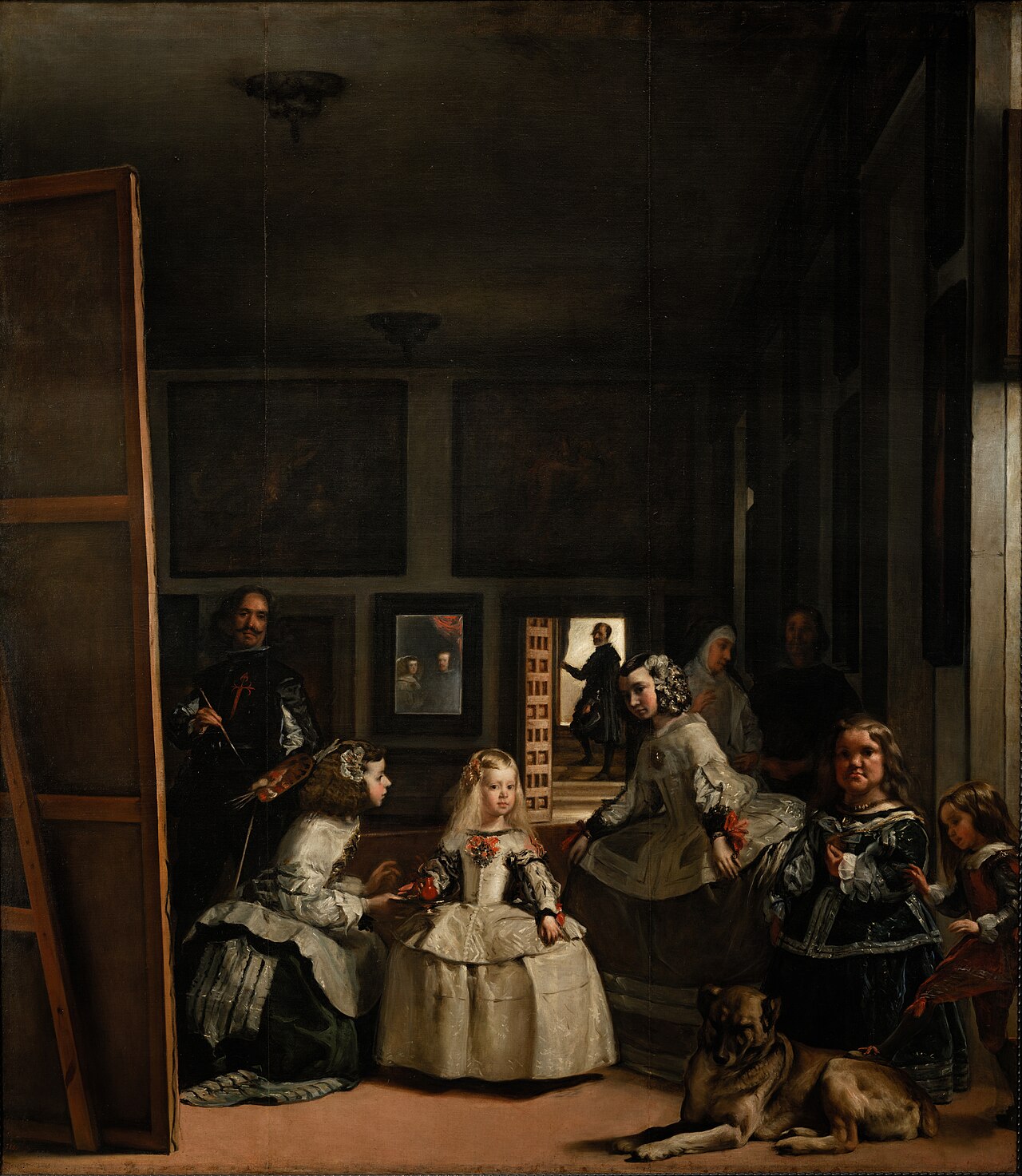 Painting
Primary source
Las Meninas
Diego Velázquez · 1656
 Painting
Primary source
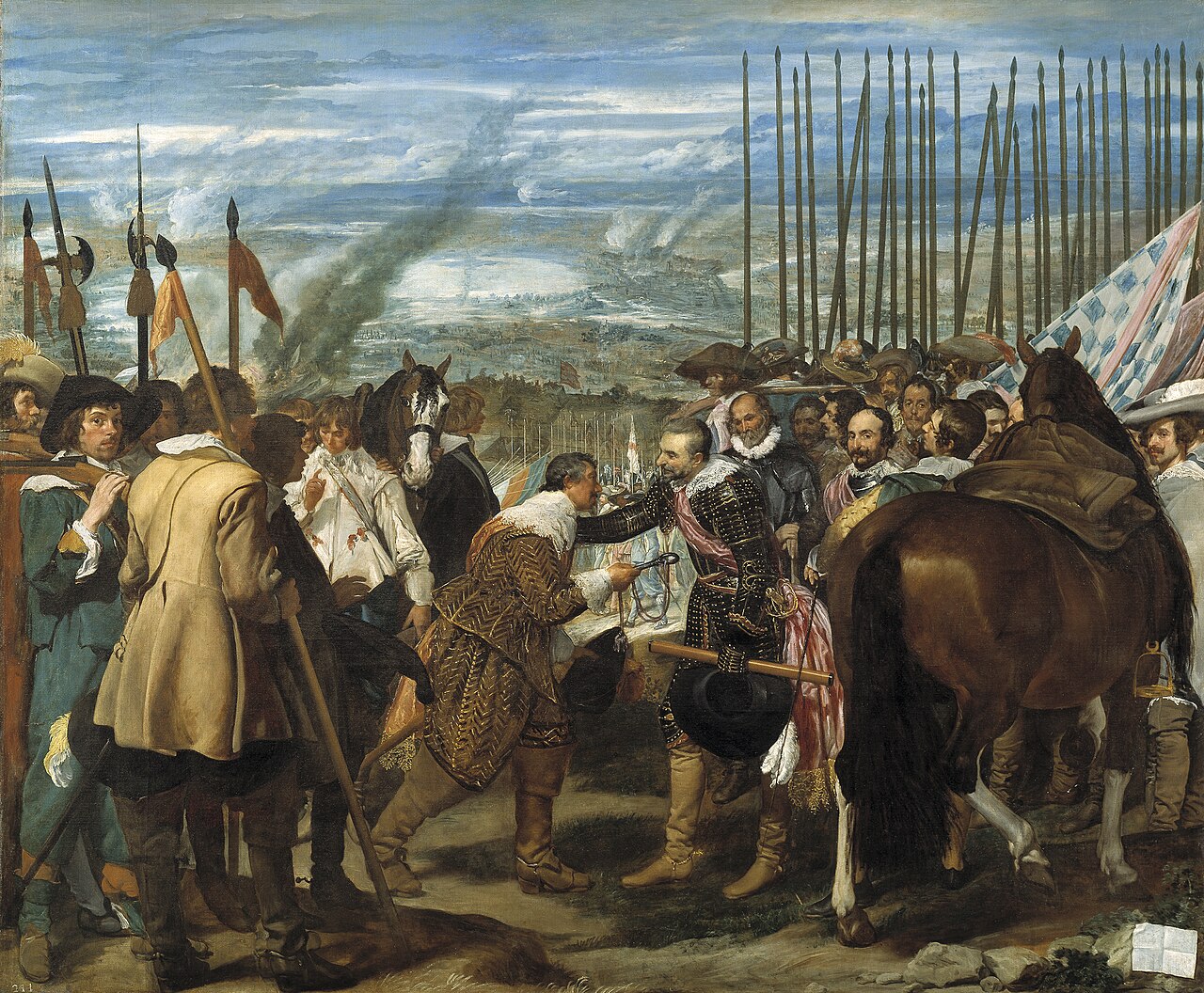
The Surrender of Breda
Diego Velázquez · 1634–1635
 Painting
Primary source
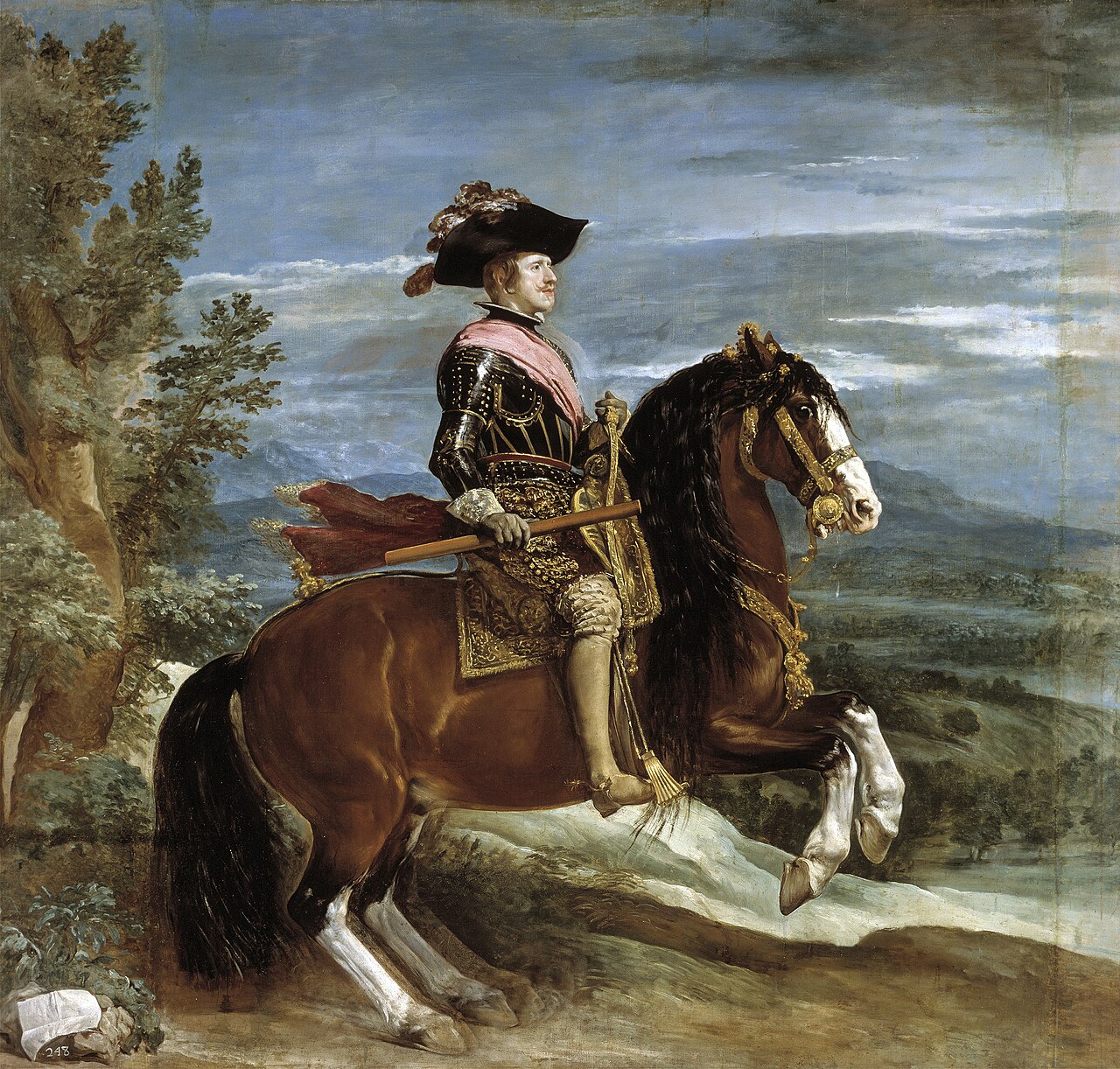
Equestrian Portrait of Philip IV
Diego Velázquez · 1634-1636
 Painting
Primary source
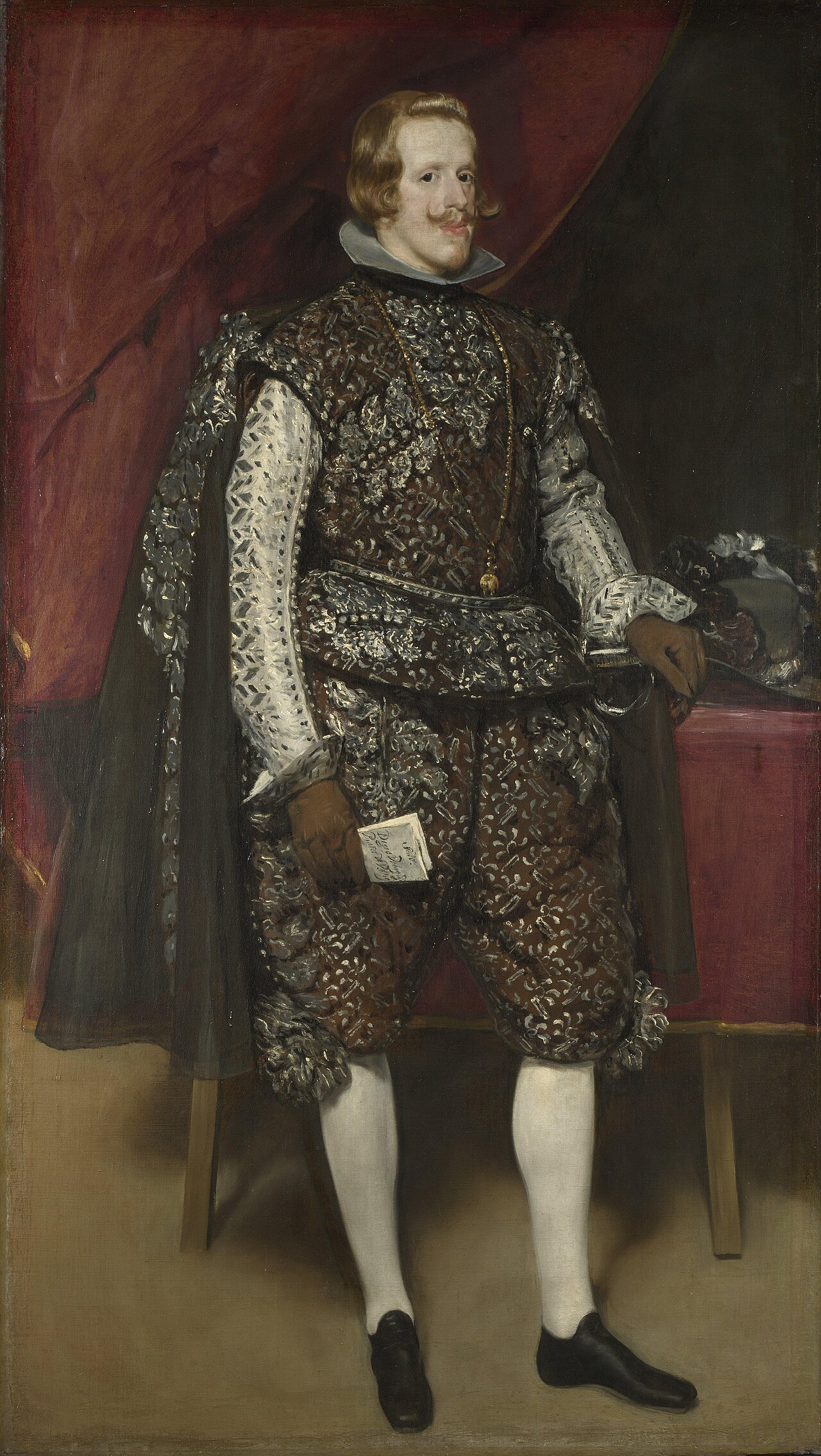
Philip IV in Brown and Silver
Diego Velázquez · c. 1631–1635
Free account
Read every Philip IV of Spain source
Sign up free →
Ready when you are
Start chatting with Philip IV of Spain now.
20 messages free · No credit card · Available in 50+ languages.