


Secondary sourceArtifact
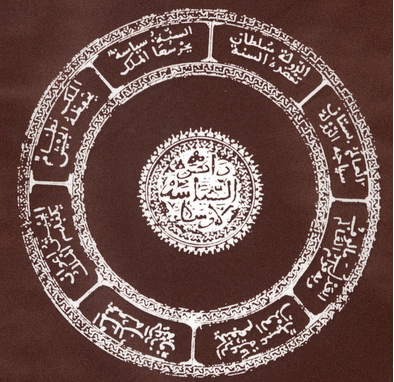
Political circle diagram from a Muqaddimah manuscript
Ibn Khaldun
A cropped detail of a circular diagram from a manuscript copy of the Muqaddimah, shown in a Yale library exhibition on Ibn Khaldun.
Shows a diagram of political ideas from the Muqaddimah, the work through which Ibn Khaldun is best known.
About this source
What it is
This is a cropped detail from a manuscript copy of the Muqaddimah. It shows a circular political diagram made of white Arabic calligraphy on a brown background. An outer ring of text is divided into segments, and a small ornate medallion sits at the centre. The image was shown in a Yale library exhibition. It is a detail of a copy, not the original page as a whole.
Why it matters
The Muqaddimah is Ibn Khaldun's introduction to his history of the world. In it he explains how states rise and fall. A diagram like this shows how his political ideas were laid out and copied for readers in the centuries after he wrote. Later copyists and exhibition curators helped keep his ideas known.
Look closer
- How does the diagram organise its ideas, and what is in the outer ring compared with the centre?
- Why might a copyist have chosen to draw a diagram rather than write only in prose?
- What does a cropped detail leave out of the full manuscript page?
This artifact is part of the curated material that grounds the AI version of Ibn Khaldun on Humy.ai — when students ask about related events, the AI can quote it and cite it.
More Ibn Khaldun sources
Browse all 56 →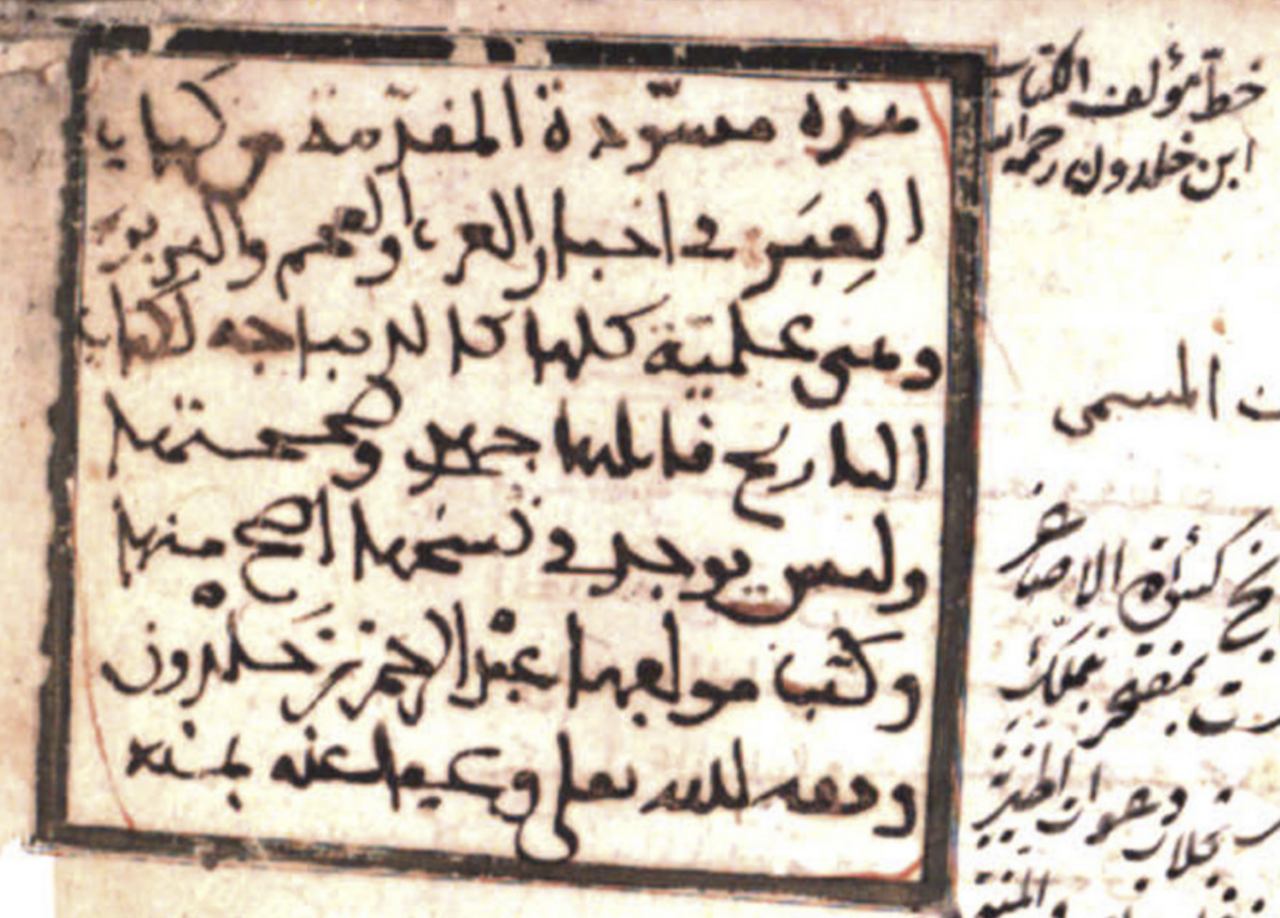 Book
Primary source
Muqaddimah Manuscript, MS Atıf Efendi 1936
Ibn Khaldūn
 Document
Secondary source
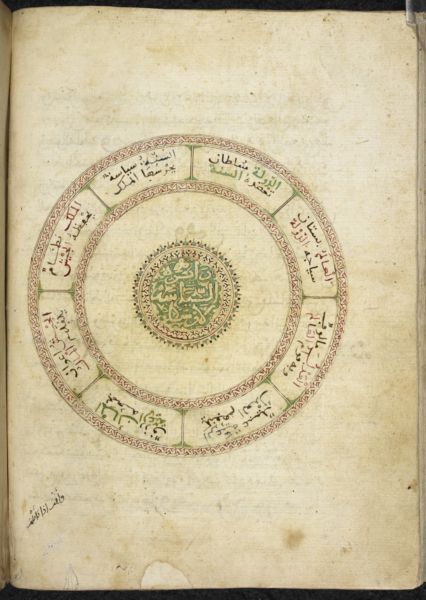
Circle of Policy Diagram in the Muqaddimah
 Artifact
Secondary source
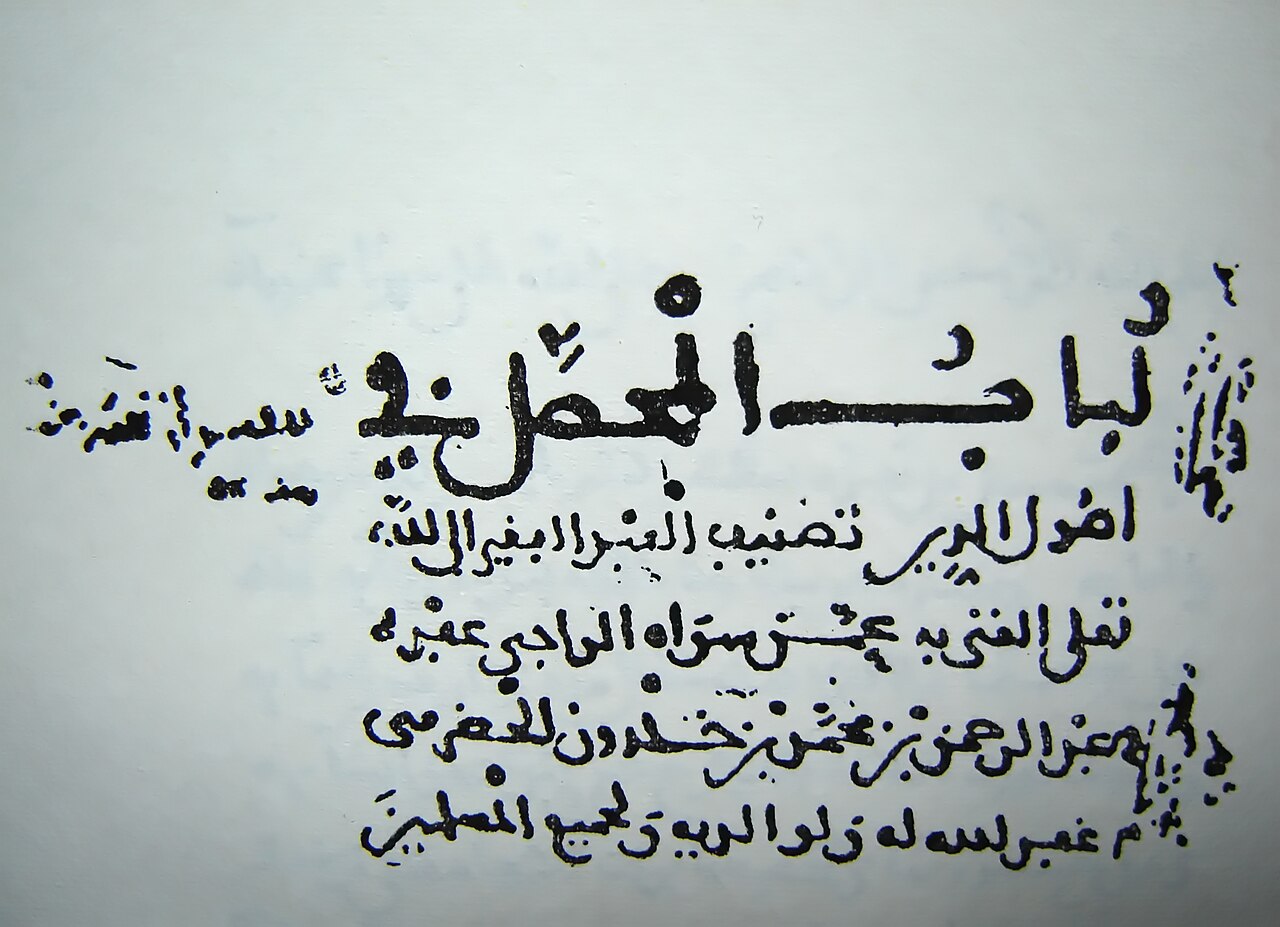
Lubab al-Muhassal manuscript page
Ibn Khaldun
 Artifact
Secondary source
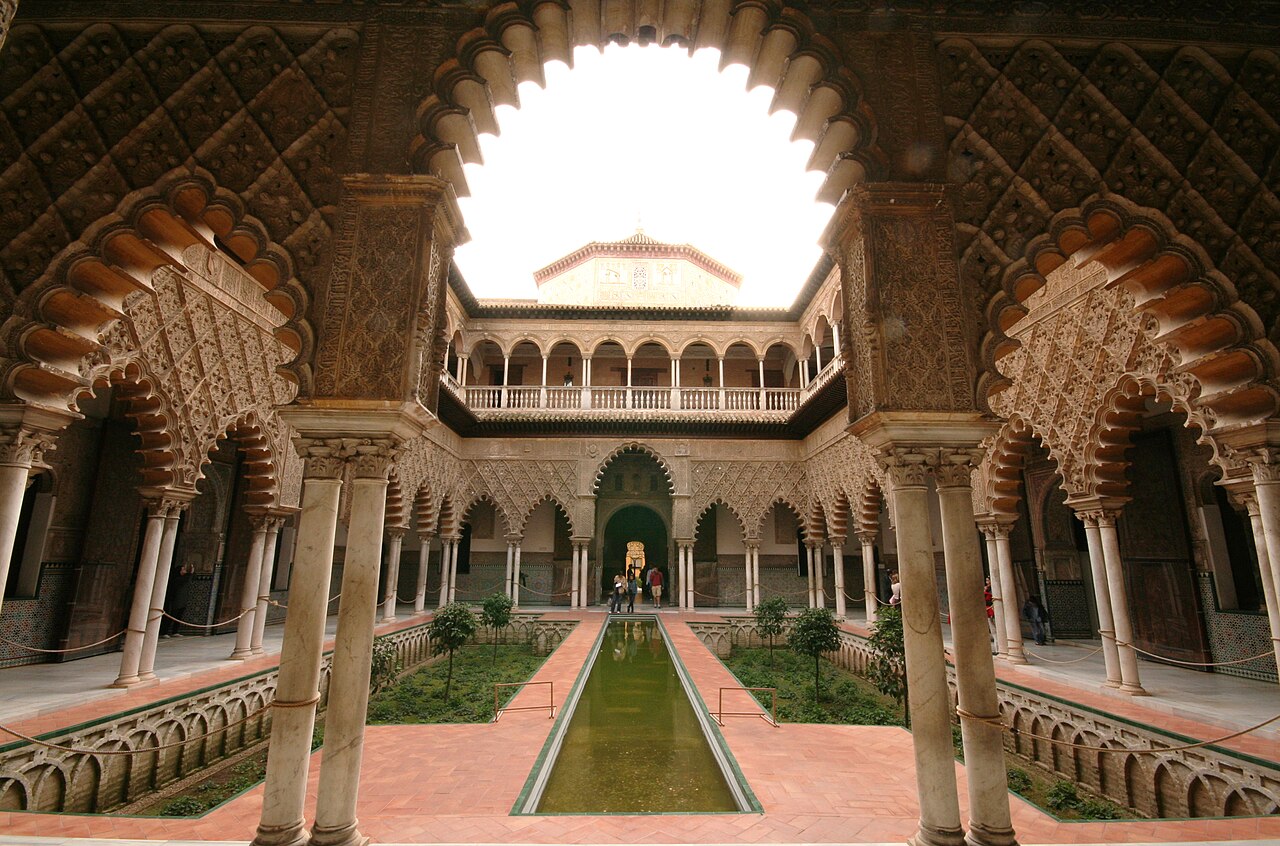
Royal Alcázar of Seville
begun 1364
Free account
Read every Ibn Khaldun source
Sign up free →
Ready when you are
Start chatting with Ibn Khaldun now.
20 messages free · No credit card · Available in 50+ languages.