


Primary sourcePainting
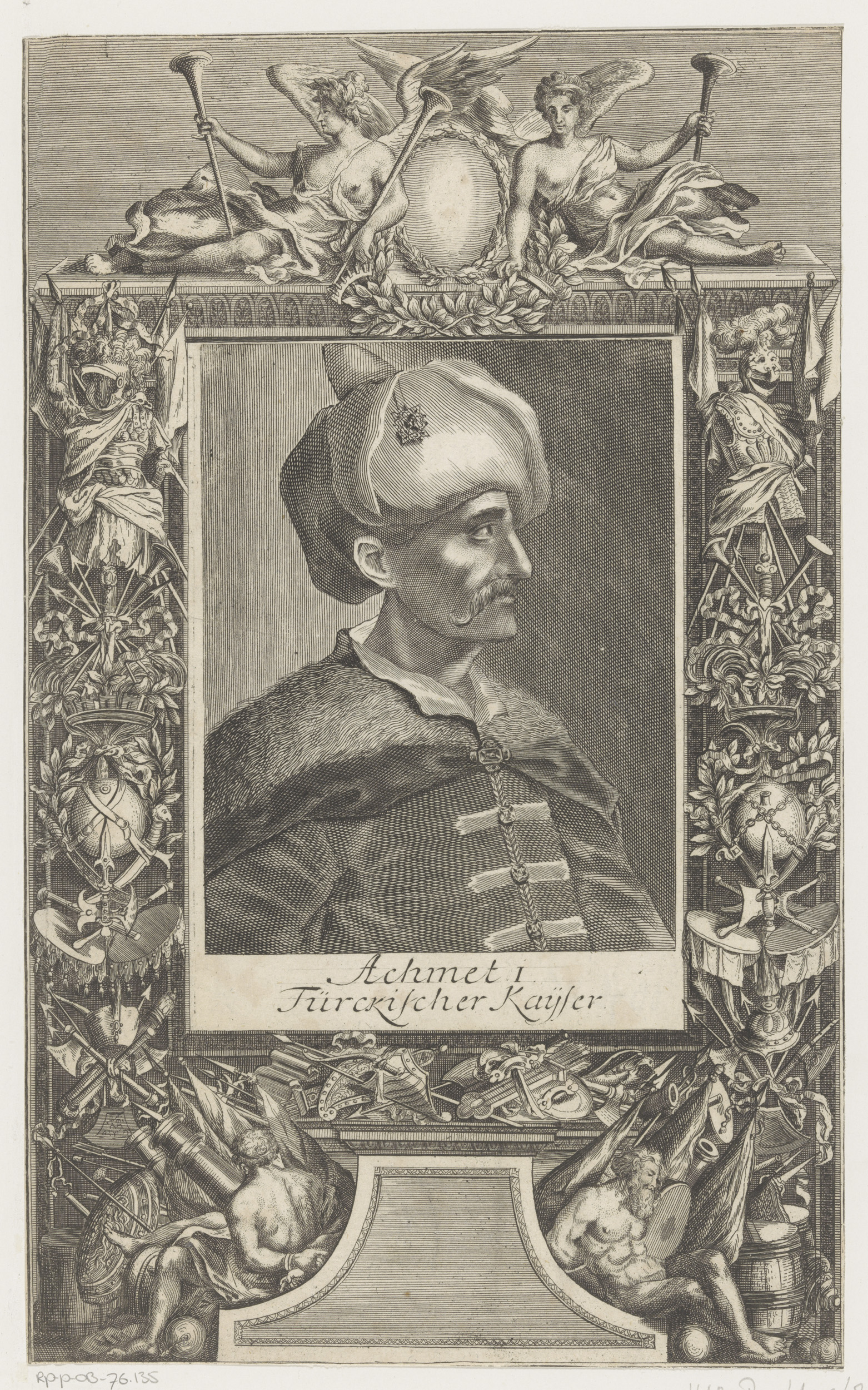
Portrait of Ahmed I with Allegorical Border
An engraved portrait of Sultan Ahmed I framed by allegorical figures and captives, reflecting European views of Ottoman power.
This European print portrays Ahmed I as sultan, surrounded by imagery reflecting Ottoman military power.
About this source
What it is
This engraving, held by the Rijksmuseum, shows Sultan Ahmed I in profile wearing a turban, with his name and title below. The main portrait is surrounded by a separate decorative border containing allegorical figures, weapons, trophies, and bound captives.
Why it matters
This print is a primary source for how European engravers imagined and framed the Ottoman sultan. The allegorical border, with its trophies and captive figures, hints at European anxieties and fascination with Ottoman military power, rather than giving a neutral image of Ahmed I himself.
Look closer
- What might the bound captive figures in the border be meant to represent?
- Why would an engraver surround a ruler's portrait with weapons and allegorical figures rather than leave it plain?
- What does this image tell us about European attitudes toward the Ottoman Empire, rather than about Ahmed I personally?
This painting is part of the curated material that grounds the AI version of Ahmed I on Humy.ai — when students ask about related events, the AI can quote it and cite it.
More Ahmed I sources
Browse all 51 →
Ready when you are
Start chatting with Ahmed I now.
20 messages free · No credit card · Available in 50+ languages.