


Secondary sourcePaintingc. 1640
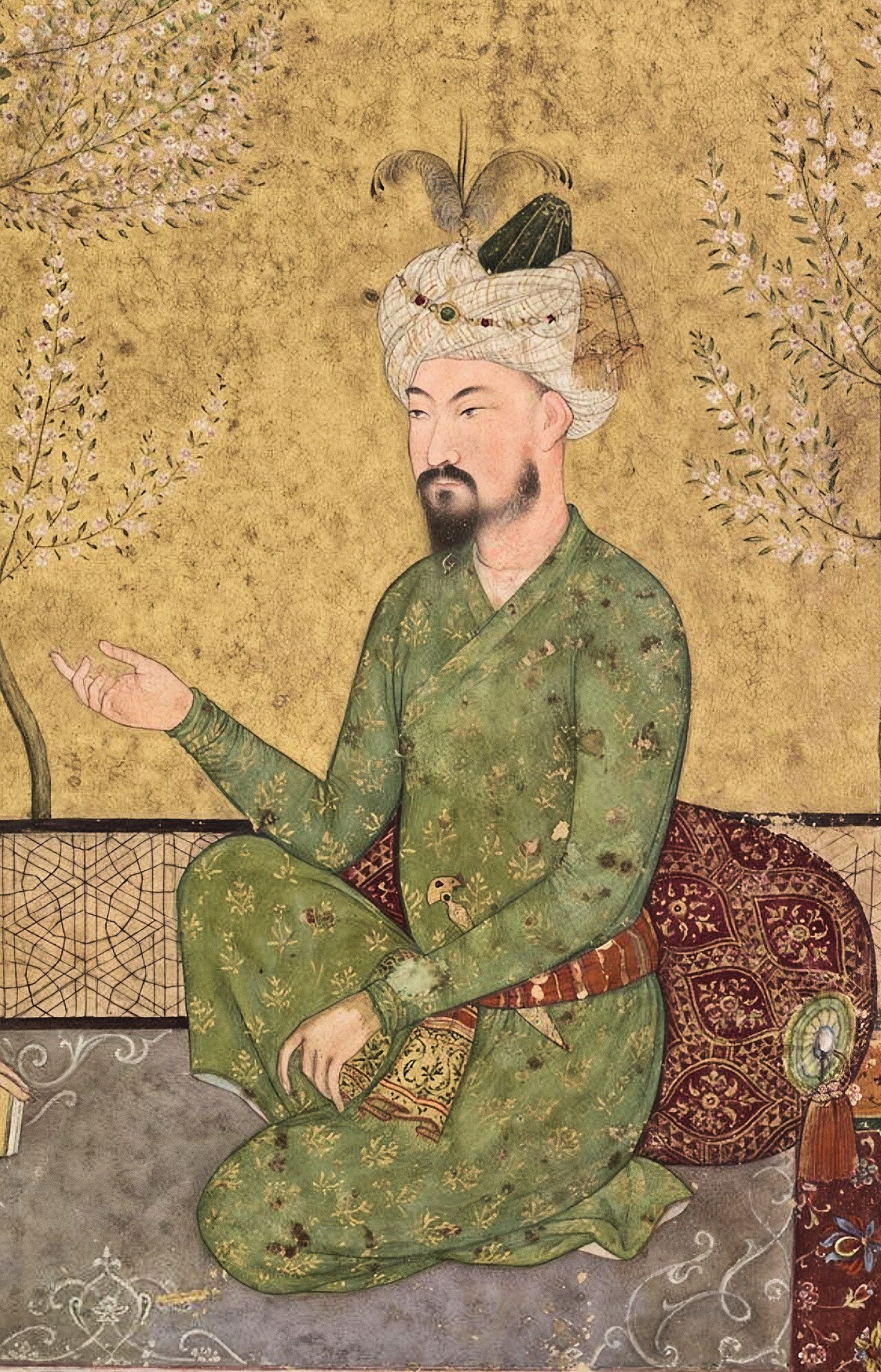
Portrait of Babur with Humayun
c. 1640
A Mughal album painting showing Babur seated with his son and successor Humayun, made over a century after Babur's death to glorify dynastic succession.
This posthumous portrait depicts Babur as dynastic founder, commissioned generations later to legitimize his descendants.
About this source
What it is
This is a detail from a Mughal miniature painting, Babur and Humayun with Courtiers, from the Late Shah Jahan Album. It was painted in India around 1640, in opaque watercolor and gold on paper, and is now held by the Smithsonian's National Museum of Asian Art.
Why it matters
The painting shows Babur, the first Mughal emperor, seated with his son and successor Humayun. It was commissioned by Babur's great-great-grandson, Shah Jahan, long after both men had died. Such posthumous family portraits were made to celebrate the early Mughal emperors and to show a direct line of succession back to Babur, strengthening the ruling family's claim to power.
Look closer
- Why might a later emperor want to commission a portrait of his ancestors?
- What details of clothing and setting make this image look grand or important?
- Since this was painted long after Babur's death, how reliable is it as a record of what he actually looked like?
This painting is part of the curated material that grounds the AI version of Babur on Humy.ai — when students ask about related events, the AI can quote it and cite it.
More Babur sources
Browse all 95 →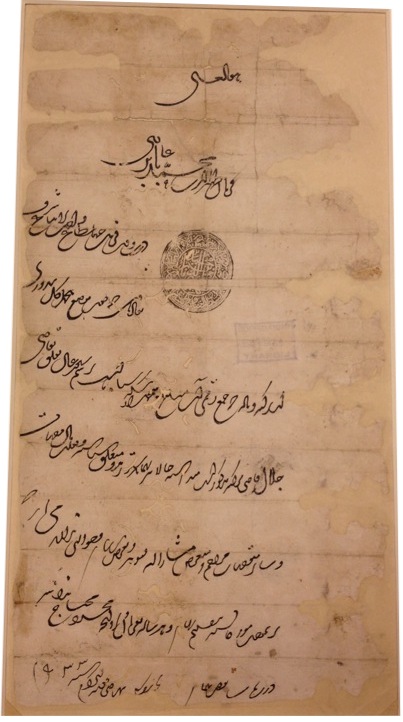 Document
Primary source
Mughal Land Grant of August 1527
Mughal emperor Babur's administration · August 1527
 Artifact
Primary source
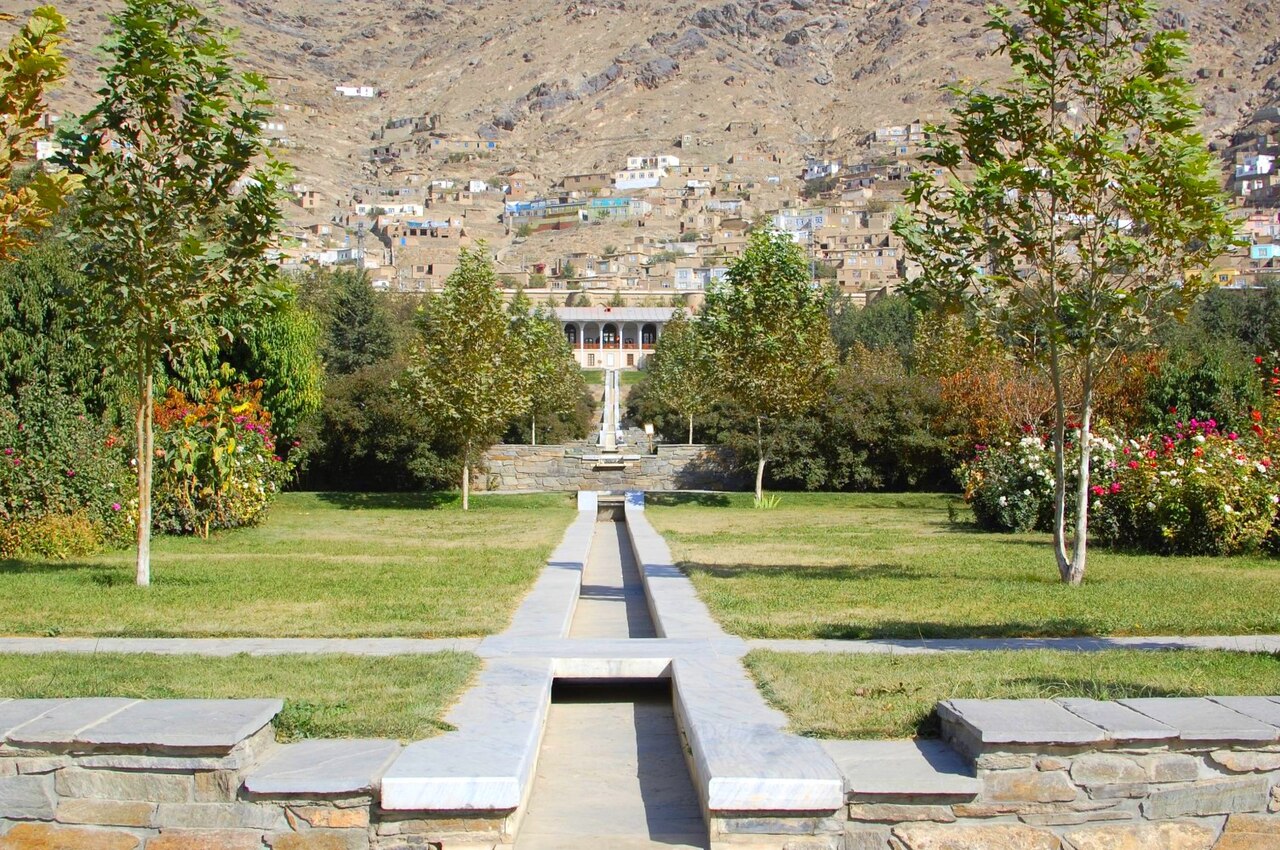
Gardens of Babur
Babur · c. 1504
 Artifact
Secondary source
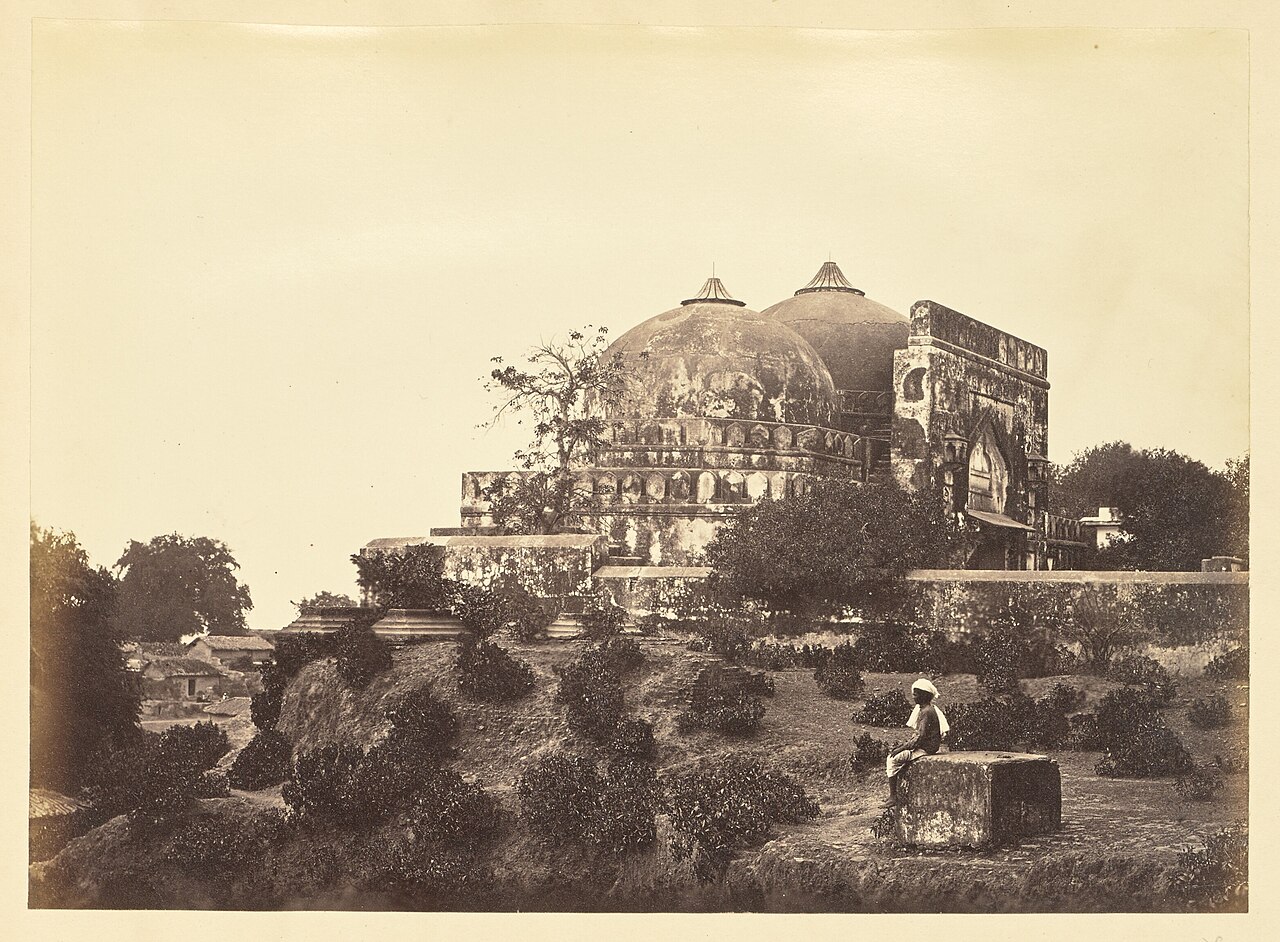
Babri Masjid
Mir Baqi · 1528/1529
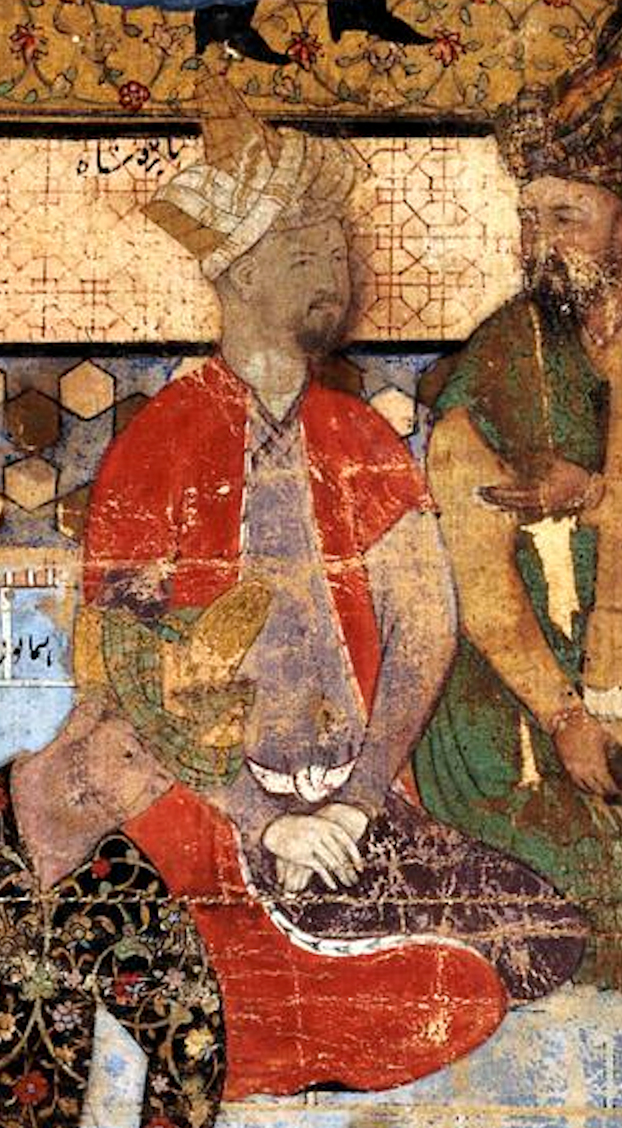 Painting
Primary source
Princes of the House of Timur
mid-16th century, later altered
Free account
Read every Babur source
Sign up free →
Ready when you are
Start chatting with Babur now.
20 messages free · No credit card · Available in 50+ languages.