


Secondary sourcePainting1665-1693
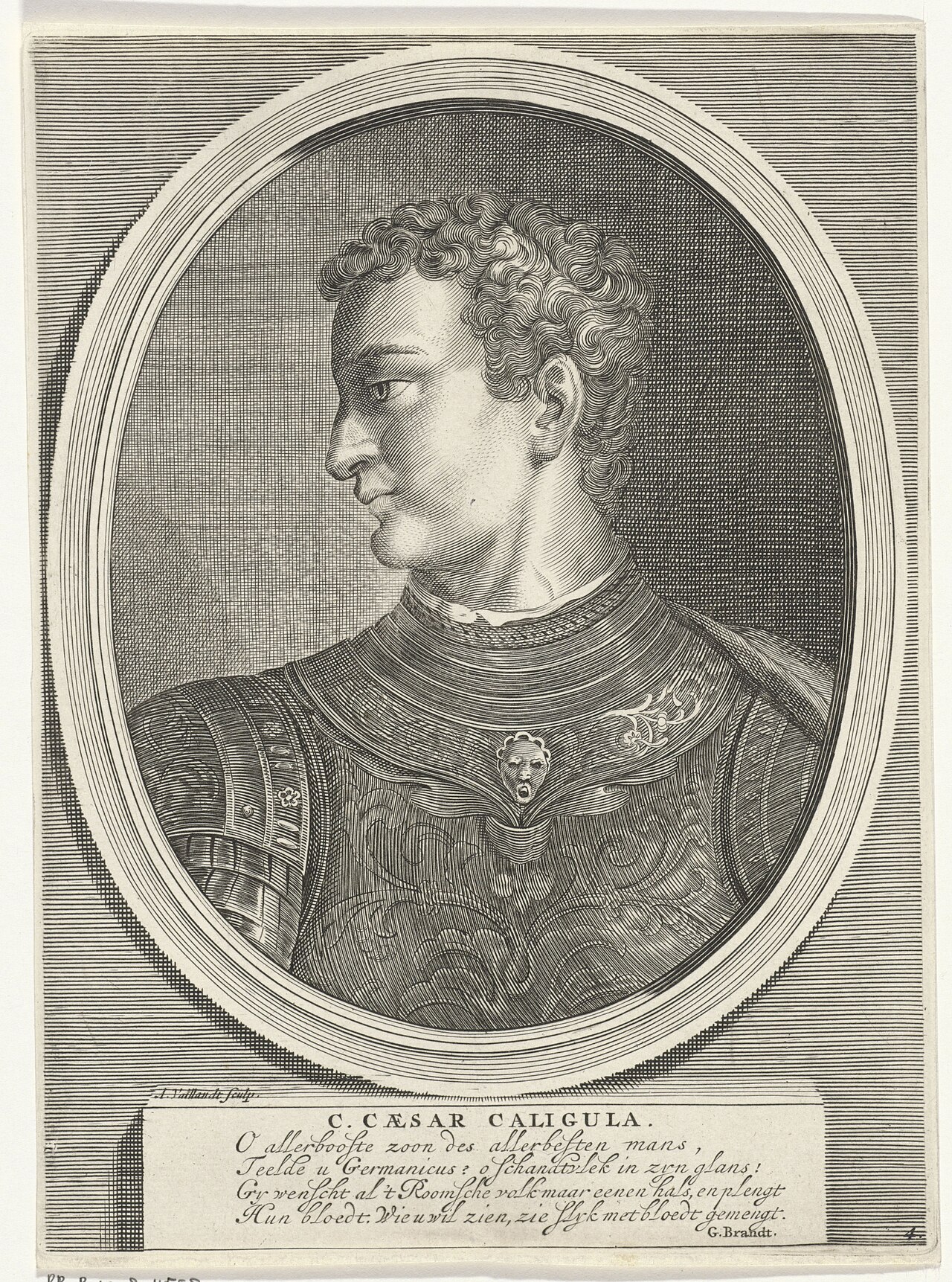
Portrait of Caligula, Rijksmuseum Print
Andries Vaillant · 1665-1693
A Dutch 17th-century engraved portrait of Caligula, part of a series of Roman emperor prints based on designs by Titian.
A 17th-century Dutch print imagining Caligula's appearance, part of a series of Roman emperor portraits.
About this source
What it is
This engraving of Caligula was made in the Netherlands between 1665 and 1693 by printmaker Andries Vaillant, after a design attributed to Titian, with verse captions by Geeraert Brandt. It is part of a series of fourteen prints of Roman emperors, plus Germanicus and Seneca.
Why it matters
This print shows how, centuries after Caligula's death, Dutch publishers and artists kept producing images and texts about Roman emperors for an educated audience. It reflects ongoing fascination with Rome's rulers, and the role of Titian's designs in shaping how later Europeans imagined them.
Look closer
- What does the gorgon-like head on the armor suggest the artist wanted to show about Caligula?
- Why do you think print series of Roman emperors were popular in the 17th century?
- What does the Dutch verse caption suggest about the audience for this print?
This painting is part of the curated material that grounds the AI version of Caligula on Humy.ai — when students ask about related events, the AI can quote it and cite it.
More Caligula sources
Browse all 88 →
Ready when you are
Start chatting with Caligula now.
20 messages free · No credit card · Available in 50+ languages.