


Secondary sourcePainting1557
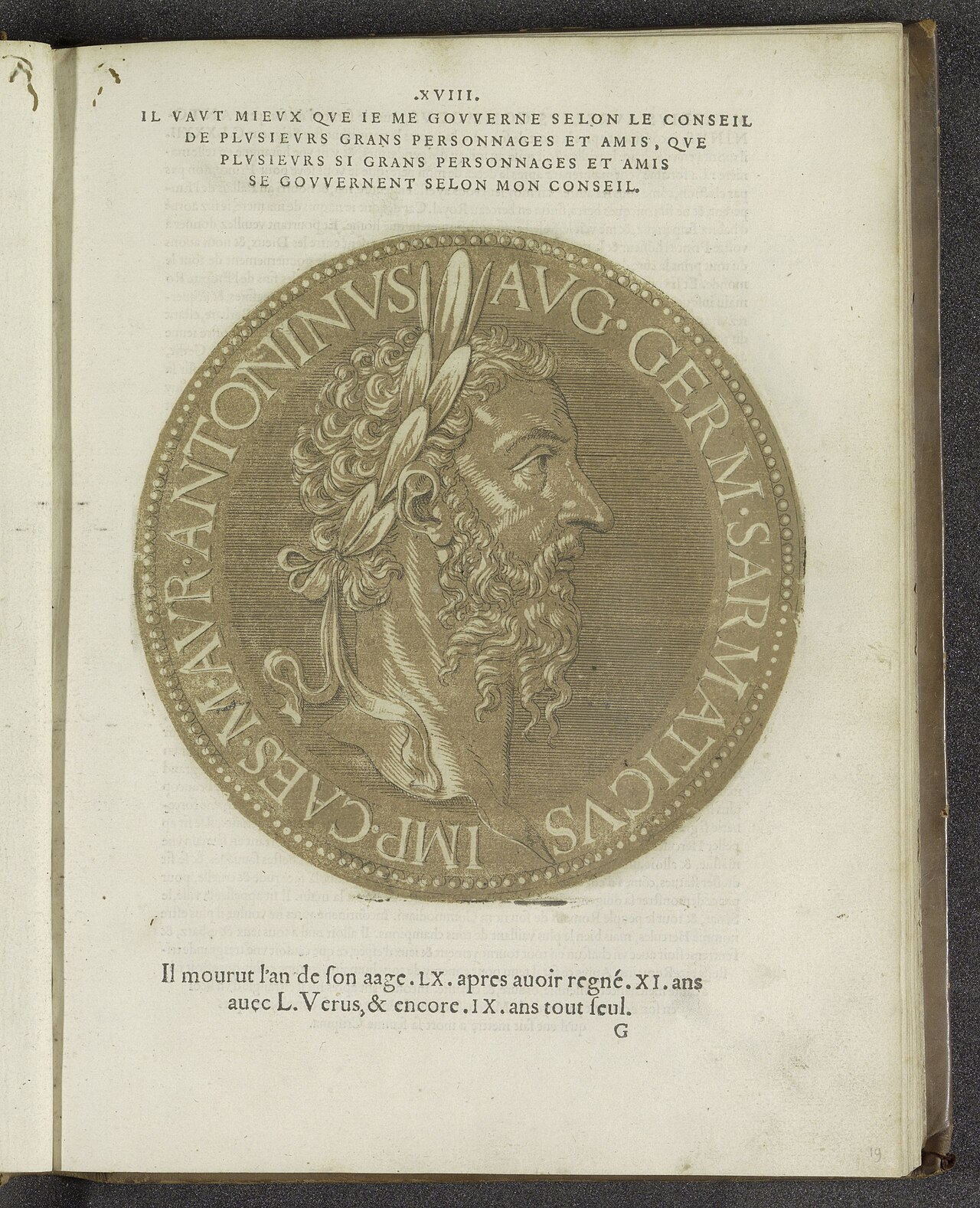
Portrait of Emperor Marcus Aurelius, Les images de tous les empereurs
Joos Gietleugh, Hubert Goltzius · 1557
A 1557 printed page with an engraved medallion portrait of Marcus Aurelius in profile. It comes from a French book of emperor portraits.
Shows how Marcus Aurelius was presented in a sixteenth-century book of emperor portraits, based on ancient coins.
About this source
What it is
This is a printed page from a 1557 French book of emperor portraits. At the top is a French motto in capitals. In the center is an engraved medallion portrait in profile of Marcus Aurelius, wearing a laurel wreath, with the inscription IMP CAES M AVR ANTONINVS AVG GERM SARMATICVS. Below it is French caption text. The Rijksmuseum record says the print belongs to a book about the emperors from Julius Caesar to Charles V and his brother Ferdinand. Joos Gietleugh cut the woodblock, Hubert Goltzius made the print, and Gillis Coppens van Diest printed it in Antwerp. The record dates it to 1557 and/or 1559.
Why it matters
Books of emperor portraits were popular in the sixteenth century. Scholars and collectors used them to learn what the rulers of Rome had looked like, often working from coins and medals. The makers of this page depended on ancient coins to build their likenesses. This shows that people in early modern Europe were already trying to recover the faces of ancient rulers, even though they were working from objects that had been made long before.
Look closer
- Why does the portrait sit inside a medallion shape, and what does that suggest about how the emperor was seen?
- What does the text on the page tell a reader about who the emperor was?
- What might the maker not know about the real Marcus Aurelius, and how could that affect the picture?
This painting is part of the curated material that grounds the AI version of Marcus Aurelius on Humy.ai — when students ask about related events, the AI can quote it and cite it.
More Marcus Aurelius sources
Meet the AI Marcus Aurelius →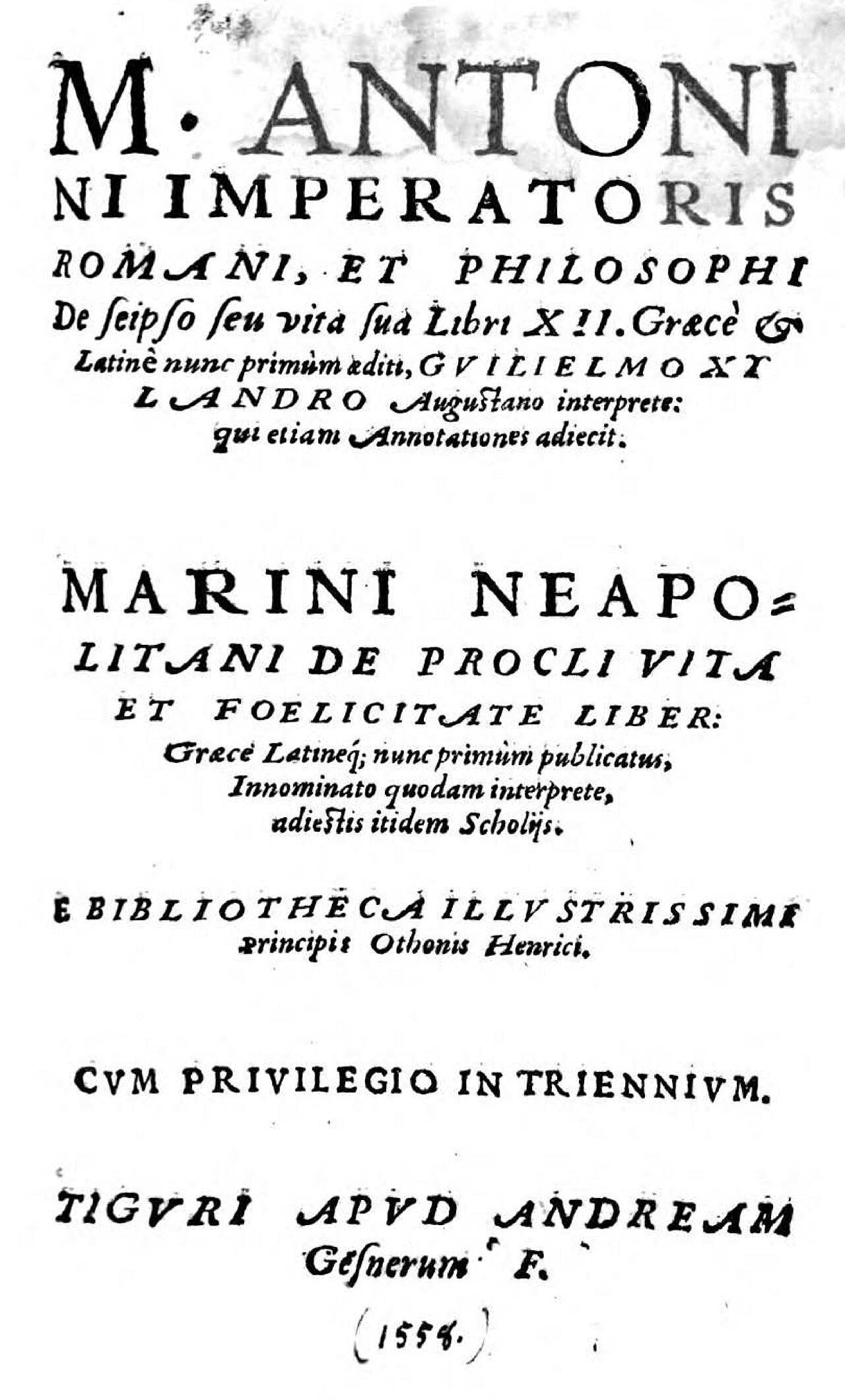 Book
Primary source
Meditations
Marcus Aurelius · c. 170-180 AD (this edition printed 1558)
 Sculpture
Primary source
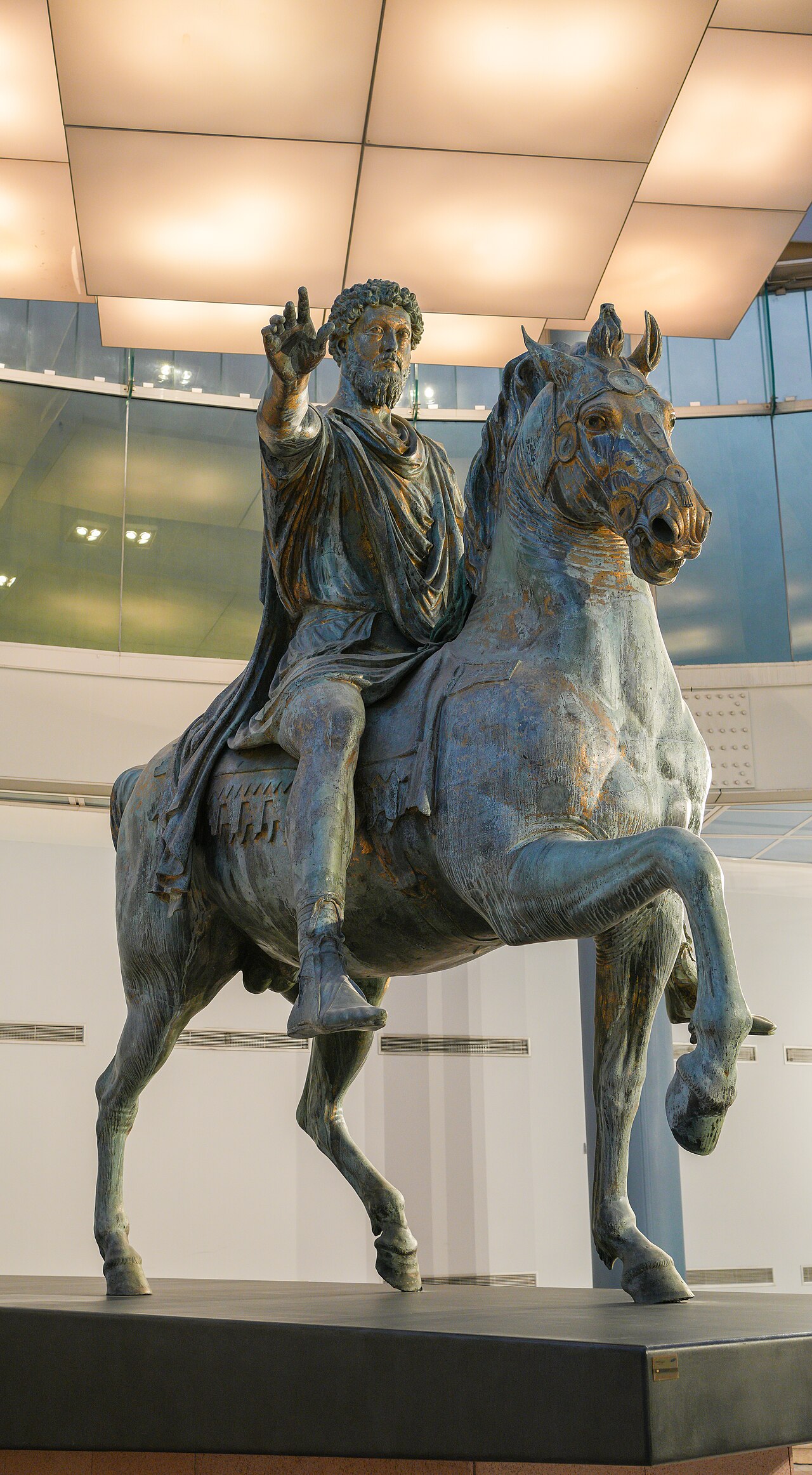
Equestrian Statue of Marcus Aurelius
c. 173 AD
 Artifact
Secondary source
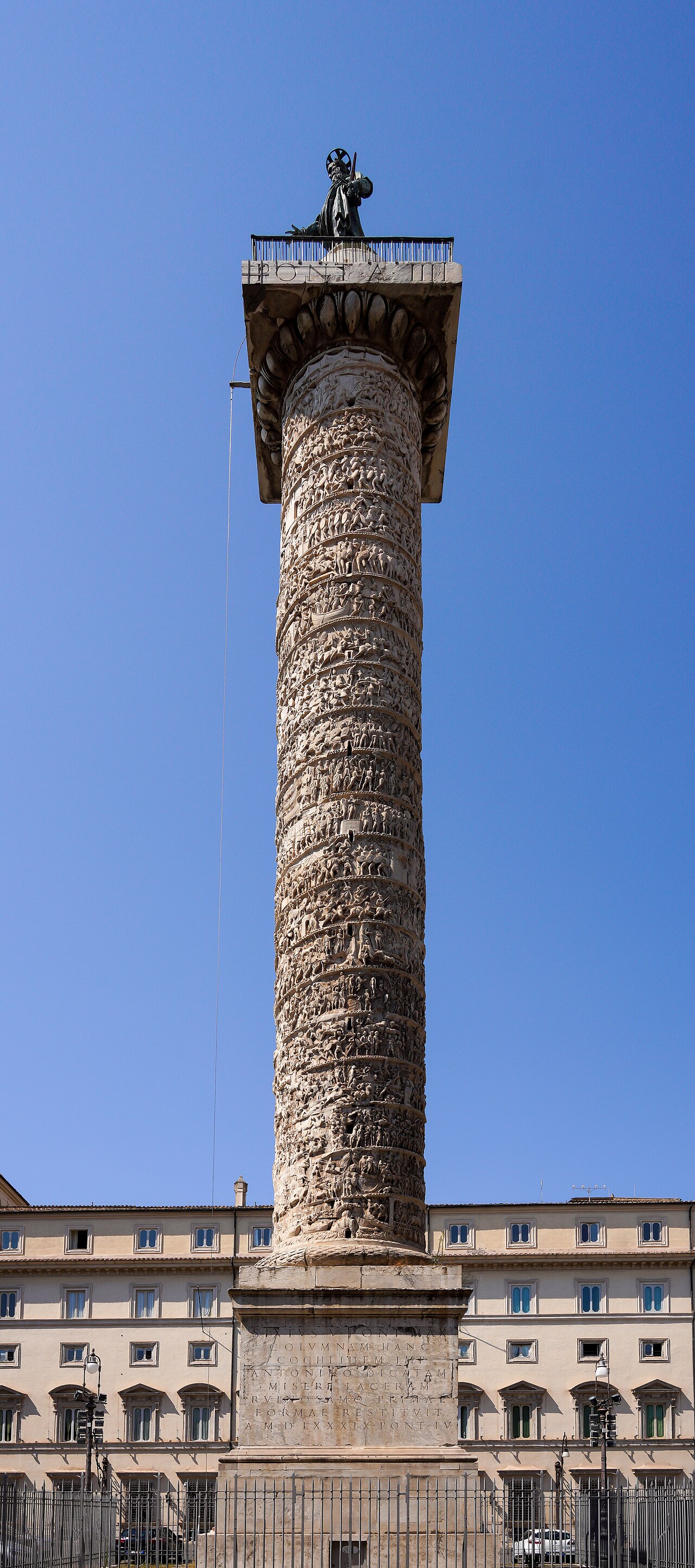
Column of Marcus Aurelius
completed c. 193 AD
Secondary source
Marcus Antoninus (Historia Augusta)
Scriptores Historiae Augustae · probably 4th century AD
 Sculpture
Primary source
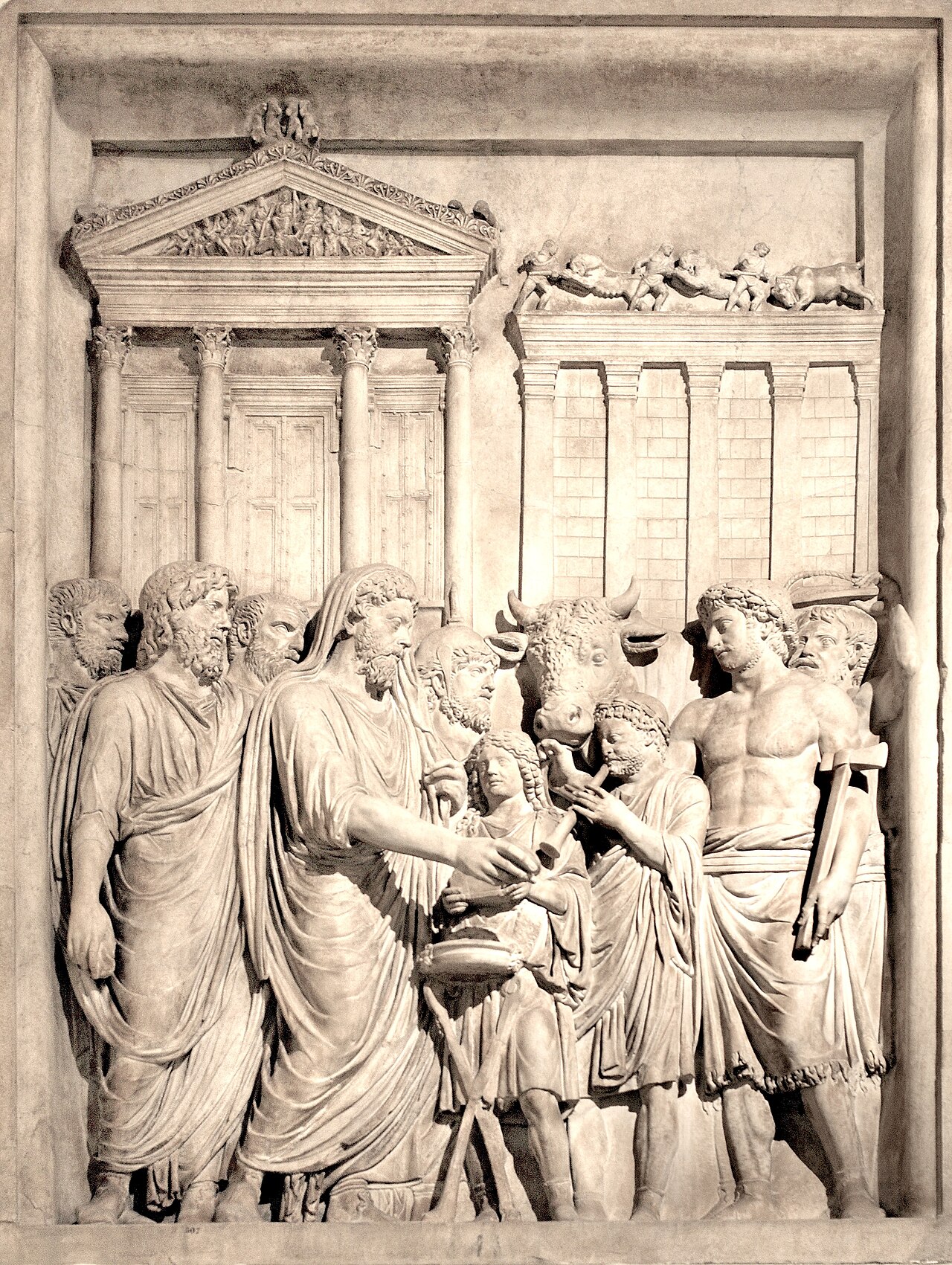
Panel Relief of Marcus Aurelius Sacrificing
Ready when you are
Start chatting with Marcus Aurelius now.
20 messages free · No credit card · Available in 50+ languages.