


Secondary sourcePainting1801
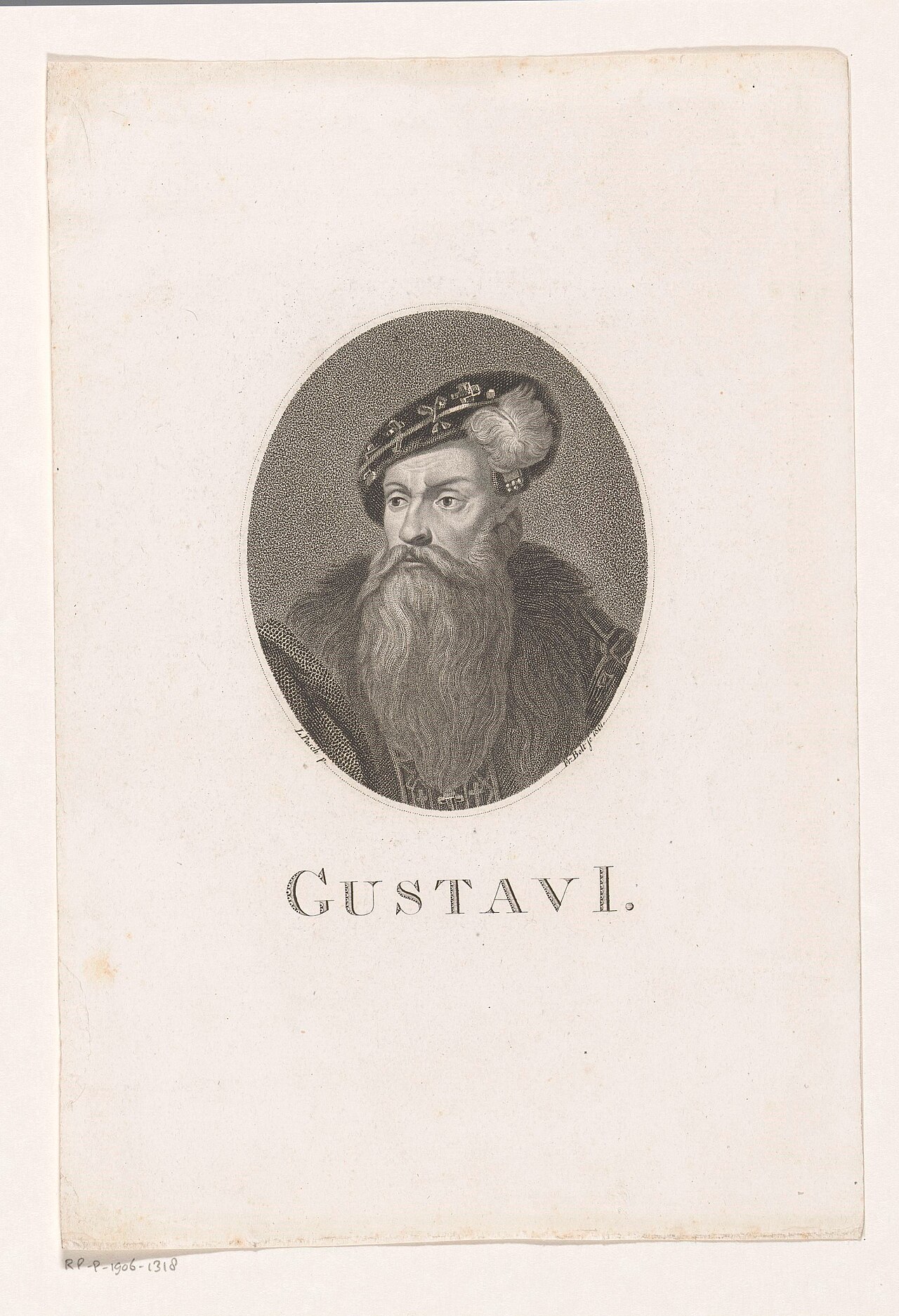
Portrait of Gustav I, King of Sweden
Johann Friedrich Bolt, after Lorenz II Pasch · 1801
An engraved oval portrait of Gustav I, made in Berlin in 1801 after an earlier painting.
This later engraving shows Gustav I's face and status, an image made long after his reign to keep his memory alive.
About this source
What it is
This is an engraving showing Gustav I, King of Sweden, made in 1801 by the printmaker Johann Friedrich Bolt in Berlin, copying a painting by Lorenz II Pasch. It is held today in the Rijksmuseum.
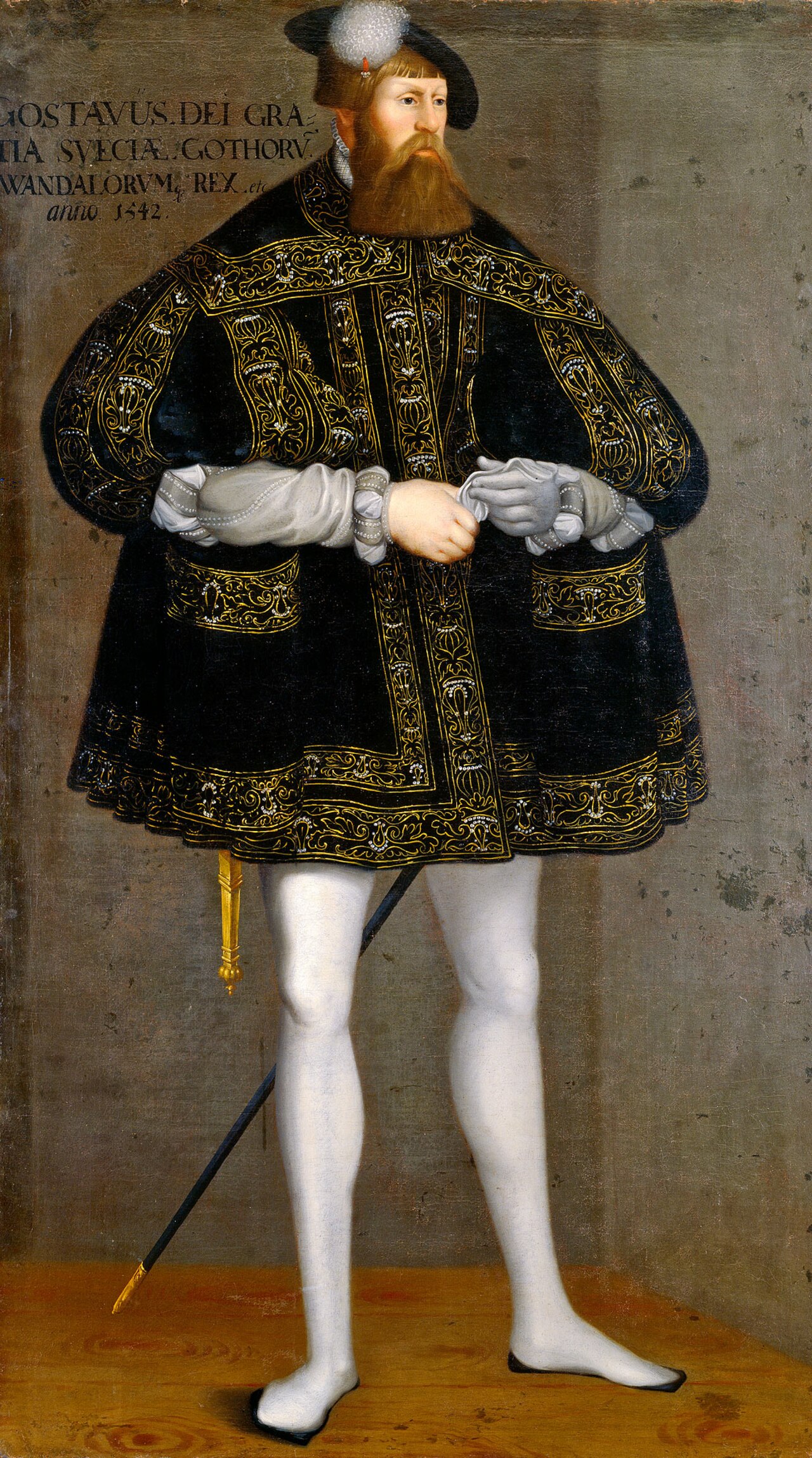
The print shows a bearded man wearing a jeweled cap with a white plume and a fur-collared robe, with his name inscribed below.
Why it matters
Although made more than two centuries after Gustav I's death, this print kept his image in circulation among European collectors of historical portraits. It reflects how later generations imagined and remembered the founder of a royal dynasty, more than how he actually looked in life.
Look closer
- What details in his clothing and cap suggest royal status?
- Why might a Berlin printmaker in 1801 choose to copy an older portrait of a Swedish king?
- How reliable is a portrait made so long after its subject lived?
This painting is part of the curated material that grounds the AI version of Gustav Vasa on Humy.ai — when students ask about related events, the AI can quote it and cite it.
More Gustav Vasa sources
Browse all 94 →

Ready when you are
Start chatting with Gustav Vasa now.
20 messages free · No credit card · Available in 50+ languages.