


Secondary sourcePainting1650
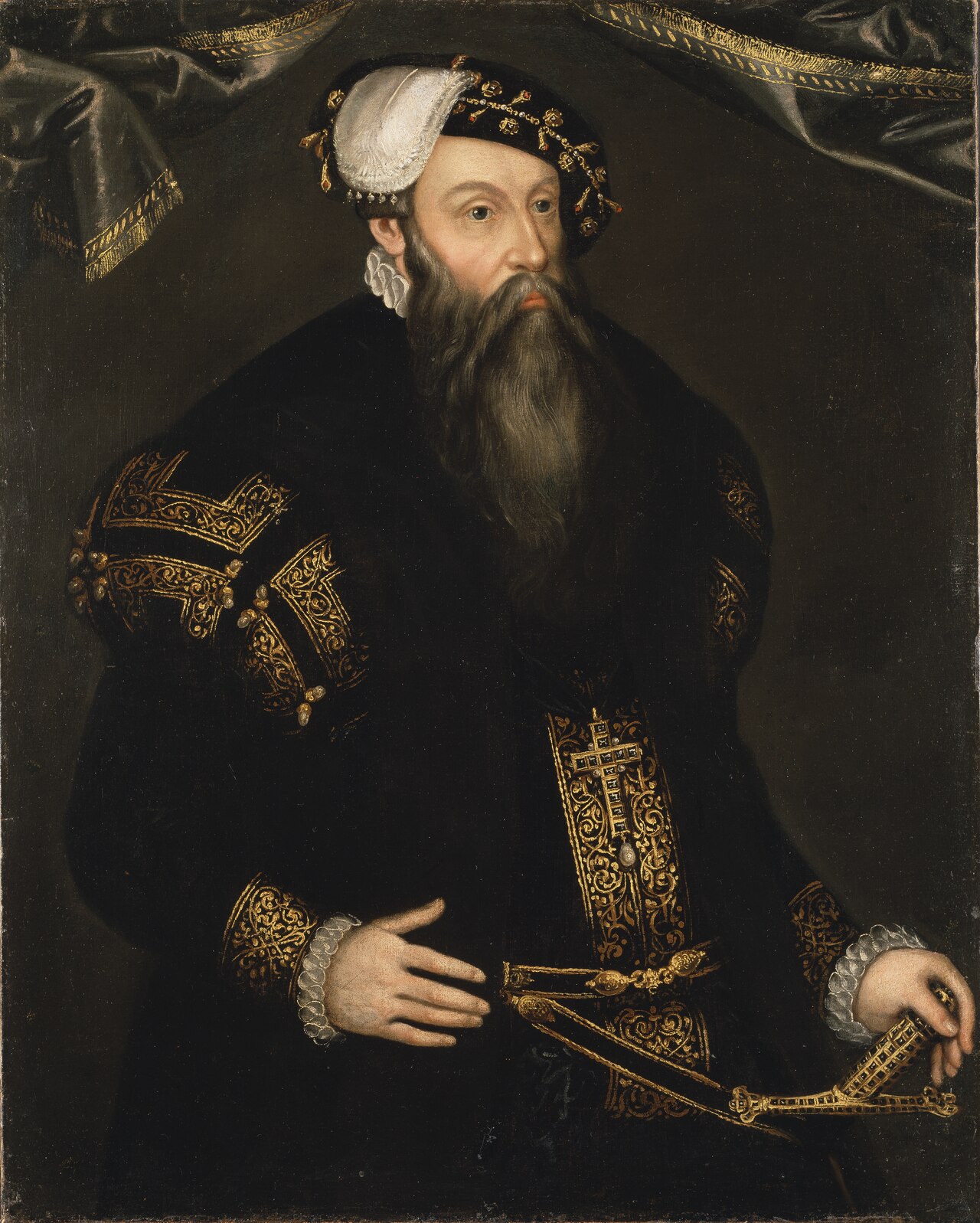
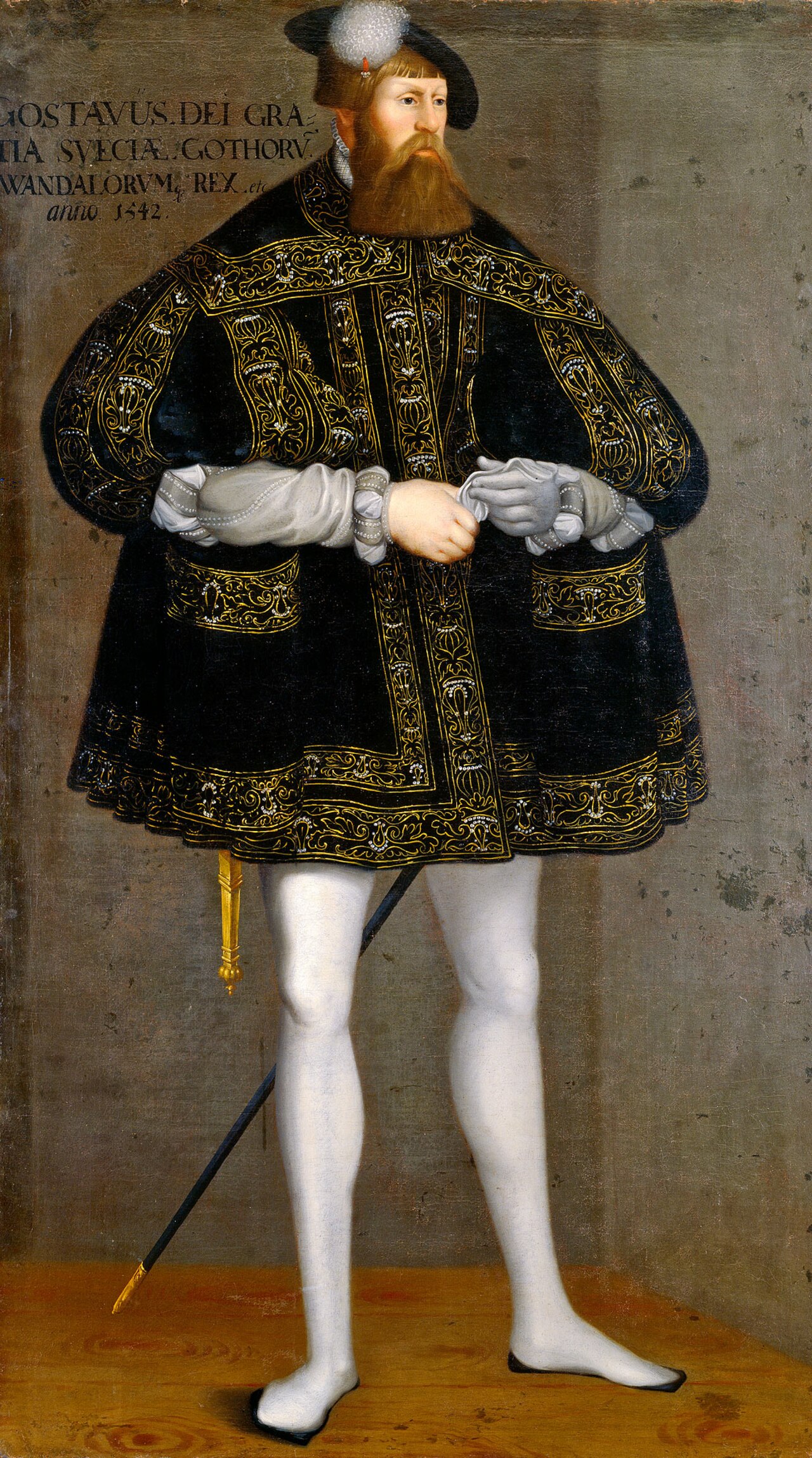
Portrait of Gustav Vasa, King of Sweden
Cornelius Arendtz · 1650
A 1650 oil portrait of Gustav Vasa, painted long after his death to keep alive the image of the dynasty's founder.
A posthumous portrait of Gustav made to preserve the dynasty founder's image for later generations.
About this source
What it is
An oil portrait painted in 1650 by Cornelius Arendtz, showing a bearded man in rich black clothing trimmed with gold embroidery, wearing a plumed cap. It is held today in the Nationalmuseum in Sweden.
Why it matters
Gustav Vasa founded the Vasa dynasty that ruled Sweden for generations. This portrait, made about ninety years after his death, shows how later Vasa rulers used images of their founder to support their own legitimacy. The painter never saw Gustav in life, so the portrait reflects how the 17th-century court imagined and wanted him remembered, more than exact likeness.
Why it matters
Look closer
- Why might a royal family want flattering images of its founder painted long after his death?
- What do the clothes and pose suggest about the kind of power the sitter is meant to project?
- Since the artist never met Gustav, where might the image of his face have come from?
This painting is part of the curated material that grounds the AI version of Gustav Vasa on Humy.ai — when students ask about related events, the AI can quote it and cite it.
More Gustav Vasa sources
Browse all 94 →
Ready when you are
Start chatting with Gustav Vasa now.
20 messages free · No credit card · Available in 50+ languages.