


Primary sourcePainting1836
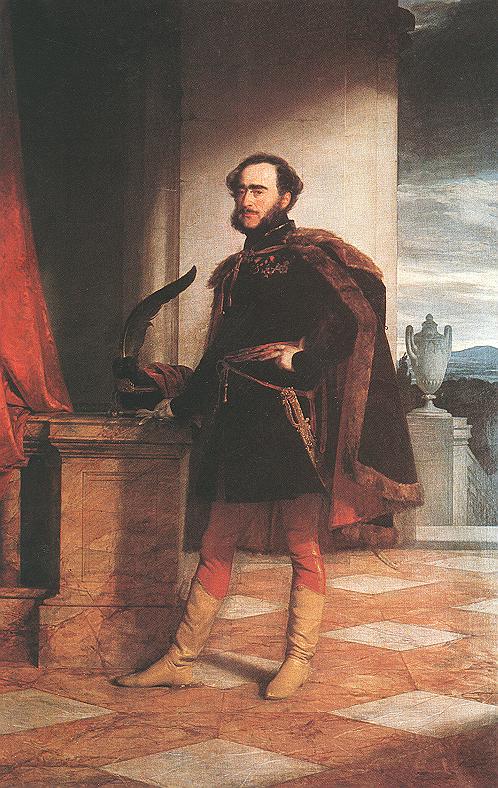
Portrait of István Széchenyi
1836
The standard full-length painted portrait used to identify Count István Széchenyi in his mature years.
The standard identifying portrait of Széchenyi, showing him in his mature years as a reformer.
About this source
What it is
This is a full-length painting of István Széchenyi from 1836, showing him as a bearded man in a dark fur-trimmed cloak with decorations, standing beside a pedestal and a plumed hat, with a landscape in the background.
Why it matters
This image is the reference portrait used to identify Széchenyi, the Hungarian nobleman and reformer. Formal portraits like this were meant to project status, dignity and public role, showing how the elite of his time wished to be remembered.
Look closer
- What do the clothing, pose and setting tell you about Széchenyi's status?
- Why might the artist have included the urn and landscape in the background?
- What does a formal portrait like this leave out about a person's private life?
This painting is part of the curated material that grounds the AI version of István Széchenyi on Humy.ai — when students ask about related events, the AI can quote it and cite it.
More István Széchenyi sources
Browse all 88 →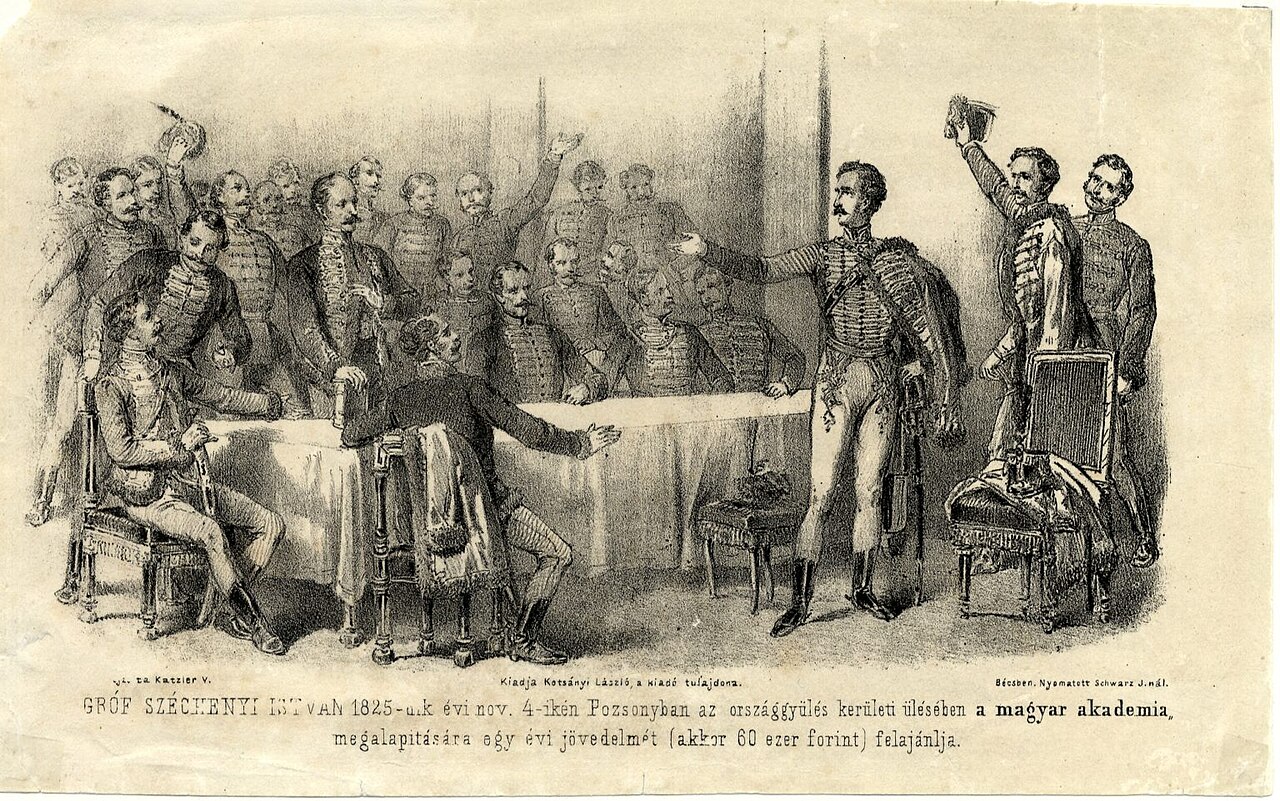 Painting
Secondary source
Széchenyi felajánlása
Vinzenz Katzler
 Artifact
Secondary source
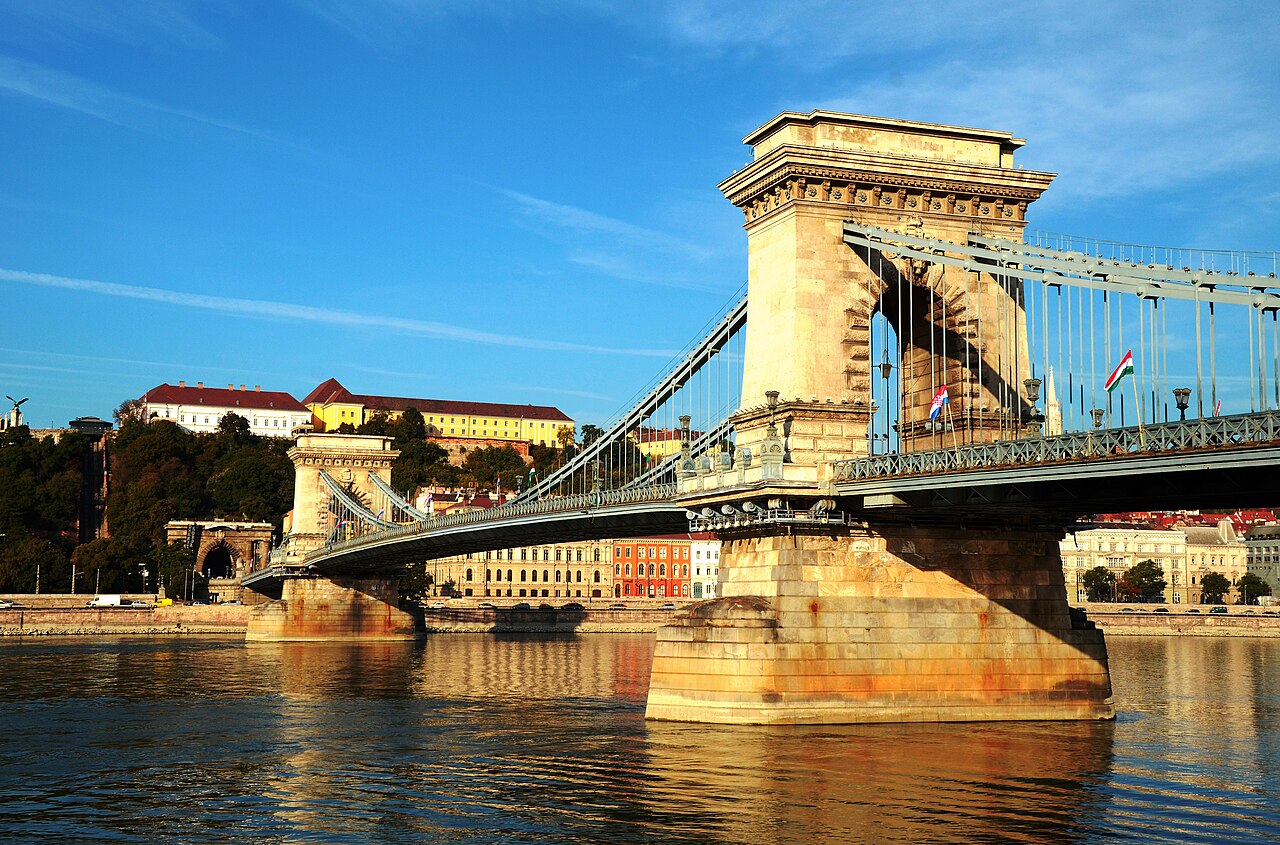
Széchenyi Chain Bridge
William Tierney Clark · 1839-1849
 Painting
Primary source
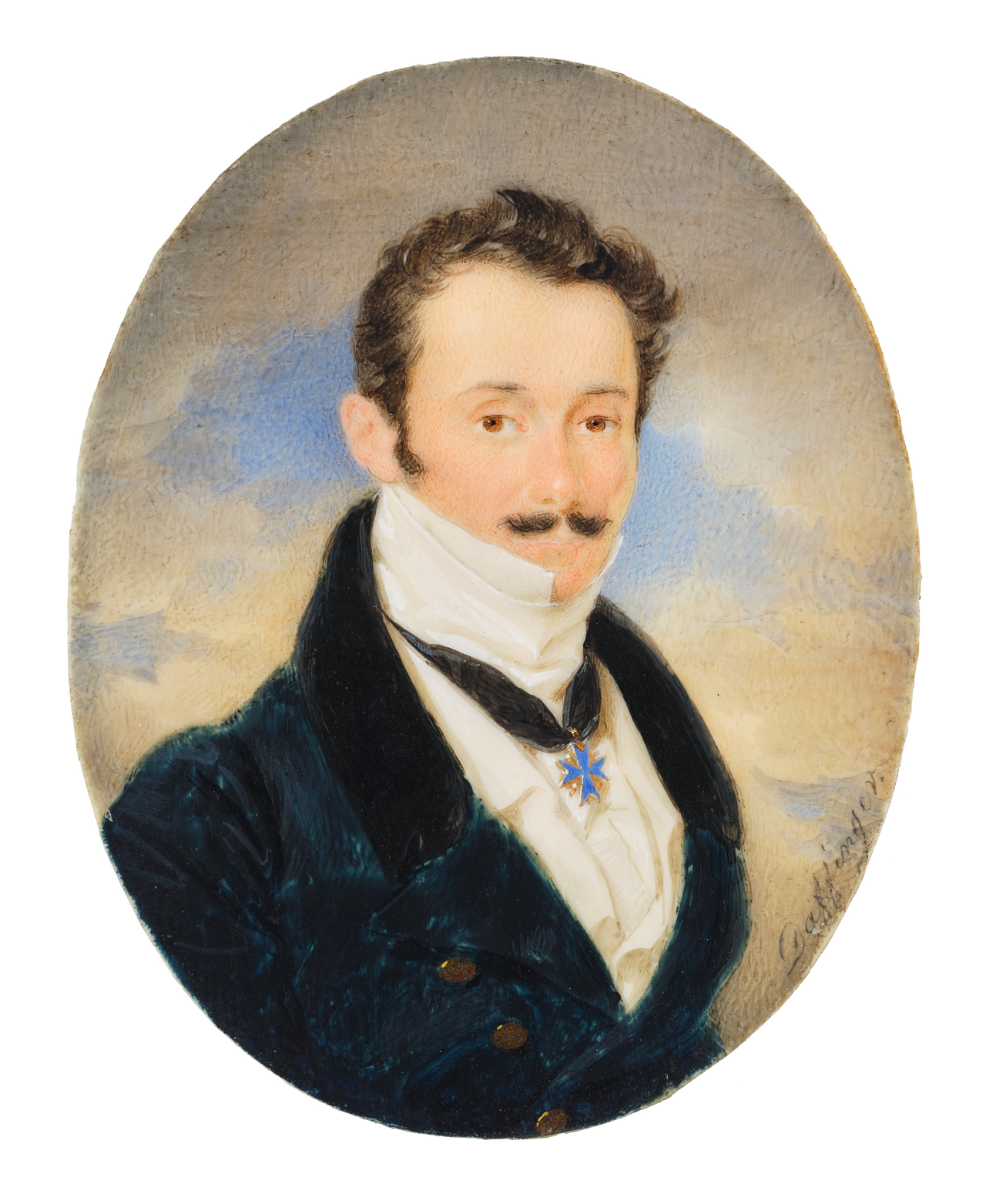
Three-quarter Length Portrait of Count István Széchenyi
Moritz Michael Daffinger · c. early 19th century
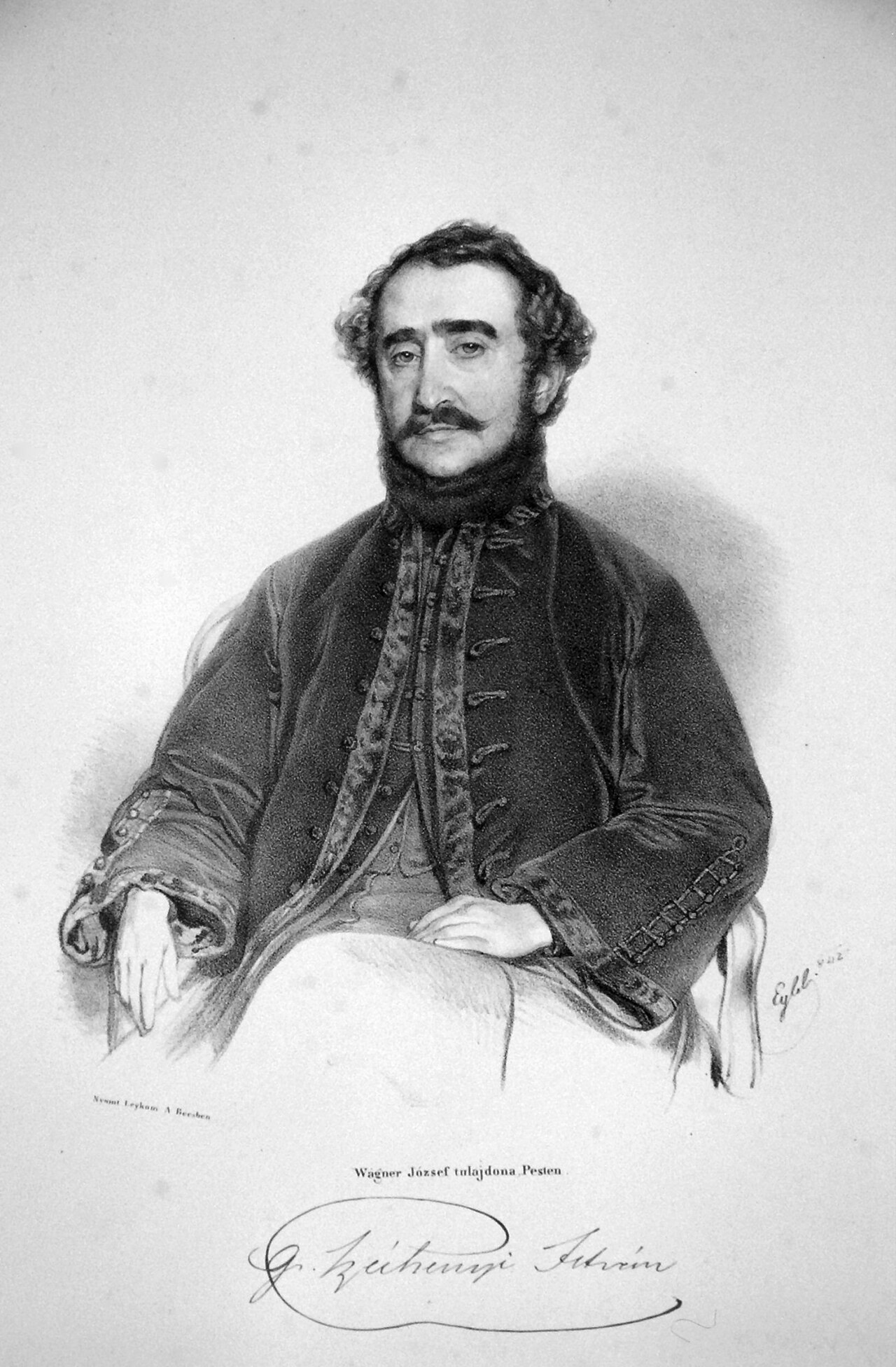 Painting
Primary source
István Széchenyi, Lithograph by Franz Eybl
Franz Eybl · 1842
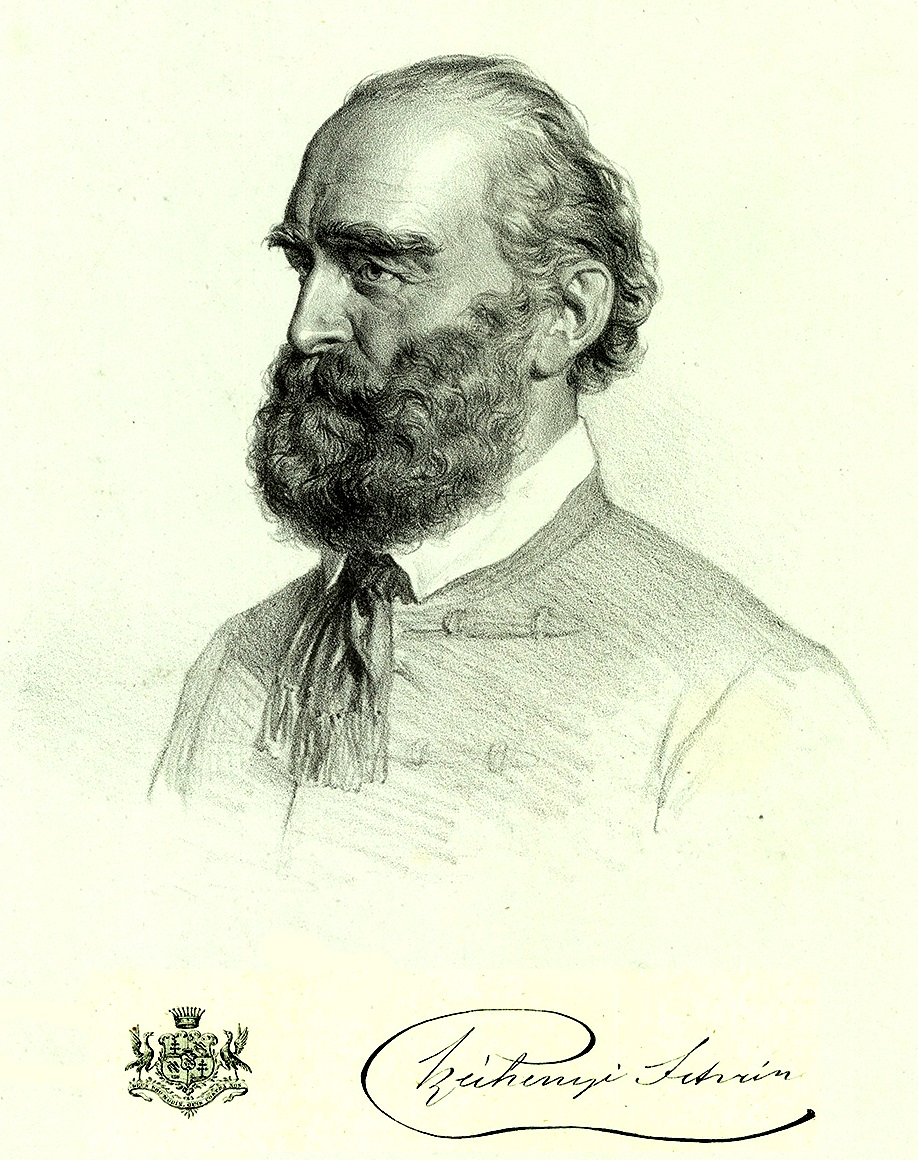
Free account
Read every István Széchenyi source
Sign up free →
Ready when you are
Start chatting with István Széchenyi now.
20 messages free · No credit card · Available in 50+ languages.