


Secondary sourceSculpture
Portrait of Marcus Agrippa
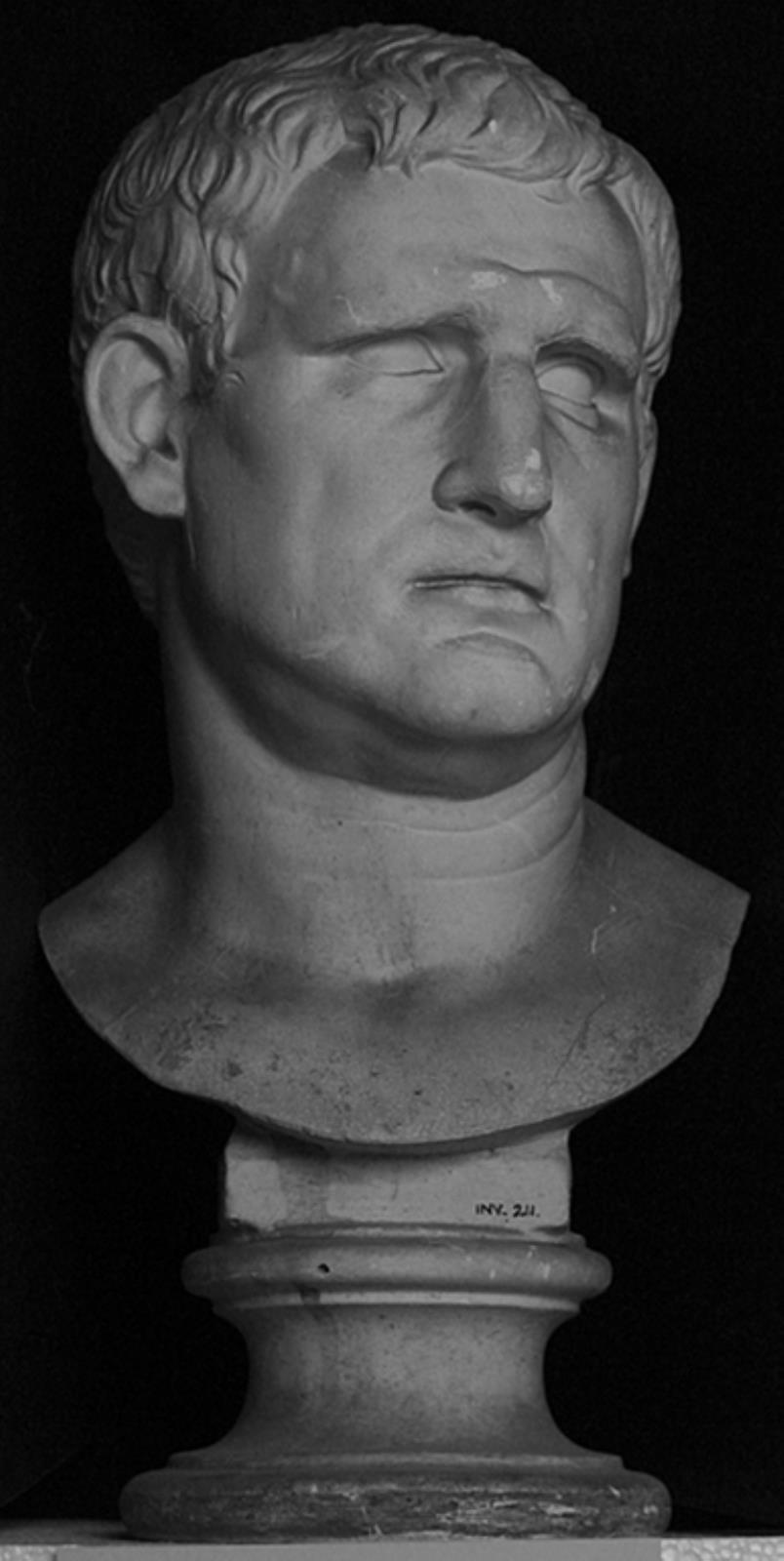
A marble bust of Agrippa held by the National Gallery of Denmark, known here through a black-and-white photograph of the bust. The record gives little further description.
This later bust shows Agrippa as a sculpted portrait in a modern national collection, a representation made long after his lifetime.
About this source
What it is
This is a marble bust of a Roman man with short, curly hair and a furrowed brow, with eyes looking to one side, set on a cylindrical base. The object is held by the National Gallery of Denmark. The record shows a black-and-white photograph of the bust, and an inventory label reading INV. 211 is visible on the pedestal. The record does not give a date, sculptor or detailed history of the bust.
Why it matters
Busts like this were often made to show important figures long after they lived, so a portrait of Agrippa tells us how later people chose to remember him. The photograph is a record of the object, not the object itself, and it shows the bust through the lens of the museum's collection practices.
Look closer
- What expression and details does the sculptor give this man, and what do they suggest about his character?
- Why might a museum record an inventory number on a sculpture, and what does that tell us about how it is cared for?
- What can we not learn about Agrippa from one bust alone?
This sculpture is part of the curated material that grounds the AI version of Marcus Vipsanius Agrippa on Humy.ai — when students ask about related events, the AI can quote it and cite it.
More Marcus Vipsanius Agrippa sources
Browse all 97 → Document
Secondary source
CIL VI, 896 (Pantheon Dedication Inscription)
126 (copying text of 27 BC)
 Sculpture
Primary source
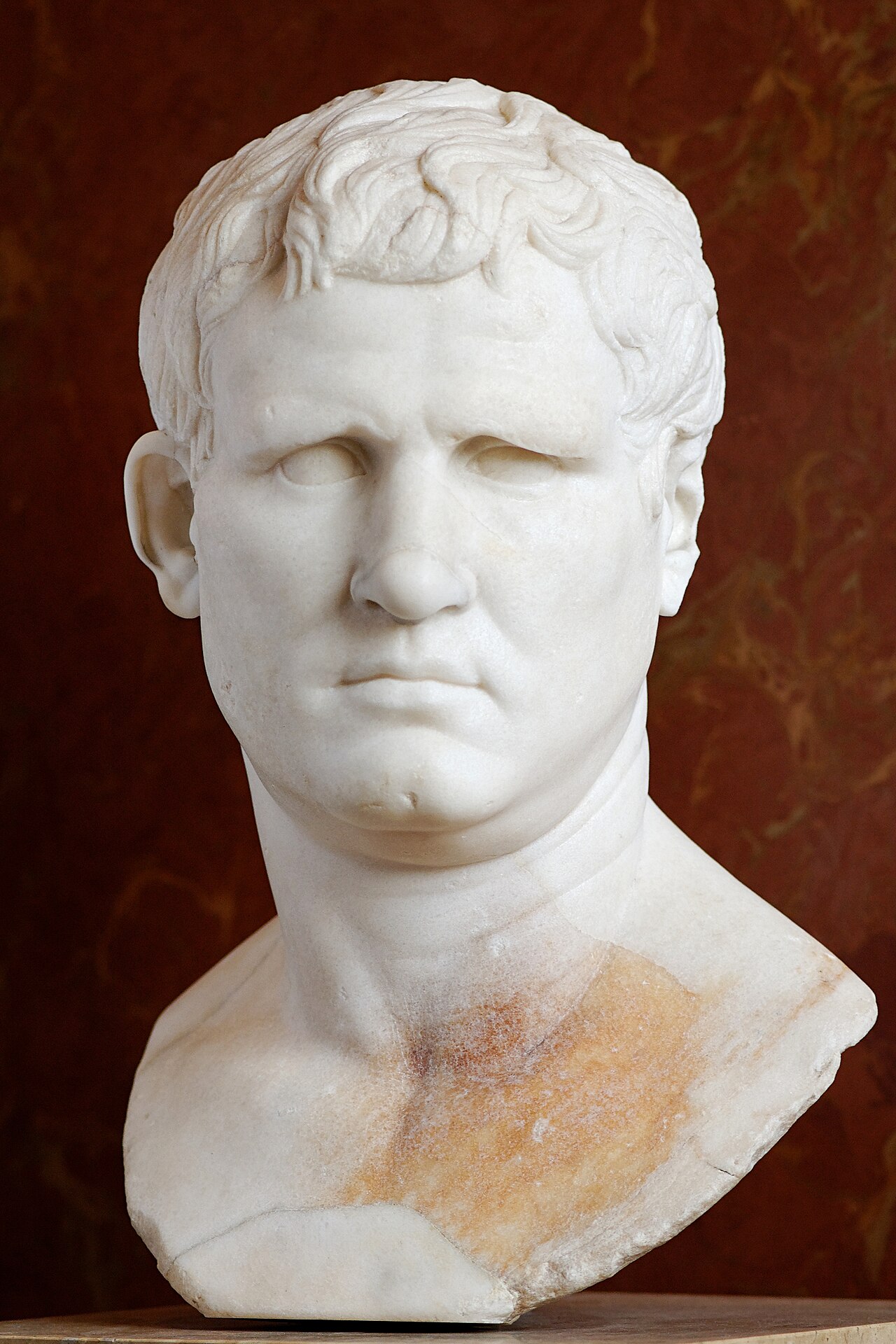
Portrait of Marcus Vipsanius Agrippa (Gabii type)
c. 25–24 BC
 Artifact
Primary source
Pantheon
Hadrian · c. AD 126-128
 Document
Primary source
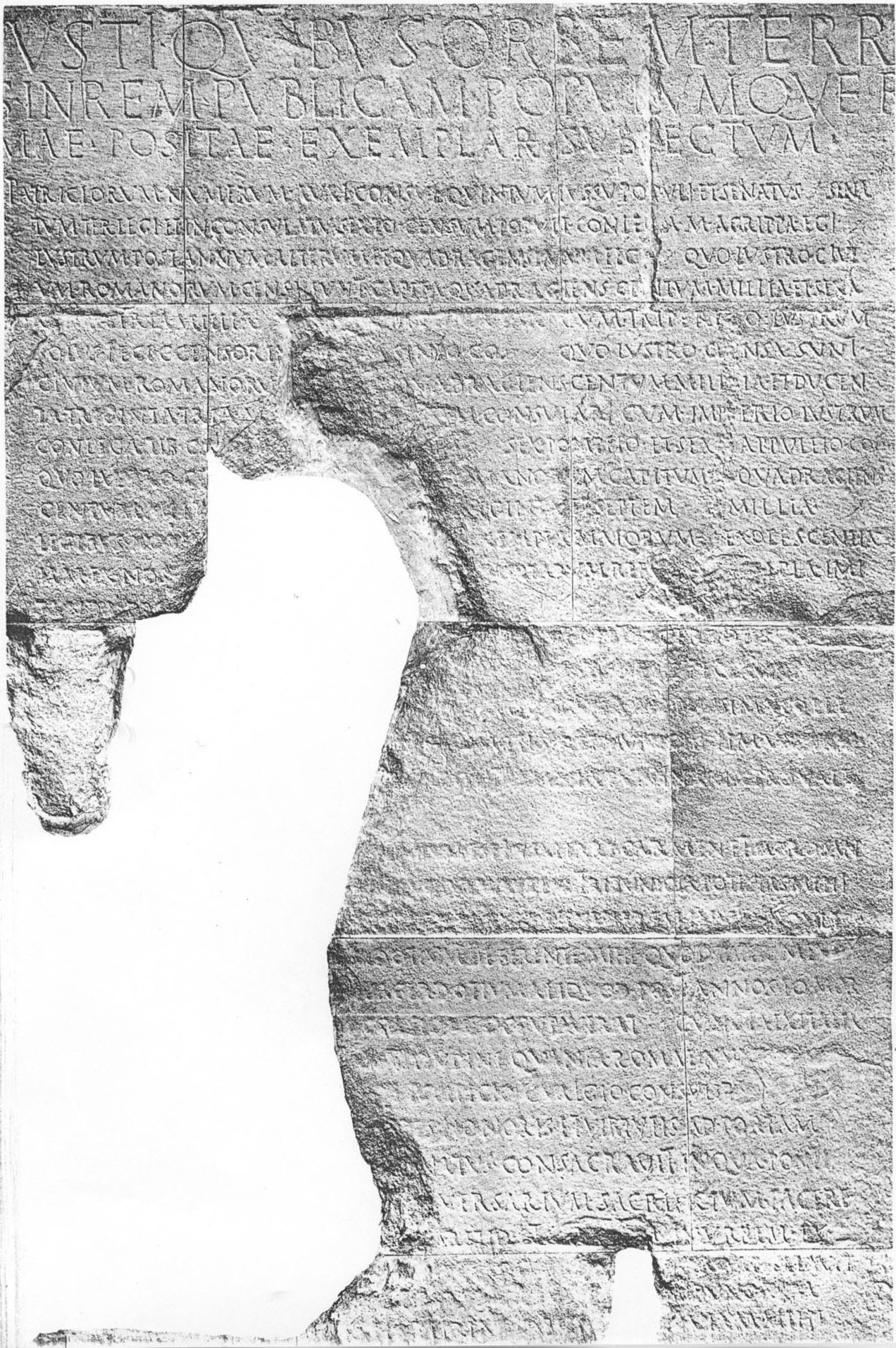
Res Gestae Divi Augusti
Augustus · 14 AD
Free account
Read every Marcus Vipsanius Agrippa source
Sign up free →
Ready when you are
Start chatting with Marcus Vipsanius Agrippa now.
20 messages free · No credit card · Available in 50+ languages.