


Secondary sourcePainting16th century
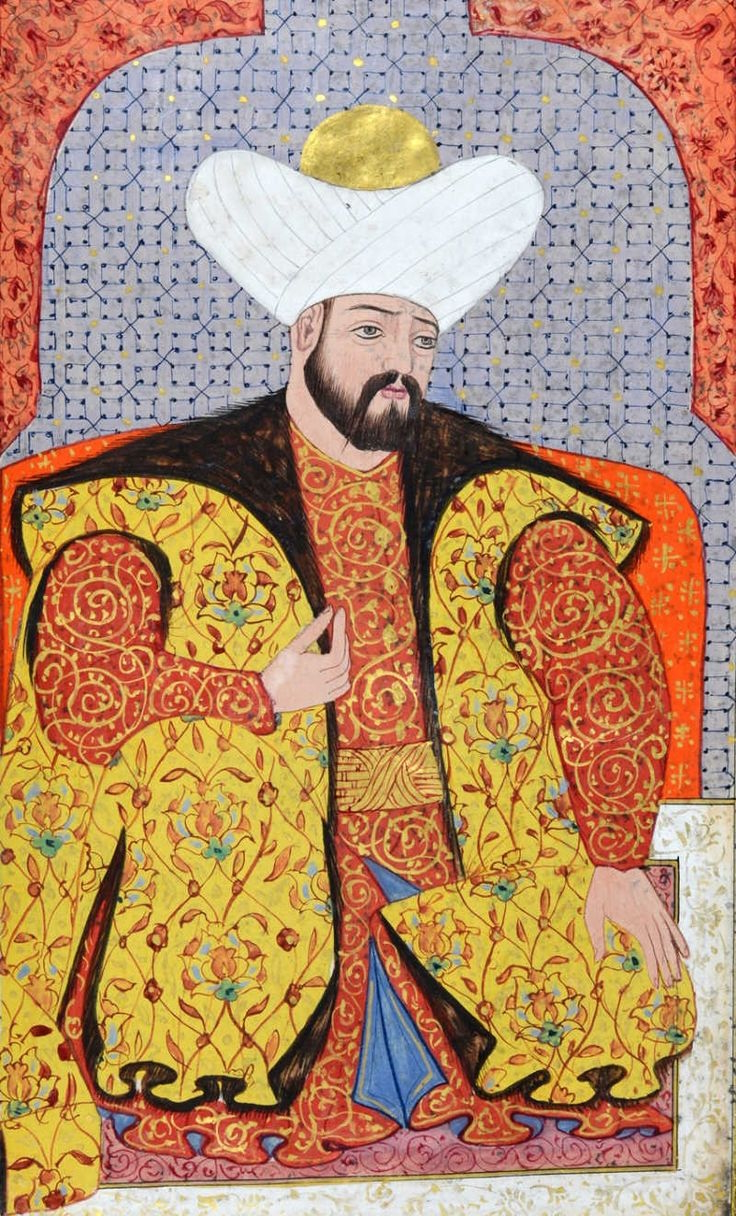
Portrait of Murad II (Semailname)
16th century artist · 16th century
A 16th-century Ottoman portrait of Sultan Murad II from the official album of sultans' physiognomies, the Semailname.
An official court portrait showing how later Ottoman painters codified Murad II's image.
About this source
What it is
This painted portrait of Murad II comes from the Semailname, an official Ottoman manuscript collecting idealized likenesses of the sultans. It shows a bearded man seated on a throne, dressed in a large white turban, a fur-trimmed black robe, and a patterned gold robe. The manuscript is held in the Millet Library's Ali Emîrî Collection.
Why it matters
Painted by a 16th-century court artist, long after Murad II's death, this portrait shows how the Ottoman dynasty formalized the images of its past rulers into a standard, dignified style. It tells us more about how later Ottoman court painters wanted sultans to be remembered than about Murad's actual appearance.
Look closer
- What details of clothing and posture suggest royal authority?
- Why might a dynasty want an official, standardized set of portraits of its rulers?
- Since this was painted decades after Murad's death, how reliable is it as a record of his real appearance?
This painting is part of the curated material that grounds the AI version of Murad II on Humy.ai — when students ask about related events, the AI can quote it and cite it.
More Murad II sources
Browse all 80 →
Ready when you are
Start chatting with Murad II now.
20 messages free · No credit card · Available in 50+ languages.