


Secondary sourcePaintinglate 16th century
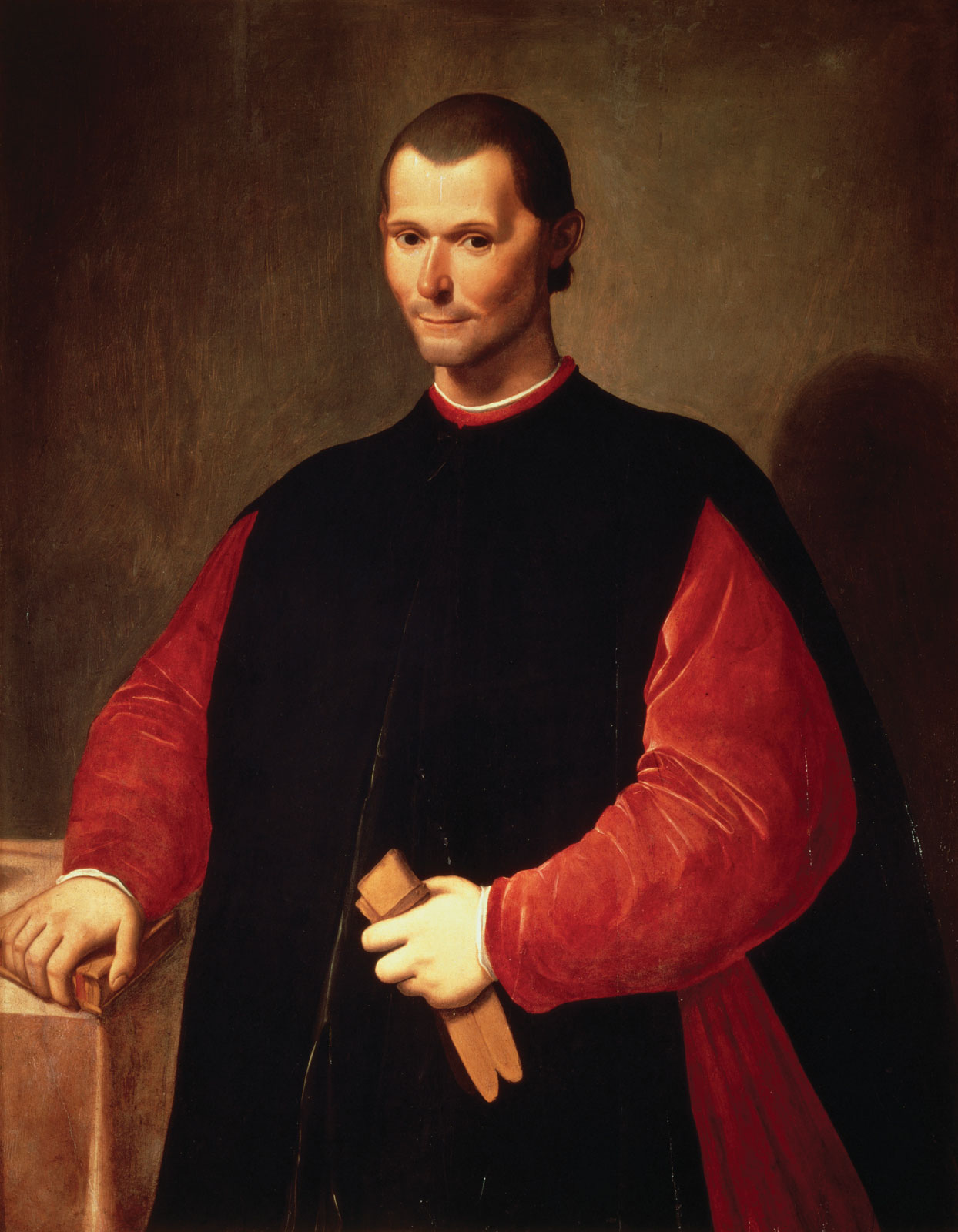
Portrait of Niccolò Machiavelli
Santi di Tito · late 16th century
A late 16th-century portrait by Santi di Tito that became the standard image of Machiavelli, though painted after his death.
This posthumous portrait became the standard visual image of Machiavelli, despite being painted after his death.
About this source
What it is
This portrait of Niccolò Machiavelli was painted by Santi di Tito in the late 16th century and hangs in the Palazzo Vecchio. It shows a man in a black cloak with red sleeves and collar, resting one hand on a stone ledge and holding a book in the other.
Why it matters
Because no portrait was made of Machiavelli during his lifetime, this painting, created decades after his death, became the image most people associate with him. It reflects how later generations imagined the author of The Prince, shaping his legacy as much as his writings did.
Look closer
- Why might an artist include a book in a portrait of a writer?
- Since this was painted after Machiavelli died, how reliable do you think it is as a record of his actual appearance?
- What might the dark background and formal pose be meant to suggest about the sitter?
This painting is part of the curated material that grounds the AI version of Niccolo Machiavelli on Humy.ai — when students ask about related events, the AI can quote it and cite it.
More Niccolo Machiavelli sources
Meet the AI Niccolo Machiavelli →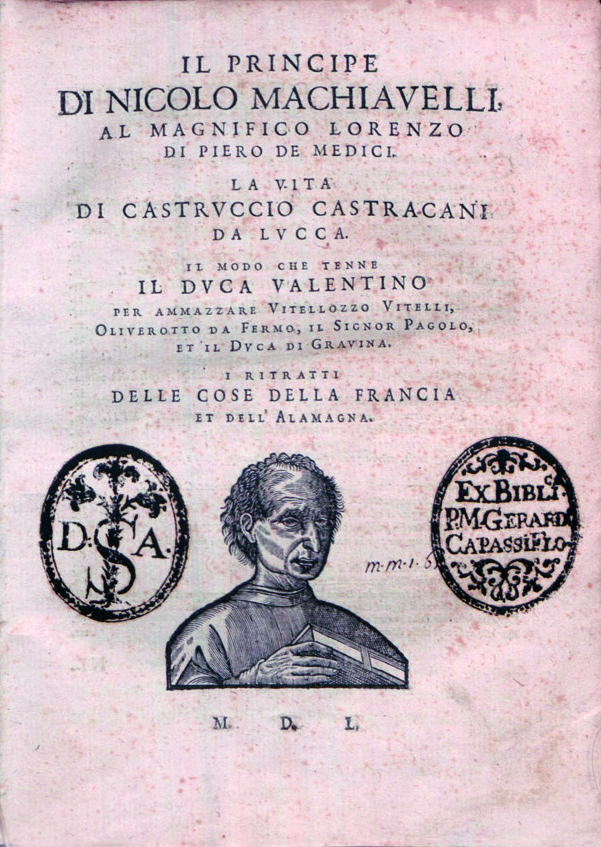 Book
Primary source
The Prince
Niccolò Machiavelli · 1513
Primary source
Letter to Francesco Vettori
Niccolò Machiavelli · 10 December 1513
 Book
Primary source
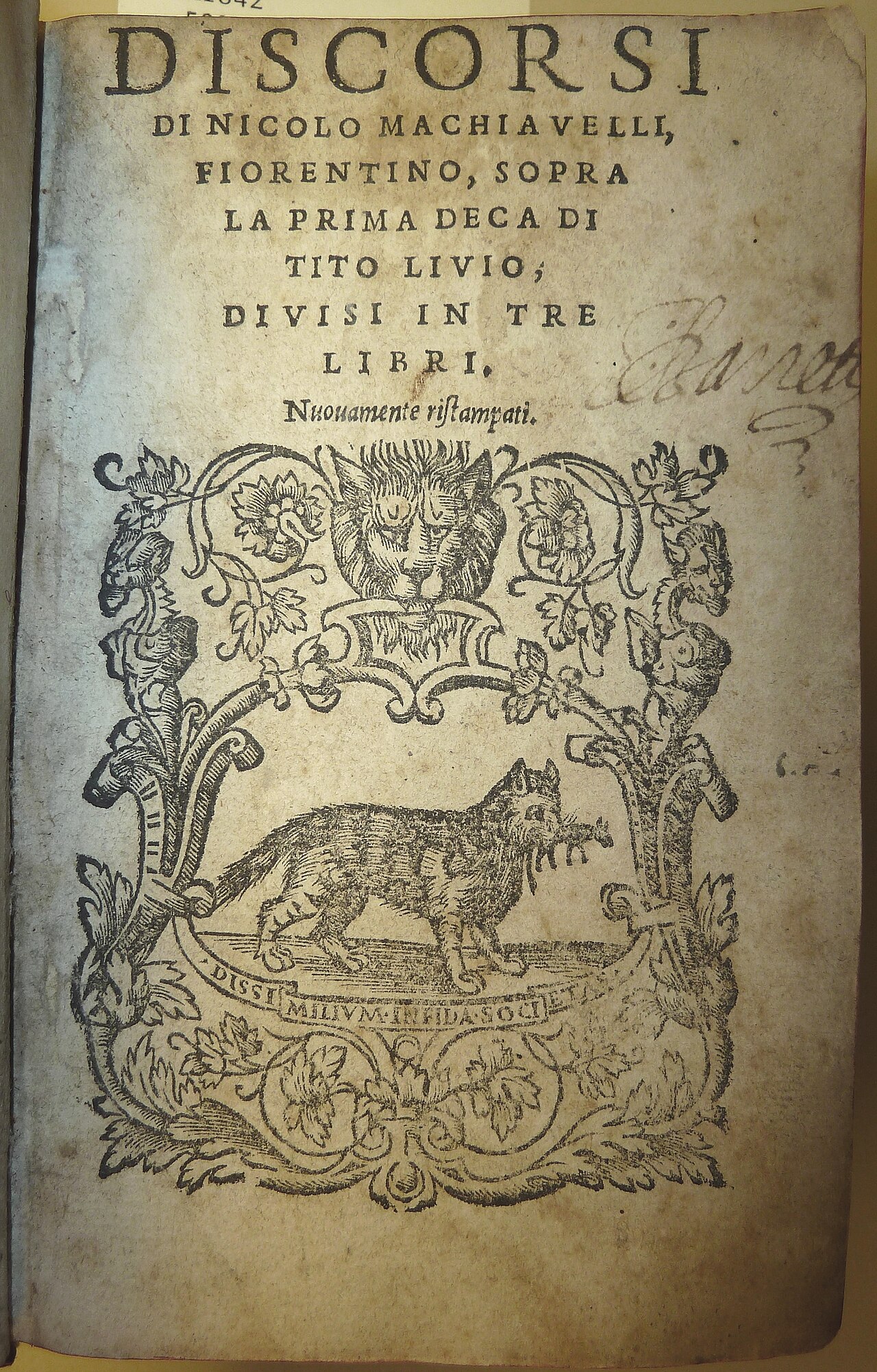
Discourses on Livy
Niccolò Machiavelli · c. 1517, published 1531
 Book
Primary source
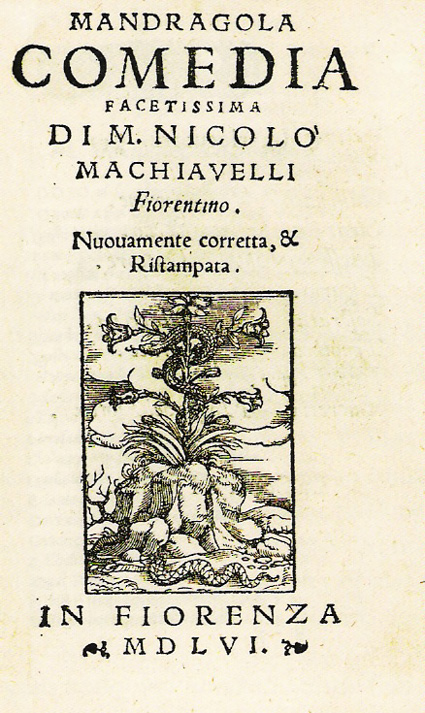
The Mandrake
Niccolò Machiavelli · 1524
 Book
Primary source
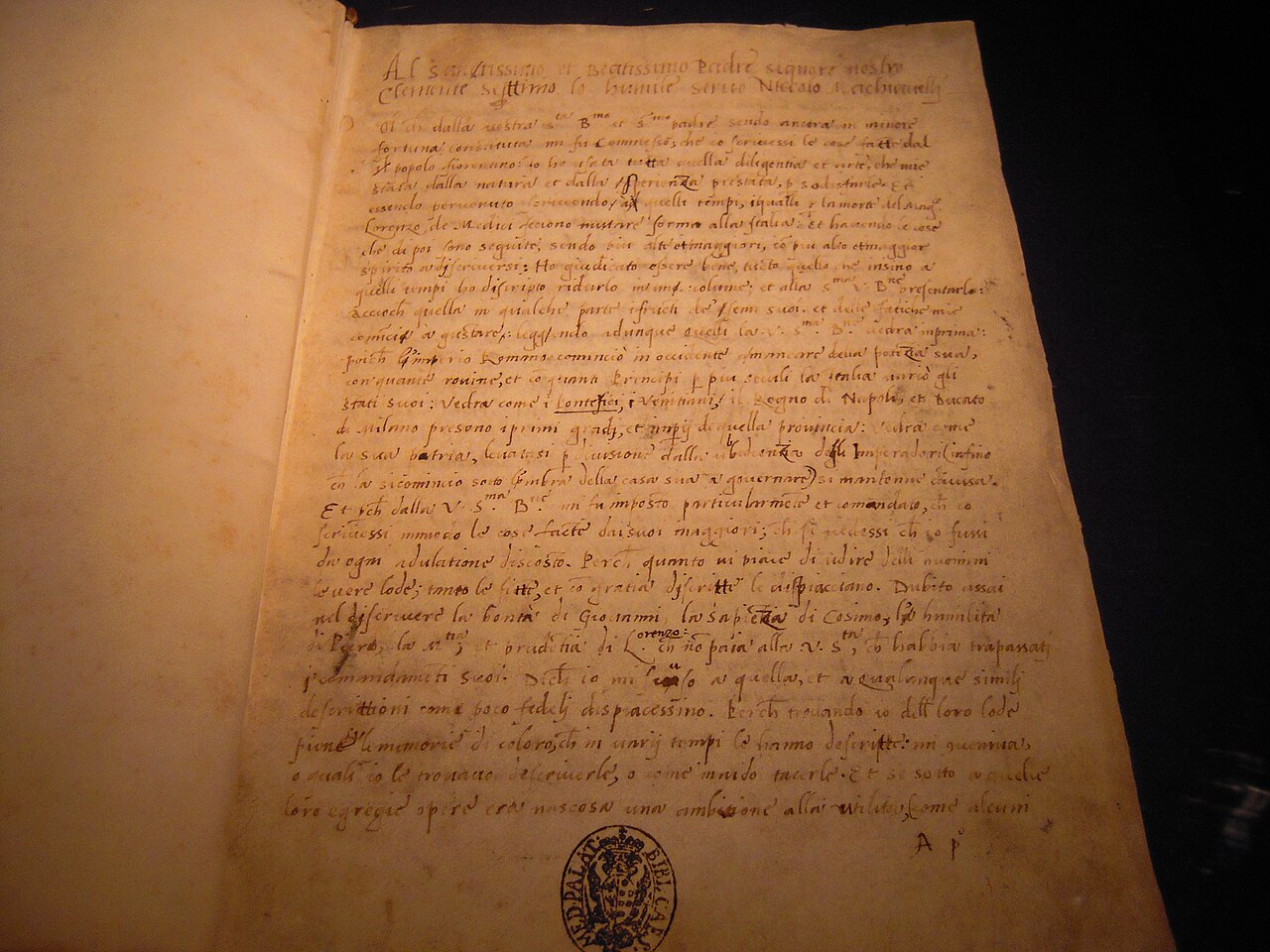
Florentine Histories
Niccolò Machiavelli · commissioned 1520, presented 1526, published 1532
Ready when you are
Start chatting with Niccolo Machiavelli now.
20 messages free · No credit card · Available in 50+ languages.