


Secondary sourcePainting1734
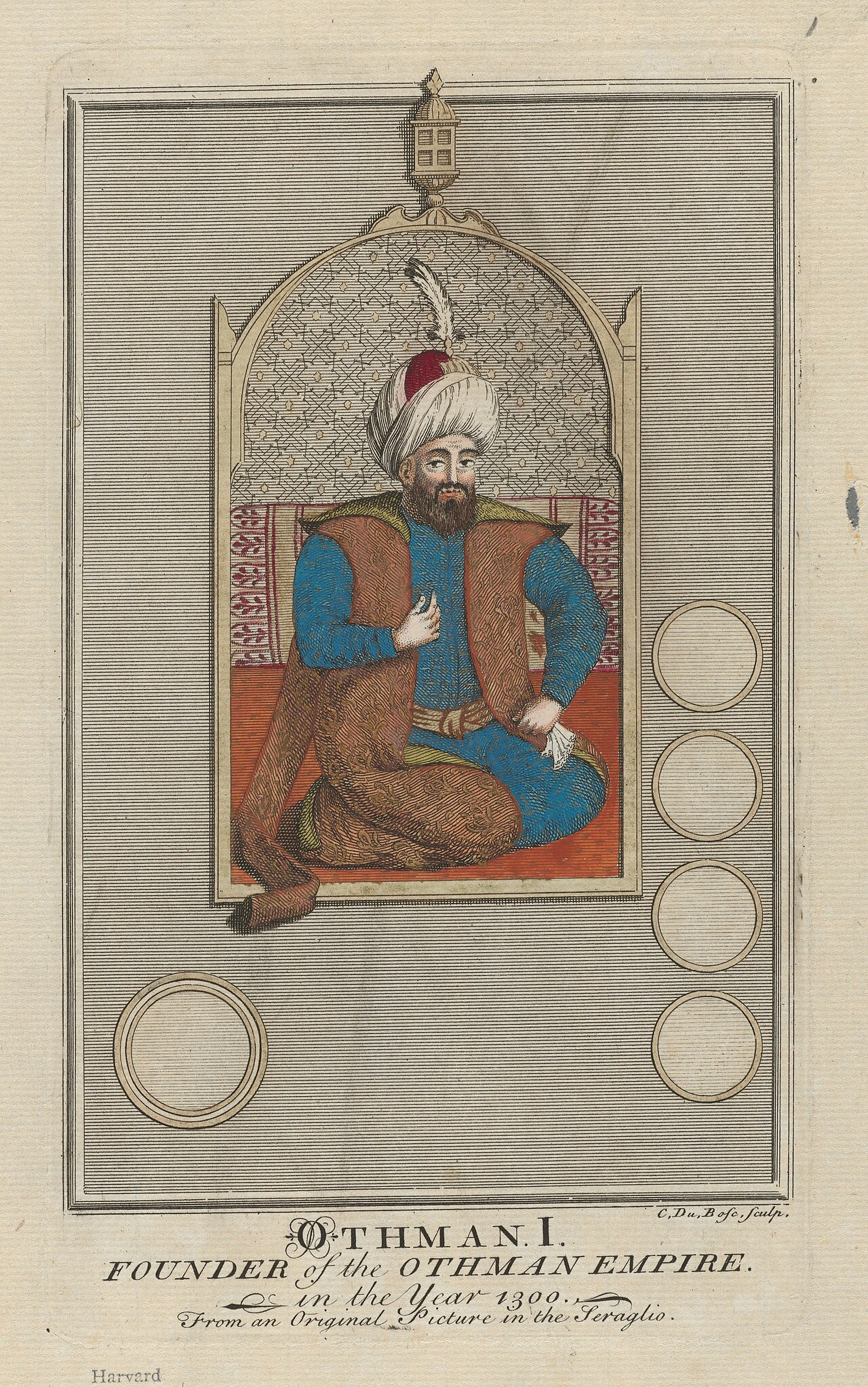
Portrait of Othman I
Claude du Bosc · 1734
An 18th-century engraving of Osman I, Ertuğrul's son, made for a European history of the Ottoman Empire.
Depicts Ertuğrul's son Osman I, showing how Europeans pictured the dynasty's founding family long after his lifetime.
About this source
What it is
This hand-colored engraving by Claude du Bosc shows Osman I seated on a carpet in an arched niche, wearing a turban and robes. It was published in 1734-35 in Dimitrie Cantemir's History of the Growth and Decay of the Othman Empire, and is now held at Harvard University's Houghton Library.
Why it matters
Made over four centuries after Osman's death, this print reflects how European readers in the 1700s imagined the founder of the Ottoman dynasty, son of Ertuğrul. It was created for a widely read scholarly history rather than drawn from life.
Look closer
- What details in the clothing and setting suggest the artist's idea of an
This painting is part of the curated material that grounds the AI version of Ertuğrul and Osman I on Humy.ai — when students ask about related events, the AI can quote it and cite it.
More Ertuğrul sources
Browse all 35 →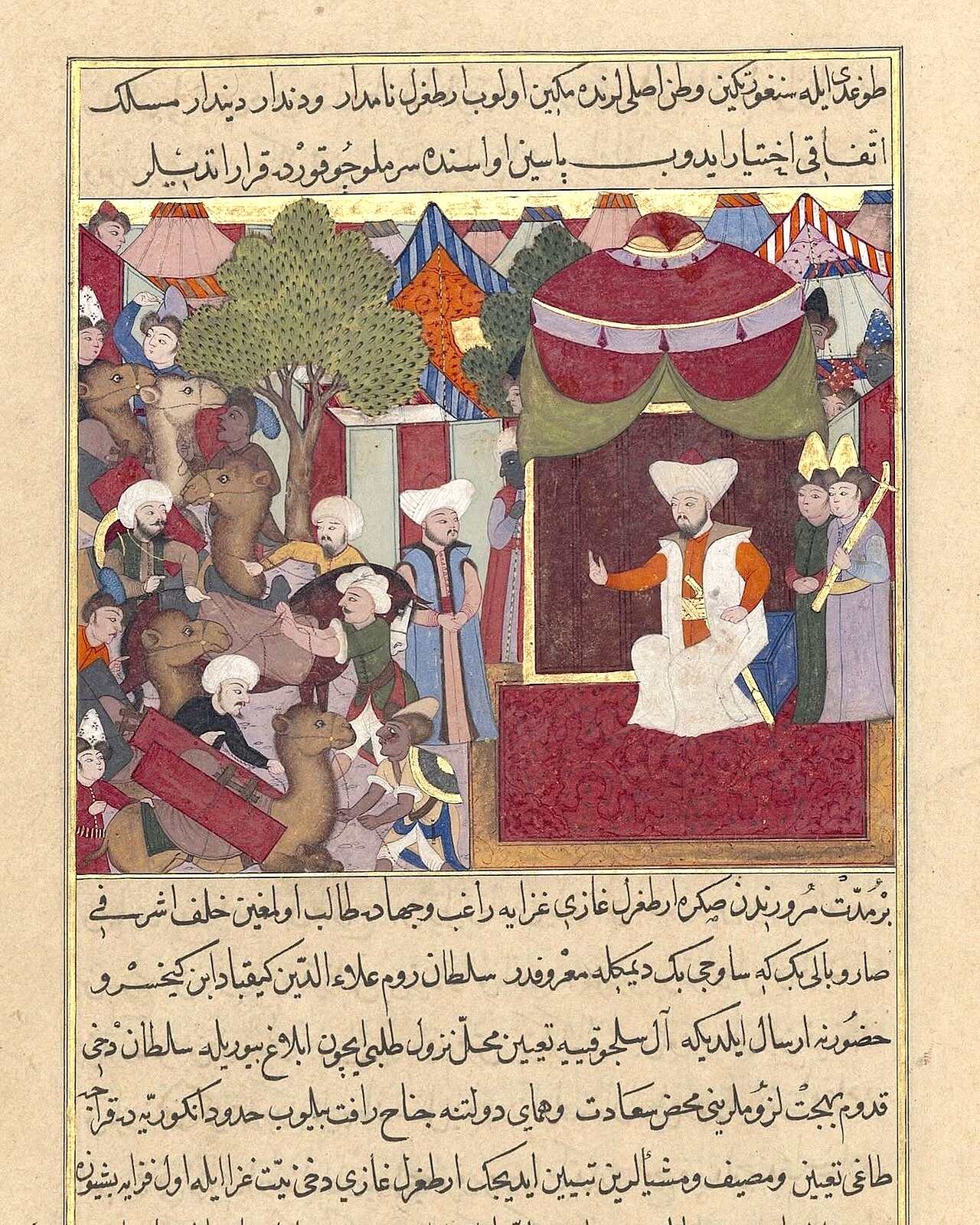 Painting
Primary source
Ertugrul Sends Savci Bey
1616
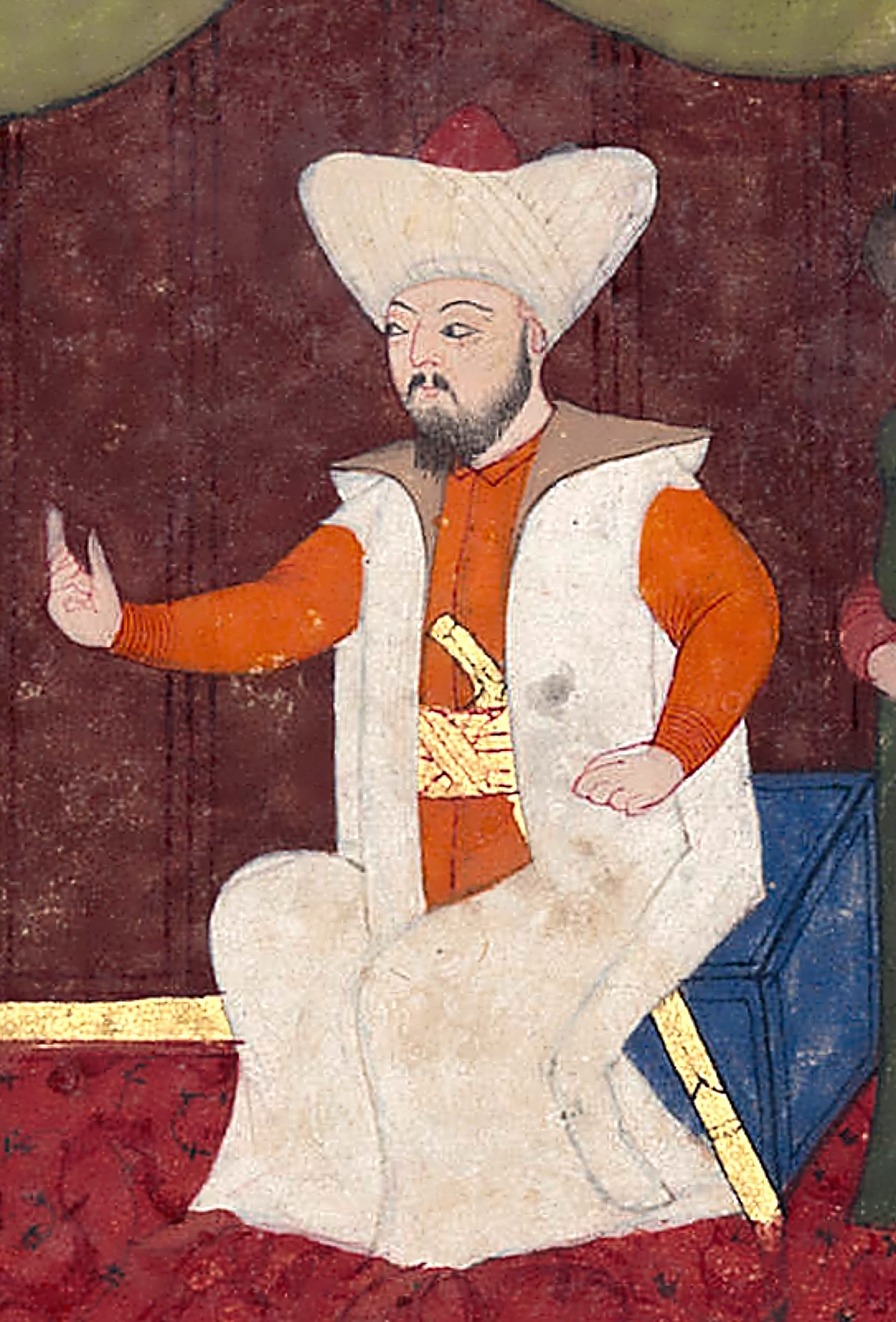 Painting
Secondary source
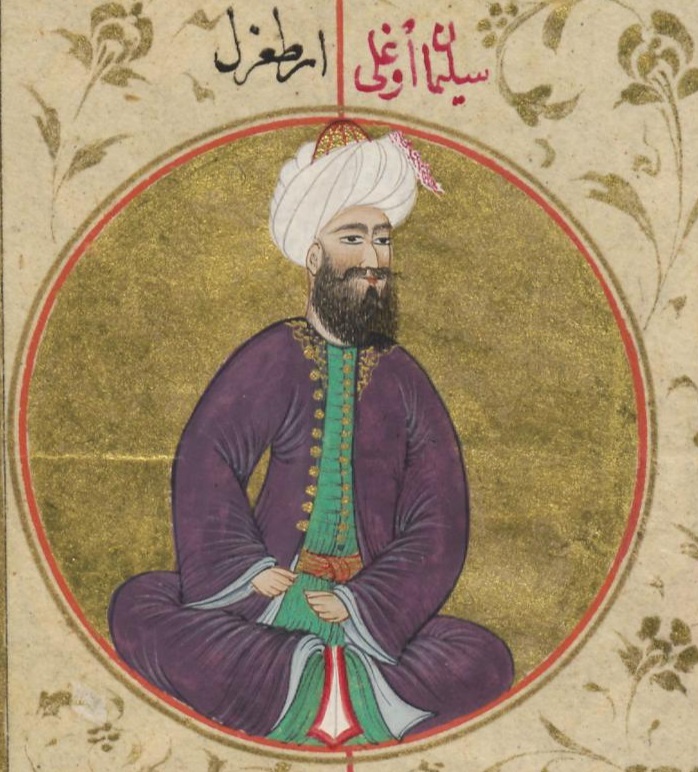
Portrait of Ertuğrul (Enthroned)
Unknown 1616 court artist · 1616
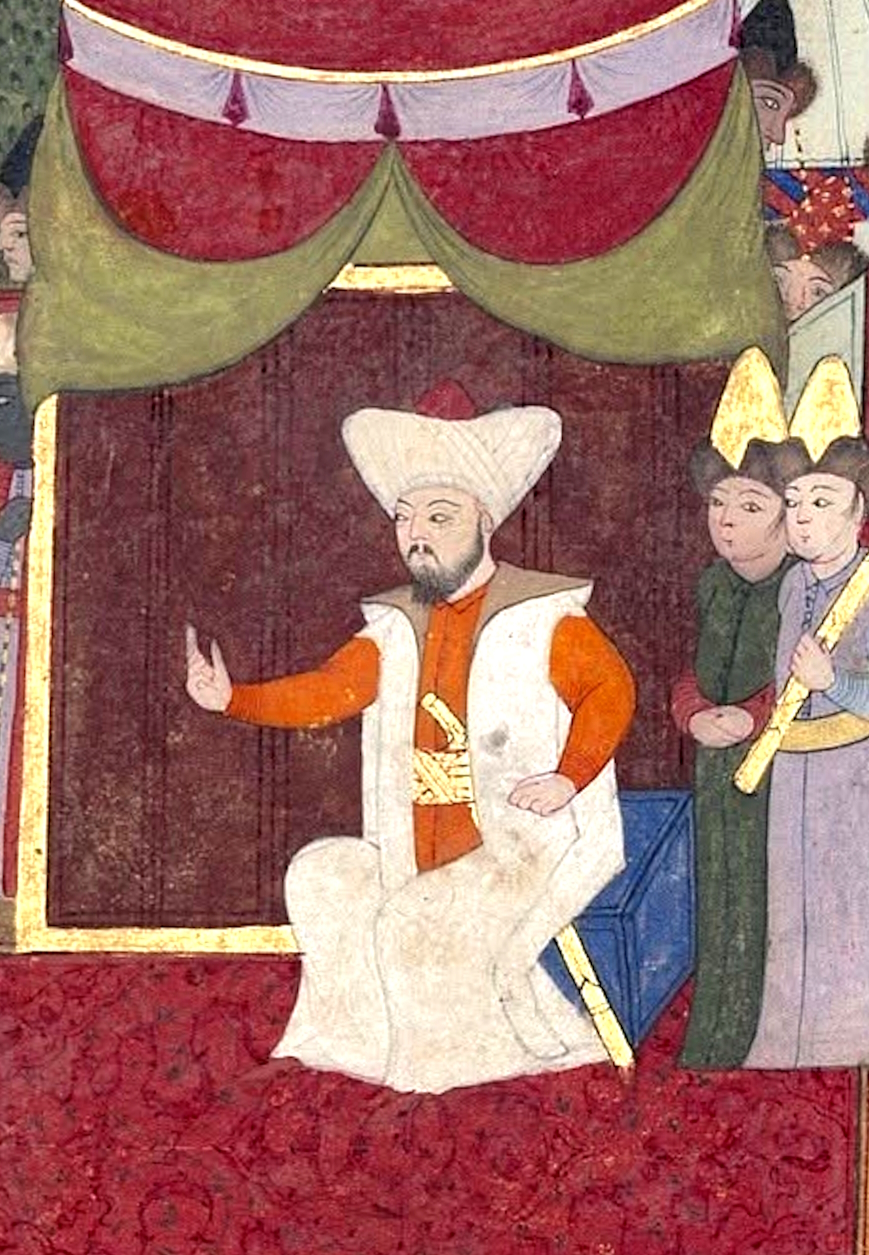 Painting
Secondary source
Ertuğrul (Enthroned), Taj al-Tawarikh Miniature
Unknown 1616 court artist · 1616
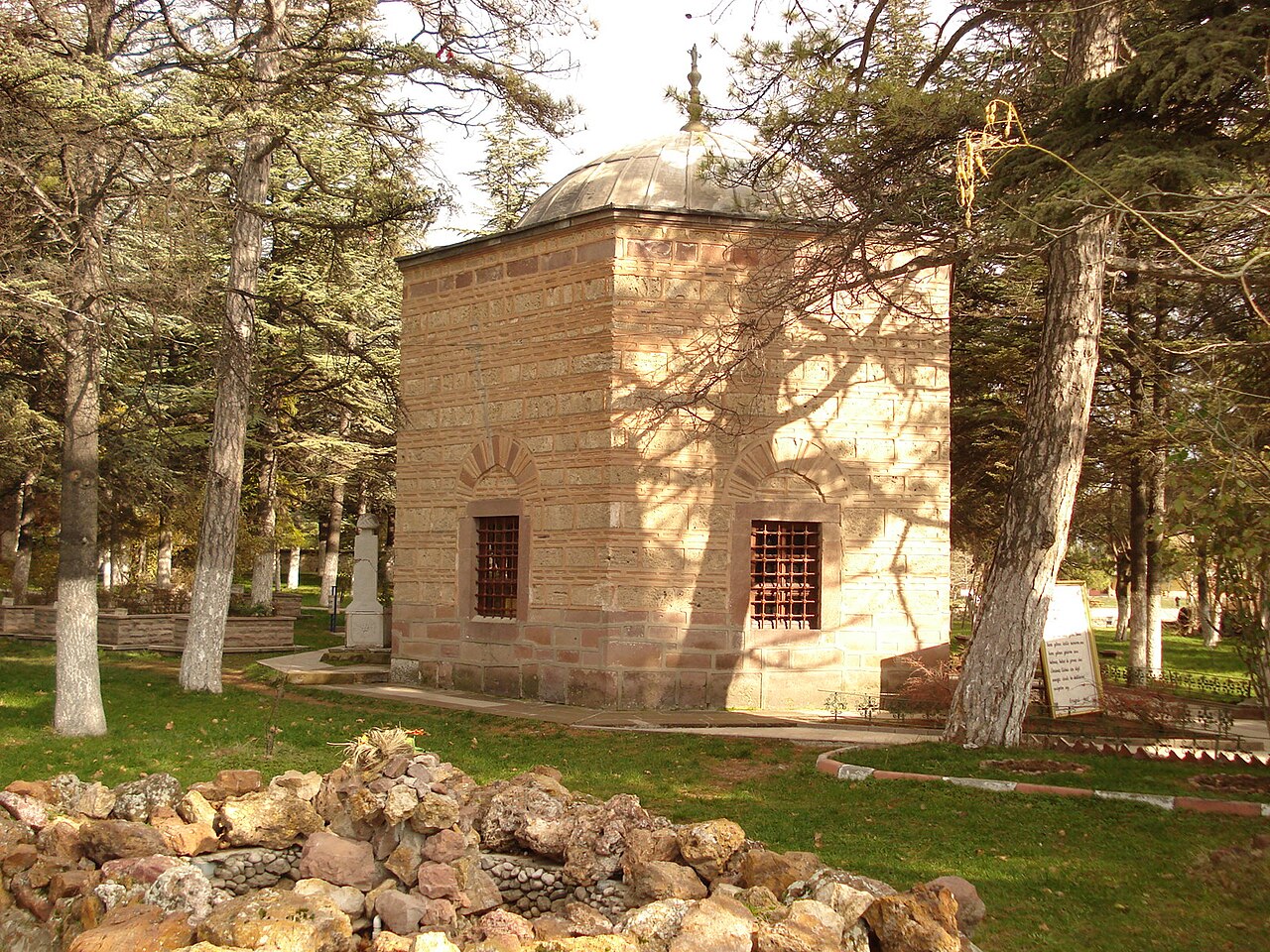 Artifact
Secondary source
Tomb of Ertuğrul Gazi, Söğüt
Traditionally Osman I; rebuilt under Abdülhamid II · Late 13th century (tradition); rebuilt 1880s
Free account
Read every Ertuğrul source
Sign up free →
Ready when you are
Start chatting with Ertuğrul now.
20 messages free · No credit card · Available in 50+ languages.