


Secondary sourceSculpture
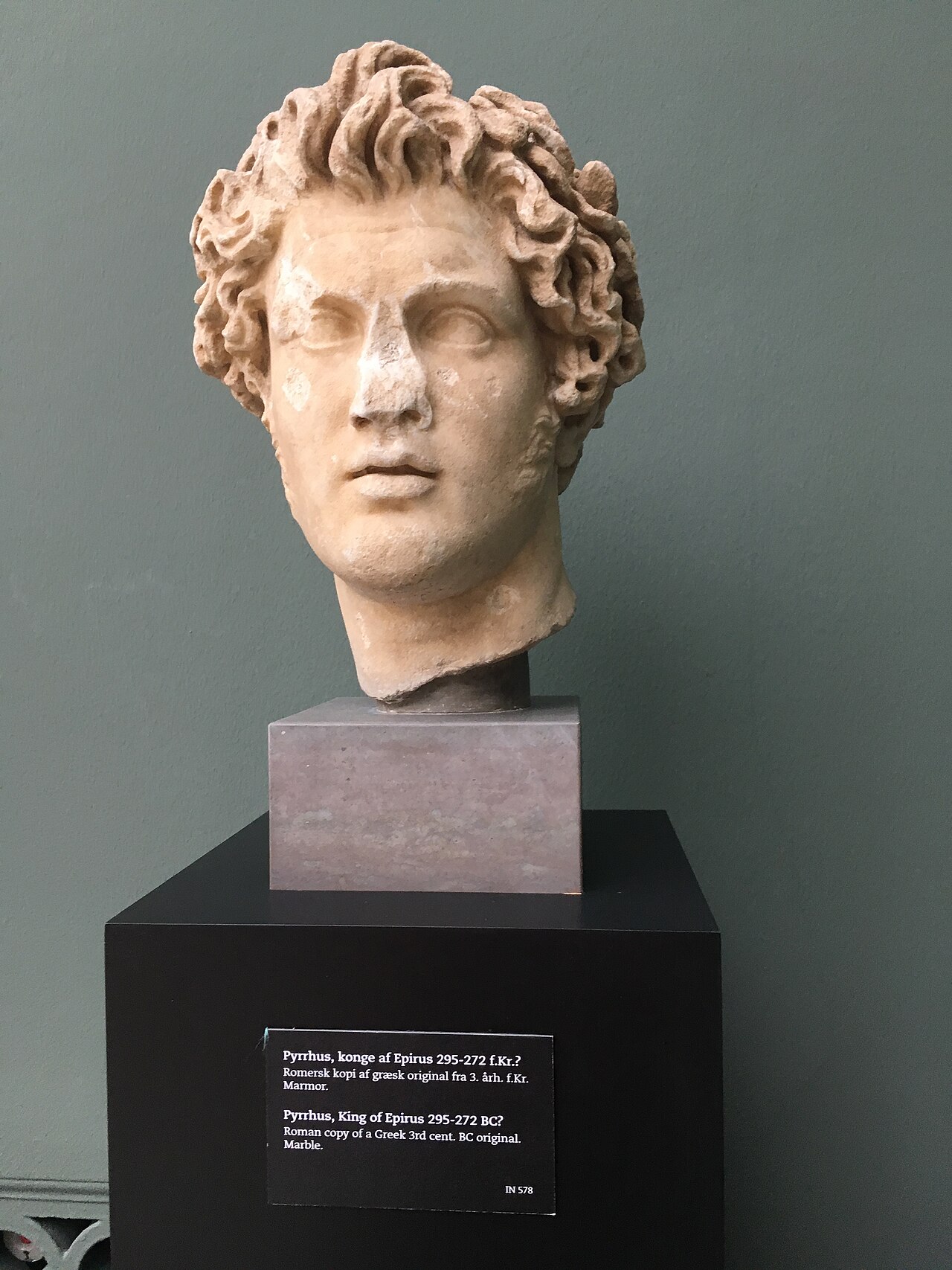
Portrait of Pyrrhus, King of Epirus, Roman marble copy
A Roman marble bust copying a 3rd-century BC Greek portrait believed to show Pyrrhus.
A Roman copy of a Greek portrait identified as Pyrrhus, offering a possible likeness of the king.
About this source
What it is
This photograph shows a Roman marble copy of a Greek portrait bust dated to the 3rd century BC, labeled as Pyrrhus, King of Epirus. The bust shows a young man with curly hair swept back, displayed on a museum plinth.
Why it matters
Portraits like this show how later Roman artists preserved and copied Greek originals of famous rulers. Because the original Greek portrait is lost, this Roman copy is one of the ways historians try to reconstruct what Pyrrhus may have looked like, though such identifications are not certain.
Look closer
- What features of the face might lead a museum to identify this as Pyrrhus?
- Why do museums rely on later Roman copies rather than the lost Greek originals?
- What assumptions are being made when a label confidently names an ancient bust?
This sculpture is part of the curated material that grounds the AI version of Pyrrhus of Epirus on Humy.ai — when students ask about related events, the AI can quote it and cite it.
More Pyrrhus of Epirus sources
Browse all 78 →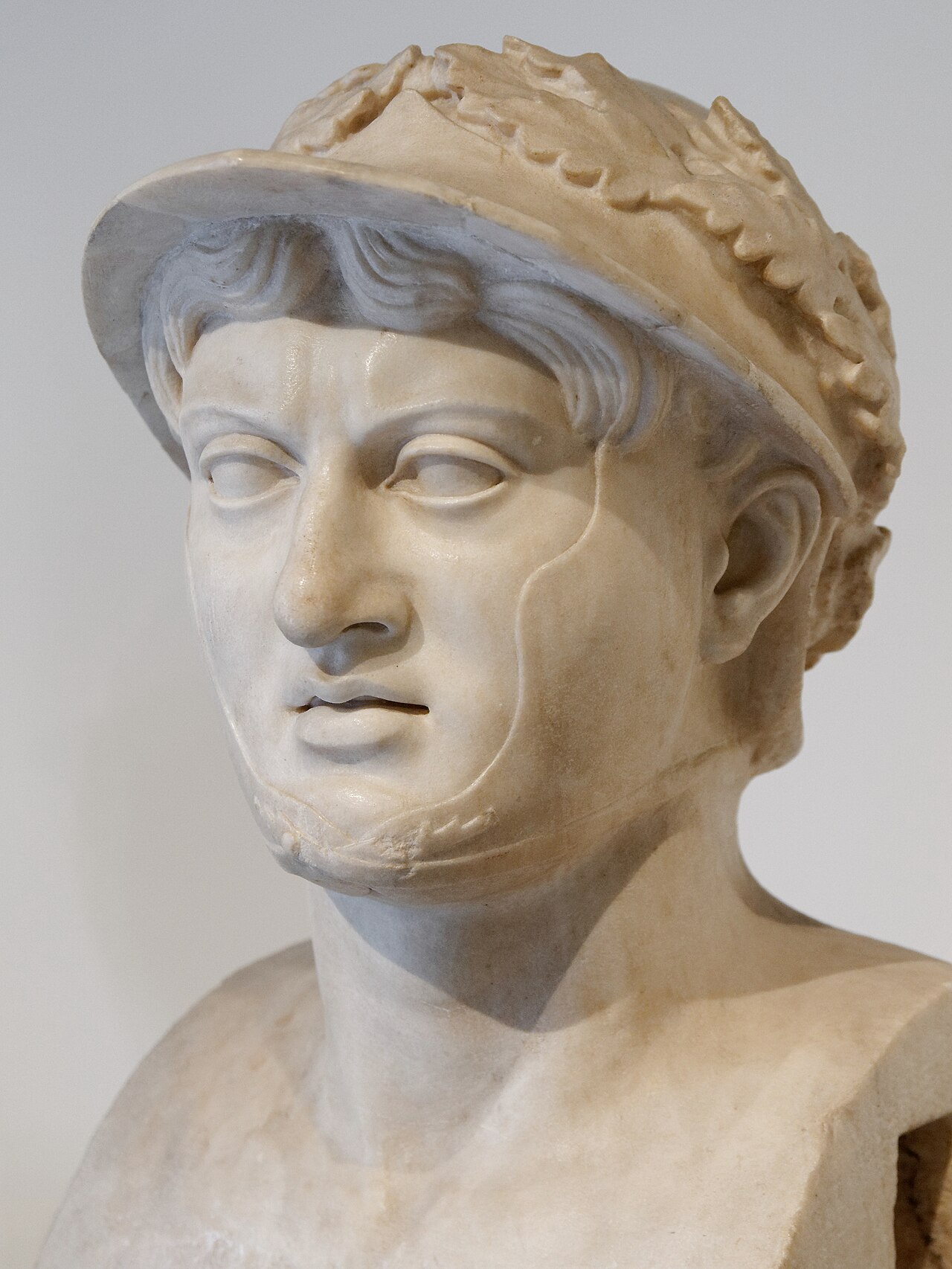
Ready when you are
Start chatting with Pyrrhus of Epirus now.
20 messages free · No credit card · Available in 50+ languages.