


Secondary sourcePainting
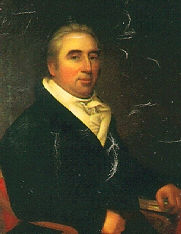
Portrait of William Marbury
The best-known painted likeness of William Marbury, plaintiff in Marbury v. Madison, now displayed in the Supreme Court's John Marshall Room.
This portrait of Marbury, the plaintiff, is displayed by the Supreme Court in the room honoring Chief Justice Marshall who decided his case.
About this source
What it is
This oil painting shows William Marbury seated, in a dark coat and white cravat, holding a small book or paper. It is the most widely reproduced image of Marbury.
Why it matters
Chief Justice Warren Burger had this portrait hung in the Supreme Court's John Marshall Room, named for the Chief Justice who wrote the famous opinion in Marbury's case. This shows how the Court itself chose to remember Marbury, not as a judge but as the plaintiff whose lawsuit shaped its own power.
Look closer
- Why might the Supreme Court want to display a portrait of the man who lost his case against it?
- What does the object Marbury holds suggest about how the artist wanted him remembered?
- What does it mean that this is the main image people use to picture Marbury today?
This painting is part of the curated material that grounds the AI version of William Marbury on Humy.ai — when students ask about related events, the AI can quote it and cite it.
More William Marbury sources
Meet the AI William Marbury →Primary source
Jefferson's First Inaugural Address
Thomas Jefferson · 4 March 1801
 Document
Primary source
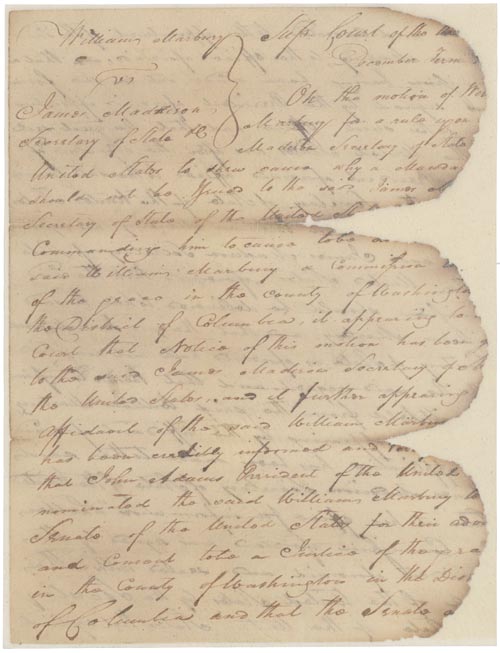
Marbury v. Madison
1803
 Painting
Primary source
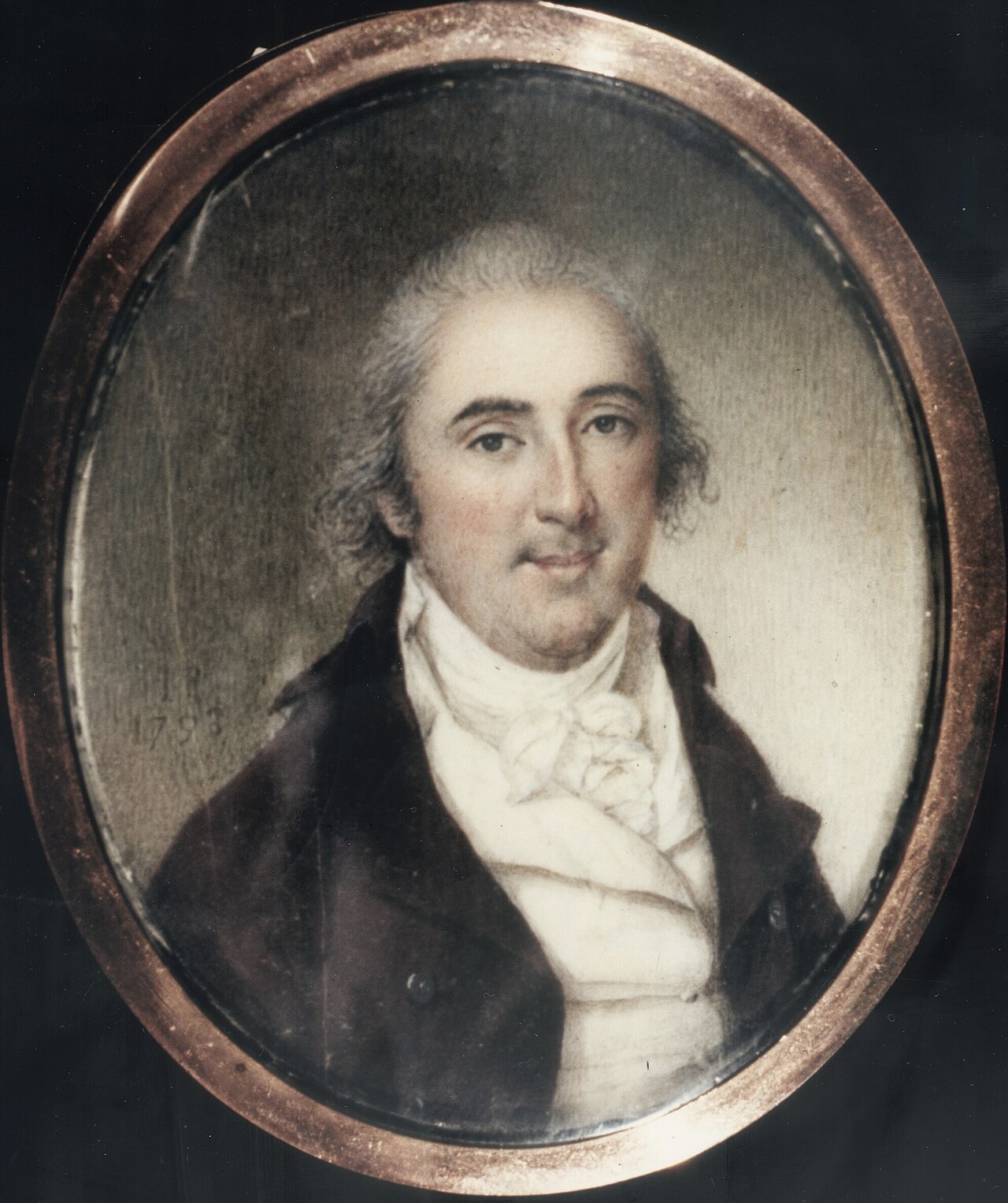
William Marbury
James Peale · c. 1790s
Primary source
Letter from Thomas Jefferson to Spencer Roane
Thomas Jefferson · 6 September 1819
 Document
Primary source
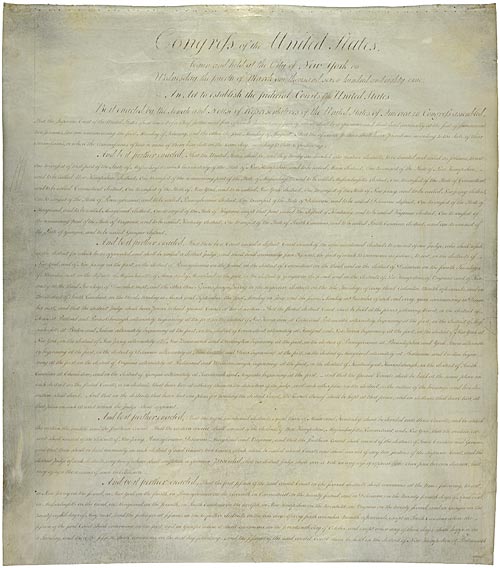
Federal Judiciary Act
United States Congress · 24 September 1789
Ready when you are
Start chatting with William Marbury now.
20 messages free · No credit card · Available in 50+ languages.