


Primary sourceDocument1803
Marbury v. Madison
1803
The 1803 Supreme Court case arising from Adams's last-minute judicial appointments, which established the principle of judicial review.
This case established judicial review, the power Taney controversially exercised in his Dred Scott opinion.
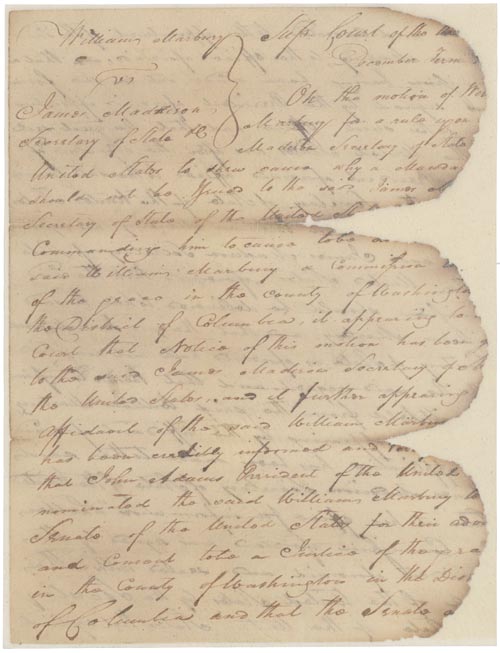
About this source
What it is
This document is a show-cause order from the Marbury v. Madison case, served on Secretary of State James Madison in 1802, held by the U.S. National Archives. It bears damage from an 1898 fire in the Capitol Building.
Why it matters
The case began because outgoing President John Adams had appointed William Marbury as a justice of the peace in his final days in office, but the new administration under Madison refused to deliver the commission. Chief Justice John Marshall's ruling established that courts could declare a law unconstitutional, creating the principle of judicial review that still shapes the balance of power between branches of government today.
Look closer
- Why might Adams have made judicial appointments right before leaving office?
- What does the fire damage on this document tell you about how historical records survive?
- Why was it significant for a court, rather than Congress or the President, to decide this dispute?
This document is part of the curated material that grounds the AI version of Roger B. Taney, John Adams, James Madison and John Marshall on Humy.ai — when students ask about related events, the AI can quote it and cite it.
More Roger B. Taney sources
Meet the AI Roger B. Taney →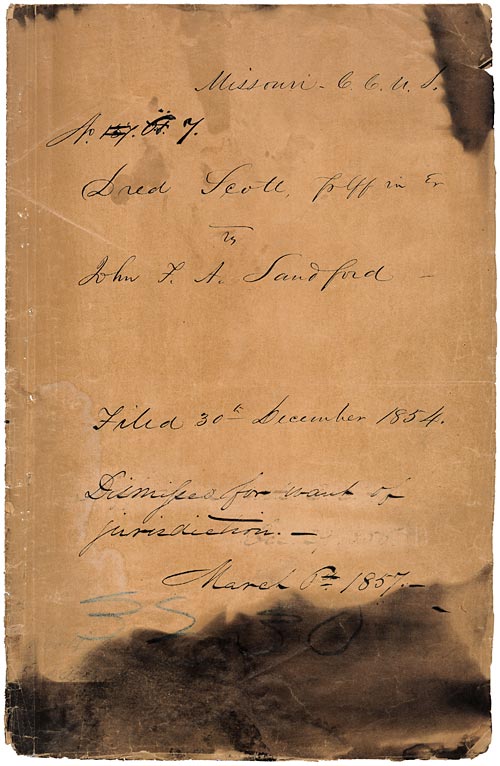 Document
Primary source
Dred Scott v. Sandford
Roger B. Taney · 6 March 1857
 Document
Primary source
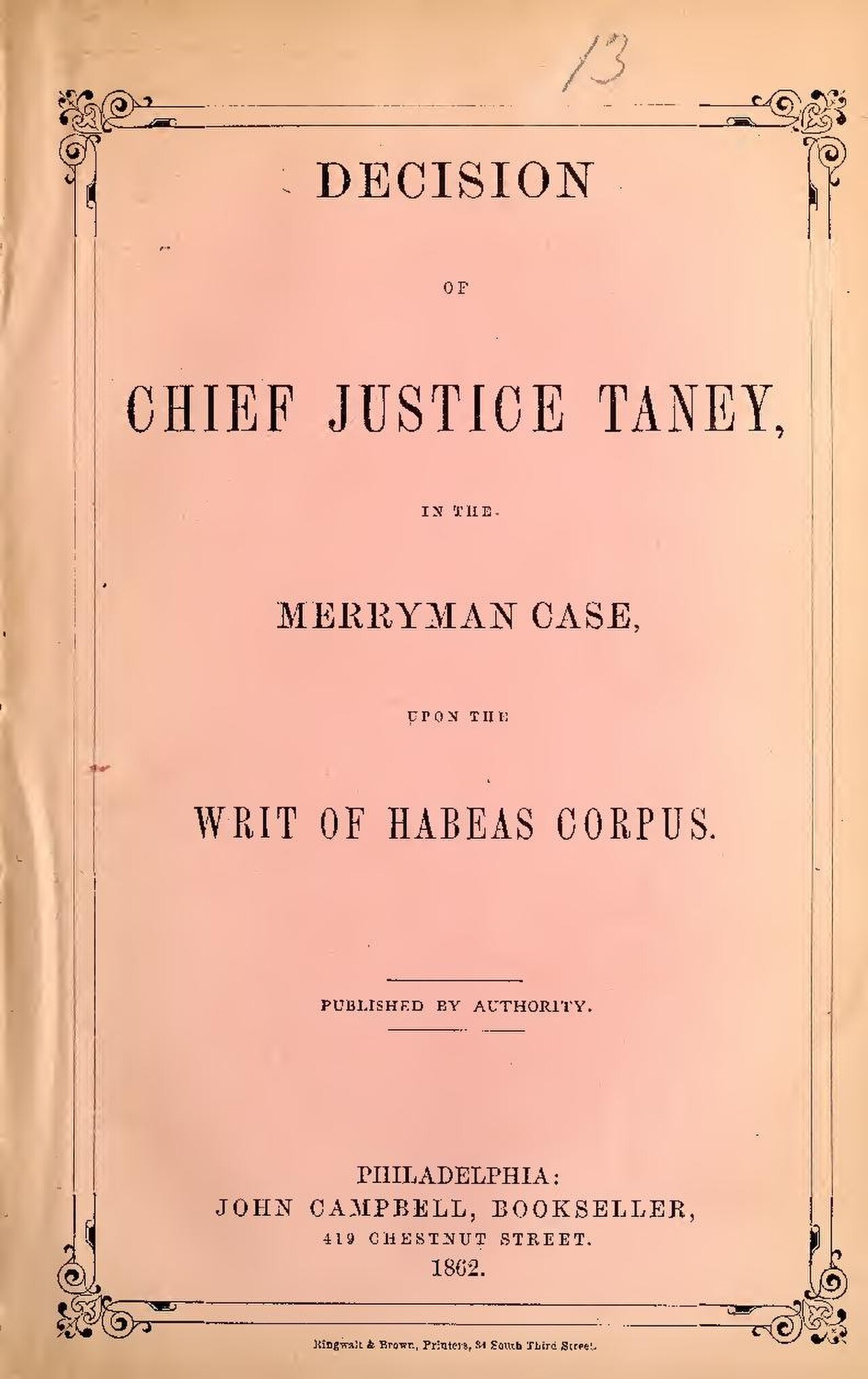
Ex parte Merryman opinion
Roger B. Taney · 1861
 Photograph
Primary source
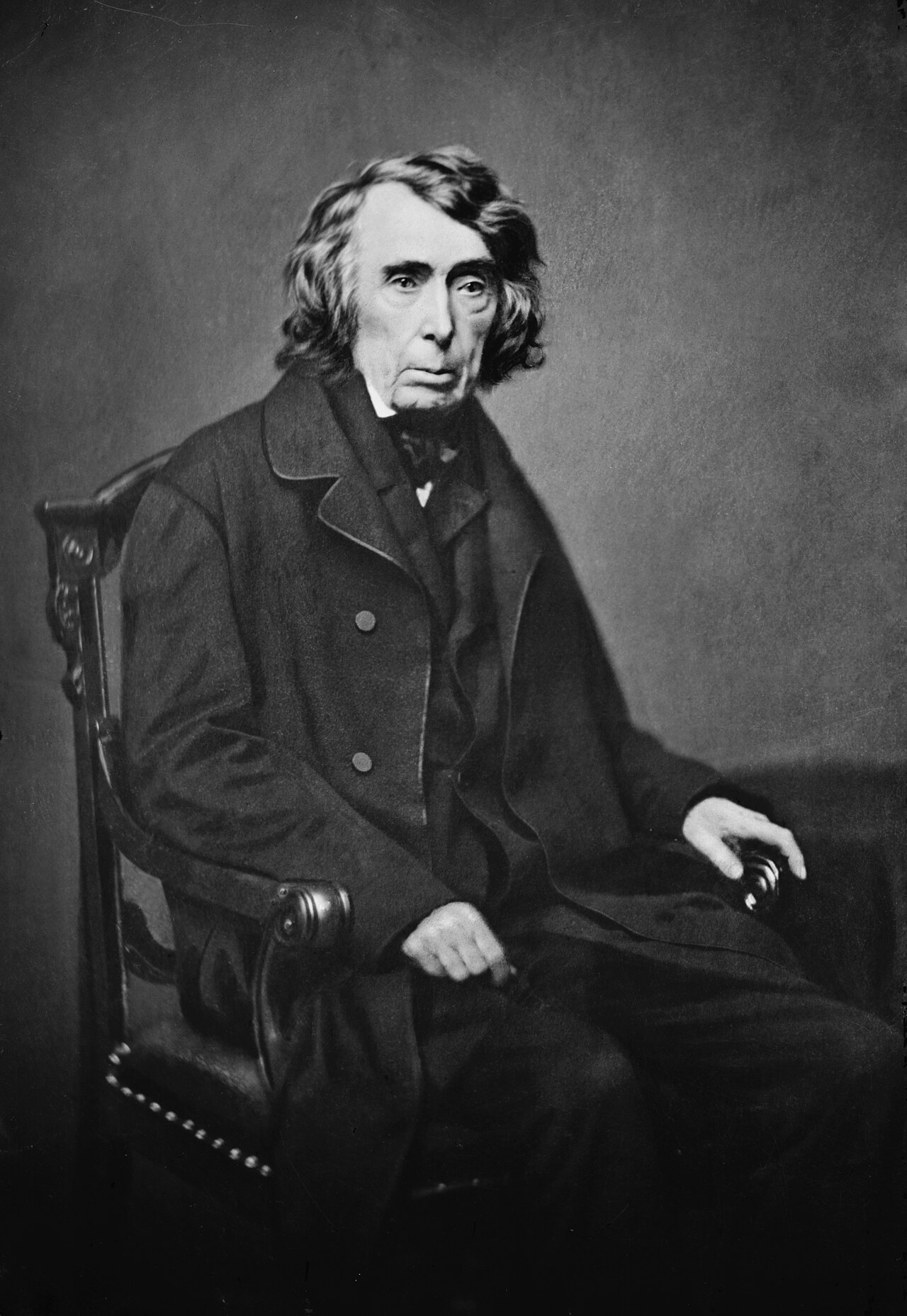
Roger B. Taney - Brady-Handy
Mathew Benjamin Brady
Primary source
Charles River Bridge v. Warren Bridge opinion
Roger B. Taney · 1837
Primary source
House Divided Speech
Abraham Lincoln · 16 June 1858
Ready when you are
Start chatting with Roger B. Taney now.
20 messages free · No credit card · Available in 50+ languages.