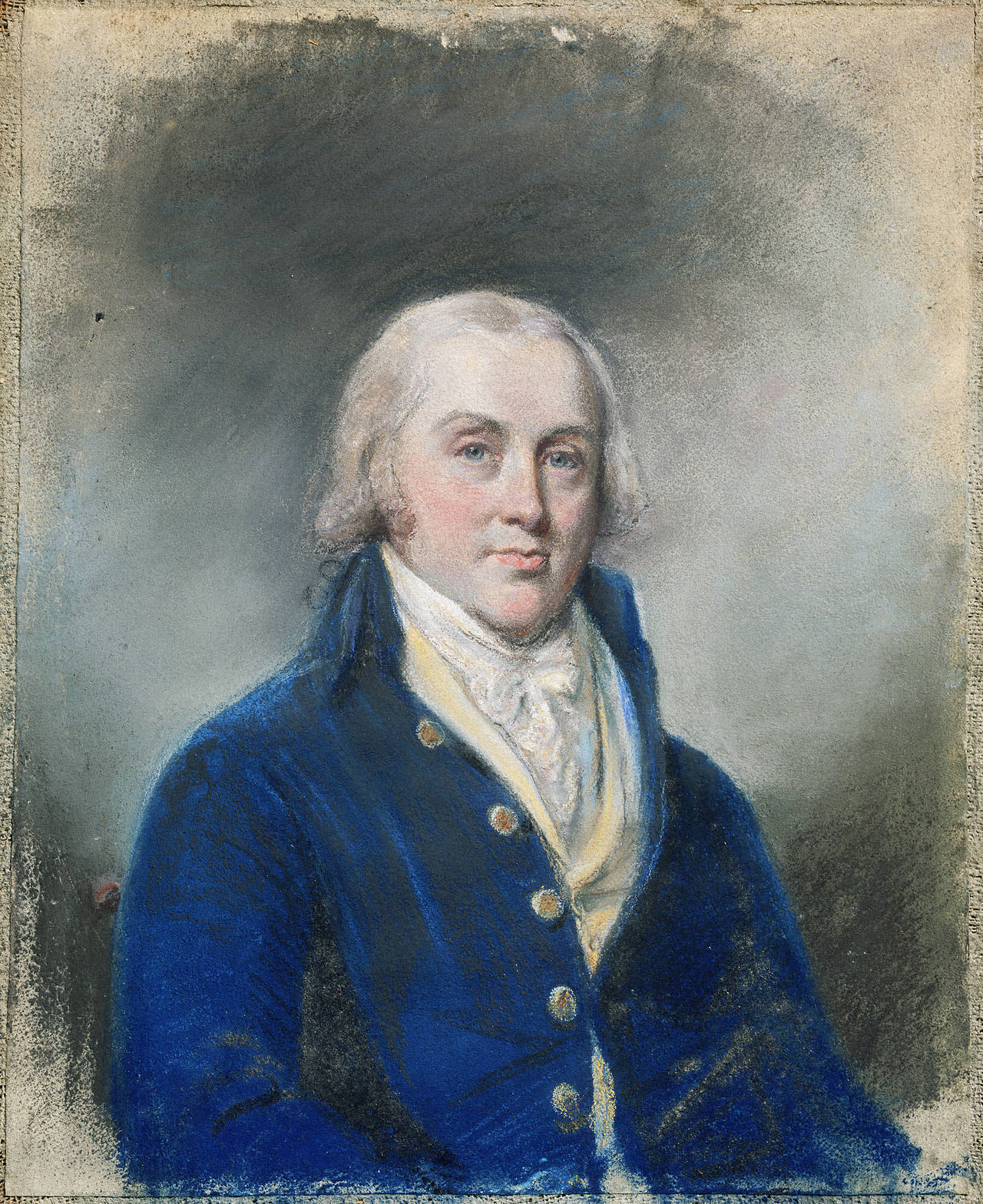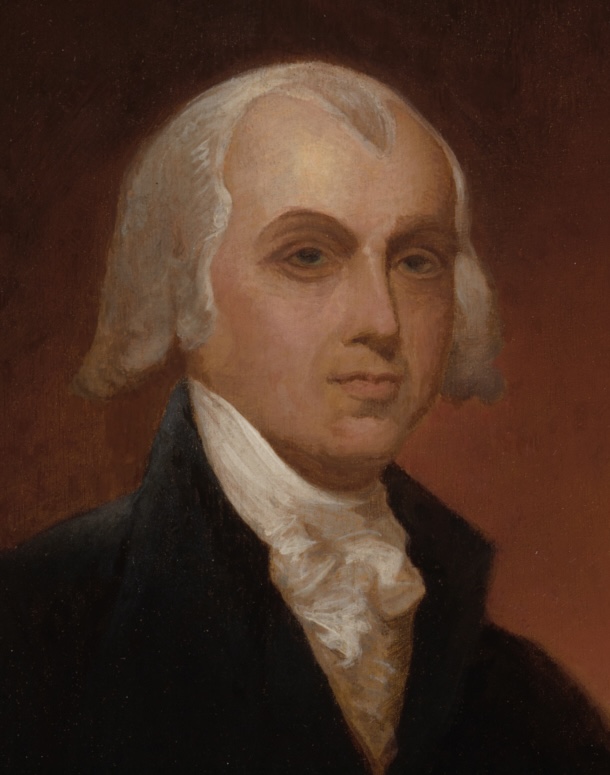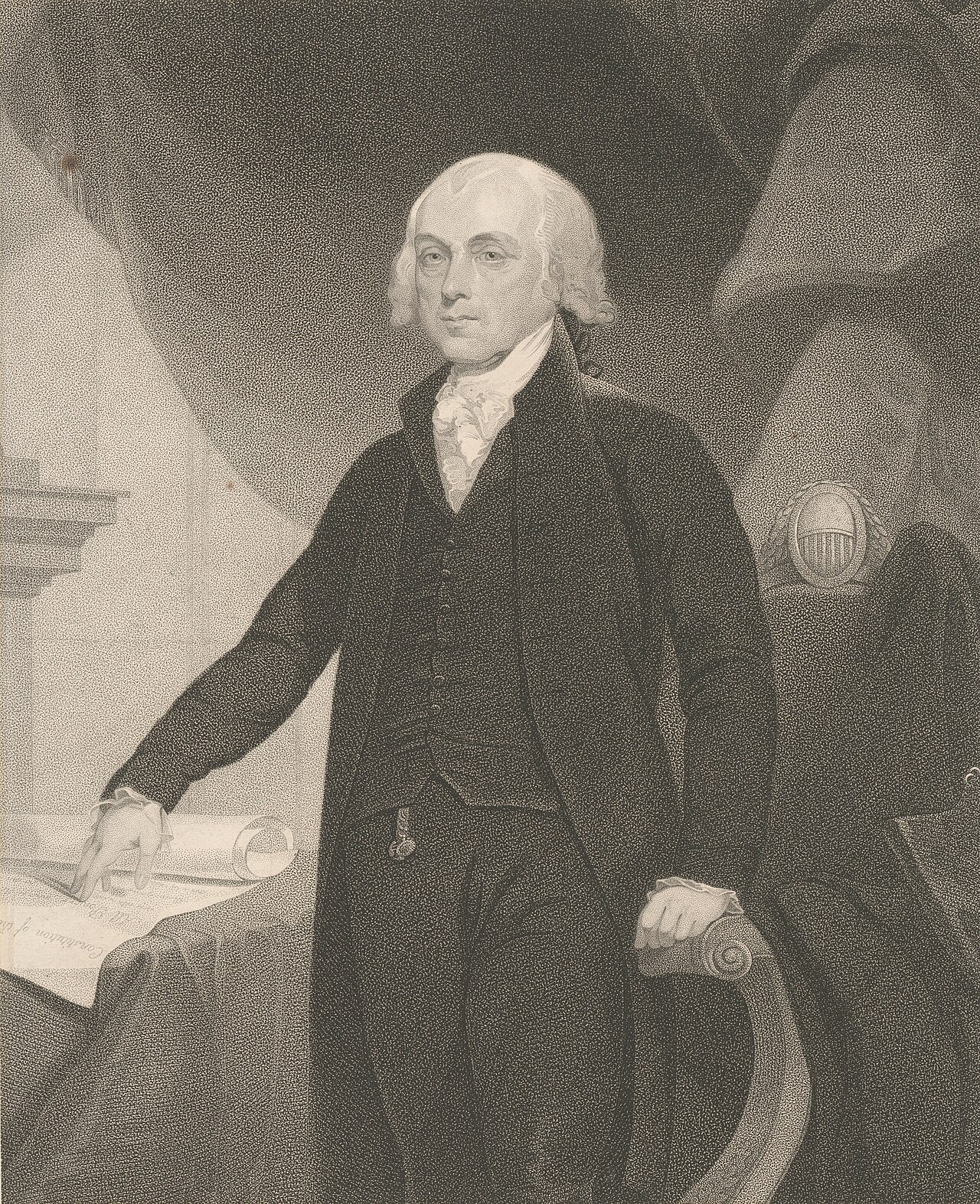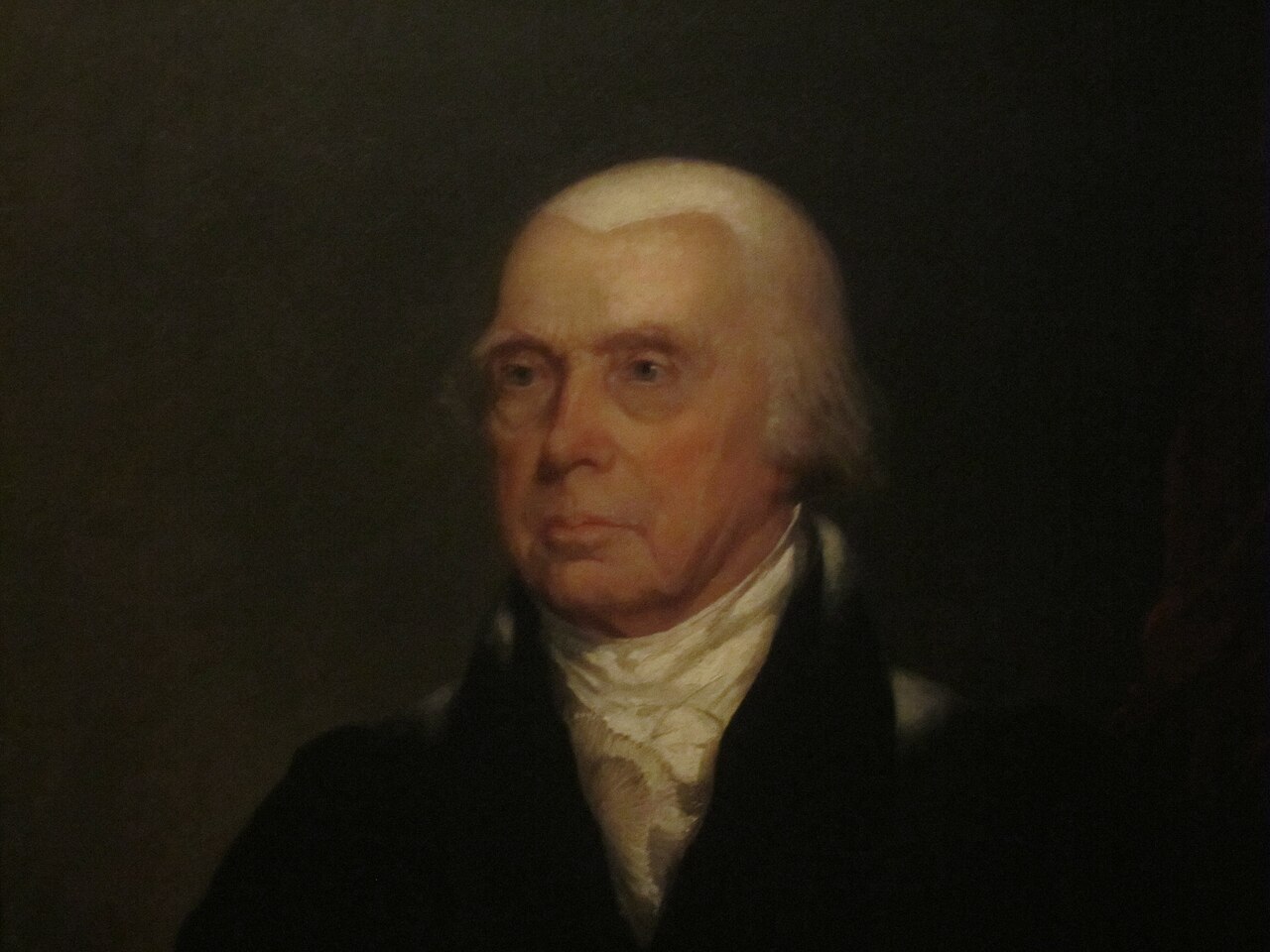

Portrait of James Madison

AI Historical Figure

James Madison

Fourth President of the United States and "Father of the Constitution.

Chat with James Madison via text or voice — in 42 languages, drawing on a curated biography and 81 historical sources. Available 24/7.

Start chatting with James Madison20 messages free · No credit card
Lived
1751–1836
From
United States
Known for
Politics & governmentPhilosophy
James Madison

James Madison

Online · responds in seconds

Hello — I'm James Madison. Fourth President of the United States and "Father of the Constitution. What would you like to ask me?

20 messages free · No credit card · Powered by Humy.ai

Live preview · Switch between 42 languages above · Send a message to continue in the app

Multilingual

Talk to James Madison in 42 languages

Ask James Madison questions in any language below, and the rest of Humy's app speaks it too. Pick yours to open the chat in that language.

Also in German (Austria), German (Switzerland), English (UK), English (Australia), English (Canada).

The sources behind this AI

81 sources · 28 documents · 13 letters · 12 books · 8 paintings · 7 newspaper articles · 6 speeches · 3 sculptures · 2 photographs · 1 artifact · 1 diary entry

James Madison doesn’t improvise from thin air. The AI is grounded in 81 curated historical sources students can inspect. Open any of them to see what informs the conversation.

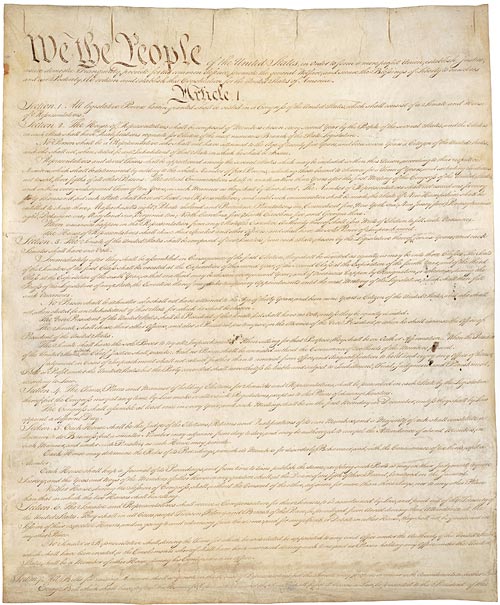
Photograph of the original parchment of the United States Constitution. The large handwritten text begins with the words 'We the People' in ornate script, followed by the article headings and dense lines of brown-ink writing on aged, yellowed parchment.Document

Primary source

United States Constitution

Constitutional Convention · 17 September 1787

Document

Primary source

Federalist No. 10

James Madison · 22 November 1787

Document

Primary source

Federalist No. 51

James Madison · 6 February 1788

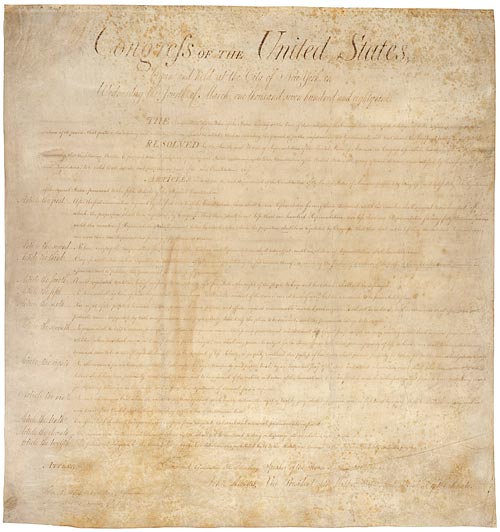
Aged, yellowed parchment page with handwritten calligraphy in brown ink. The heading reads 'Congress of the United States' in large script, followed by the opening lines of the document below.Document

Primary source

Bill of Rights

25 September 1789

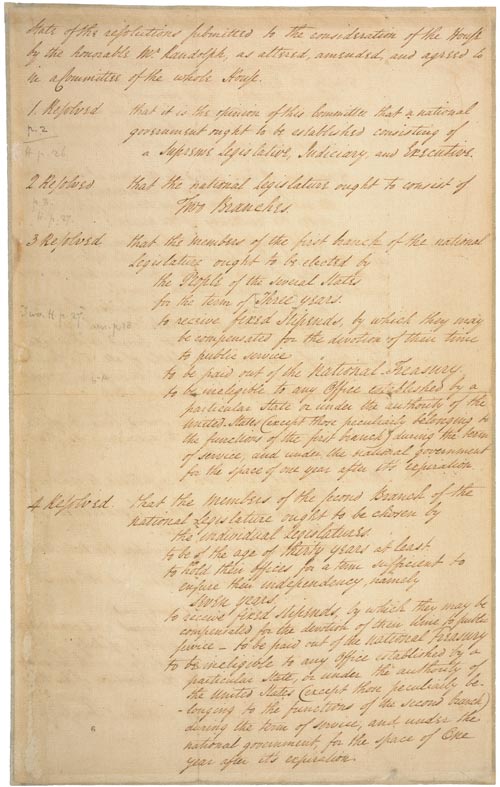
Handwritten manuscript page in brown ink on aged paper, headed 'State of the Resolutions submitted to the consideration of the House by the honorable Mr. Randolph, as altered, amended, and agreed to in a committee of the whole House.' Numbered resolutions follow, including provisions for a national government, a two-branch national legislature, and qualifications for members of the first and second branches.Document

Primary source

Virginia Plan

James Madison · 29 May 1787 (this copy 13 June 1787)

Title page of The Records of the Federal Convention of 1787, Volume I. Centered text reads 'THE RECORDS OF THE FEDERAL CONVENTION OF 1787', with 'VOLUME I' below a short horizontal rule. The rest of the page is blank.Document

Primary source

Notes of Debates in the Federal Convention of 1787

James Madison · 1787

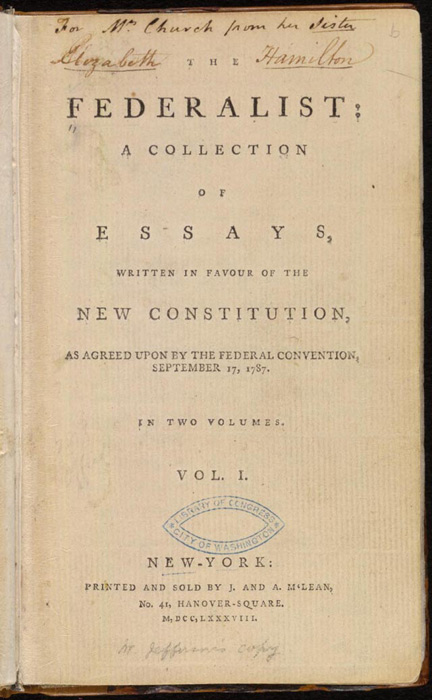
Title page of the first edition of The Federalist, volume I, 1788, New York. Handwritten inscription at top reads 'For Mrs. Church from her Sister Elizabeth Hamilton'. Blue library stamp and pencil note 'Jefferson's copy' visible.Book

Primary source

The Federalist Papers

Alexander Hamilton, James Madison, John Jay · 1788

Document

Primary source

Memorial and Remonstrance Against Religious Assessments

James Madison · 1785

Speech

Primary source

James Madison's War Message to Congress

James Madison · 1 June 1812

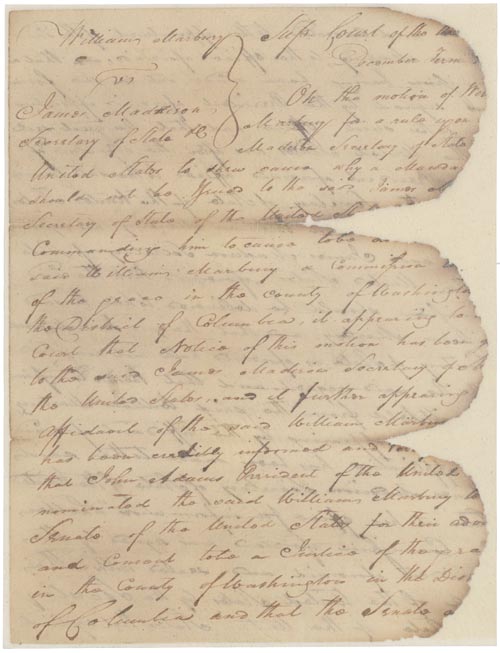
Handwritten manuscript page, brown and aged, with burned or torn edges. It reads 'William Marbury vs James Madison, Secretary of State of the United States,' and is a show-cause order about a writ of mandamus, in cursive.Document

Primary source

Marbury v. Madison

1803

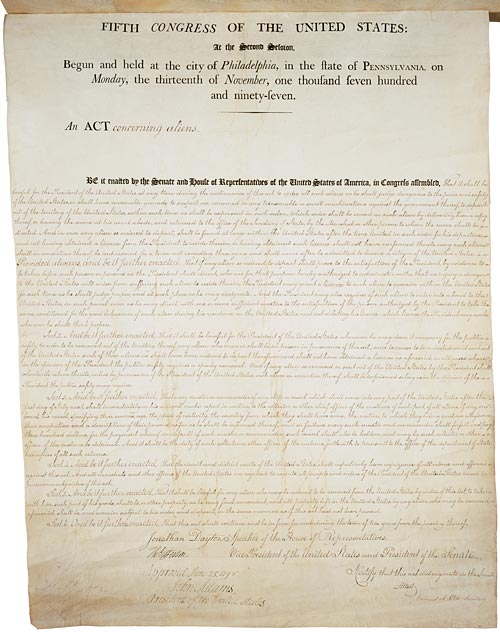
Scan of the enrolled manuscript of the 1798 Alien and Sedition Acts, headed Fifth Congress of the United States, with the Act Concerning Aliens text in dense handwritten lines and signature lines at the bottom.Document

Primary source

Alien and Sedition Acts

Fifth Congress of the United States · 1798

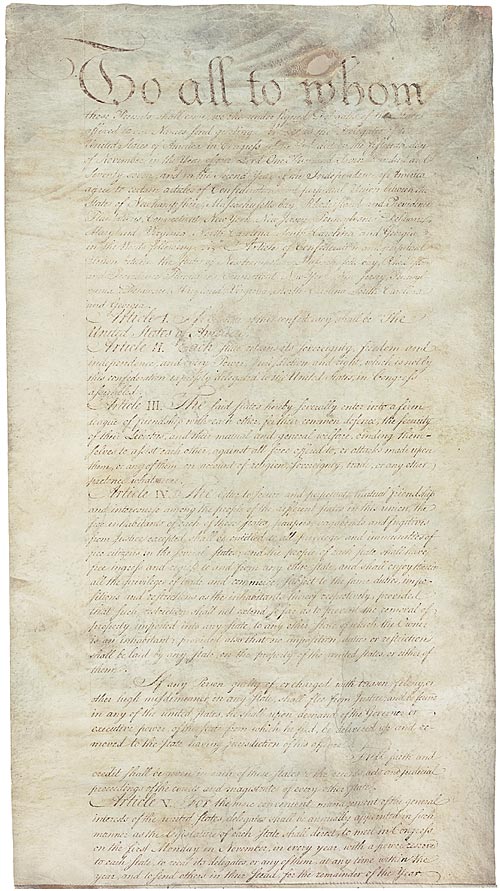
Scan of the handwritten Articles of Confederation manuscript on aged, cream-colored paper. The ornate heading reads 'To all to whom these Presents shall come'. Dense cursive text fills the page in columns, with article headings visible.Document

Primary source

Articles of Confederation

Continental Congress · 1777

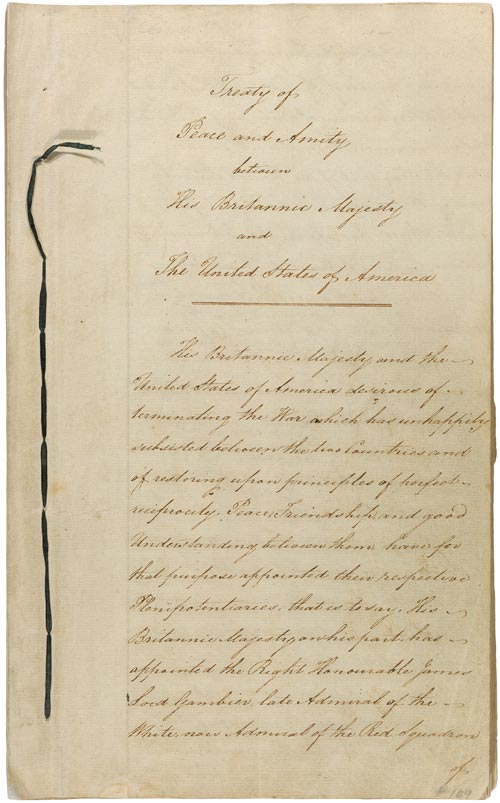
Handwritten manuscript page on aged paper, bound at left with a dark cord. Title reads 'Treaty of Peace and Amity between His Britannic Majesty and The United States of America', followed by the opening paragraph in cursive script.Document

Primary source

Treaty of Ghent

24 December 1814

Document

Primary source

Louisiana Purchase Treaty

30 April 1803

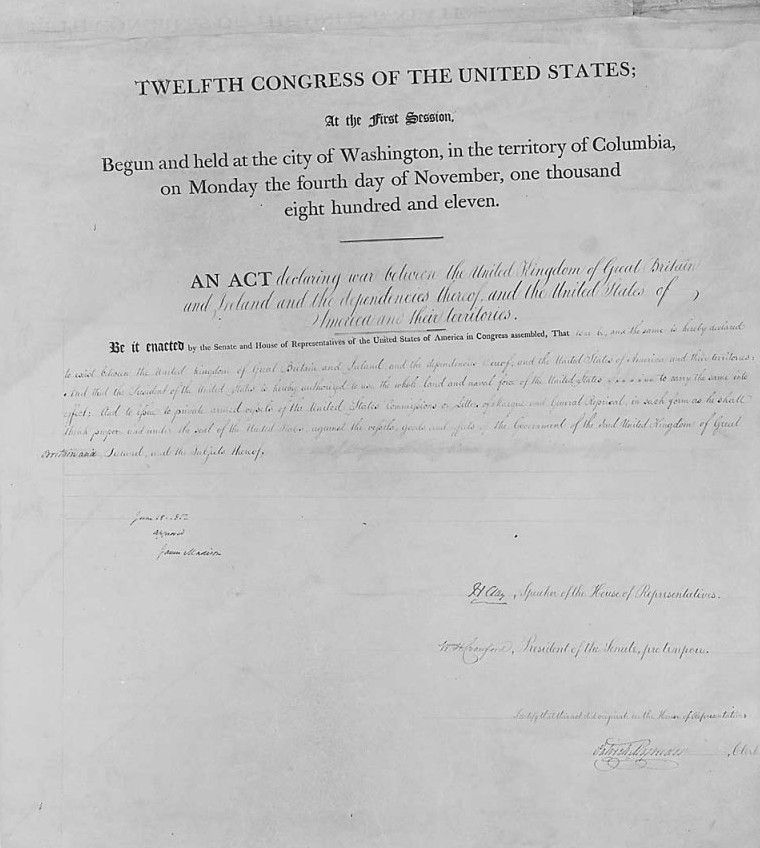
Scan of the handwritten 1812 Act of Congress declaring war between the United Kingdom of Great Britain and Ireland and the United States of America. Header reads Twelfth Congress of the United States, First Session, Washington, November 1811. Signatures of the Speaker and Vice President appear at the bottom.Document

Primary source

United States Declaration of War on the United Kingdom

18 June 1812

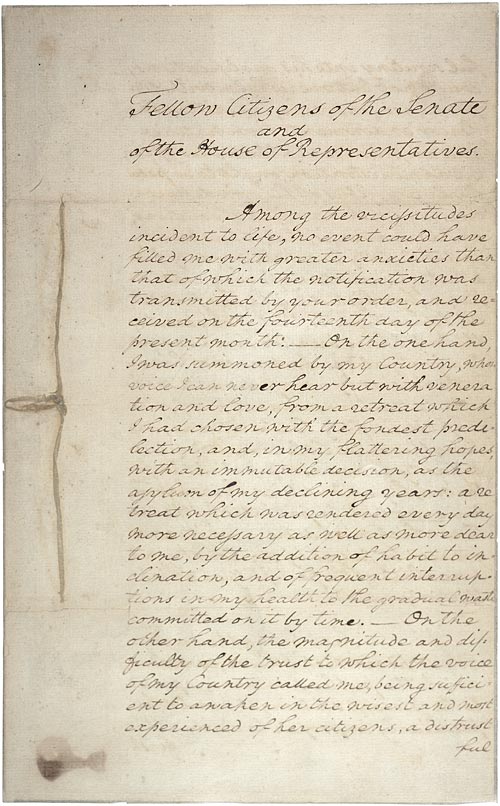
Handwritten manuscript page in brown ink on aged paper, headed 'Fellow Citizens of the Senate and of the House of Representatives', beginning 'Among the vicissitudes incident to life, no event could have filled me with greater anxieties than that of which the notification was transmitted by your order'. A folded fold line runs down the left side with a string-like tie, and a faint red wax or seal mark is near the bottom.Speech

Primary source

President George Washington's First Inaugural Speech

George Washington · 30 April 1789

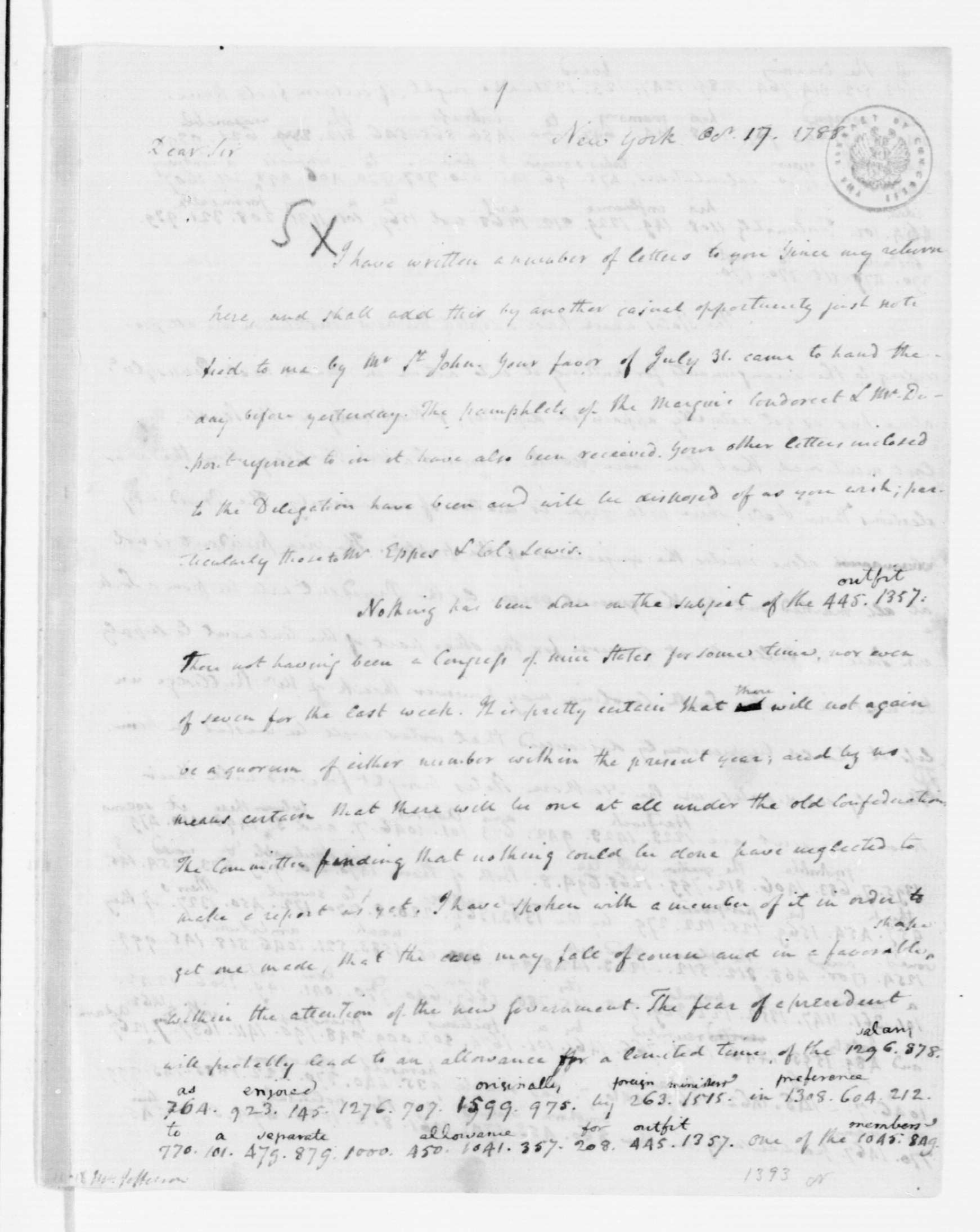
Handwritten manuscript letter on aged paper, dated New York, Oct. 17, 1788, beginning 'Dear Sir', with a circular Department of State seal stamp in the upper right. Lines include numerical cipher groups at the bottom and a note 'from Mr. Jefferson' in the lower left margin.Letter

Primary source

Letter from James Madison to Thomas Jefferson, October 17, 1788

James Madison · 17 October 1788

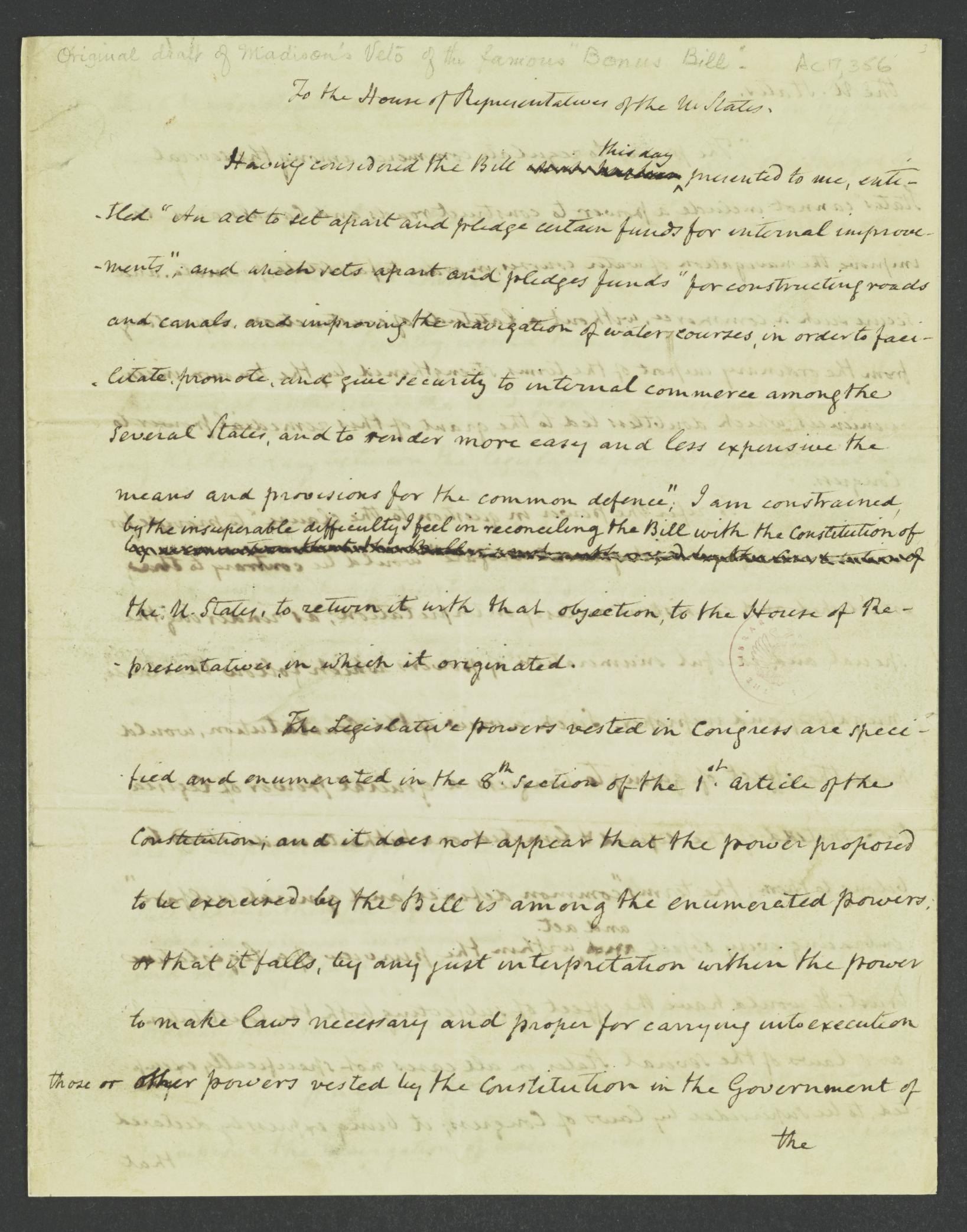
Handwritten manuscript draft on lined paper, with a faded archival label at top reading 'Original draft of Madison's Veto of the famous Bonus Bill' and a number. The text begins 'To the House of Representatives of the U.S. States' and discusses the bill for internal improvements, with crossed-out words and insertions visible.Document

Primary source

Bonus Bill of 1817

James Madison · March 3, 1817

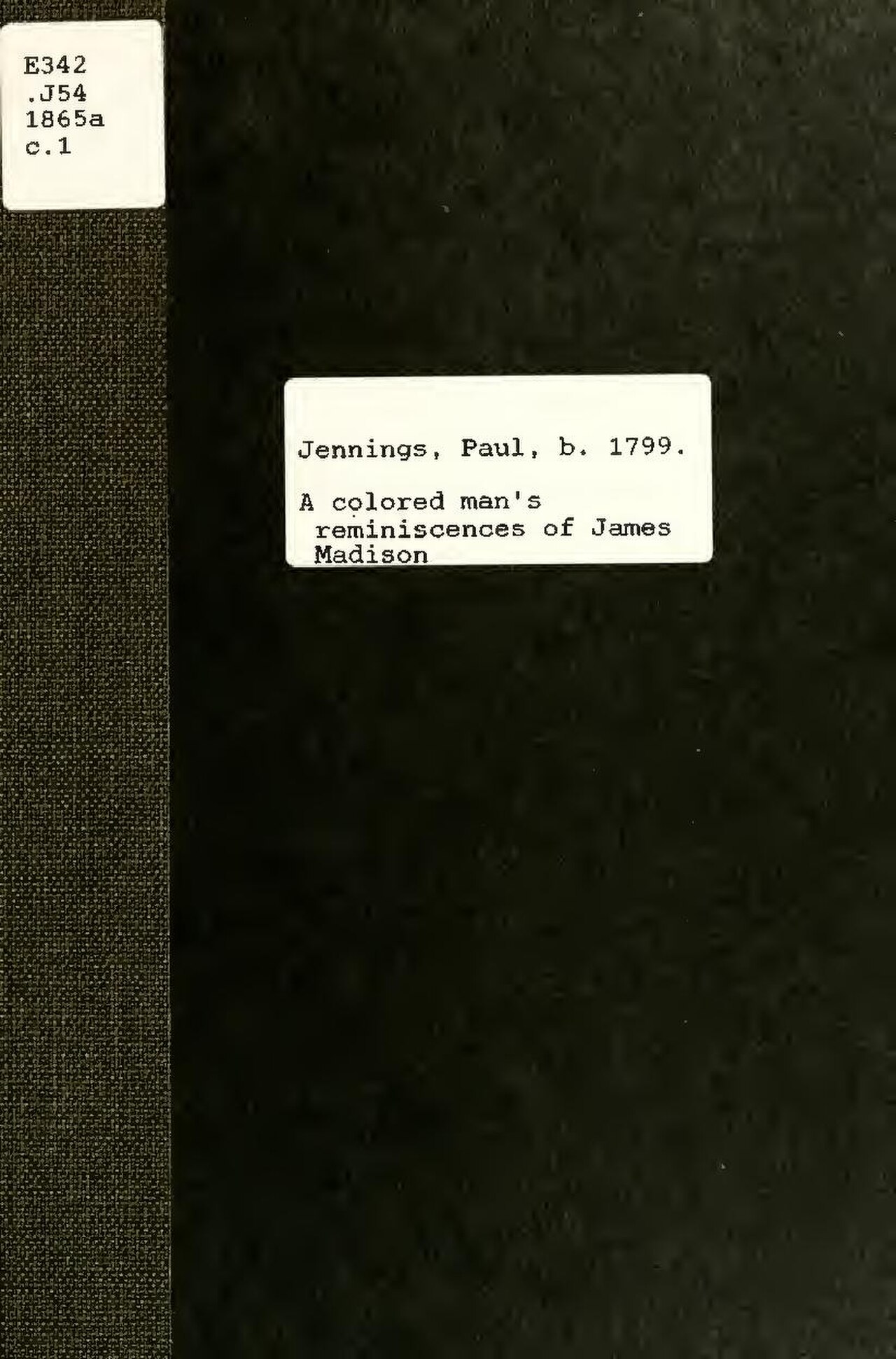
Dark olive-green cloth book cover with a white library call-number label on the spine at upper left reading E342 .J54 1865a c.1, and a white label on the front reading Jennings, Paul, b. 1799. A colored man's reminiscences of James Madison.Book

Primary source

A Colored Man's Reminiscences of James Madison

Paul Jennings · 1865

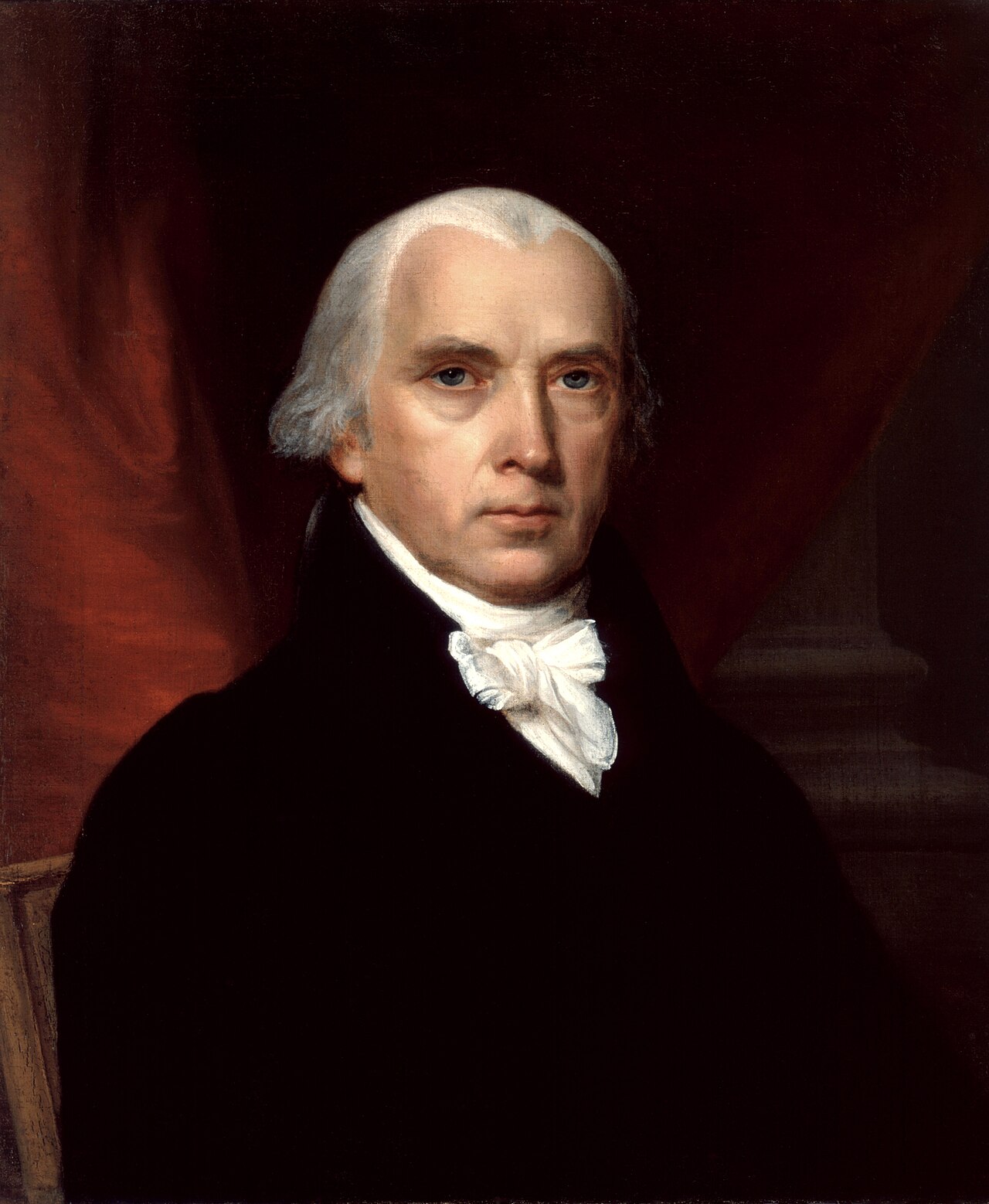
Oil portrait of an older man with white hair, wearing a black coat and white cravat, against a dark background with red drapery and a column on the right. He looks directly at the viewer.Painting

Primary source

James Madison

John Vanderlyn · 1816

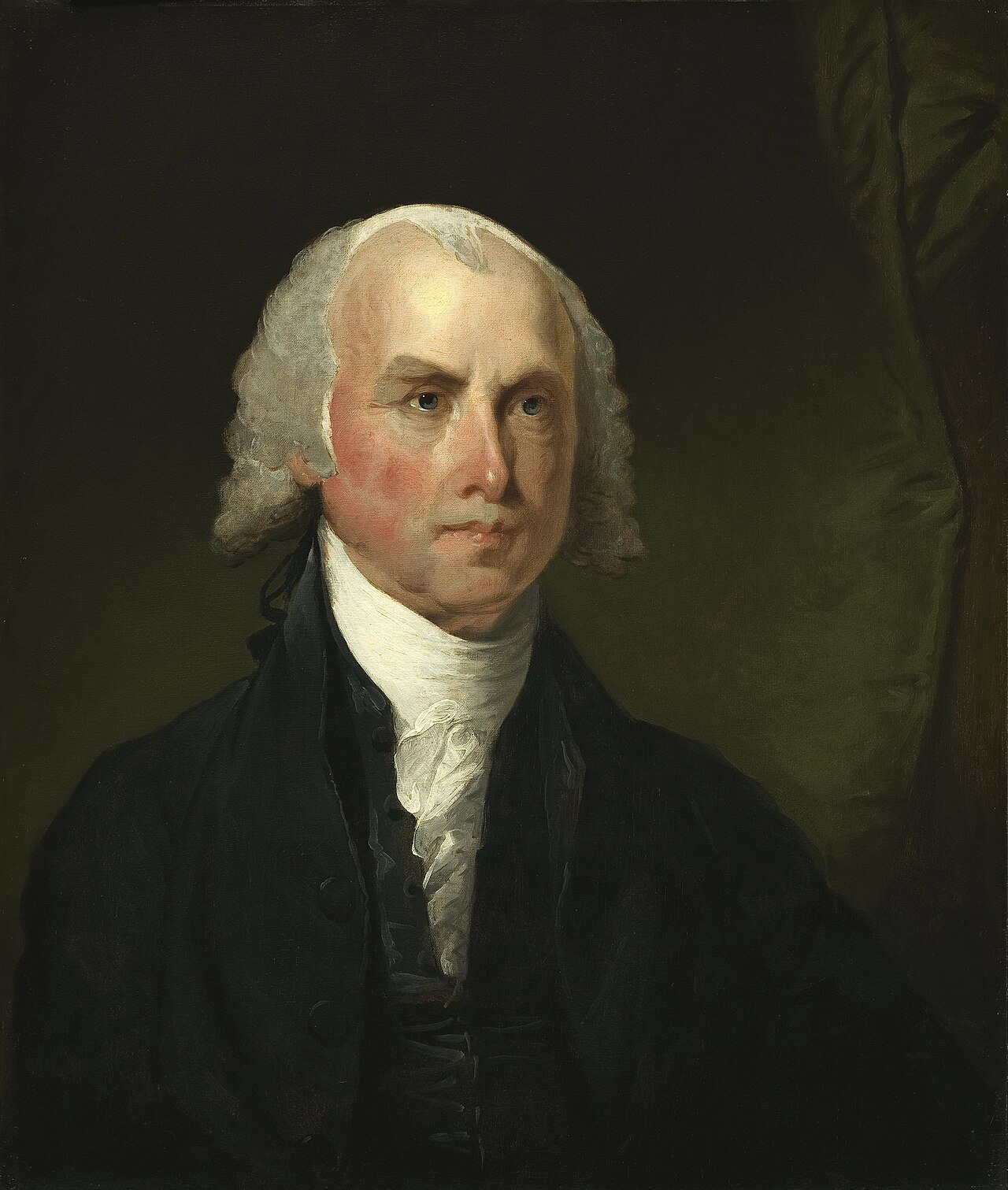
Oil portrait of an older man with powdered gray hair, wearing a dark coat, dark waistcoat, and white cravat, against a dark background with a green curtain at the right edge. He looks toward the viewer.Painting

Primary source

James Madison

Gilbert Stuart · 1821

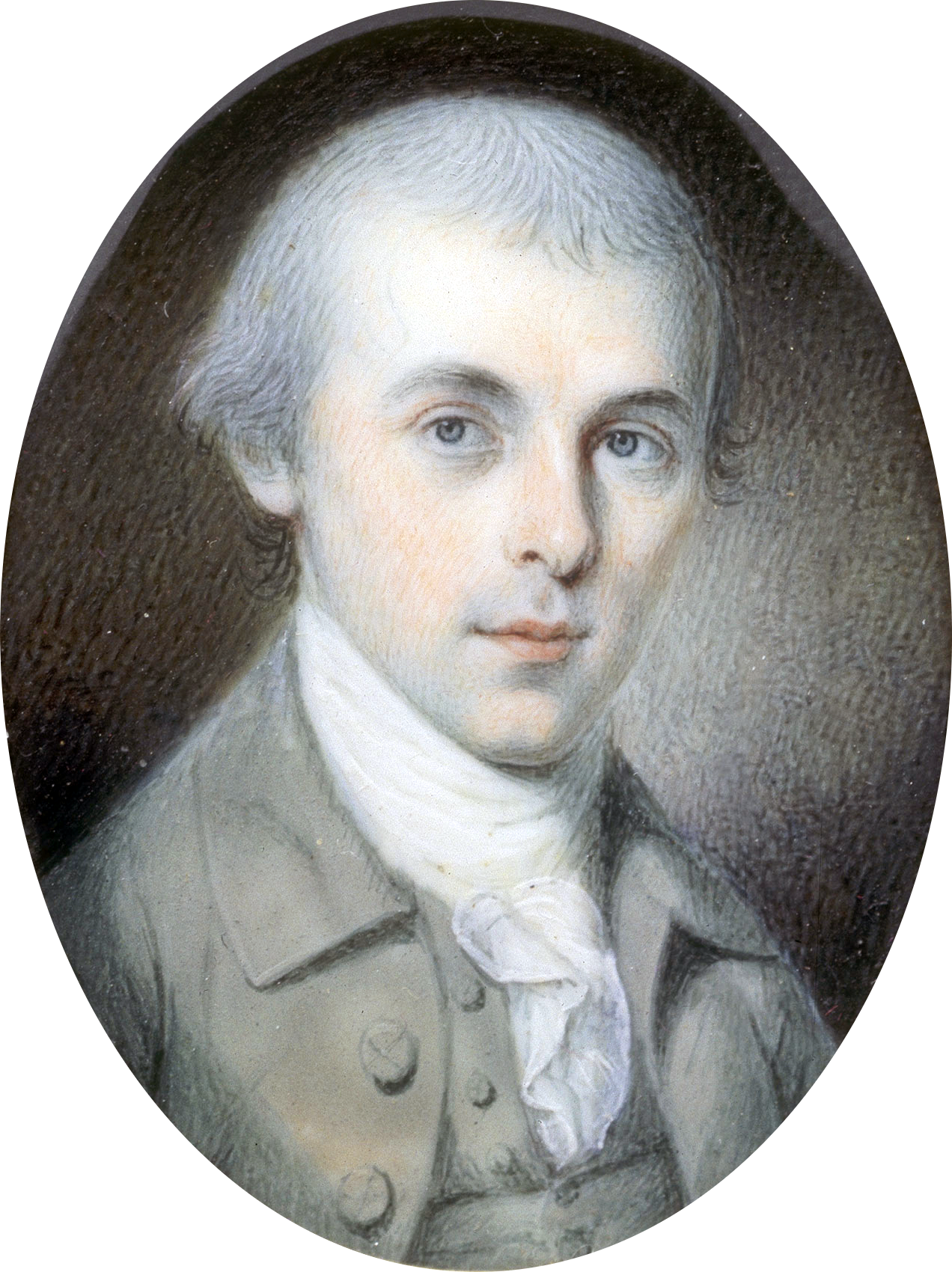
Oval miniature painting of a man with short gray-white hair, pale blue eyes, and a white neckcloth tied over a grayish-green coat with round buttons. Dark background, bust view turned slightly to the right.Painting

Primary source

Miniature Portrait of James Madison

Charles Willson Peale · 1783

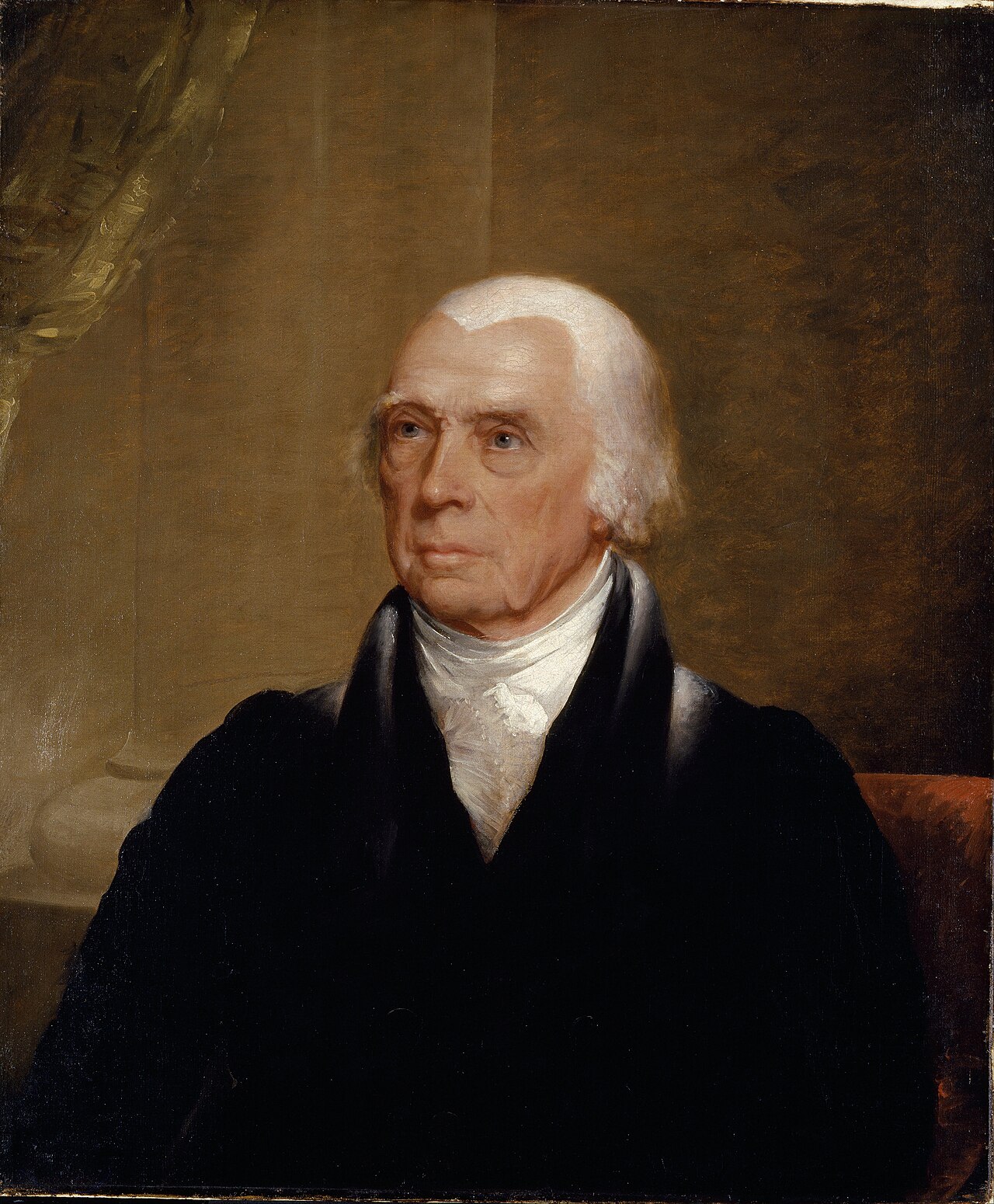
Oil portrait of an elderly man with white hair, wearing a black coat and white cravat, seated against a brown background with a gold curtain at the left. He gazes to the right.Painting

Primary source

James Madison

Chester Harding · c. 1829-1830

Document

Primary source

Federalist No. 18

James Madison · 7 December 1787

Letter

Primary source

Letter to William Rives

James Madison · 12 March 1833

Document

Secondary source

The American Cyclopædia: Madison, James

1879

Document

Primary source

Federalist No. 45

James Madison · 26 January 1788

Document

Primary source

Federalist No. 46

James Madison · 29 January 1788

Document

Primary source

Federalist No. 47

James Madison · 1788

Document

Primary source

Federalist No. 48

James Madison · 1 February 1788

Document

Primary source

Federalist No. 37

James Madison · 11 January 1788

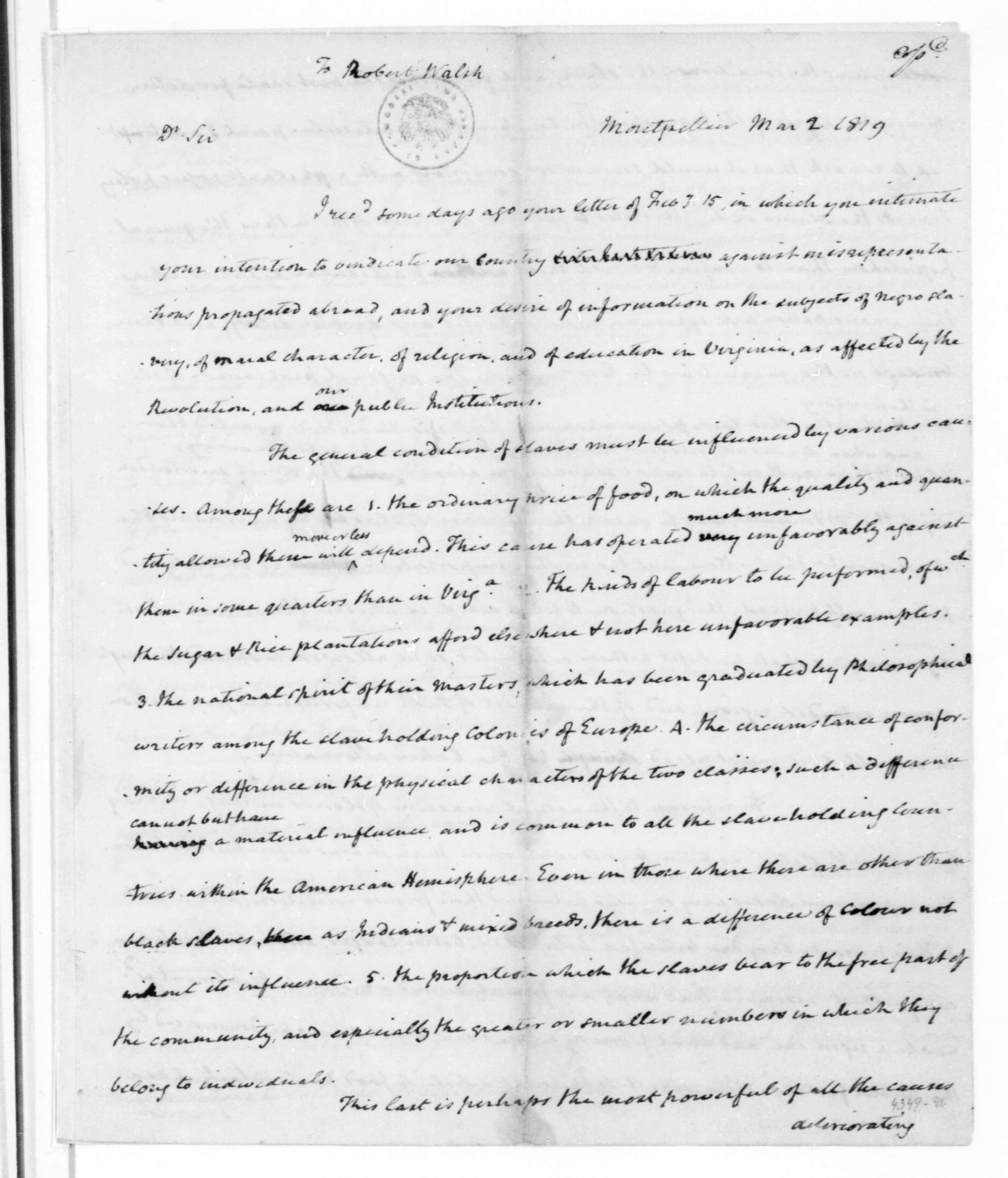
Handwritten letter on aged paper addressed 'To Robert Walsh', dated Montpelier, March 2, 1819, with an embossed seal at top. The text discusses slavery, labor, and conditions in Virginia, with many handwritten corrections and interlineations.Letter

Primary source

James Madison letter to Robert Walsh

James Madison · 2 March 1819

Document

Primary source

Virginia Resolutions of 1798

James Madison · 1798

Letter

Primary source

James Madison letter to Nicholas P. Trist

James Madison · 15 February 1830

James Madison's Notes of Debates in the Federal Convention of 1787 and Their Relation to a More Perfect Society of NationsBook

Secondary source

James Madison's Notes of Debates in the Federal Convention of 1787 and Their Relation to a More Perfect Society of Nations

James Brown Scott · 1918

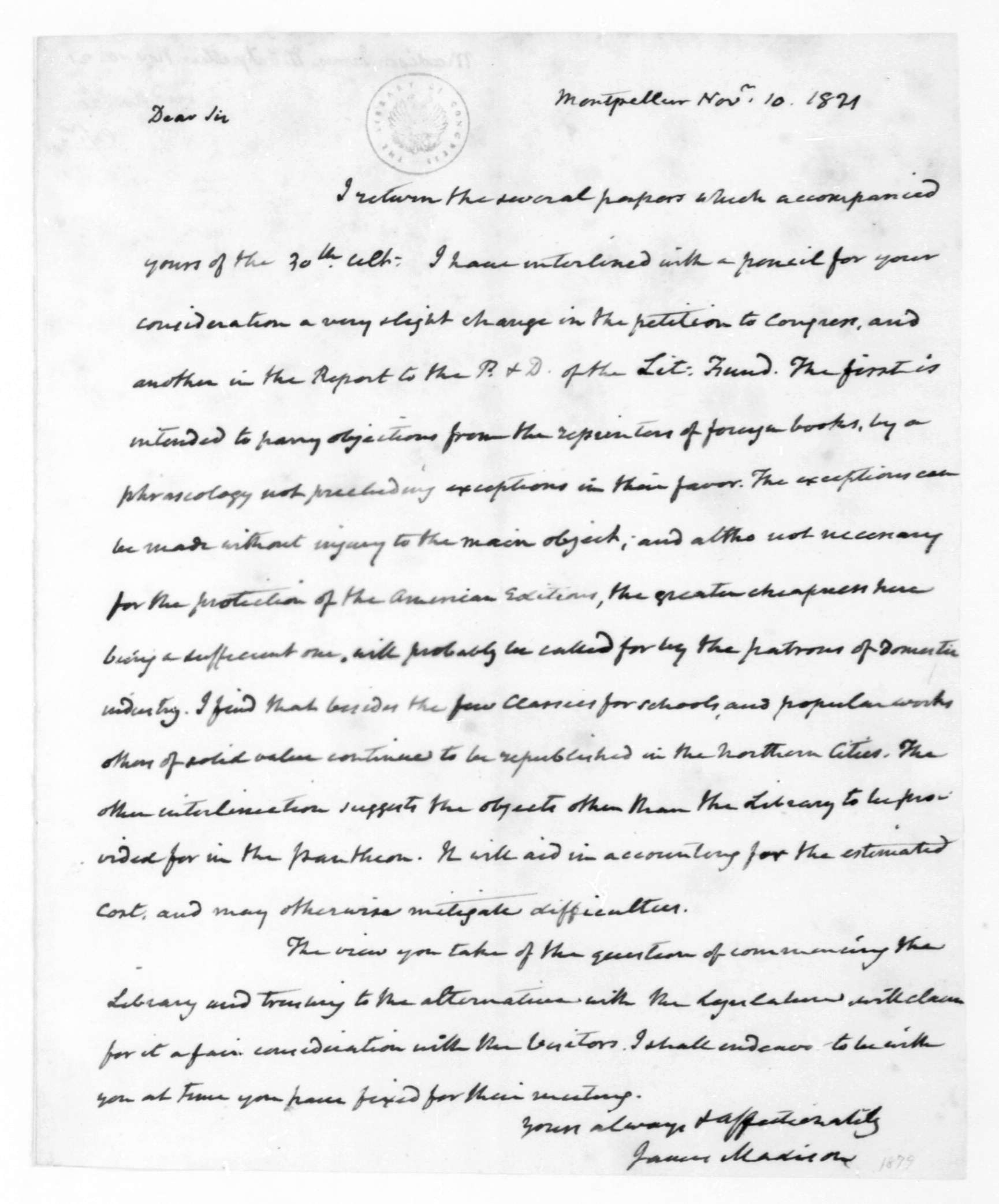
Handwritten letter on paper from James Madison, dated Montpelier, Nov. 10, 1821, addressed 'Dear Sir', with a Library of Congress oval stamp at top center. The letter discusses returned papers, pencil changes to a petition and a report, and the Library and Pantheon.Letter

Primary source

James Madison to Thomas Jefferson, 10 November 1821

James Madison · 10 November 1821

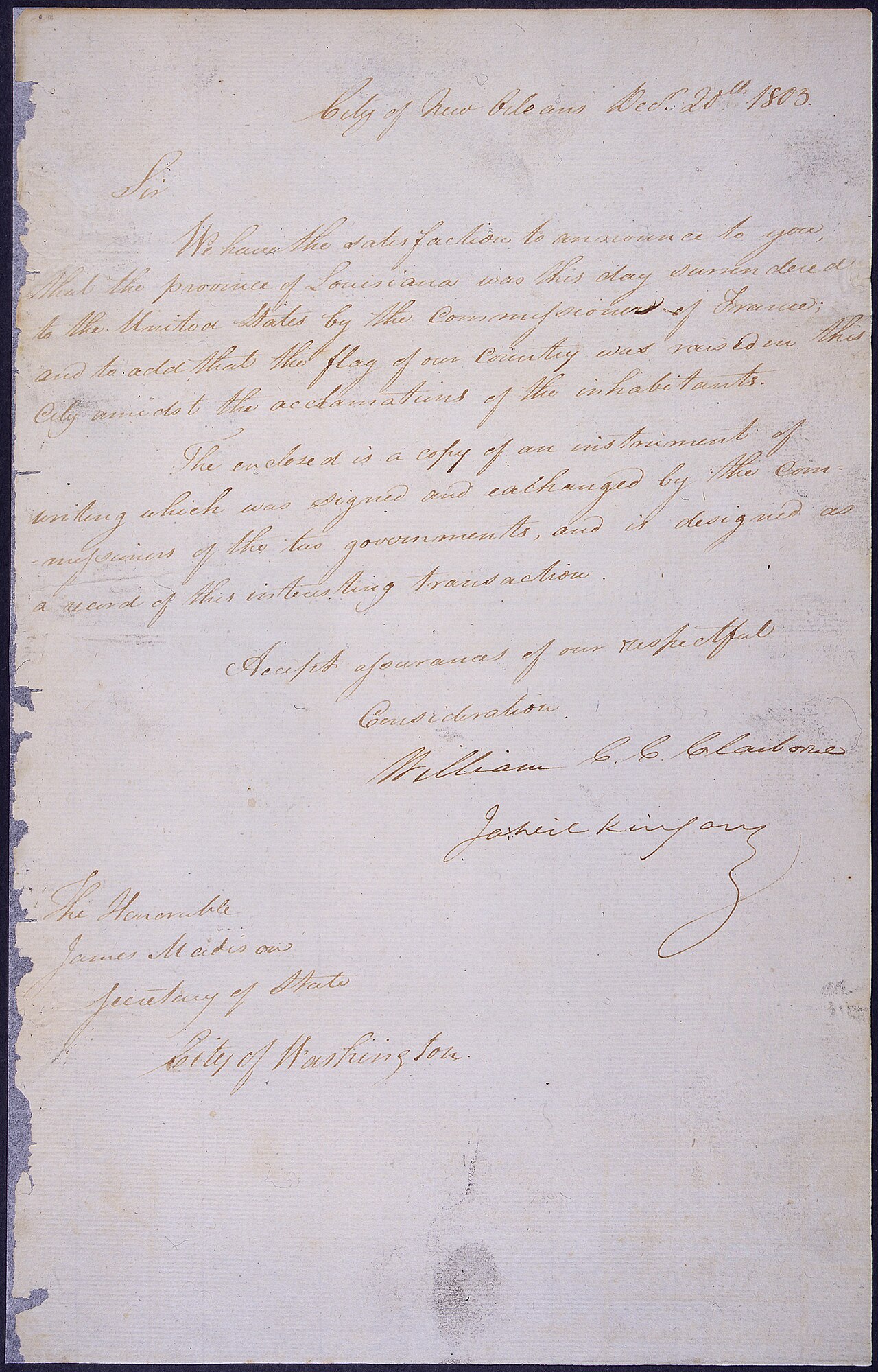
Handwritten letter dated City of New Orleans, Dec. 20th 1803, addressed to The Honorable James Madison, Secretary of State, City of Washington. Signed William C. C. Claiborne and Jacques Kingsbury. Announces the surrender of Louisiana to the United States by France.Letter

Primary source

Letter to James Madison, Secretary of State, Announcing the Surrender of Louisiana to the United States by France

William C. C. Claiborne · 20 December 1803

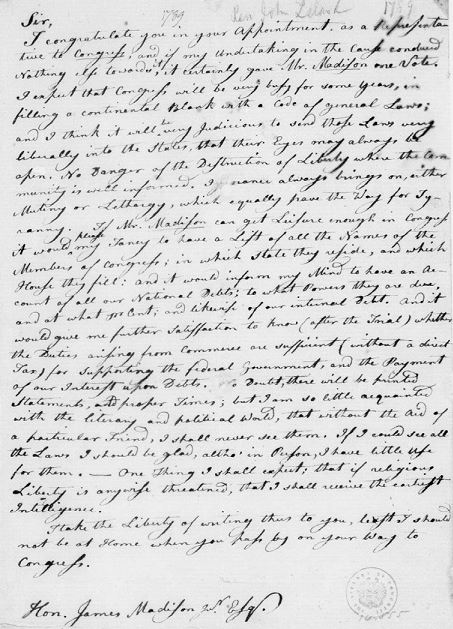
Handwritten letter on aged paper, addressed 'Sir' and signed at the bottom 'Hon. James Madison Jr. Esq.', with a circular seal in the lower right corner. The text congratulates the recipient on his appointment to Congress and discusses the Constitution's lack of a bill of rights and religious liberty. Faded ink, dated at top right.Letter

Primary source

Letter from John Leland to James Madison

John Leland

Speech

Primary source

Second Inaugural Address of James Madison

James Madison · March 4, 1813

Speech

Primary source

First State of the Union Address

James Madison · November 29, 1809

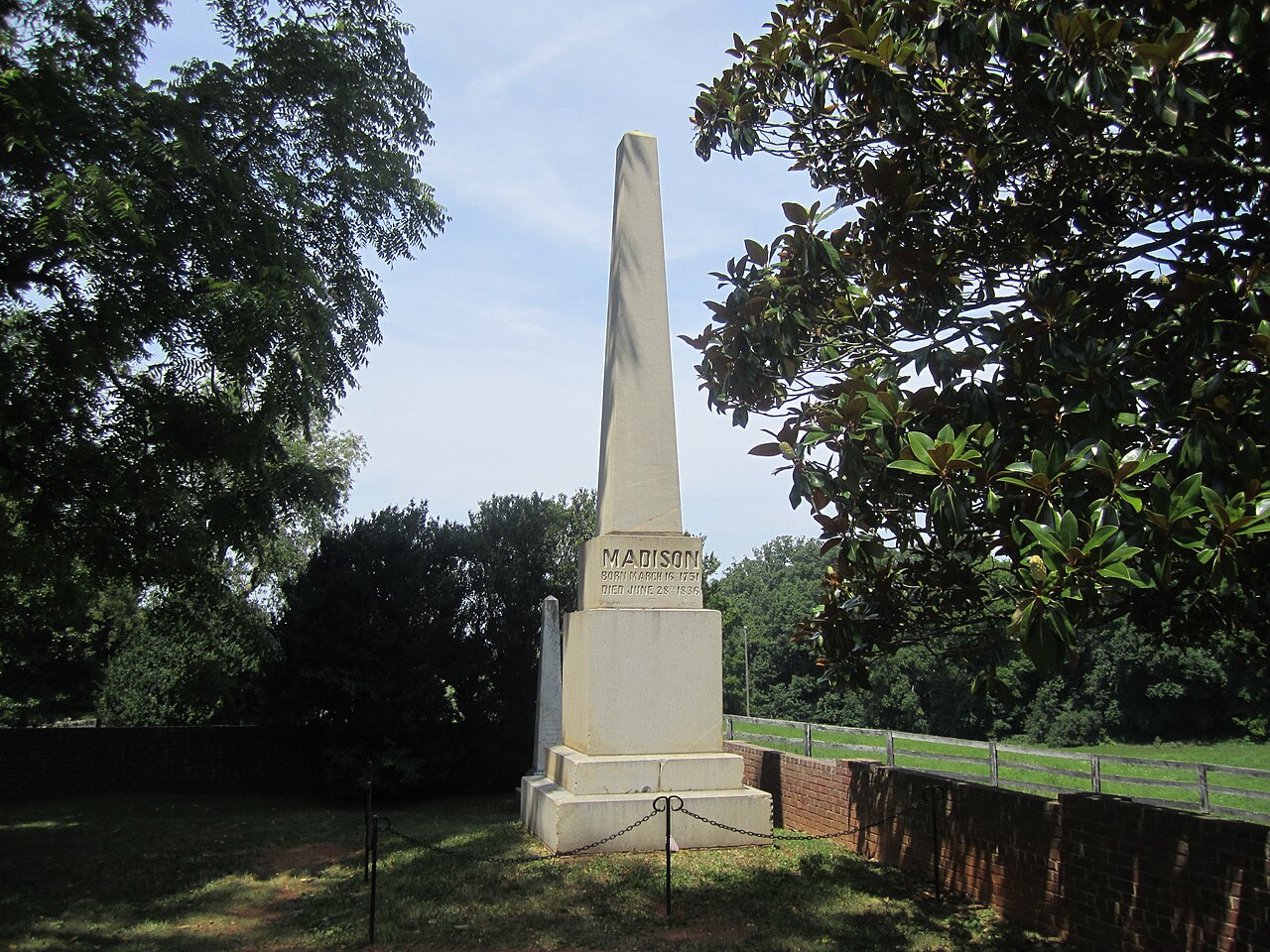
A tall white obelisk monument on a stone base stands in a grassy enclosure surrounded by a low brick wall and chain posts. The base front reads MADISON with born and died dates. Green trees frame the scene under a pale blue sky.Photograph

Secondary source

Grave of James Madison

Document

Primary source

Proclamation Respecting Taking Possession of Part of Louisiana

James Madison · 1810

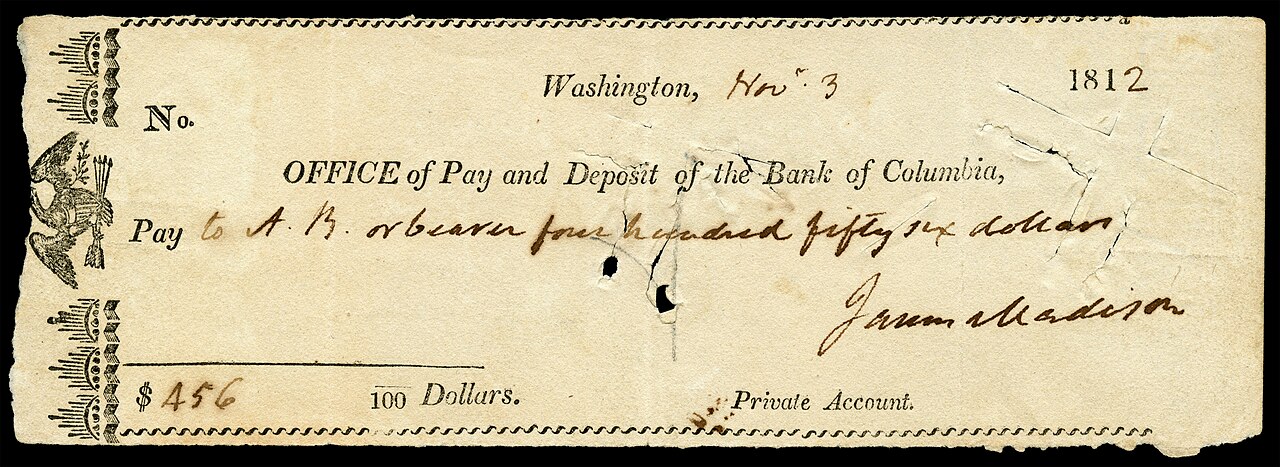
Scan of a partially torn 1812 check dated Washington, Nov. 3, from the Office of Pay and Deposit of the Bank of Columbia, payable to A.B. or bearer for four hundred fifty-six dollars, with a handwritten signature reading James Madison at lower right. Eagle emblem at left.Document

Primary source

Check Signed by James Madison

James Madison · 3 November 1812

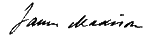
Handwritten cursive signature in dark ink on a white background, reading 'James Madison'.Artifact

Primary source

Signature of James Madison

James Madison

Letter

Primary source

Letter to Thomas Ritchie on interpreting the Constitution

James Madison · 15 September 1821

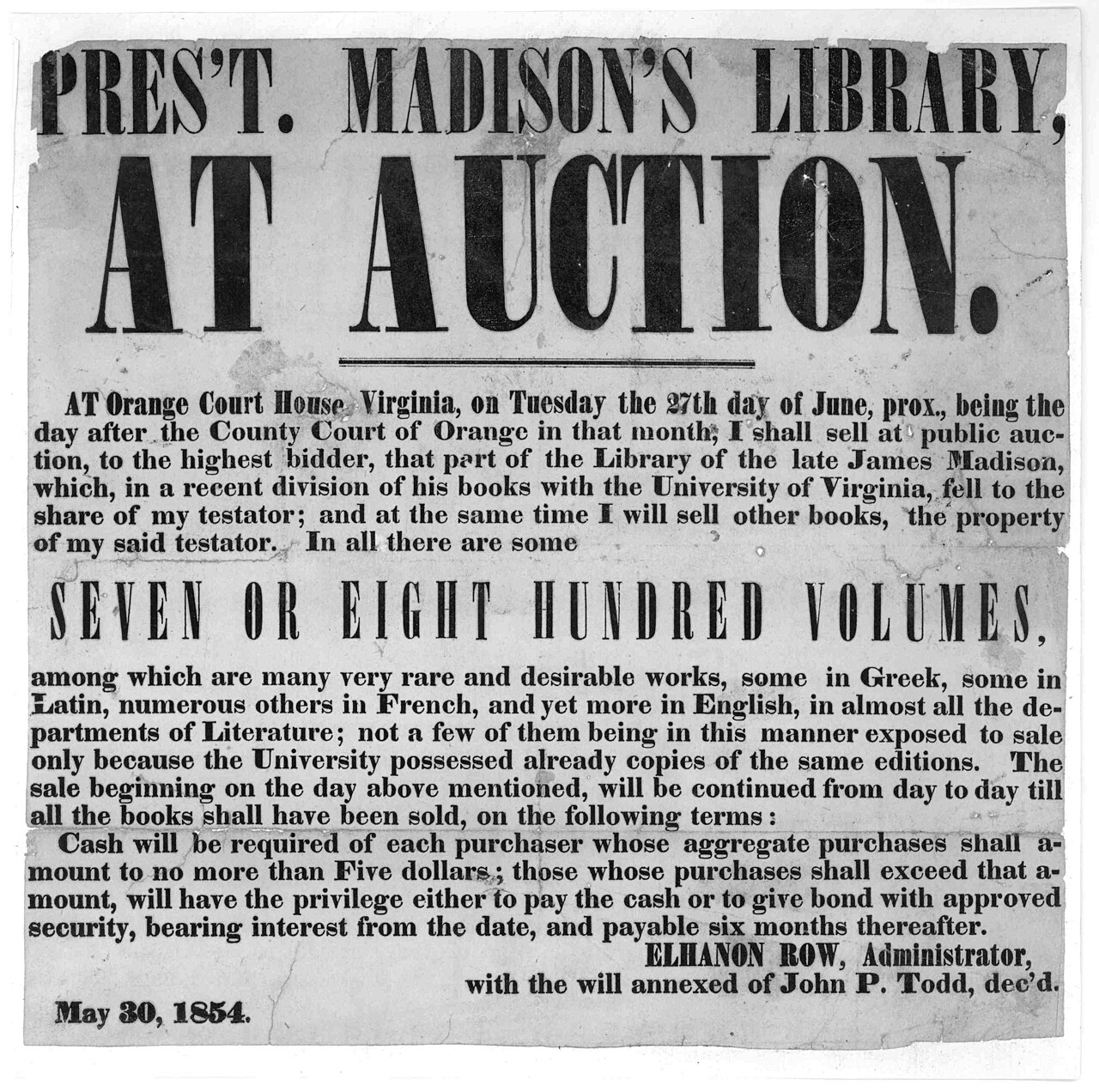
Printed broadside titled 'Pres't. Madison's Library, At Auction.' Large black capital headings above dense small-type text announcing a public auction at Orange Court House, Virginia, of books from James Madison's library. Signed by administrator Elhanon Row and dated May 30, 1854.Document

Primary source

Auction of President James Madison's Library

Elhanon Row · 30 May 1854

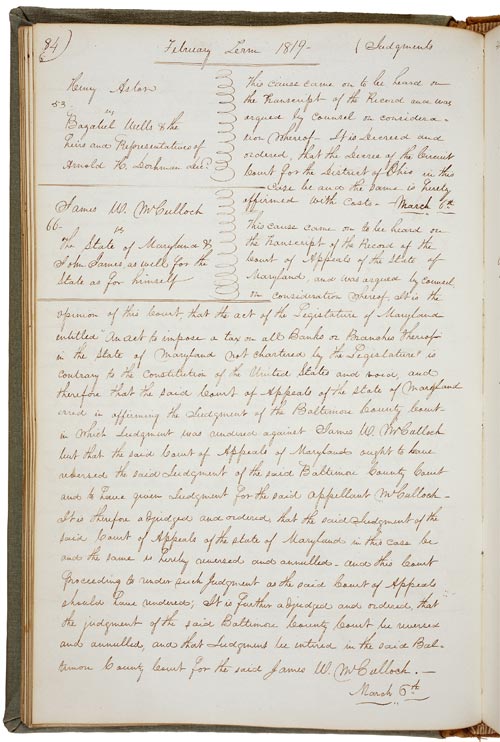
Handwritten page of the Supreme Court engrossed minutes dated February Term 1819, headed Judgments, recording the decree in McCulloch v. Maryland and the related case involving Henry Asher and the Bank of the United States. The text is in brown ink cursive with the page number 24 at top left and the date March 6th at the bottom.Document

Primary source

McCulloch v. Maryland

John Marshall · 6 March 1819

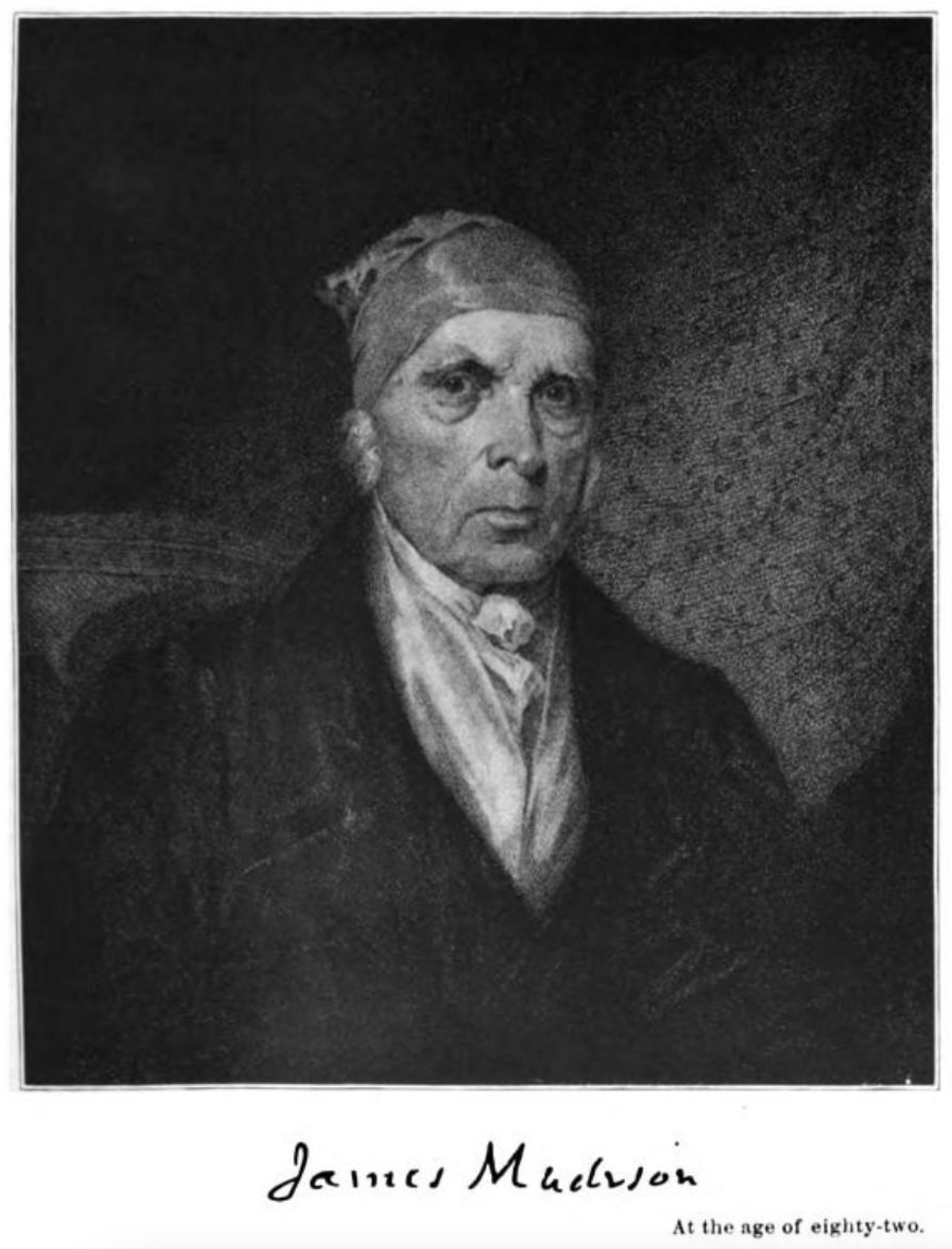
Black-and-white engraved portrait of an elderly man in a dark coat, white cravat and head covering, looking toward the viewer against a dark background. Handwritten script below reads 'James Madison' and small print reads 'At the age of eighty-two.'Photograph

Secondary source

James Madison at the Age of Eighty-Two

Letter

Primary source

Letter to James Robertson

James Madison · 20 April 1831

Document

Primary source

Report of the Secretary of State on an Indiana Petition

James Madison · 1 December 1803

Newspaper article

Primary source

Population and Emigration

James Madison · 1791

Newspaper article

Primary source

Consolidation

James Madison · 1791

Book

Primary source

Public Opinion

James Madison · 1791

Book

Primary source

Money

James Madison · 1791

Book

Primary source

Government

James Madison · 1791

Book

Primary source

Charters

James Madison · 1792

Diary entry

Primary source

Journal of the Debates in the Federal Convention of 1787

James Madison · 1787 (published 1908)

Eulogy on the Life and Character of James MadisonSpeech

Primary source

Eulogy on the Life and Character of James Madison

John Quincy Adams · 27 September 1836

Letters of Pacificus and Helvidius on the Neutrality ProclamationLetter

Primary source

Letters of Pacificus and Helvidius on the Neutrality Proclamation

Alexander Hamilton and James Madison · 1793 (reprinted 1845)

The Life of James MadisonBook

Secondary source

The Life of James Madison

Gaillard Hunt · 1902

James MadisonBook

Secondary source

James Madison

Sydney Howard Gay · 1884

Newspaper article

Primary source

Universal Peace

James Madison · 1792

Newspaper article

Primary source

Spirit of Governments

James Madison · 1792

Newspaper article

Primary source

Republican Distribution of Citizens

James Madison · 1792

Letter

Primary source

Letter to James Madison from Fontainebleau

Thomas Jefferson · October 28, 1785

Newspaper article

Primary source

Property

James Madison · 1792

Document

Primary source

The Union: Who Are Its Real Friends?

James Madison · 1792

Pastel portrait of a man with powdered white hair wearing a dark blue coat with gold buttons, a cream waistcoat, and a white cravat, against a gray-blue background. He faces the viewer with a slight smile.Painting

Primary source

James Madison Pastel Portrait by James Sharples

James Sharples · before 1811

Oil painting of a man with white powdered hair in a dark coat and white cravat, set against a dark reddish-brown background. He faces slightly to the viewer's left with a calm, serious expression.Painting

Primary source

Portrait of James Madison by Thomas Sully

Thomas Sully · 1809

Engraved black-and-white portrait of a standing man in late eighteenth-century dress: powdered white hair, dark coat and waistcoat, white cravat. He rests one hand on a table holding a rolled document and a sheet of writing; his other hand grips a chair back. A stippled background includes a draped curtain and a carved emblem.Painting

Primary source

Portrait of James Madison, President of the United States

1810

Photograph of an oil portrait of an elderly man with white hair, pale blue eyes, and a reddish complexion, wearing a dark coat and a cream-colored cravat against a dark background.Painting

Primary source

James Madison by Chester Harding

Chester Harding · 1829

Lives of Celebrated StatesmenBook

Secondary source

Lives of Celebrated Statesmen

John Quincy Adams · 1846

The Lives of James Madison and James MonroeBook

Secondary source

The Lives of James Madison and James Monroe

John Quincy Adams · 1851

Speech

Primary source

LibriVox Audio Reading of The Federalist Papers

Alexander Hamilton; John Jay; James Madison · 1787-1788 (text); modern reading

Book

Secondary source

James Madison chapter by John Fiske

John Fiske · 1914

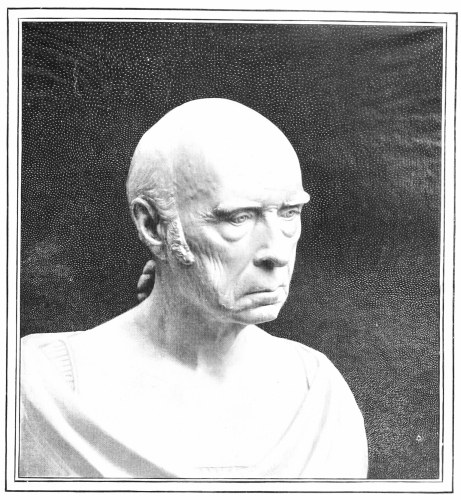
Black-and-white photograph of a bald, elderly man's bust, shown in profile turned to the right with a downturned mouth and deep-set eyes, draped in cloth against a dark speckled background.Sculpture

Primary source

Life Mask of James Madison

John Henri Isaac Browere · 1897 (reproduction of life mask)

Newspaper article

Secondary source

Paul Cuffe and President Madison

18 September 1857

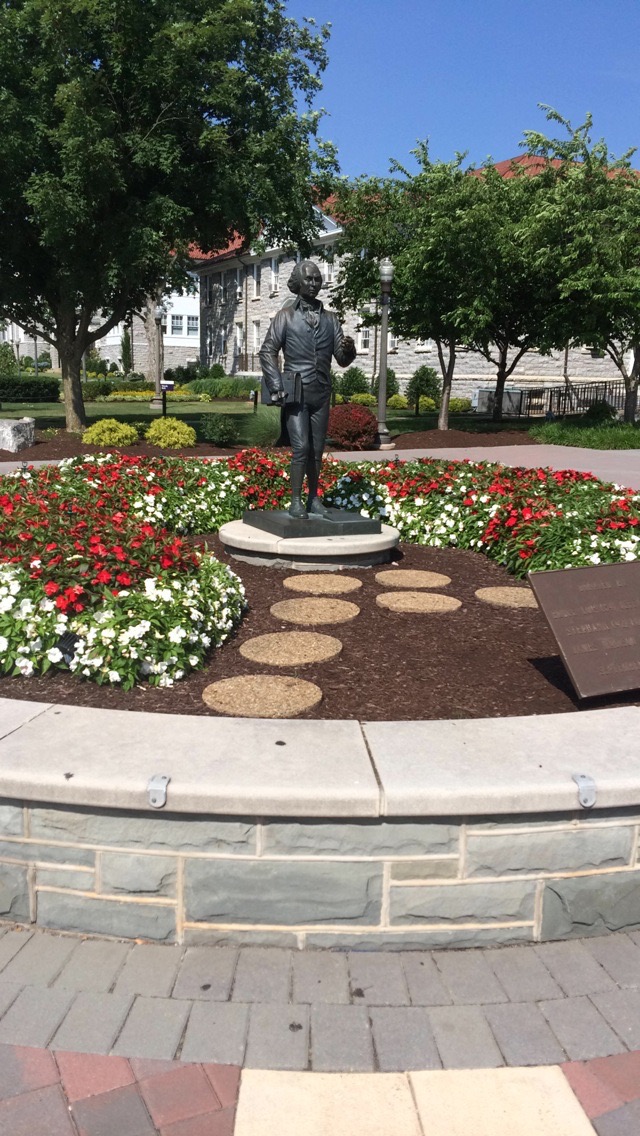
Bronze statue of a standing man in a period coat with a hand raised, set on a stone base in a circular flower bed of red and white flowers, with stone-faced buildings and trees behind.Sculpture

Secondary source

James Madison Statue, Bluestone Area

Tran4mx · Photographed 1 July 2014

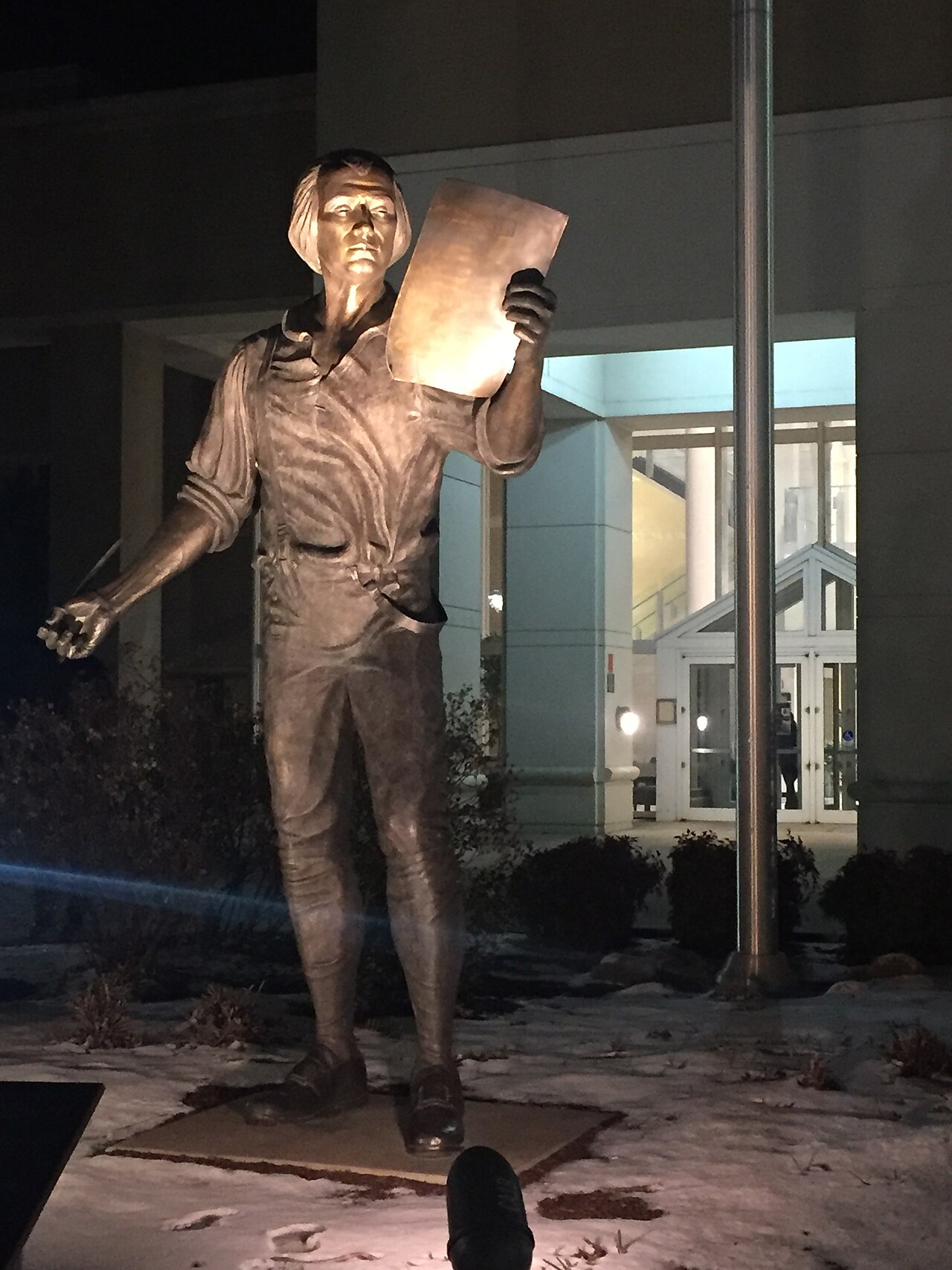
Bronze statue of a standing man in a button-up shirt and trousers, holding a large open paper or document in one raised hand, with the other arm extended outward. Lit at night, with snow on the ground and a glass building behind.Sculpture

Secondary source

James Madison Statue, James Madison University

Bri rei · Photographed 9 February 2016

Letter

Primary source

Letter to James Madison - January 30

Thomas Jefferson · 30 January 1787

Letter

Primary source

Letter to James Madison - September 20

Thomas Jefferson · 20 September 1785

Want the full shelf? Chat with James Madison in the app and open the Sources panel — every quote links back to the original.

Trusted by educators worldwide

Conversations
375,000+
Real exchanges between students and historical figures
Messages exchanged
4,142,000+
Across every figure, classroom and language
Historical figures
100,000+
Each informed by a curated biography and selected sources
Languages supported
50+
From English and Spanish to Arabic and Korean

Paying customers

Used by 98 schools and universities

Partner school logo
Tecnológico de Monterrey logo
Hyper Island logo
Partner school logo
Chambersburg Area School District logo
Broward County Public Schools logo
Nebo School District logo
National Louis University logo
South Florida PBS logo
Punahou School logo
University of Wisconsin–River Falls logo
Partner school logo
Partner school logo
Archbishop Mitty High School logo
Kingsburg High School logo
Norwalk Public Schools logo
Partner school logo
Connections logo
Partner school logo
Moore Public Schools logo
Partner school logo
Partner school logo
Partner school logo
Partner school logo
Robbinsville Public Schools logo
Partner school logo
Partner school logo
Partner school logo
Tecnológico de Monterrey logo
Hyper Island logo
Partner school logo
Chambersburg Area School District logo
Broward County Public Schools logo
Nebo School District logo
National Louis University logo
South Florida PBS logo
Punahou School logo
University of Wisconsin–River Falls logo
Partner school logo
Partner school logo
Archbishop Mitty High School logo
Kingsburg High School logo
Norwalk Public Schools logo
Partner school logo
Connections logo
Partner school logo
Moore Public Schools logo
Partner school logo
Partner school logo
Partner school logo
Partner school logo
Robbinsville Public Schools logo
Partner school logo
Partner school logo

What educators are saying

“We enjoyed the program last year and used it frequently.”
“My students say it’s a welcome change of pace. I’m not a fan of the “sage on the stage” model, so I try to incorporate research-oriented and self-paced activities. With Humy, students have to take charge of their learning. They’ve become more adept at critical thinking, forming better questions, and improving their reading comprehension. The interview feature has been my go-to tool. I create assignments where students must ask historical figures a set number of questions, then summarize the responses to ensure they’re truly absorbing the material. This approach lets them actively explore the past rather than passively consuming information.”
“Humy has helped me bring historical figures, sometimes long past, to life. When my students interact with these figures in real-time, it eliminates some of the perceived “ancient” characteristics of my curriculum. This has shifted my students’ thinking away from viewing history as abstract or irrelevant. Real-time interactions make historical figures relatable, even allowing students to ask off-topic questions that help put historical lives in a more relevant context for 13-year-olds. The feature I use the most is the interview feature. After teaching a topic, most recently Gandhi and Joan of Arc, I have the students ask pointed, focused questions. We practice good conversation techniques beforehand, teaching them to listen (or read) carefully and formulate thoughtful follow-up questions rather than just interrogating. It helps students practice effective conversation skills.”

FAQ

Frequently asked questions

Who is James Madison?
Fourth President of the United States and "Father of the Constitution. On Humy.ai you can chat with an AI version of James Madison that draws on a short biography and 81 historical sources during the conversation — by text or voice, in 42 languages.
Is James Madison AI free?
Yes. James Madison is in Humy's free library: a free account includes 20 messages a month with James Madison and the other free figures, by text or voice. No credit card is needed.
What sources does the James Madison AI use?
It draws on a short biography and 81 historical sources (documents, letters and books), including “United States Constitution”, “Federalist No. 10” and “Federalist No. 51”. Each source has its own page on Humy.ai.
How historically accurate is the AI version of James Madison?
Each figure uses a short biography and a small set of selected historical sources as context (retrieval-augmented generation), so answers stay closer to known material than the model's general knowledge alone. It isn't a citation-grade research tool — like any LLM, the AI can get details wrong or extrapolate. Treat it as a strong starting point for inquiry and cross-reference important claims.
Can I talk to James Madison by voice?
Yes. In addition to text chat, you can call James Madison and hear their voice respond in real time — useful for auditory learners, interview practice and Socratic dialogue.
Is Humy.ai safe and compliant for schools?
Yes. Humy.ai is used by more than 100 schools, universities and organisations. The platform is FERPA- and GDPR-aligned, supports SSO, and offers an IT-approval pack tailored for school procurement teams.

Ready when you are

Start chatting with James Madison now.

20 messages free · No credit card · Available in 50+ languages.