


Secondary sourcePainting1654
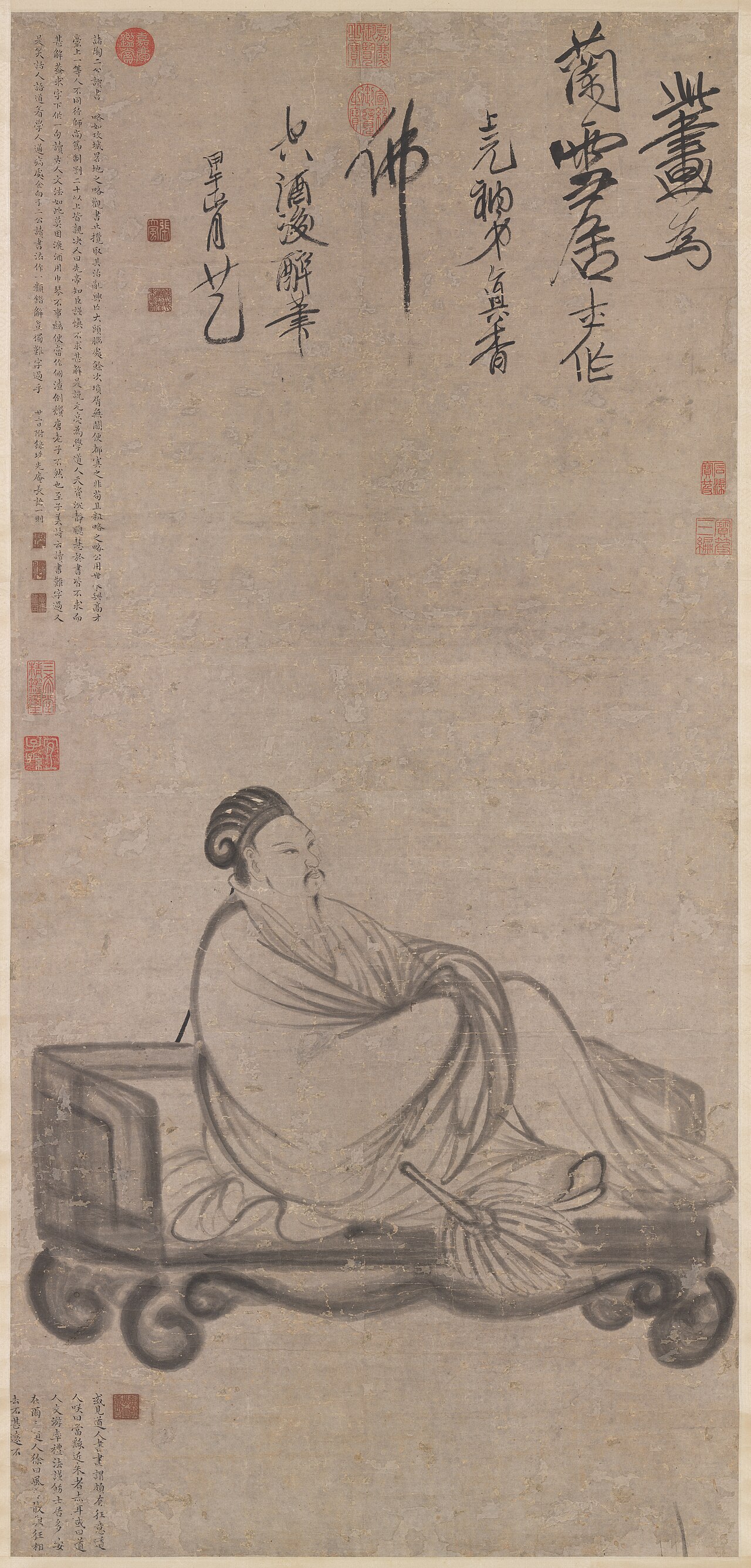
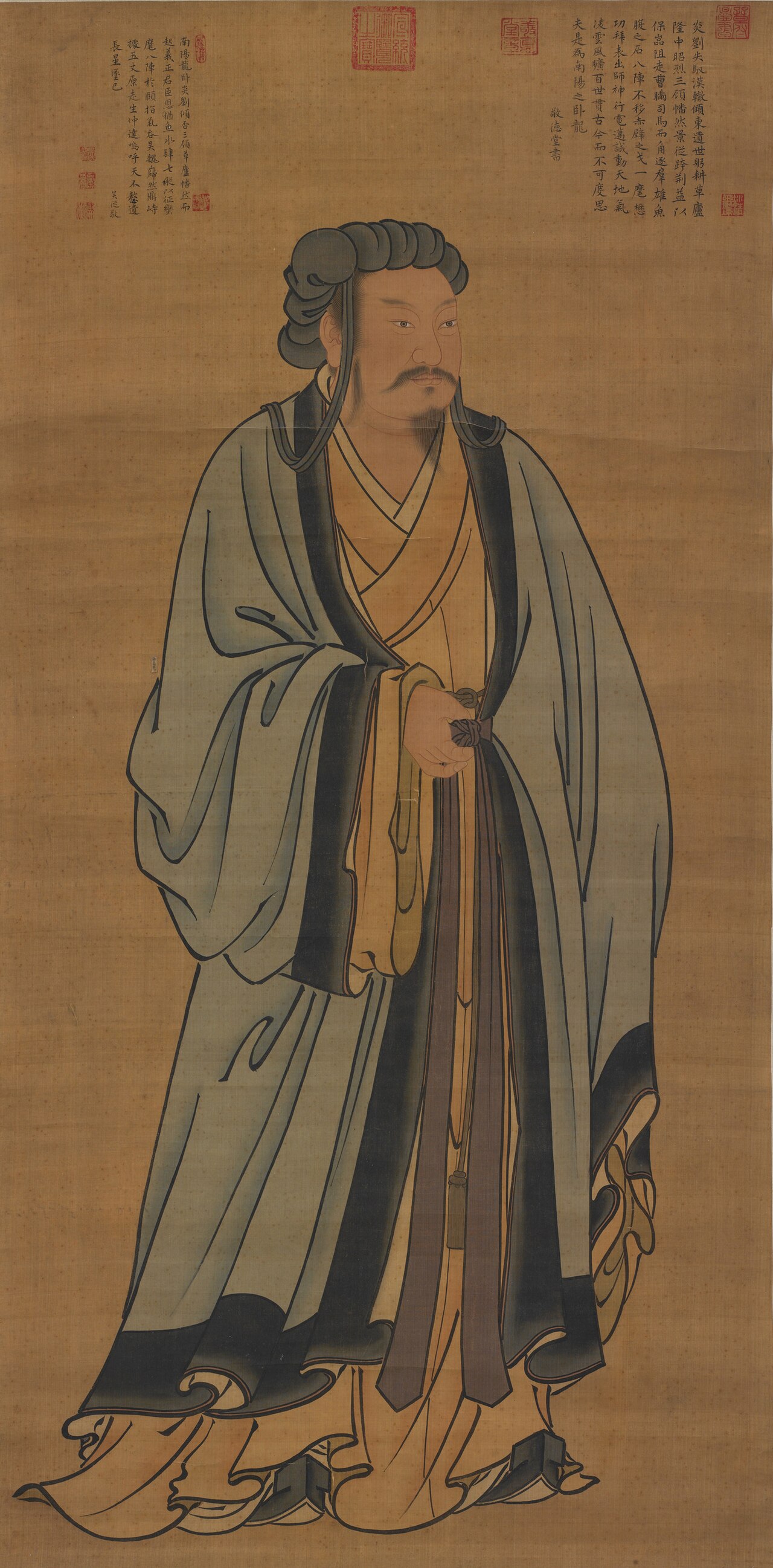
Portrait of Zhuge Liang by Zhang Feng
Zhang Feng · 1654
An ink portrait painted in 1654 showing Zhuge Liang reclining on a daybed, created over a thousand years after his death.
This imagined 1654 portrait depicts Zhuge Liang, showing how later artists pictured him centuries after his death.
About this source
What it is
This ink painting on silk-like paper, made in 1654 by the artist Zhang Feng, shows a seated man with a topknot reclining on a wooden daybed, holding a feather fan. An inscription in bold ink, written by Zhang Feng himself, states that he painted it after becoming drunk. Red seals and calligraphy appear alongside the image.
Why it matters
Painted well over a thousand years after Zhuge Liang lived, this is not a record of his actual appearance but an imagined image created by a later artist. It shows how Zhuge Liang continued to inspire artists long after his death, and how painters used repeated light and dark ink lines as a distinctive technique, reserving more careful detail for the face.
Look closer
- Since this was painted so long after Zhuge Liang lived, what can and can't it tell us about him?
- Why might an artist mention being drunk when making a formal portrait of a historical figure?
- What choices did the artist make about pose, objects, and setting, and what might they be trying to suggest about Zhuge Liang's character?
This painting is part of the curated material that grounds the AI version of Zhuge Liang on Humy.ai — when students ask about related events, the AI can quote it and cite it.
More Zhuge Liang sources
Browse all 85 →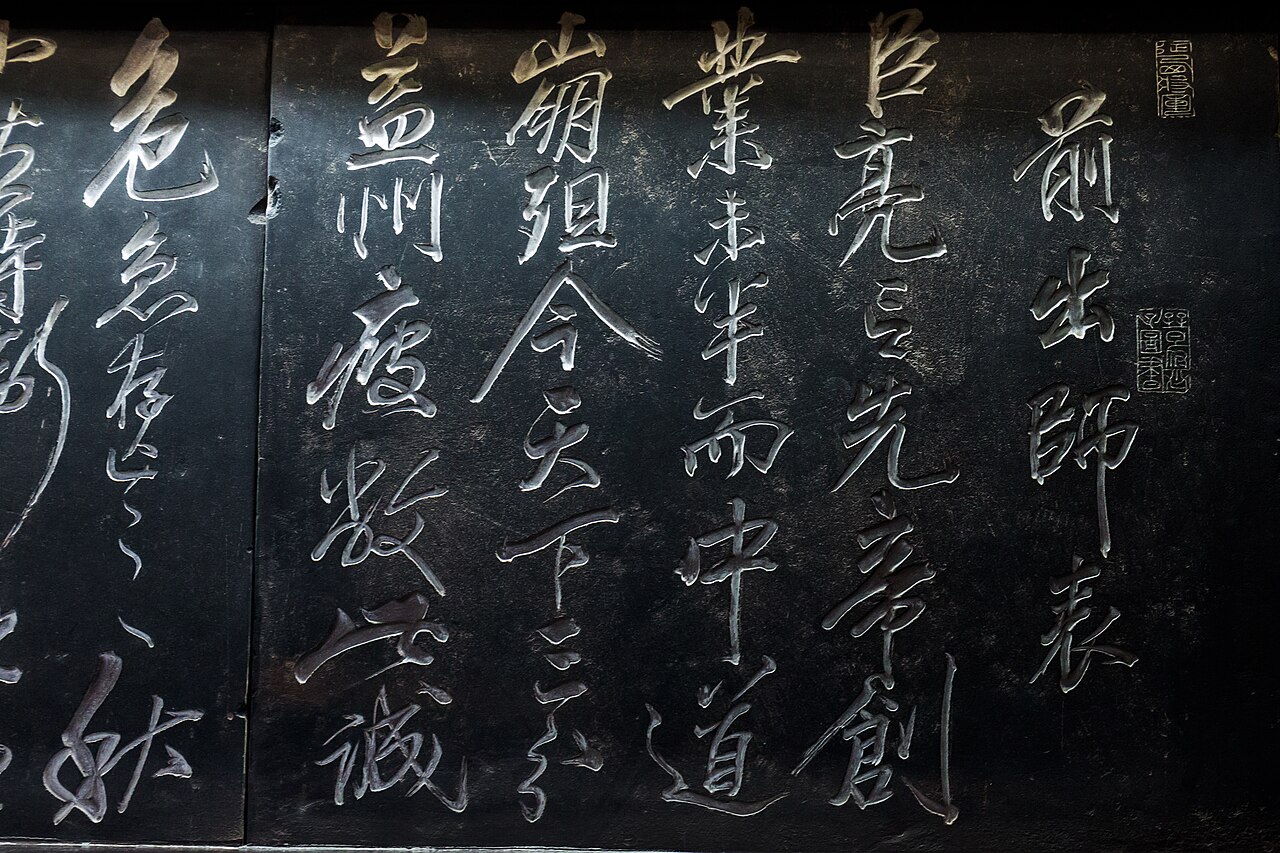 Letter
Primary source
Chu Shi Biao
Zhuge Liang · 227 (Former); 228 (Later, disputed)
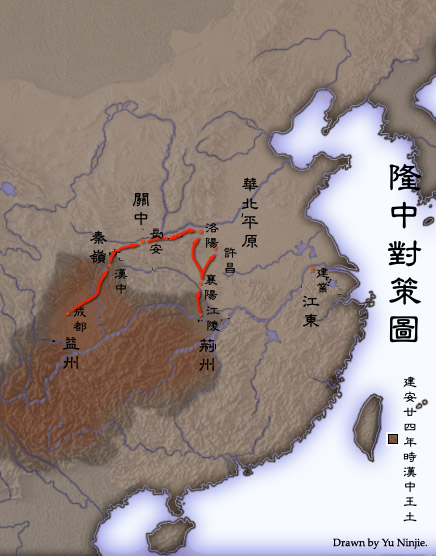 Speech
Primary source
Longzhong Plan
Zhuge Liang · 207 CE
Secondary source
Hou Chu Shi Biao
Attributed to Zhuge Liang (disputed, possibly Zhuge Ke) · 228 CE (disputed)
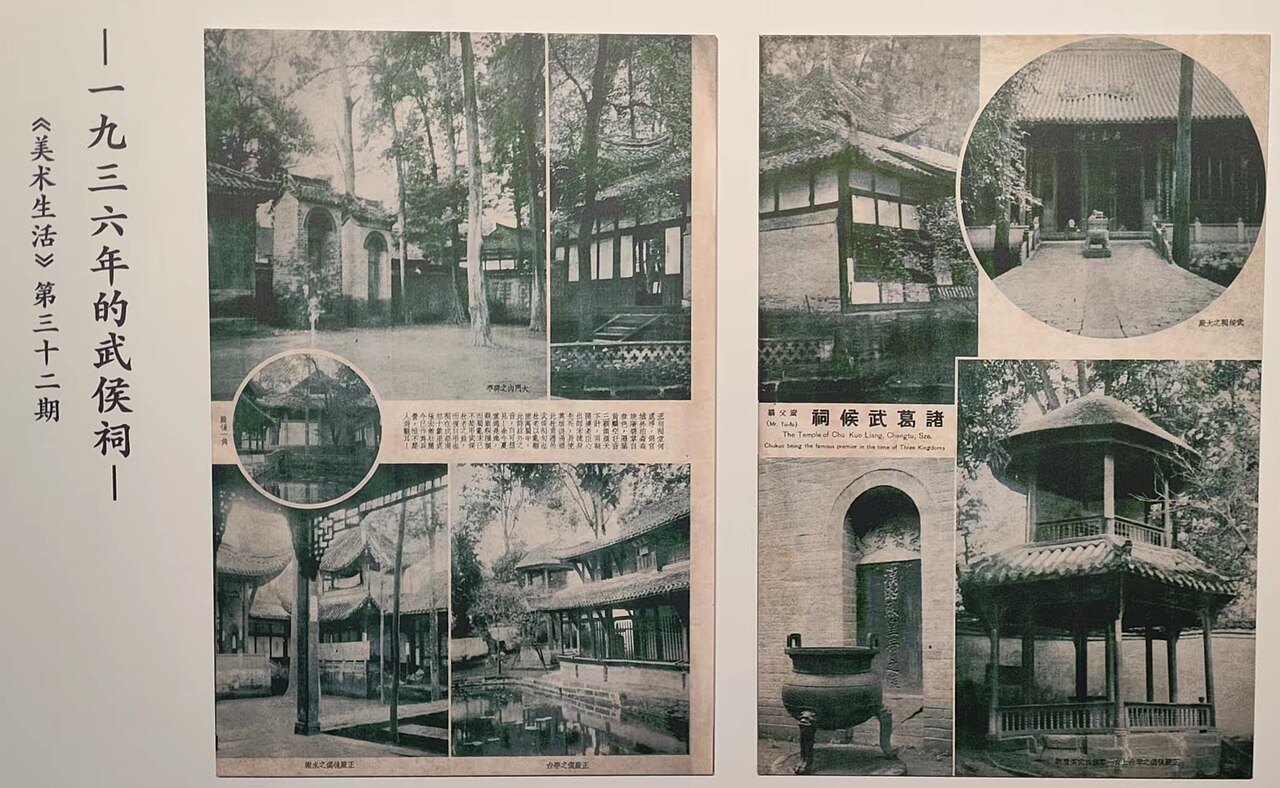 Artifact
Secondary source
Wuhou Shrine, Chengdu
rebuilt 1672, on earlier foundations
Free account
Read every Zhuge Liang source
Sign up free →
Ready when you are
Start chatting with Zhuge Liang now.
20 messages free · No credit card · Available in 50+ languages.