


Secondary sourcePainting1598
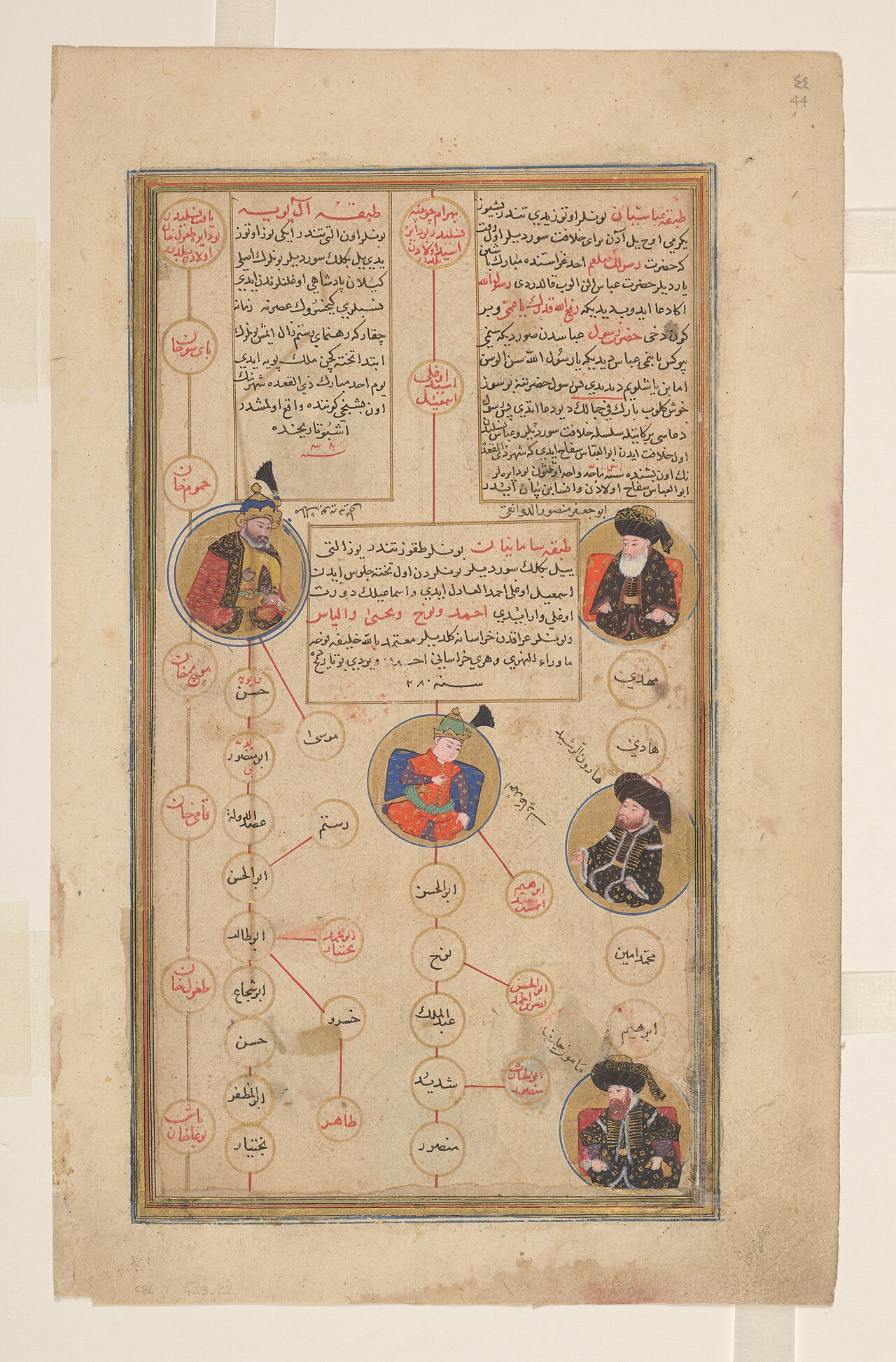
Portraits of Abbasid Caliphs al-Mansur, Harun al-Rashid and al-Ma'mun
Abū Ṭālib Iṣfahānī · 1598
An Ottoman miniature genealogy page from 1598 showing portrait medallions of al-Mansur and other caliphs as part of a universal history chart.
Depicts al-Mansur as part of an imagined chain of legitimate caliphs, not a likeness made from life.
About this source
What it is
This folio comes from a Turkish manuscript called Cream of Histories, made in Baghdad in 1598. It shows portrait medallions linked by lines, forming a family-tree style chart of history's rulers, including the Abbasid caliphs al-Mansur, Harun al-Rashid and al-Ma'mun on one side and later rulers Buya and Ahmad Samani on the other.
Why it matters
The manuscript presents history as a single chain leading up to the Ottoman dynasty, placing al-Mansur as one link among many rulers. It shows how centuries later, Ottoman court artists and scholars used earlier caliphs like al-Mansur to build a story of legitimate succession supporting their own rulers.
Look closer
- Since this was painted 800 years after al-Mansur lived, what can and can't it tell us about his real appearance?
- Why might the Ottoman court want to draw a line connecting itself back to early Abbasid caliphs?
- What is gained and lost by showing history as a simple chain of portraits?
This painting is part of the curated material that grounds the AI version of Caliph al-Mansur on Humy.ai — when students ask about related events, the AI can quote it and cite it.
More Caliph al-Mansur sources
Meet the AI Caliph al-Mansur →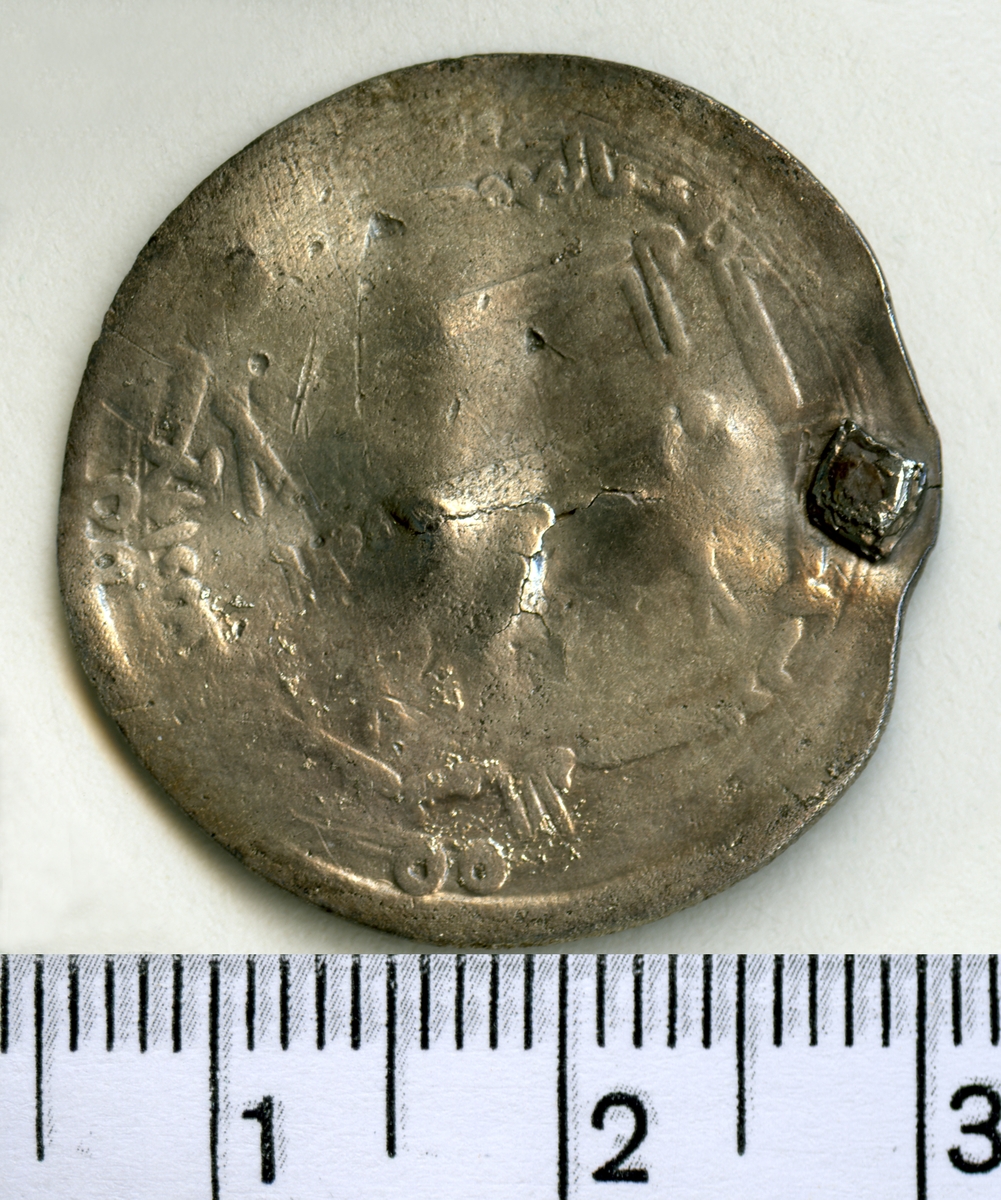 Artifact
Primary source
Coins of the Abbasid Caliphate Issued under al-Mansur
8th century, during al-Mansur's reign (754-775)
 Book
Secondary source
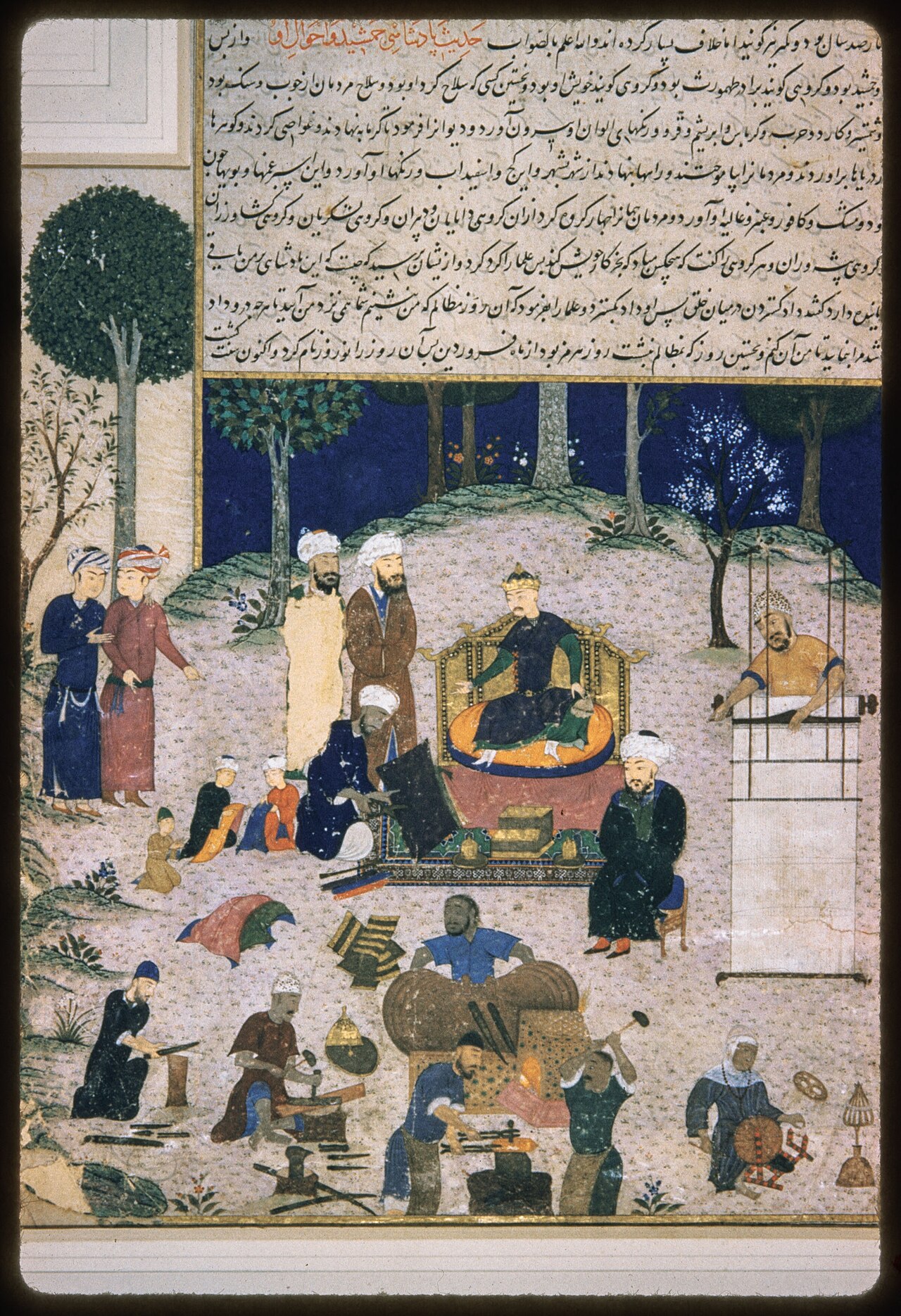
History of the Prophets and Kings
Muhammad ibn Jarir al-Tabari · completed 915 AD
 Artifact
Secondary source
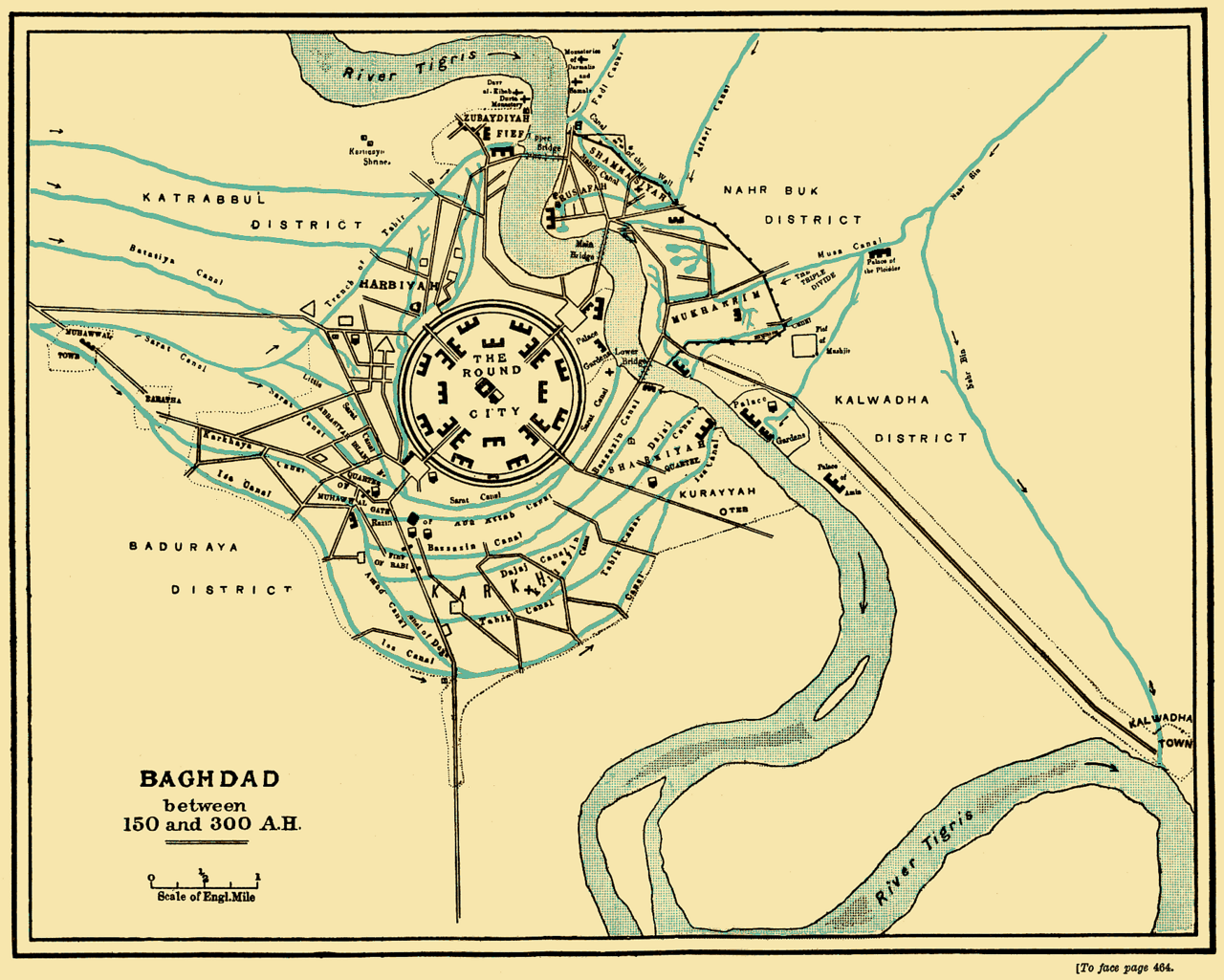
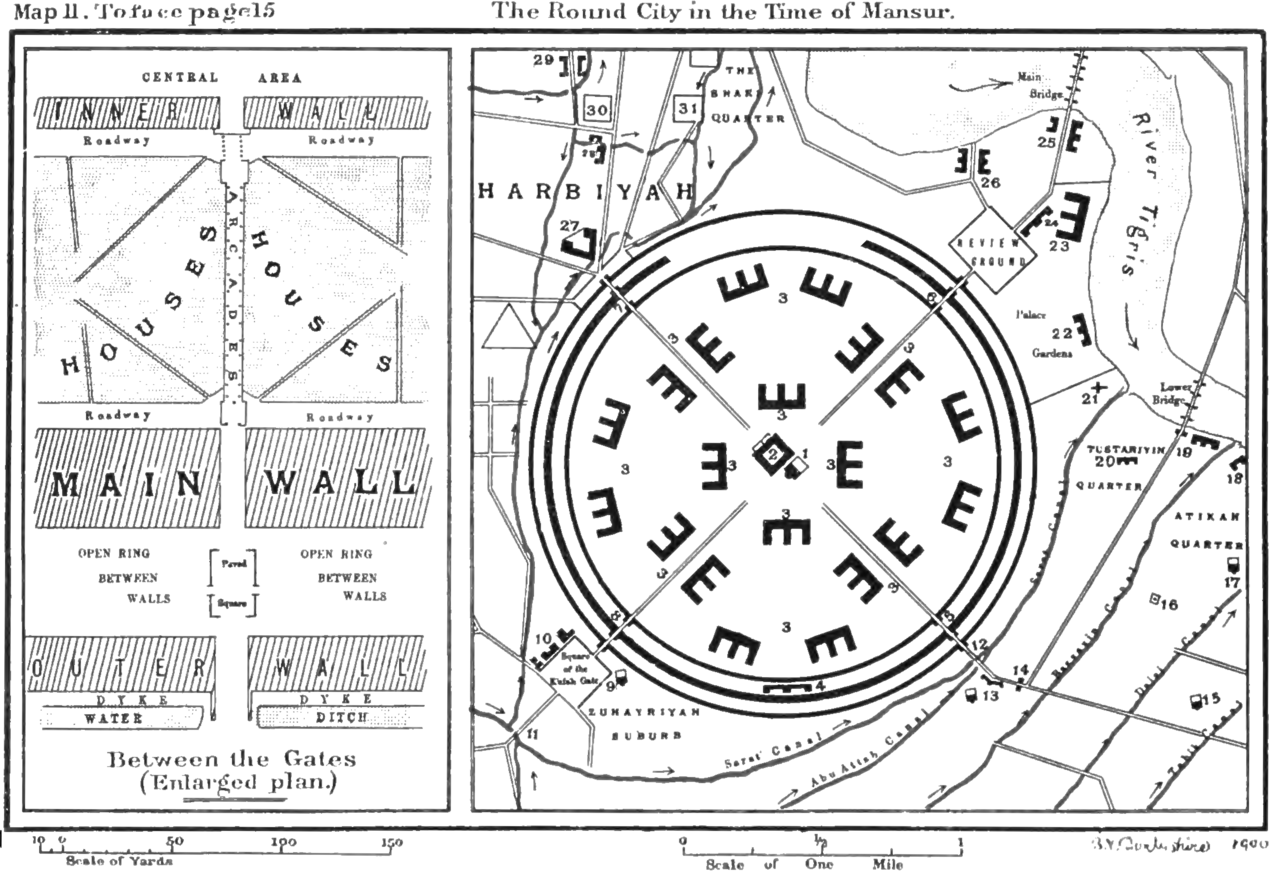
Round City of Baghdad
762–766
 Artifact
Secondary source
Palace of the Golden Gate
763
 Book
Secondary source
Genealogies of the Nobles
Al-Baladhuri
Ready when you are
Start chatting with Caliph al-Mansur now.
20 messages free · No credit card · Available in 50+ languages.