


Primary sourcePhotographc. 1900
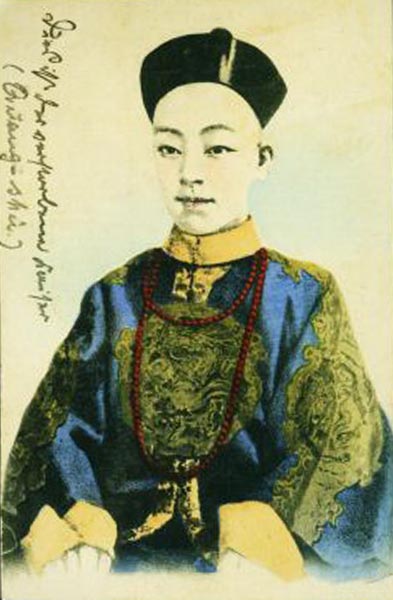
Postcard of Emperor Guangxu
Unknown · c. 1900
A hand-colored photographic postcard depicting a young man identified as Emperor Guangxu in formal dragon-patterned robes, circulated commercially around 1900.
This commercial postcard shows how images of Guangxu were marketed and circulated, especially to foreign audiences.
About this source
What it is
This is a hand-colored photographic postcard showing a young man in a dark blue silk robe with gold-embroidered dragon patterns, a red bead necklace, a high yellow collar, and a black feathered hat. A handwritten inscription runs down the left side of the image. The postcard is identified as depicting Emperor Guangxu.
Why it matters
Postcards like this show how images of the emperor circulated commercially, particularly abroad, around the turn of the twentieth century. They reveal public curiosity about Chinese court life and how the image of a secluded, largely powerless emperor was packaged and sold as a curiosity to foreign audiences.
Look closer
- Why might a postcard of an emperor have been popular with foreign buyers?
- What does hand-coloring a photograph do to how we read it as a historical record?
- What might the handwritten inscription tell us about who owned or sent this postcard?
This photograph is part of the curated material that grounds the AI version of Guangxu Emperor on Humy.ai — when students ask about related events, the AI can quote it and cite it.
More Guangxu Emperor sources
Browse all 88 →Primary source
Chinese declaration of war against Japan
Guangxu Emperor · 1 August 1894
 Document
Primary source
Treaty of Shimonoseki
17 April 1895
 Painting
Primary source
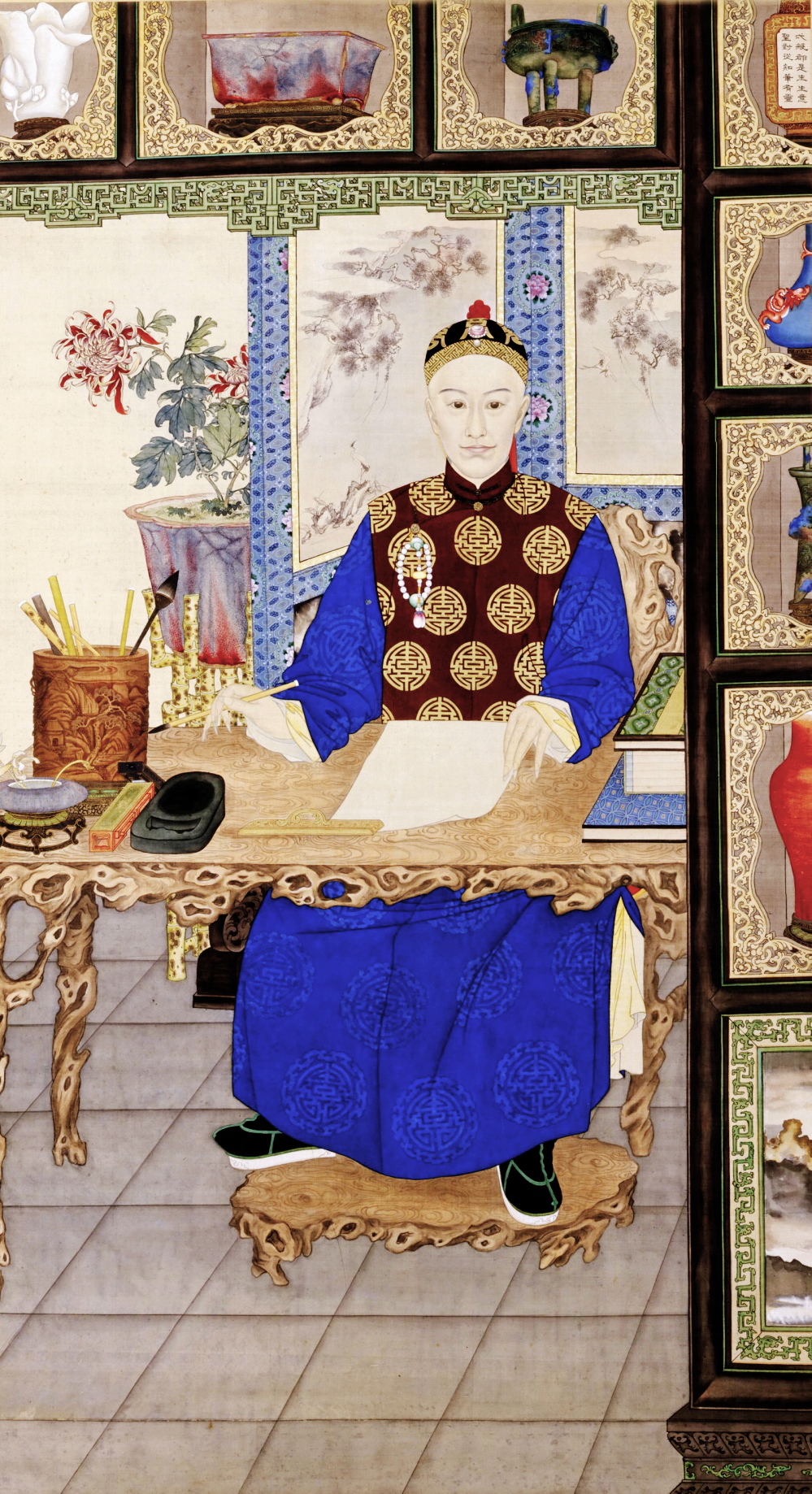
Emperor Guangxu
Qing Dynasty Court Painter
Primary source
Imperial Decree of Declaration of War Against Foreign Powers
Guangxu Emperor · 21 June 1900
Free account
Read every Guangxu Emperor source
Sign up free →
Ready when you are
Start chatting with Guangxu Emperor now.
20 messages free · No credit card · Available in 50+ languages.