


Secondary sourceSculpture1910
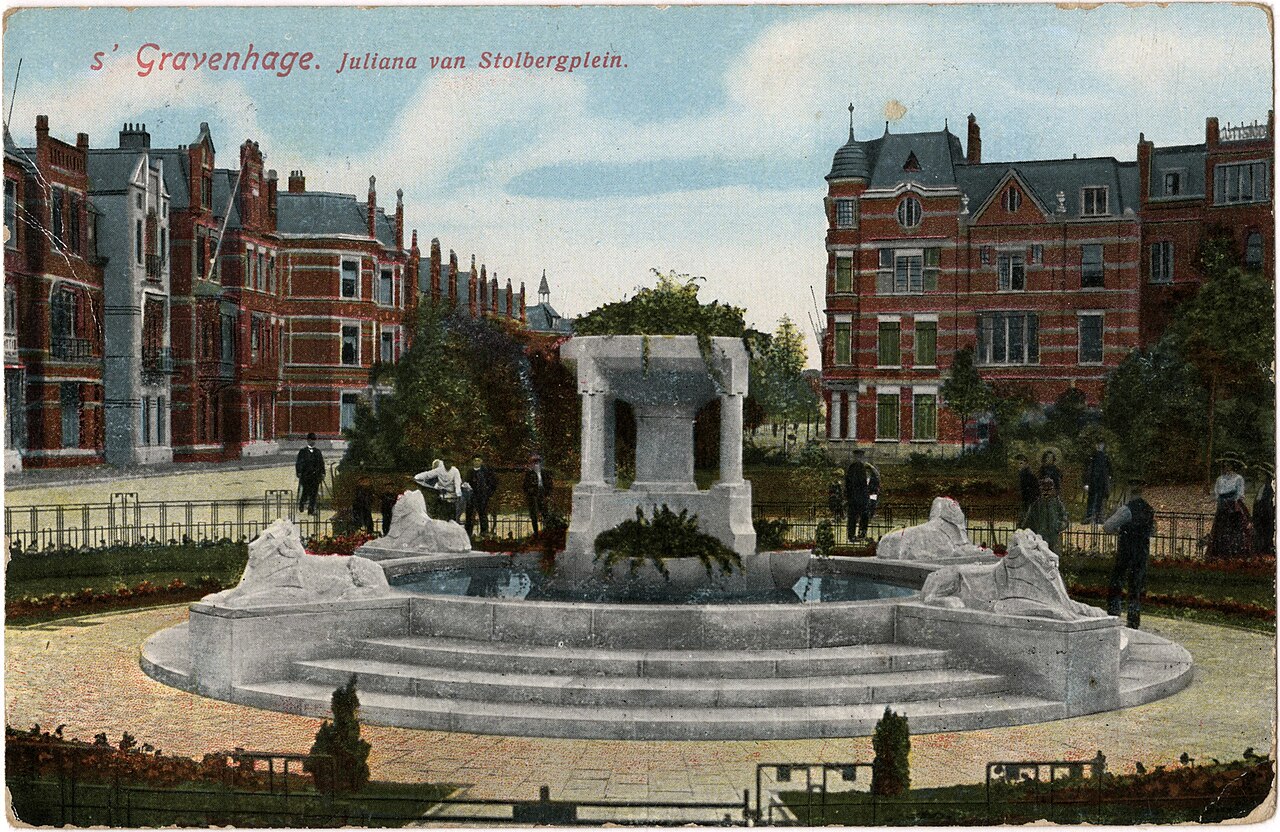
Prinses Juliana Monument
1910
A 1910 monument in The Hague, later moved to Stuyvesantplein. It honours the birth of Princess Juliana and shows the Stuyvesant name's modern reach rather than Stuyvesant himself.
Shows how Stuyvesant's name later appears on a city square where this monument was moved; it does not depict him.
About this source
What it is
This is a stone monument in The Hague, dated 1910, known as the Prinses Juliana Monument. The image in the archive is a colorized vintage postcard of the Juliana van Stolbergplein. It shows a stone fountain with lion sculptures, a central columned pavilion, a stepped stone basin and brick townhouses behind. The creator is not known. The collection record notes that in 1956 the monument was moved to the Stuyvesantplein.
Why it matters
The monument was made to mark the birth of Princess Juliana, not to honour Peter Stuyvesant. Its later move to the Stuyvesantplein links it to his name. It shows how a figure's name can spread into city spaces long after his life, even when the monument is about someone else.
Look closer
- What does the monument celebrate, and how is that shown in its design?
- Why might a city have moved a monument to a square named after someone else?
- What does a colorized postcard add to the original view, and what might it change?
This sculpture is part of the curated material that grounds the AI version of Peter Stuyvesant on Humy.ai — when students ask about related events, the AI can quote it and cite it.
More Peter Stuyvesant sources
Browse all 77 →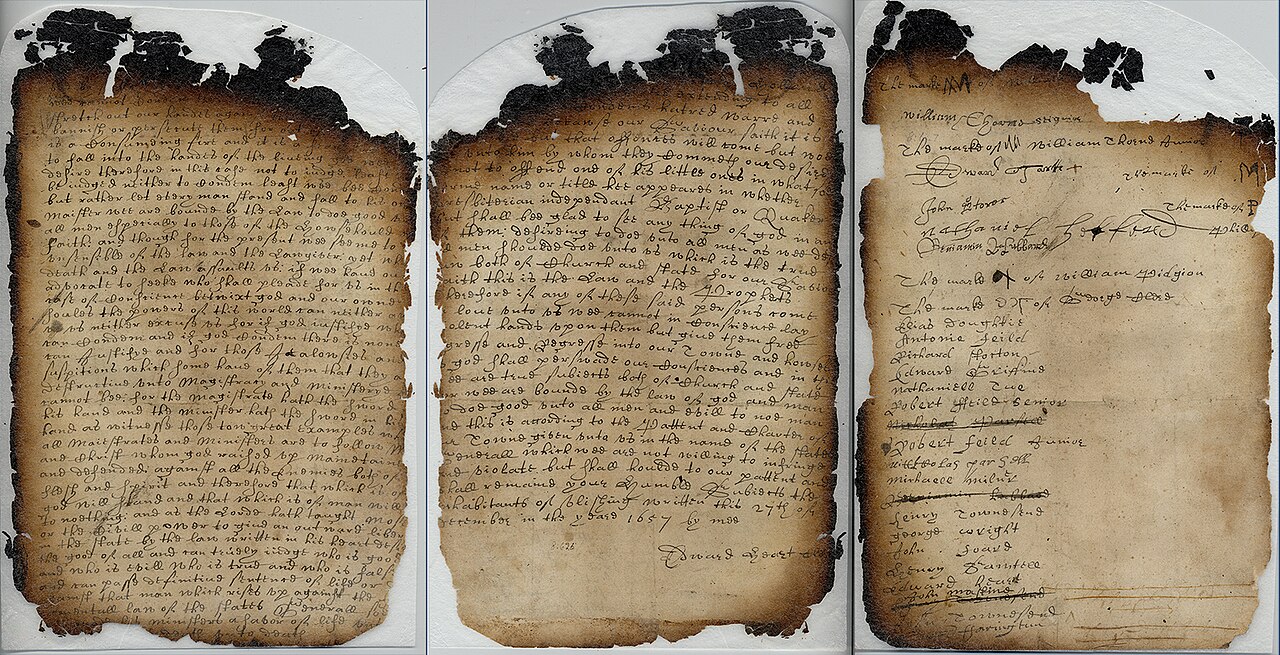 Document
Primary source
Flushing Remonstrance
Edward Hart · 27 December 1657
 Document
Primary source
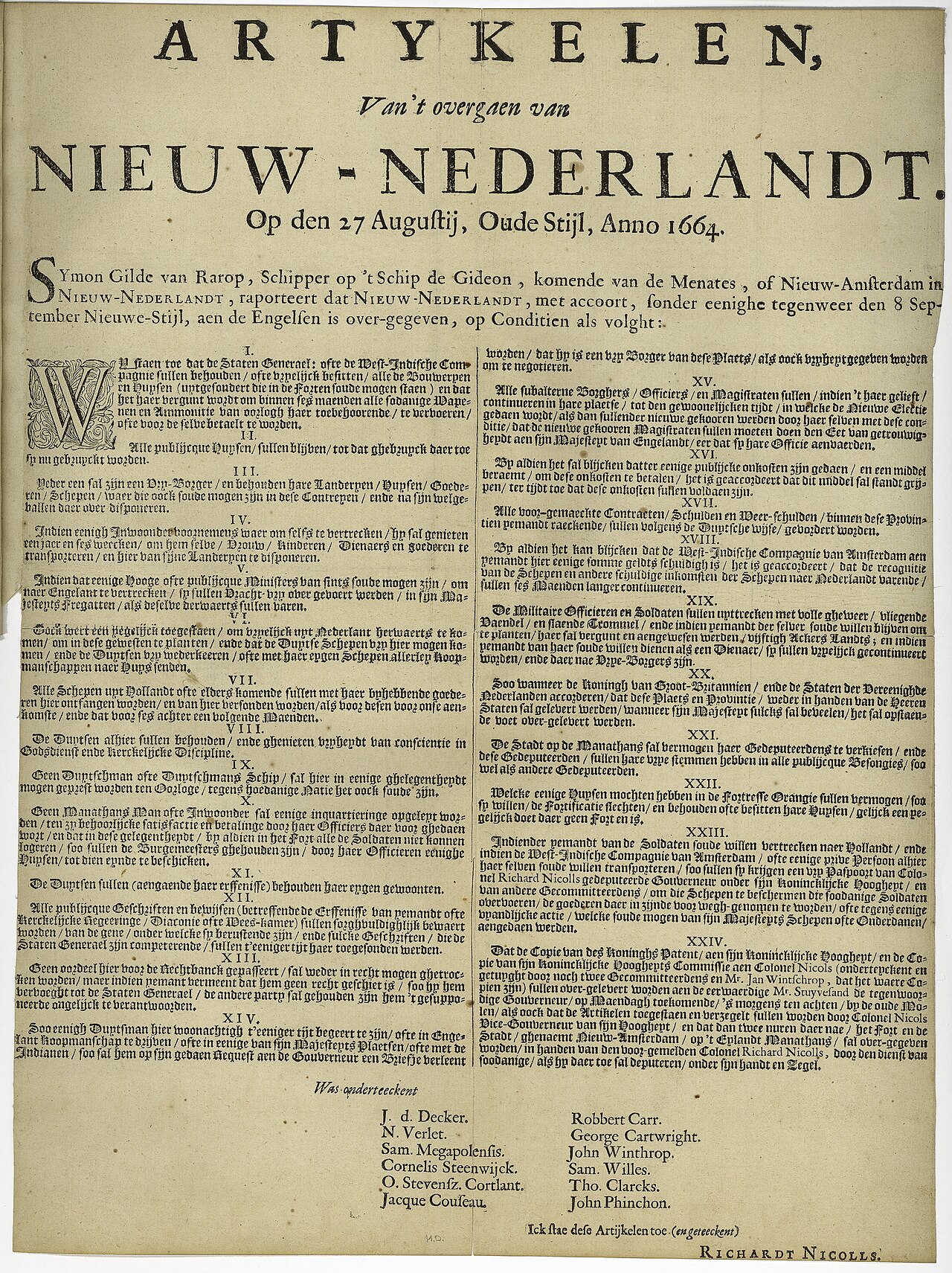
Articles of Capitulation on the Reduction of New Netherland
29 September 1664
 Painting
Primary source
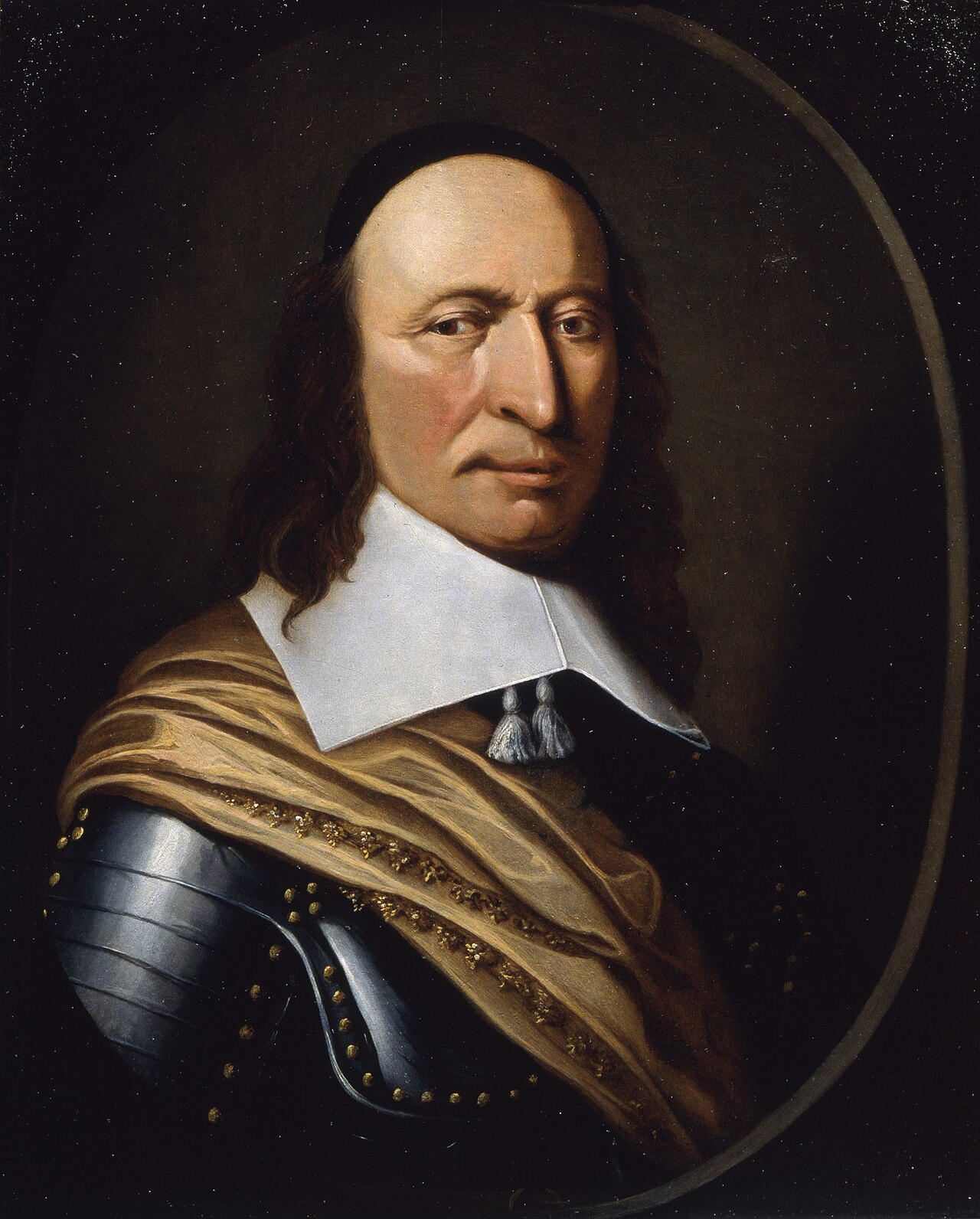
Petrus (Peter) Stuyvesant
Hendrick Couturier (attributed) · 1652
Secondary source
Laws and Ordinances of New Netherland, 1638–1674
E. B. O'Callaghan · 1647–1664 (compiled 1868)
Free account
Read every Peter Stuyvesant source
Sign up free →
Ready when you are
Start chatting with Peter Stuyvesant now.
20 messages free · No credit card · Available in 50+ languages.