


Secondary sourcePainting1562
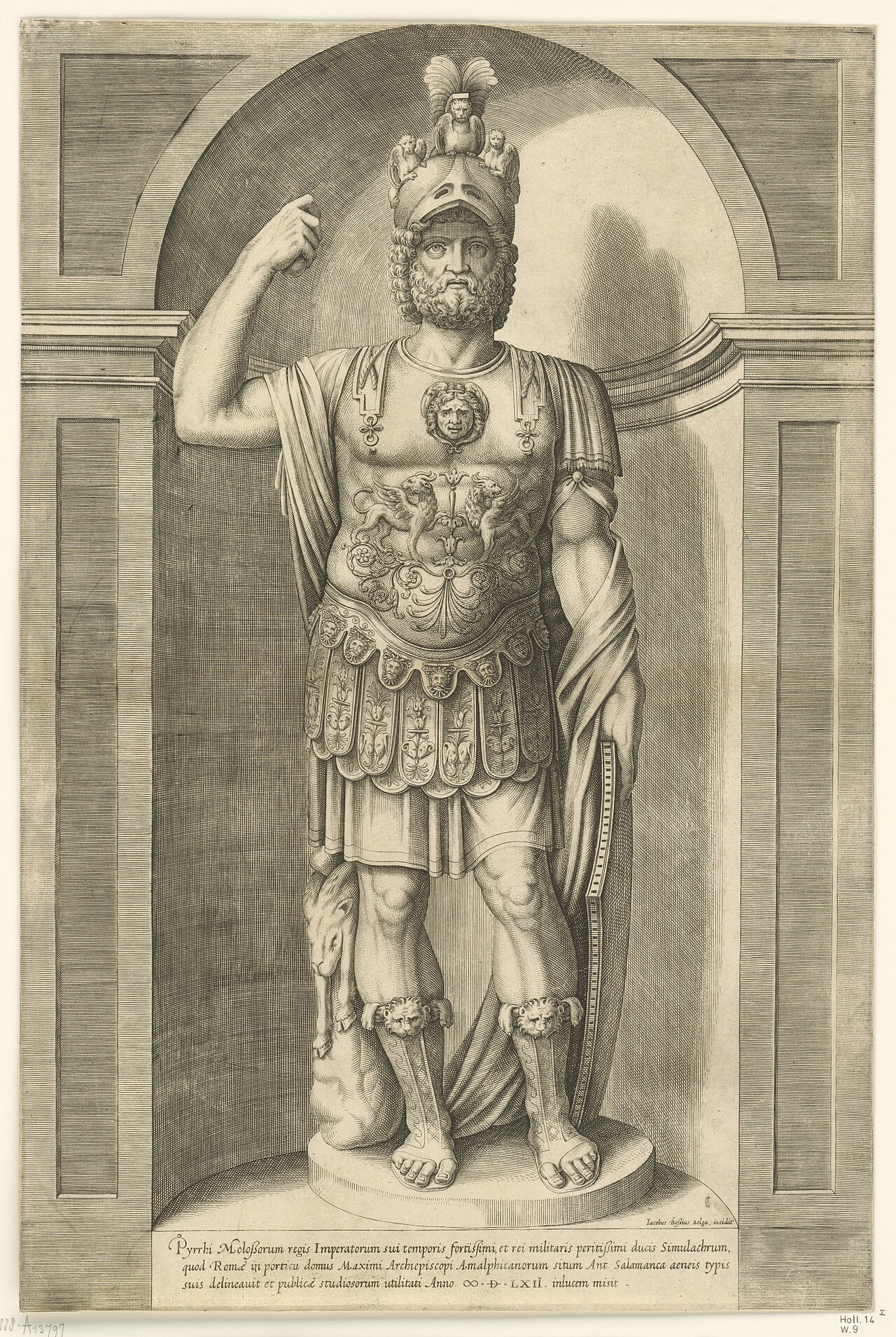
Print of a Statue of Pyrrhus as Mars
Jacob Bos · 1562
A 1562 engraving showing a Roman-era statue of Pyrrhus depicted as the war god Mars, standing in full armor.
This print reproduces an ancient statue imagined to depict Pyrrhus as the god of war, showing his later legendary image.
About this source
What it is
This engraving, made in Rome in 1562 by Jacob Bos after a drawing by Salamanca and published by Hendrick van Schoel, reproduces an ancient statue of Pyrrhus. The statue itself was carved from marble in the first century AD and stood in the Capitoline Museum in Rome. The print includes a Latin inscription.
Why it matters
The statue shows Pyrrhus dressed as Mars, the Roman god of war, reflecting how later cultures imagined and honored him as a legendary warrior-king. This print, made over a thousand years after both Pyrrhus and the original statue, shows how artists and publishers kept reproducing and reinterpreting ancient figures for new audiences.
Look closer
- Why might Pyrrhus be shown dressed as the god of war rather than as himself?
- What does the detailed armor and helmet suggest about how the Romans wanted him remembered?
- How many layers of copying stand between this print and the real Pyrrhus?
This painting is part of the curated material that grounds the AI version of Pyrrhus of Epirus on Humy.ai — when students ask about related events, the AI can quote it and cite it.
More Pyrrhus of Epirus sources
Browse all 78 →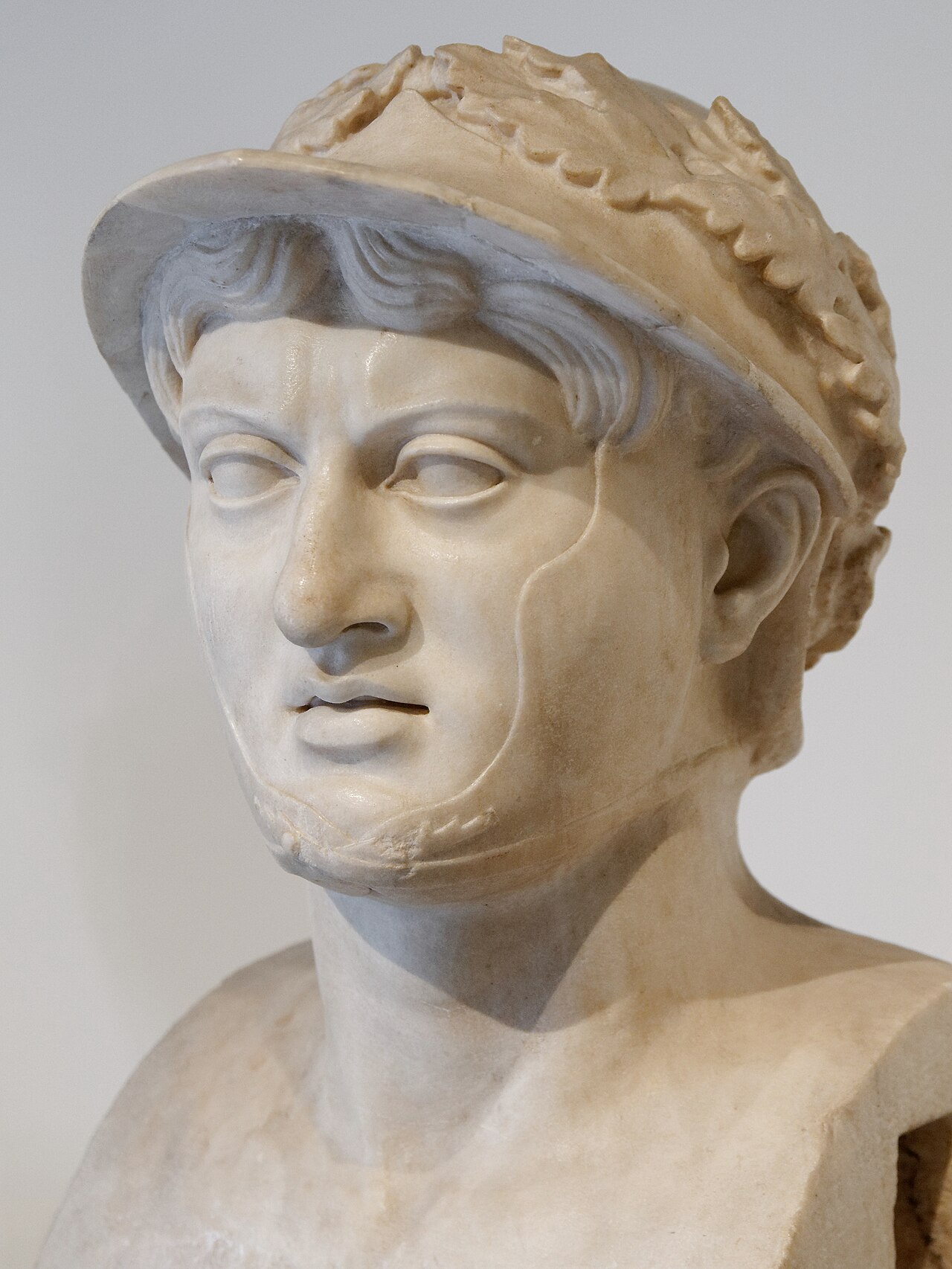
Ready when you are
Start chatting with Pyrrhus of Epirus now.
20 messages free · No credit card · Available in 50+ languages.