


Secondary sourcePainting1572 and 1682
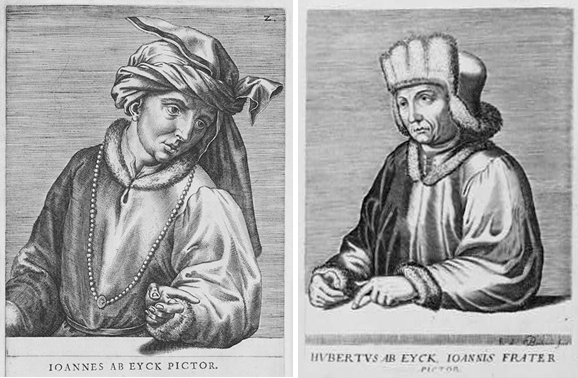
Prints of Jan and Hubert van Eyck portraits, 1572 and 1682
Unknown draughtsmen and Edme de Boulonois · 1572 and 1682
Two later engraved prints showing imagined portraits of the brothers Jan and Hubert van Eyck, based on a Ghent Altarpiece tradition.
Shows how later printmakers imagined Jan van Eyck, copying a tradition based on the Ghent Altarpiece rather than a verified portrait.
About this source
What it is
This is a pair of black-and-white engraved portrait prints, side by side. The left print shows a man in a turban, fur-trimmed robe and beaded necklace, labelled IOANNES AB EYCK PICTOR. The right print shows a man in a fur-trimmed hat and robe with hands clasped, labelled HUBERTVS AB EYCK, IOANNIS FRATER PICTOR, meaning the brother of John, painter. The Commons record dates them to 1572 and 1682 and says they are copies of an oil painting. It names unknown draughtsmen and Edme de Boulonois as the makers.
Why it matters
The record explains that these prints follow a tradition in which the brothers are shown among the figures of the Just Judges panel of the Ghent Altarpiece. The prints are therefore copies of an idea of the artists rather than sure likenesses. They show how two centuries of later artists and printmakers kept shaping the image of Jan van Eyck and his brother Hubert.
Look closer
- How are the two men dressed, and what do their clothes and hands suggest about the artists they were meant to represent?
- Why might printmakers in 1572 and 1682 have copied an earlier painting rather than making new likenesses?
- What does the print leave out, and what would we need to know to decide whether these faces are accurate?
This painting is part of the curated material that grounds the AI version of Jan van Eyck on Humy.ai — when students ask about related events, the AI can quote it and cite it.
More Jan van Eyck sources
Browse all 82 →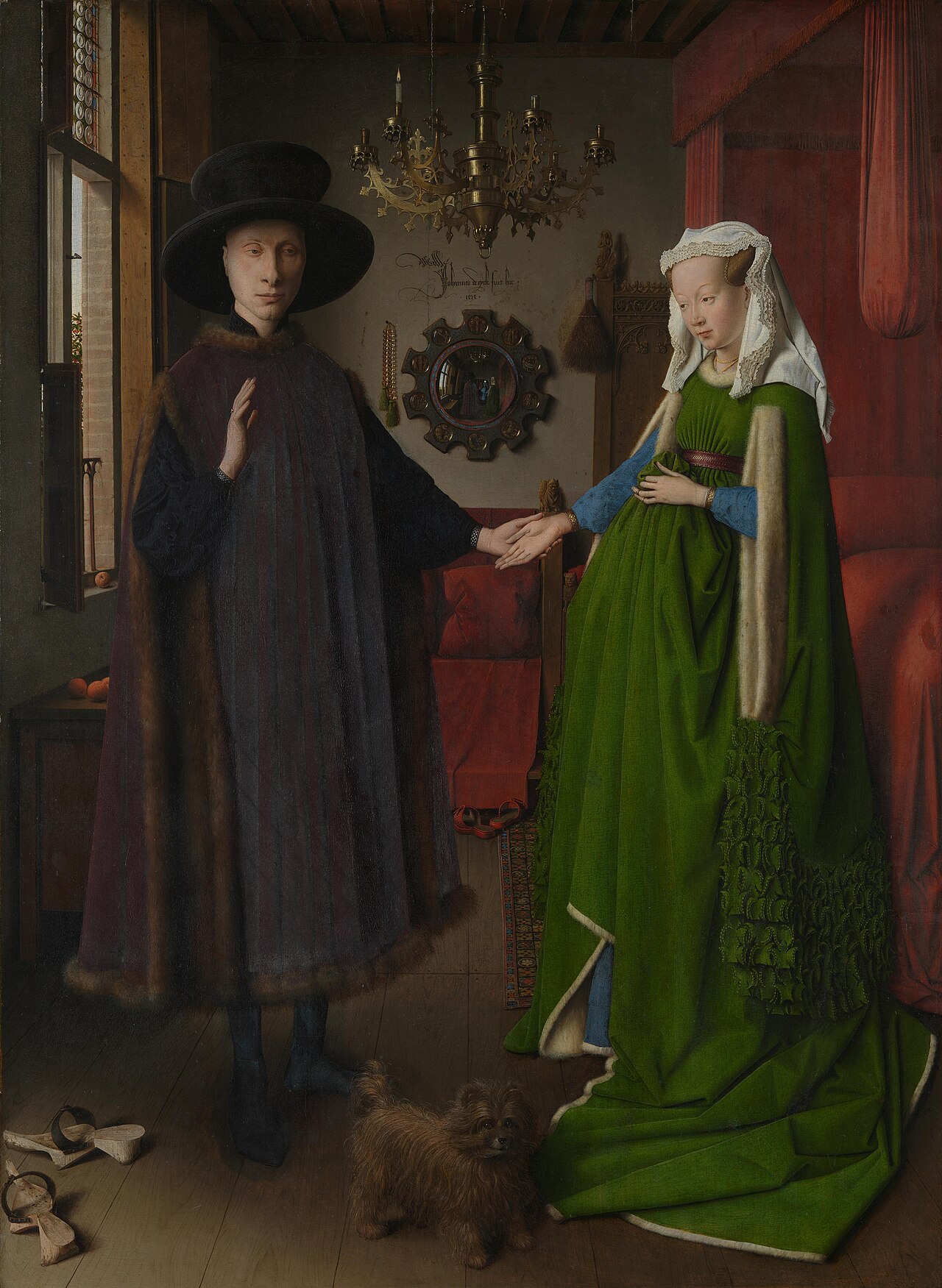 Painting
Primary source
Arnolfini Portrait
Jan van Eyck · 1434
 Painting
Secondary source
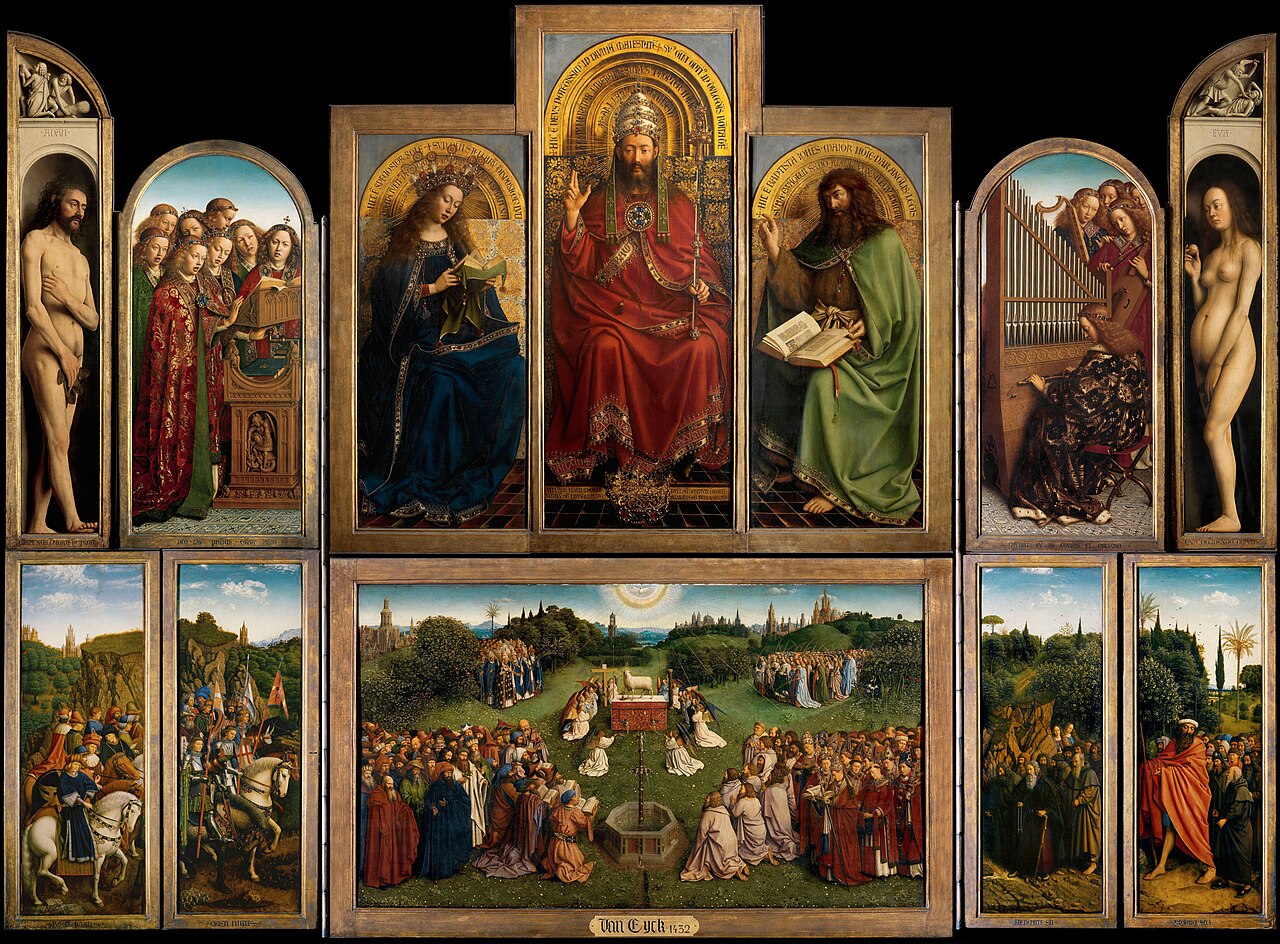
Ghent Altarpiece
Jan van Eyck and Hubert van Eyck · 1432
 Painting
Primary source
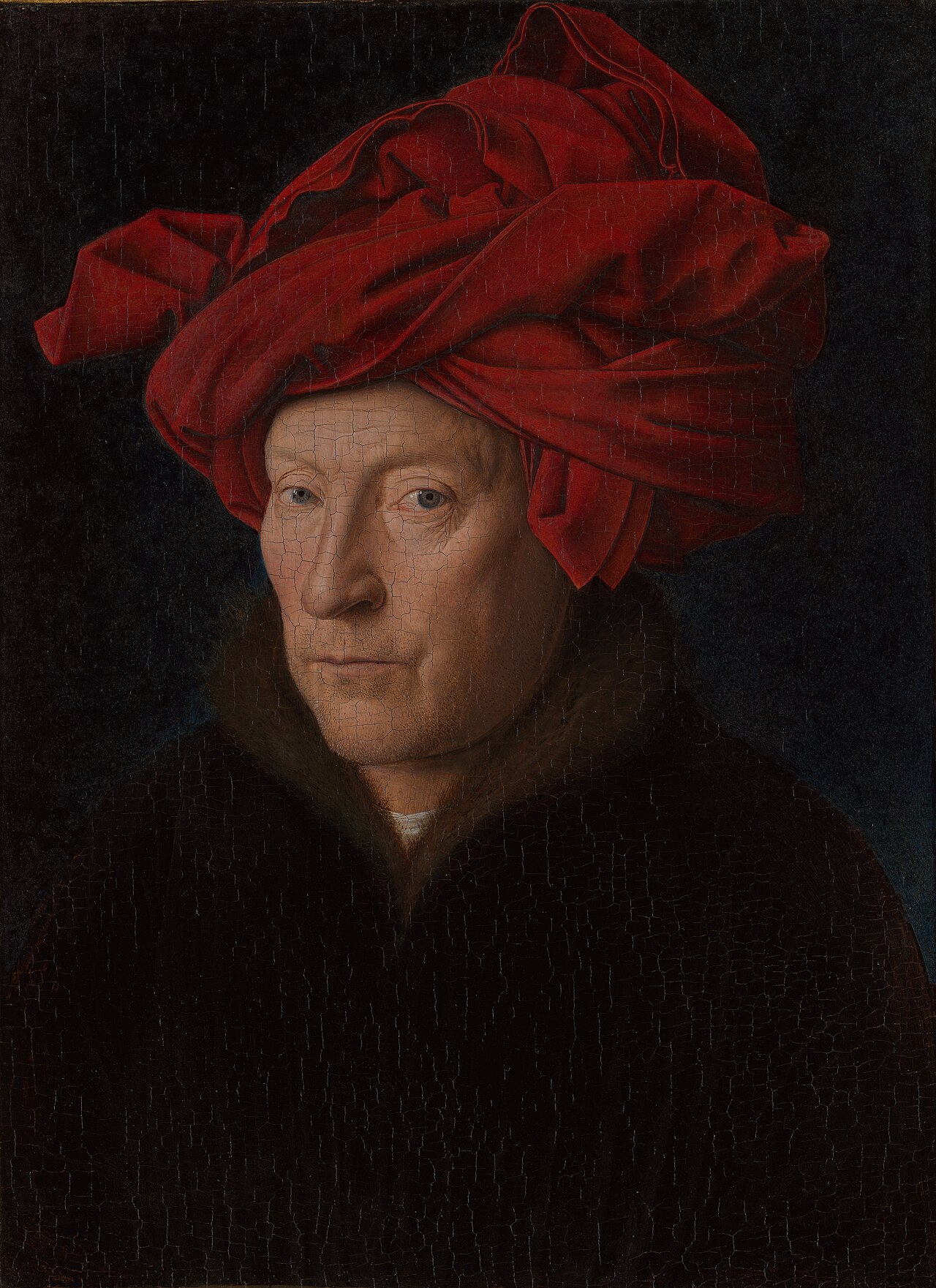
Portrait of a Man (Self Portrait?)
Jan van Eyck · 1433
 Painting
Secondary source
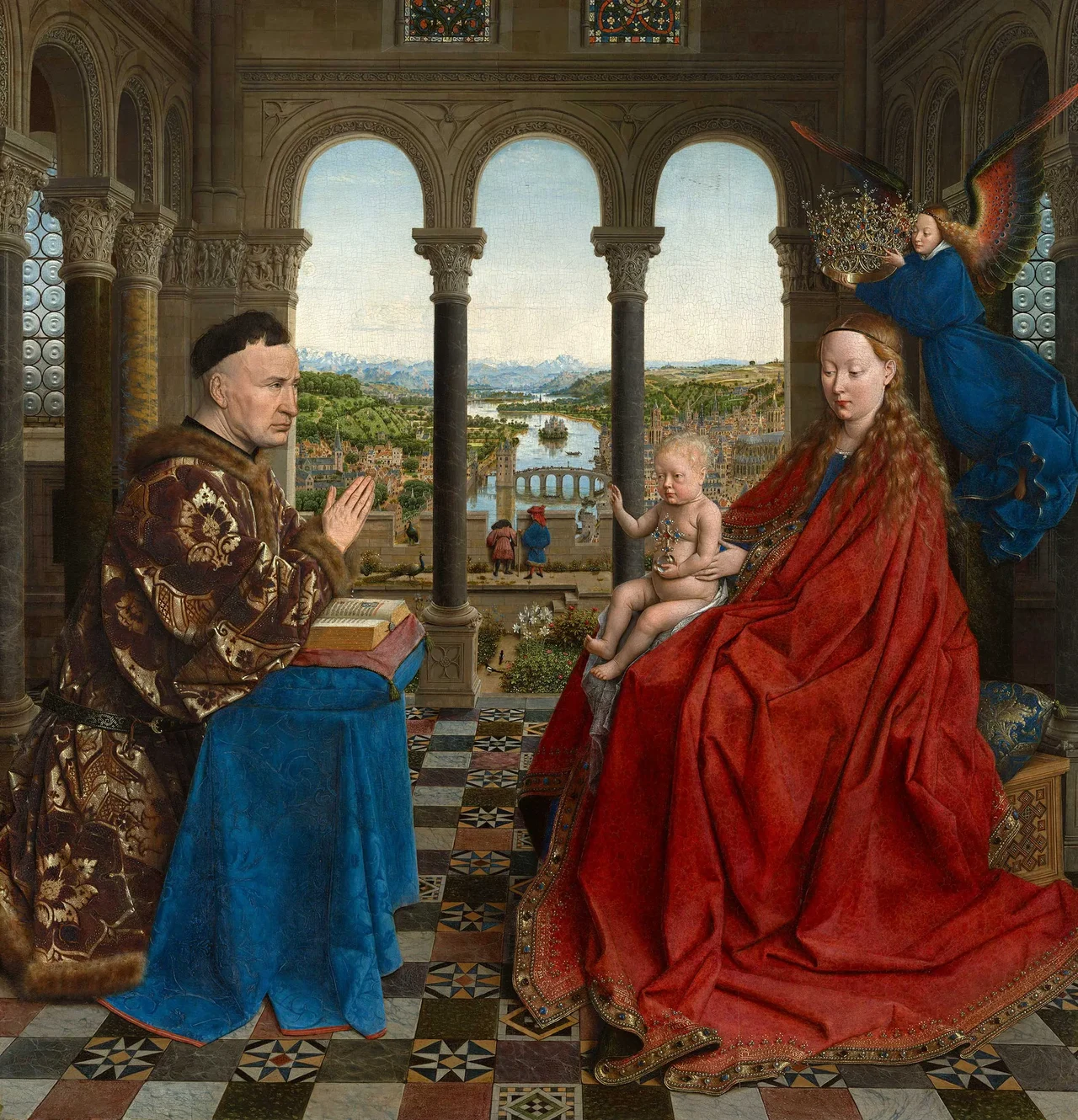
Madonna of Chancellor Rolin
Jan van Eyck · c. 1435
Free account
Read every Jan van Eyck source
Sign up free →
Ready when you are
Start chatting with Jan van Eyck now.
20 messages free · No credit card · Available in 50+ languages.