


Primary sourcePainting1890 (depicting 11 February 1889)
Promulgation of the Constitution of the Empire of Japan
Tokonami Masayoshi · 1890 (depicting 11 February 1889)
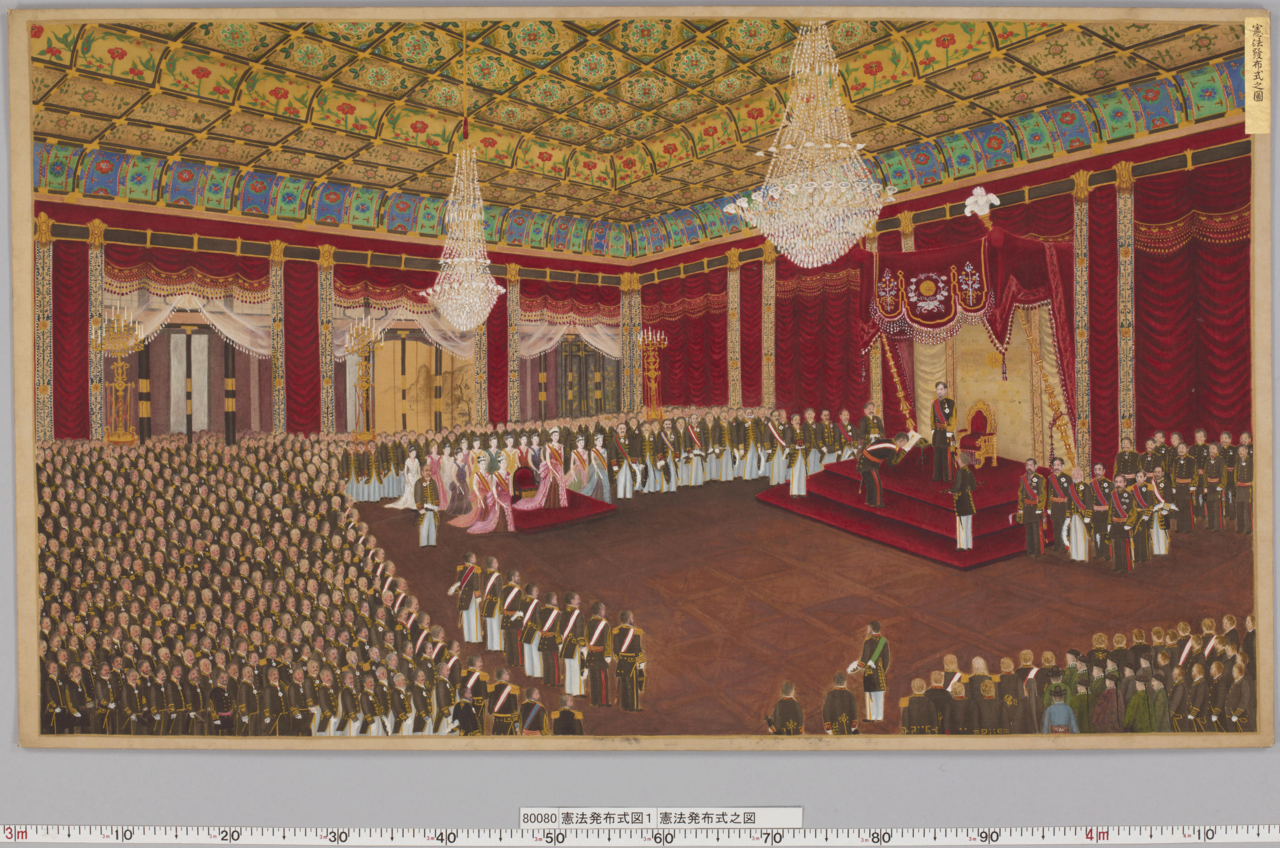
A painting of the 1889 ceremony in which Emperor Meiji proclaimed Japan's new constitution, painted in 1890.
Depicts Emperor Meiji proclaiming the Meiji Constitution, a defining act of his reign.
About this source
What it is
This painting, made in 1890 by Tokonami Masayoshi, depicts the ceremony at which Emperor Meiji proclaimed the Constitution of the Empire of Japan in the palace, on the morning of February 11, 1889.
Why it matters
The promulgation of the constitution was one of the central events of Emperor Meiji's reign, establishing a new framework of government for Japan. The painting shows a grand ceremonial hall filled with uniformed officials and ladies in gowns, reflecting the formal, Western-influenced style the Meiji government used to present this historic moment.
Look closer
- What does the grandeur of the hall and the crowd of officials suggest about how important this event was considered?
- Why might the painter have included so many figures rather than focusing closely on the emperor alone?
- What is this painting unable to show you about the actual content or effects of the constitution?
This painting is part of the curated material that grounds the AI version of Emperor Meiji on Humy.ai — when students ask about related events, the AI can quote it and cite it.
More Emperor Meiji sources
Browse all 94 →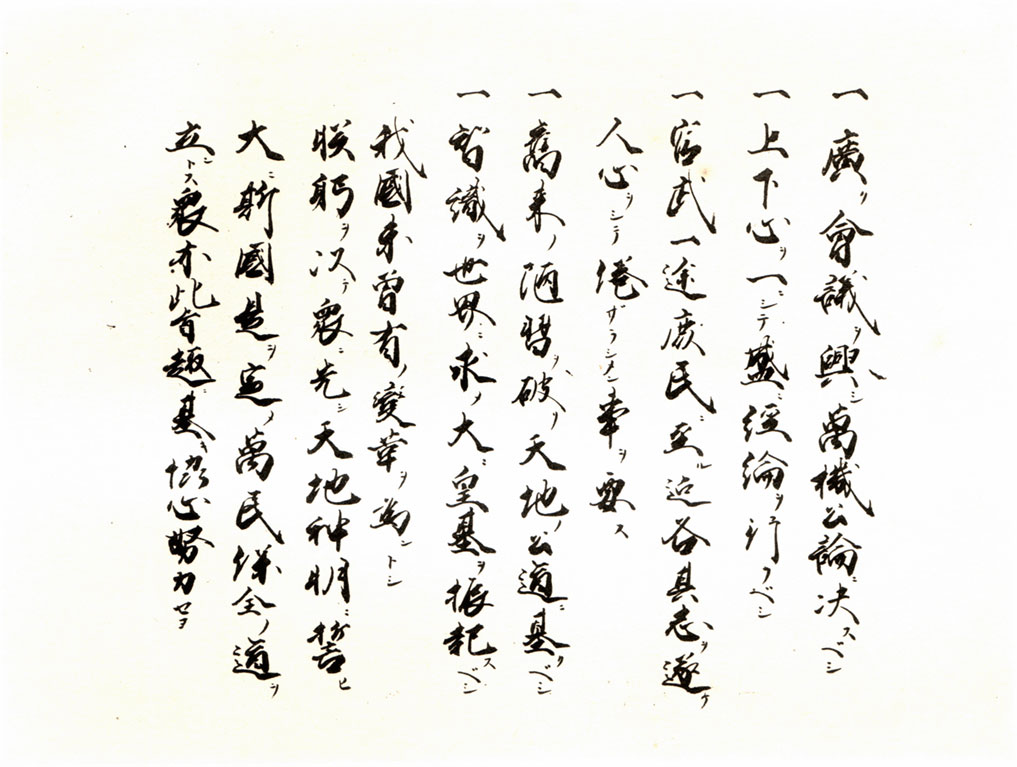 Document
Primary source
Charter Oath
Kido Takayoshi · 6 April 1868
 Document
Primary source
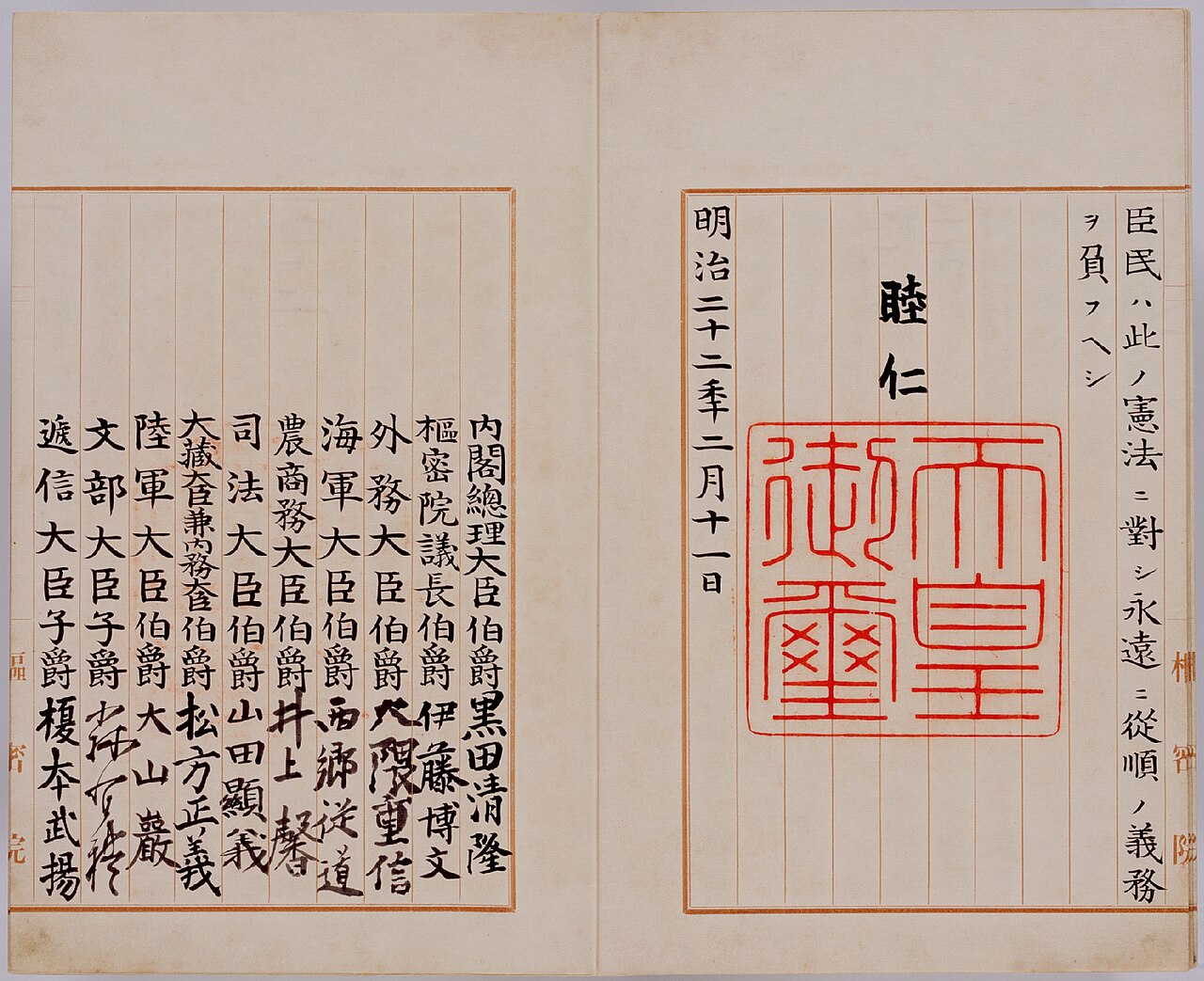
Constitution of the Empire of Japan
11 February 1889
 Document
Primary source
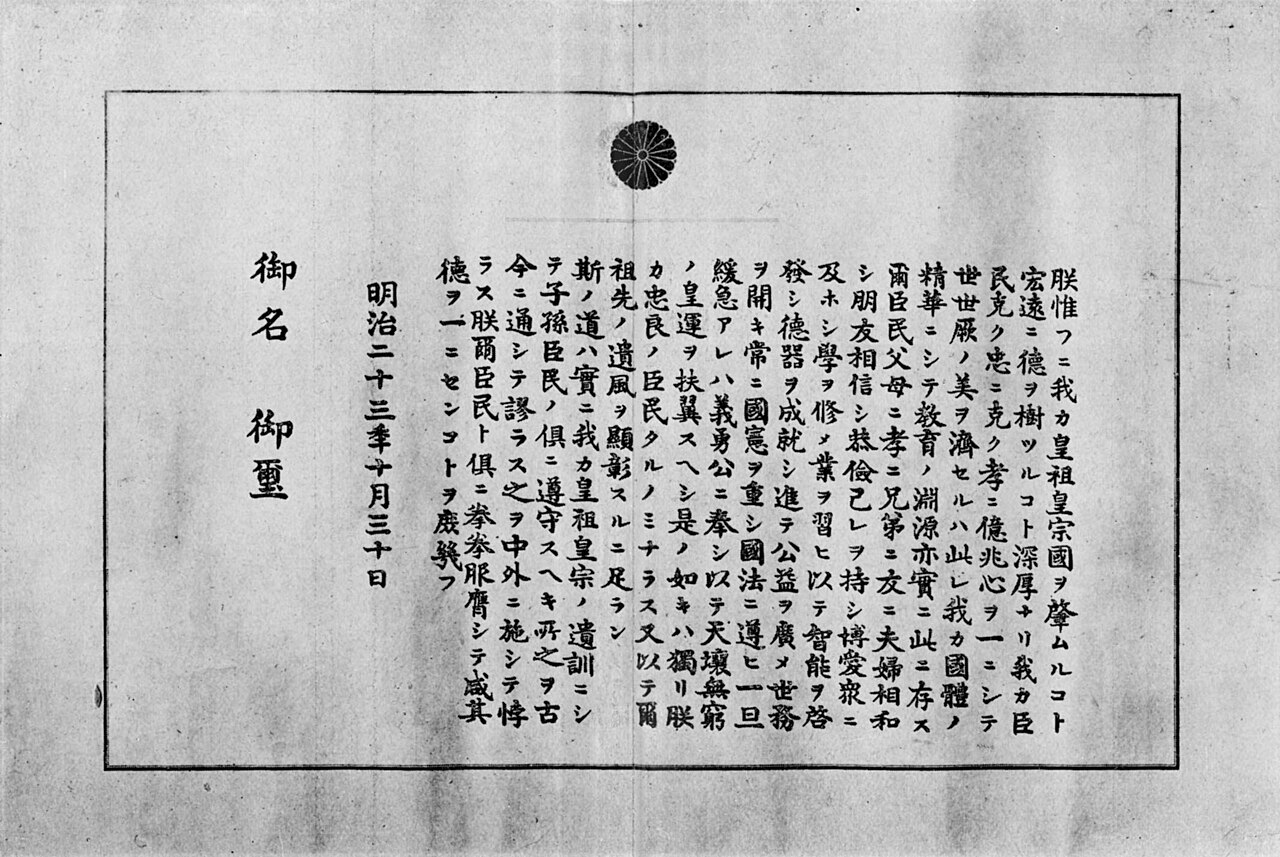
Imperial Rescript on Education
Inoue Kowashi · 30 October 1890
 Document
Primary source
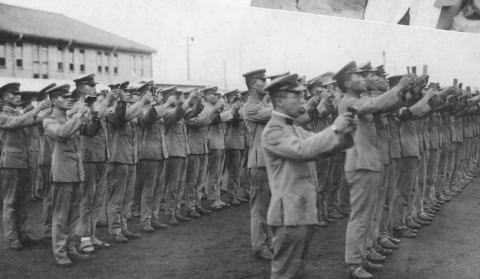
Imperial Rescript to Soldiers and Sailors
Yamagata Aritomo · 4 January 1882
Free account
Read every Emperor Meiji source
Sign up free →
Ready when you are
Start chatting with Emperor Meiji now.
20 messages free · No credit card · Available in 50+ languages.