


Primary sourceArtifactbetween 527 and 565
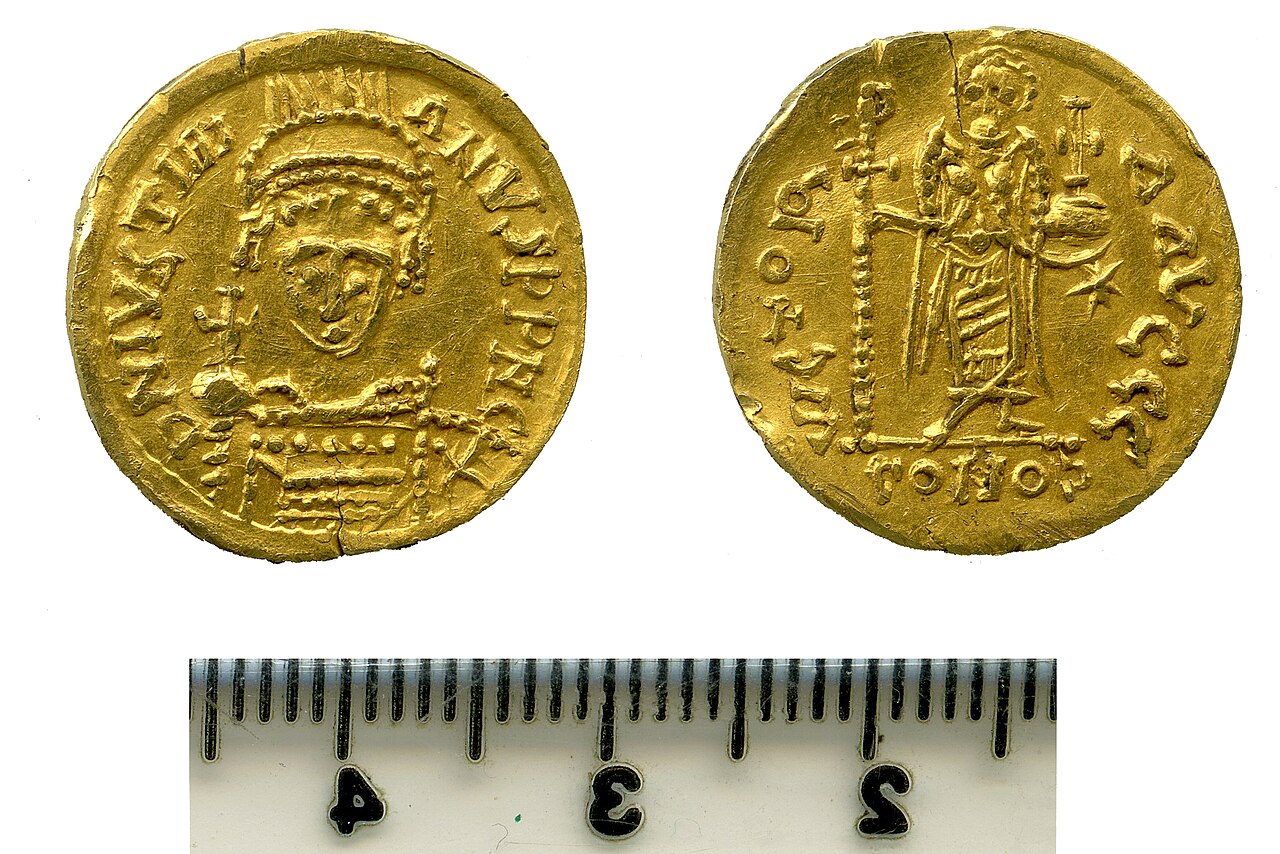
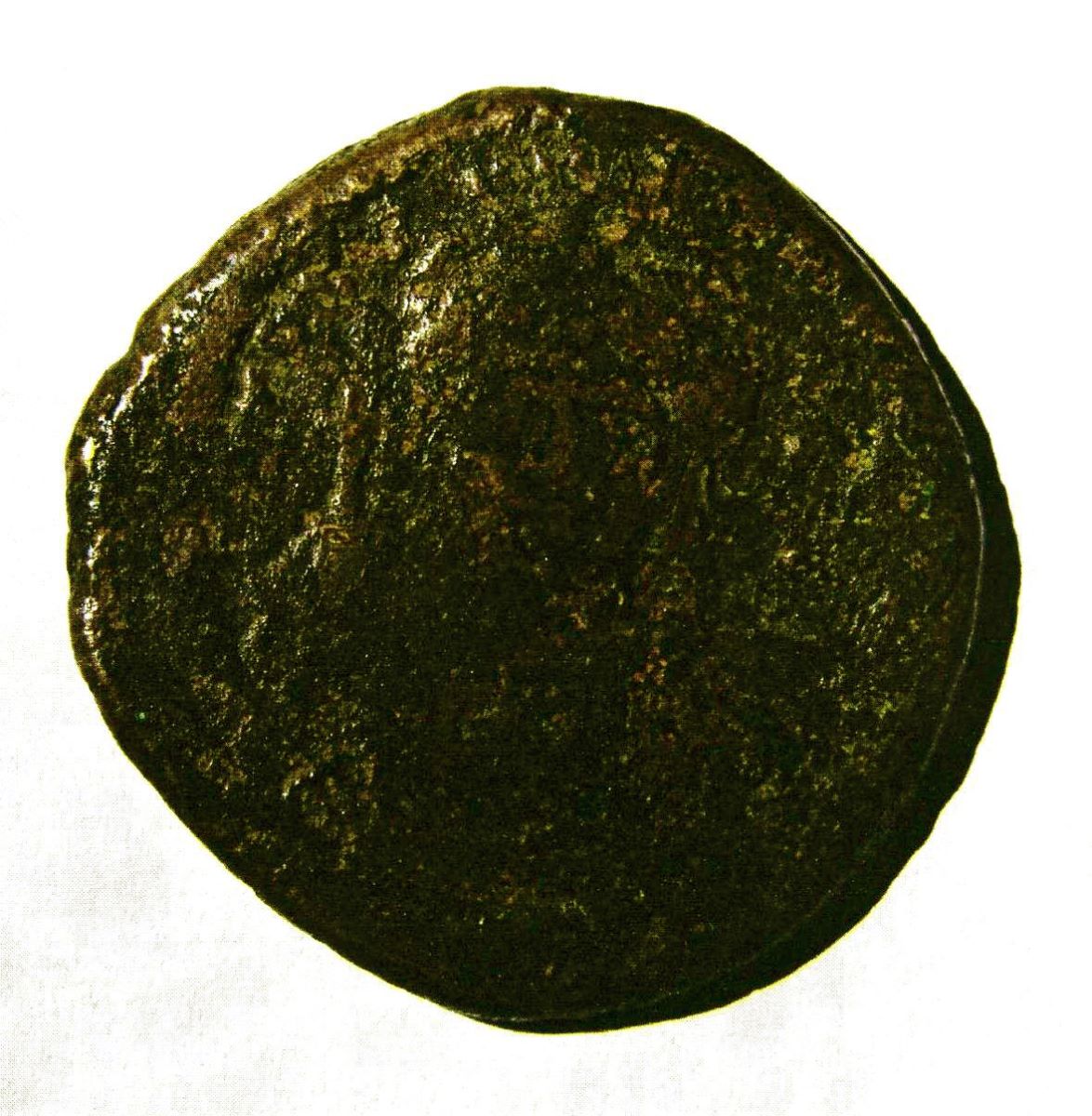
Pseudo-Imperial Solidus Imitating Justinian I, British Museum
between 527 and 565
An early-medieval gold coin imitating the official solidus of Justinian, likely struck outside the empire, held by the British Museum.
This imitation coin, copying Justinian's official image, shows how far his imperial image and authority spread.
About this source
What it is
This gold coin, dated to the period of Justinian's reign (527-565), imitates the official Byzantine solidus. The obverse shows a helmeted, cuirassed bust holding a cross-topped globe and shield, with the inscription naming Justinian; the reverse shows a standing winged figure with a cross-topped staff and a star. The British Museum identifies it as probably a Merovingian imitation of the official coin type, not an official Byzantine mint issue.
Why it matters
Coins like this show how powerful and recognisable Justinian's imperial image had become — other rulers and mints outside his empire copied his coin designs to borrow their authority and prestige. It reveals how far his image traveled and was reused by others.
Look closer
- Why would a ruler outside the Byzantine Empire want to copy Justinian's coin design?
- What small differences might a careful eye spot between an official coin and an imitation?
- What does this coin tell you about trade and contact across early medieval Europe?
This artifact is part of the curated material that grounds the AI version of Justinian I on Humy.ai — when students ask about related events, the AI can quote it and cite it.
More Justinian I sources
Meet the AI Justinian I →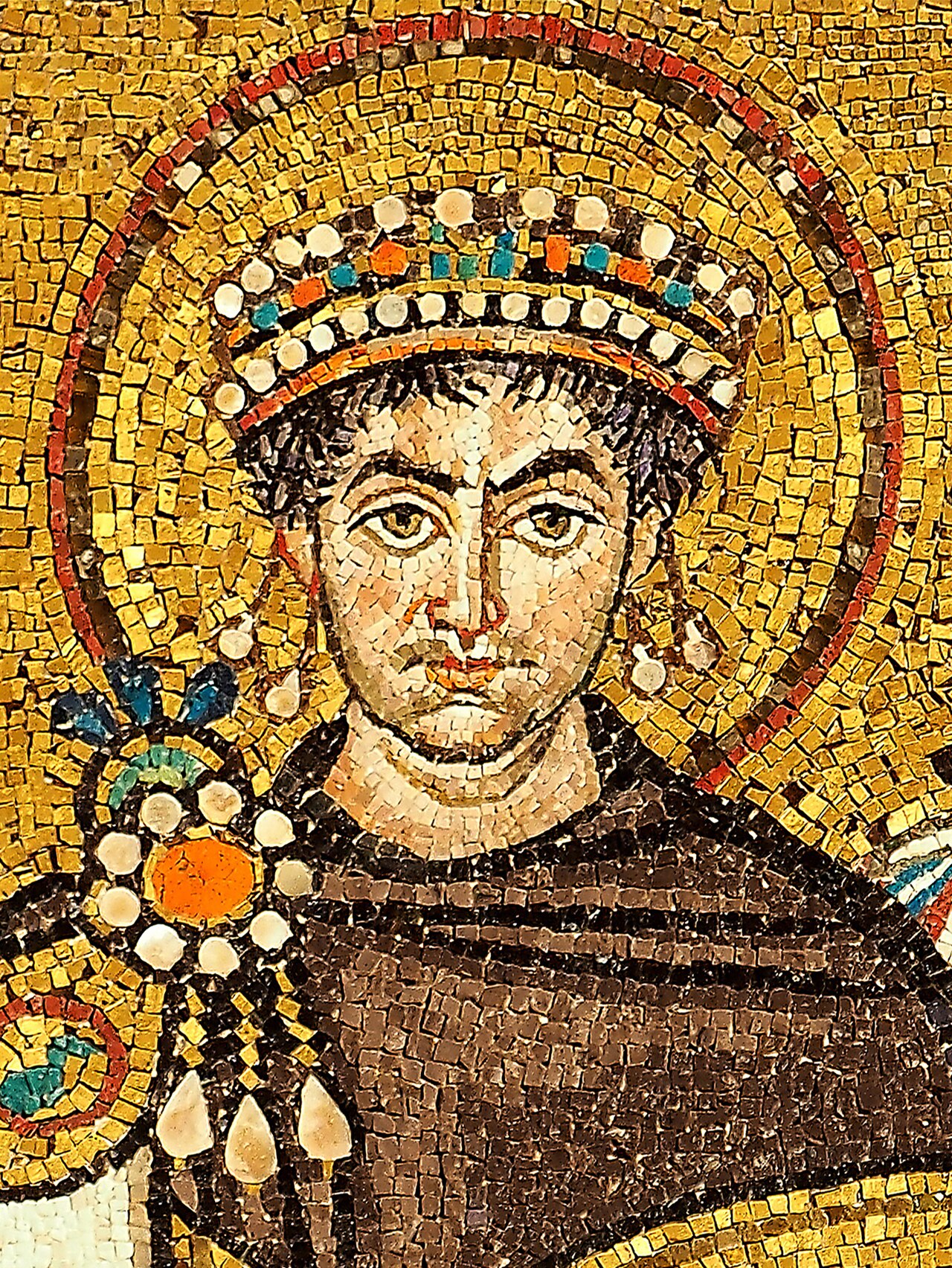 Artifact
Primary source
Portrait of Justinian I, San Vitale Mosaic
Byzantine mosaicists · c. 547
 Painting
Secondary source
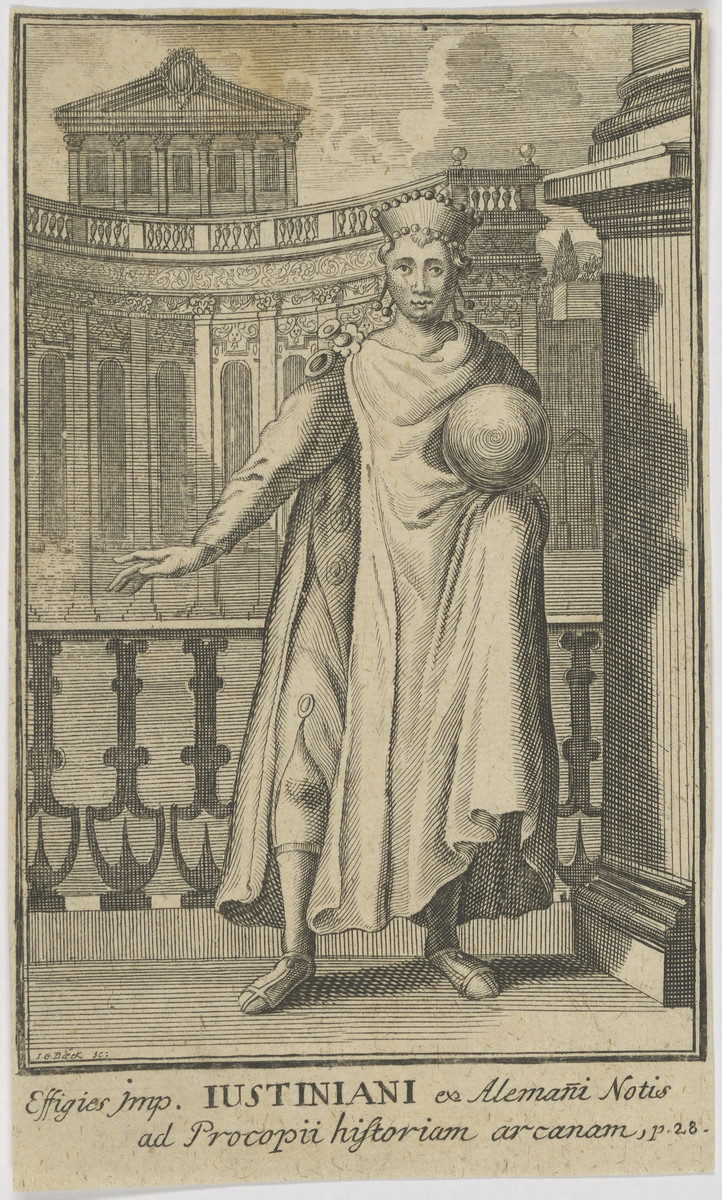
Portrait of Emperor Justinian
Johann Friedrich Böck
 Document
Primary source
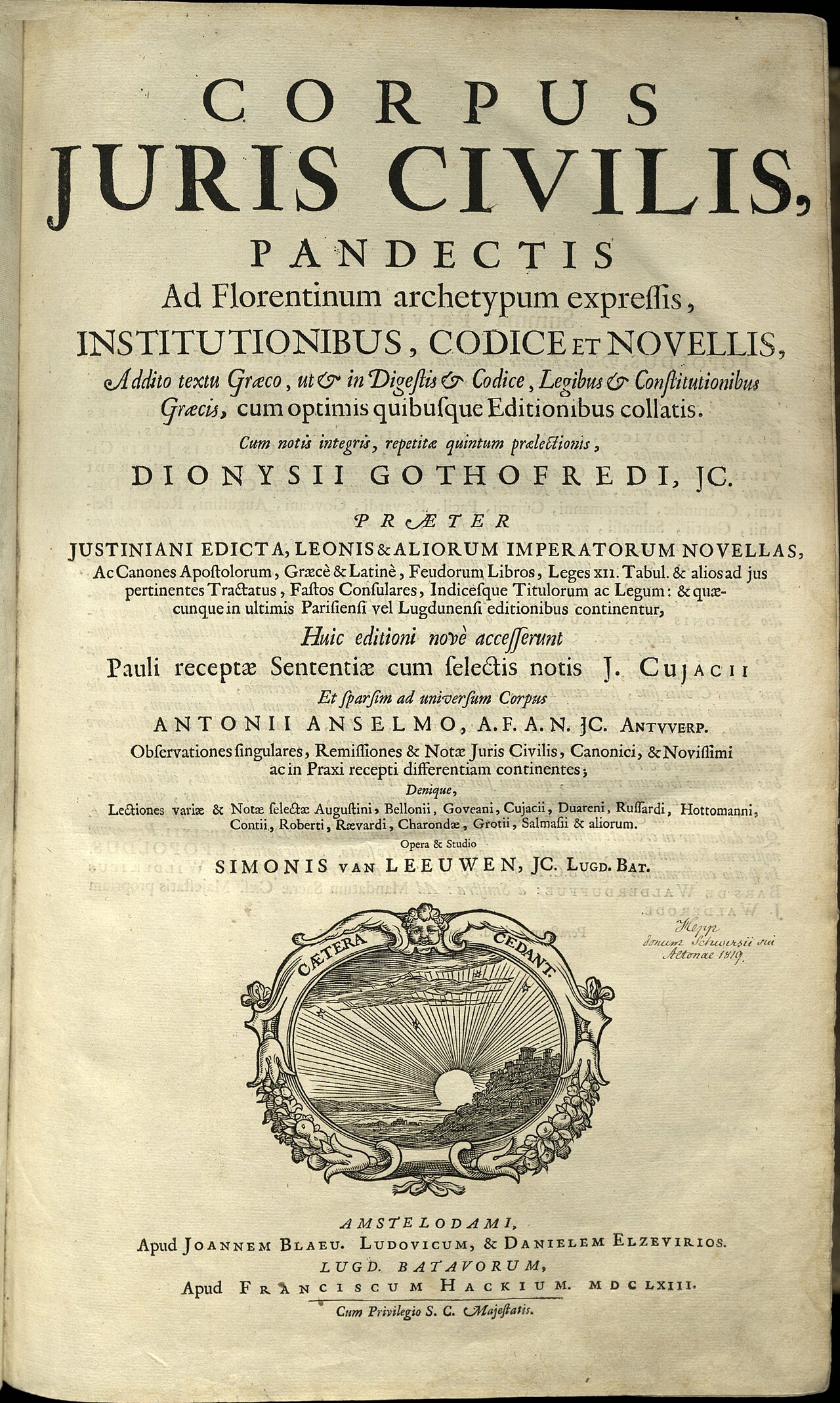
Corpus Juris Civilis
Tribonian · 528-534
 Artifact
Primary source
Bronze Follis of Justinian I with Globus Cruciger
 Artifact
Secondary source
Hagia Sophia
Isidore of Miletus and Anthemius of Tralles · 532-537 CE
Ready when you are
Start chatting with Justinian I now.
20 messages free · No credit card · Available in 50+ languages.