


Secondary sourcePainting1852
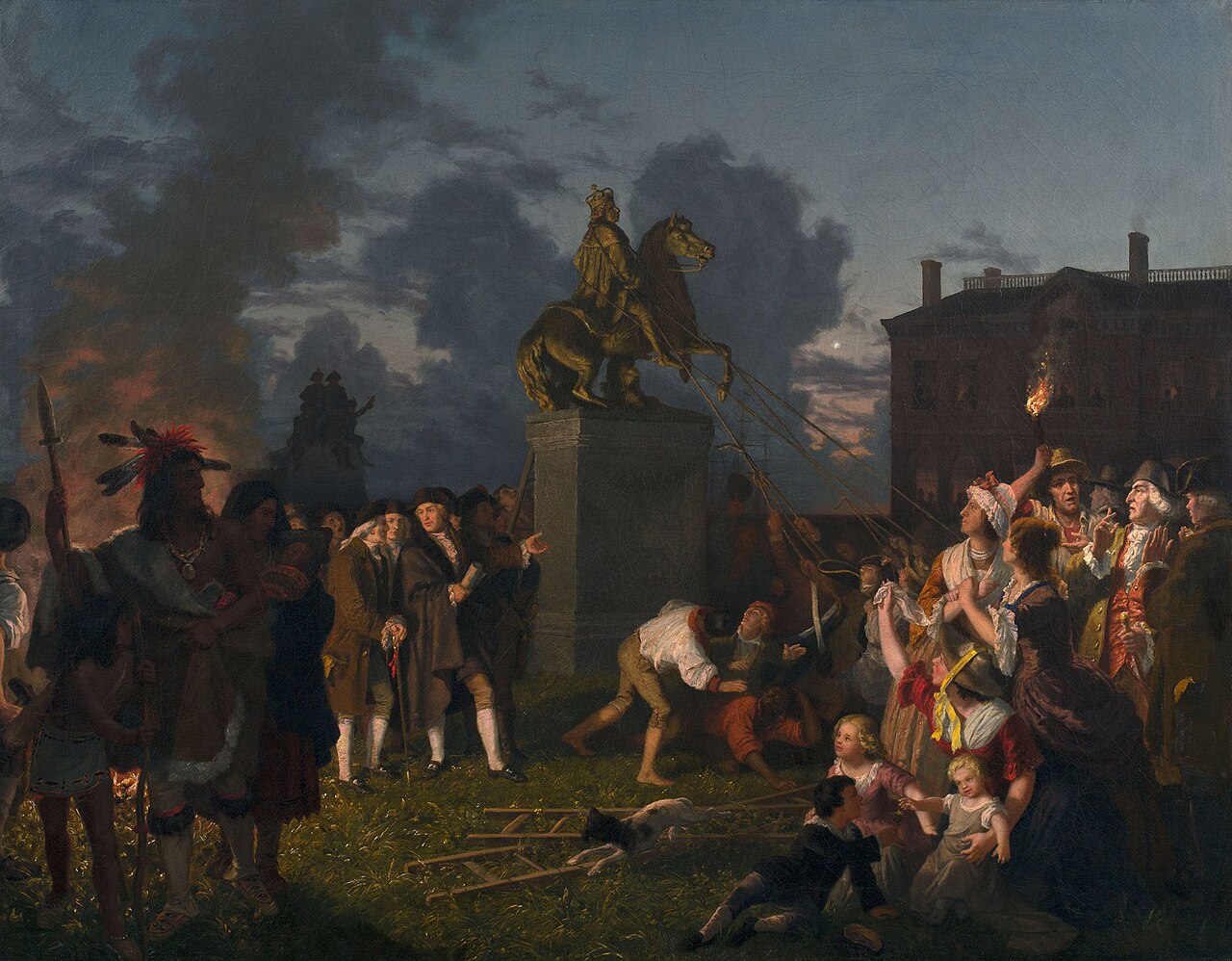
Pulling Down the Statue of King George III, New York City
Johannes Adam Simon Oertel · 1852
A later painting imagining the 1776 destruction of George III's statue by crowds in New York after the Declaration of Independence was read.
The painting depicts the symbolic destruction of a statue of George III, representing American rejection of his authority.
About this source
What it is
This painting by Johannes Adam Simon Oertel was created decades after the event it depicts, showing the toppling of a statue of George III in New York City in 1776, after the Declaration of Independence was read aloud by George Washington to citizens and soldiers.
Why it matters
The painting became a popular image in American classrooms for teaching the rejection of royal authority, but it is a romanticized, imagined scene rather than an eyewitness record. The real event involved mainly soldiers, sailors and rougher civilians, not the families shown in the painting, and the actual statue depicted George III in ancient Roman garb, not the 18th-century clothing shown here.
Look closer
- Why might an artist working decades later choose to include women, children and Native Americans in the scene?
- What does the difference between the real statue and the one in the painting tell us about how artists reshape history?
- How should historians use a painting like this as evidence, if it isn't from an eyewitness?
This painting is part of the curated material that grounds the AI version of George III on Humy.ai — when students ask about related events, the AI can quote it and cite it.
More George III sources
Meet the AI George III →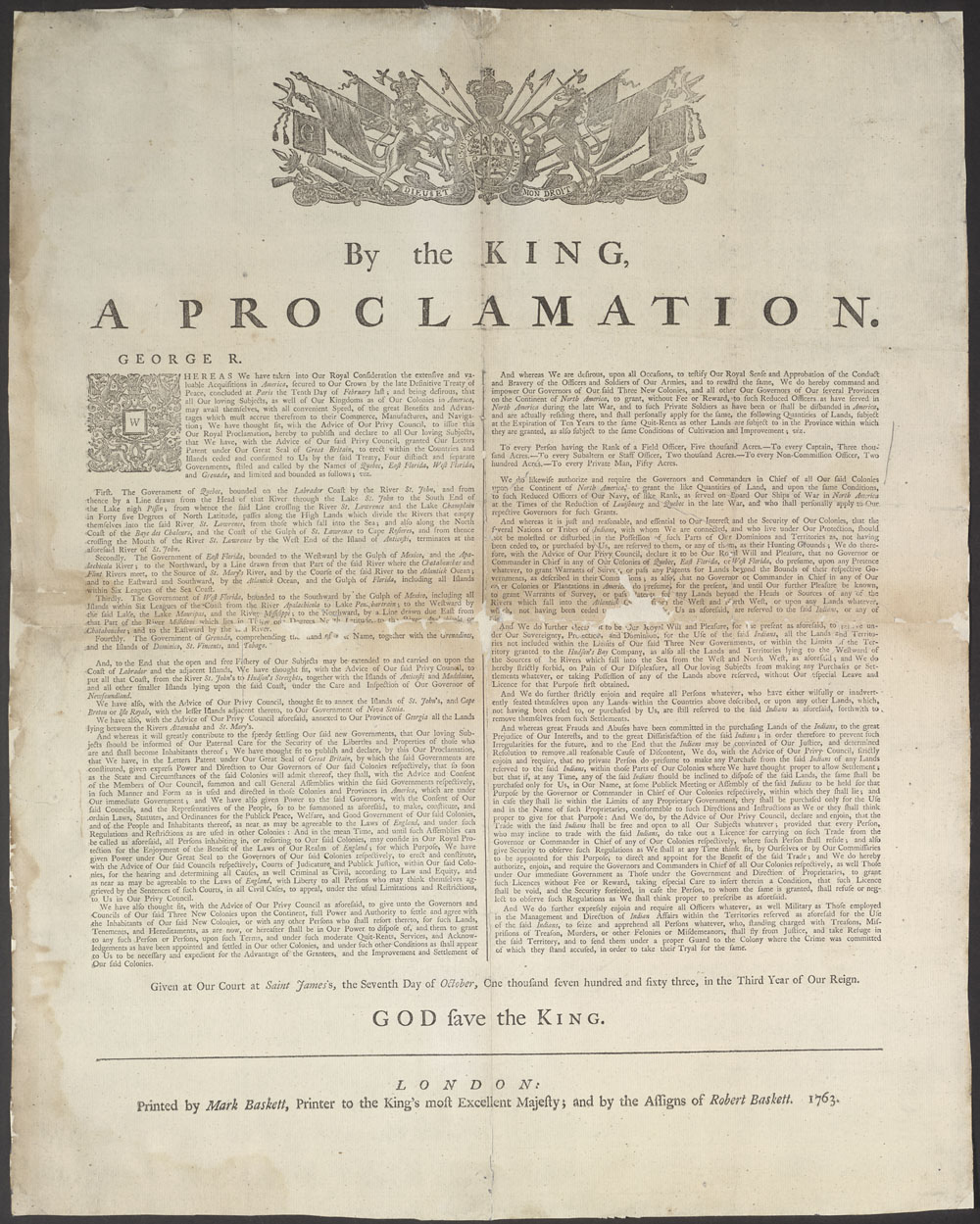 Document
Primary source
Royal Proclamation of 1763
7 October 1763
 Painting
Primary source
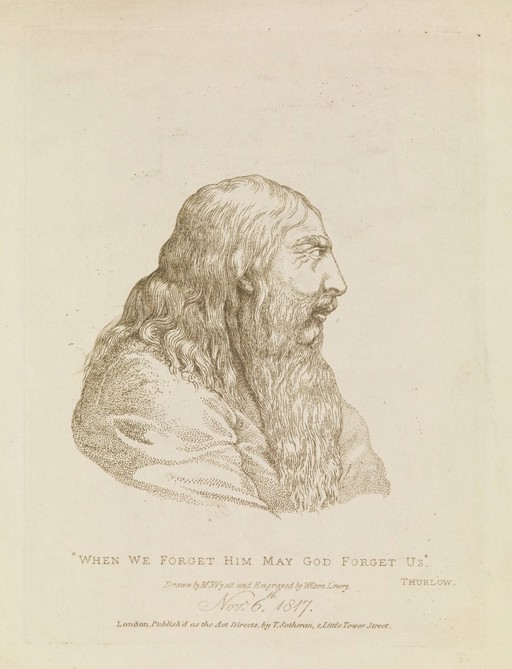
King George III, Etching by Wilson Lowry after M. C. Wyatt
Matthew Coates Wyatt · 6 November 1817
 Painting
Primary source
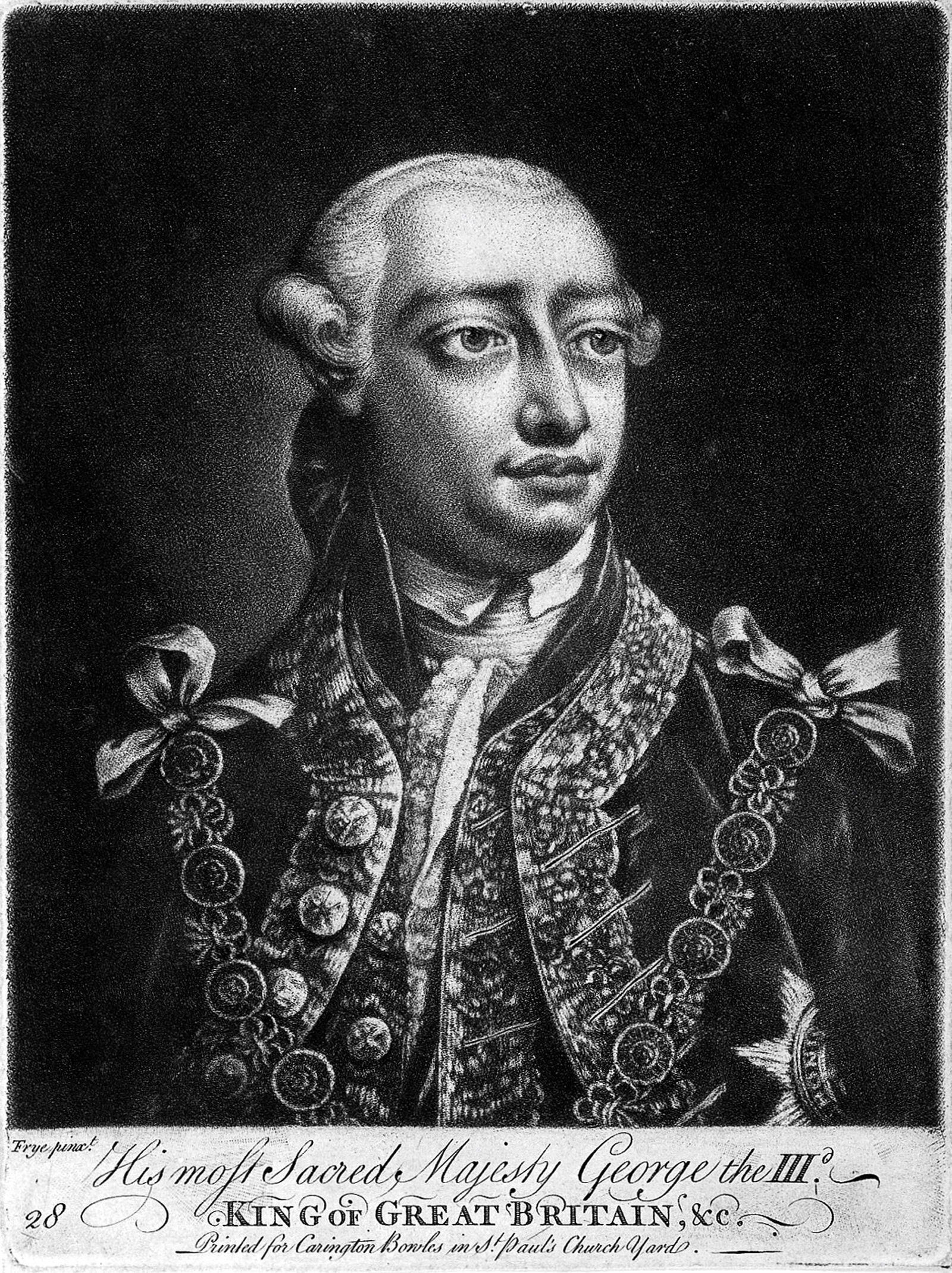
King George III, Mezzotint after Thomas Frye
Thomas Frye · not later than 1762
 Document
Primary source
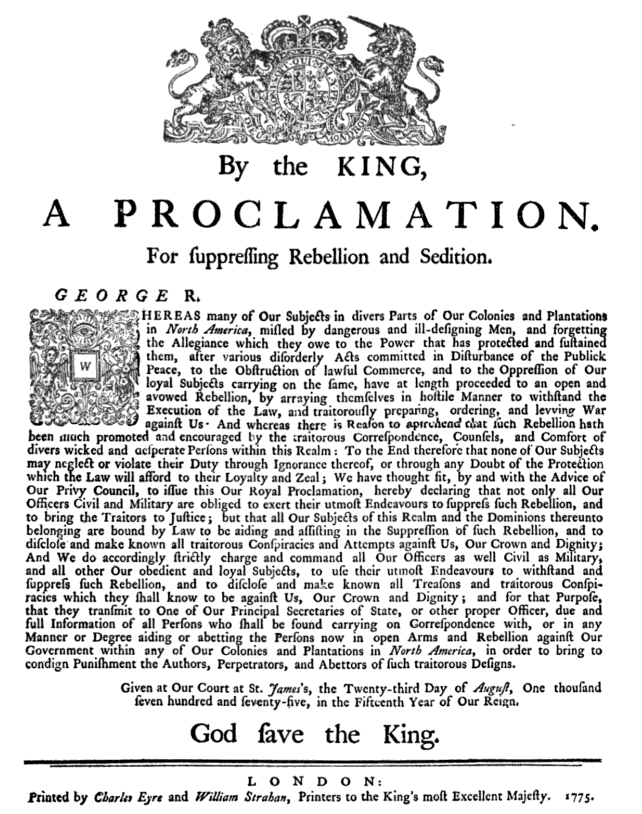
Proclamation of Rebellion
George III of Great Britain · 23 August 1775
 Document
Primary source
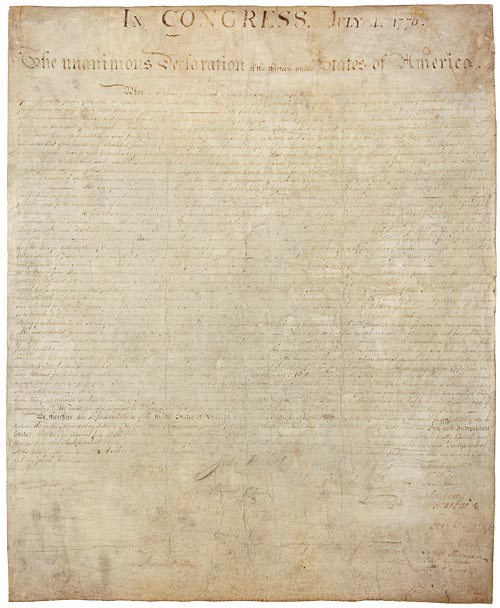
Declaration of Independence
Continental Congress (drafted by Thomas Jefferson) · 1776
Ready when you are
Start chatting with George III now.
20 messages free · No credit card · Available in 50+ languages.