


Secondary sourceSculpture16th century
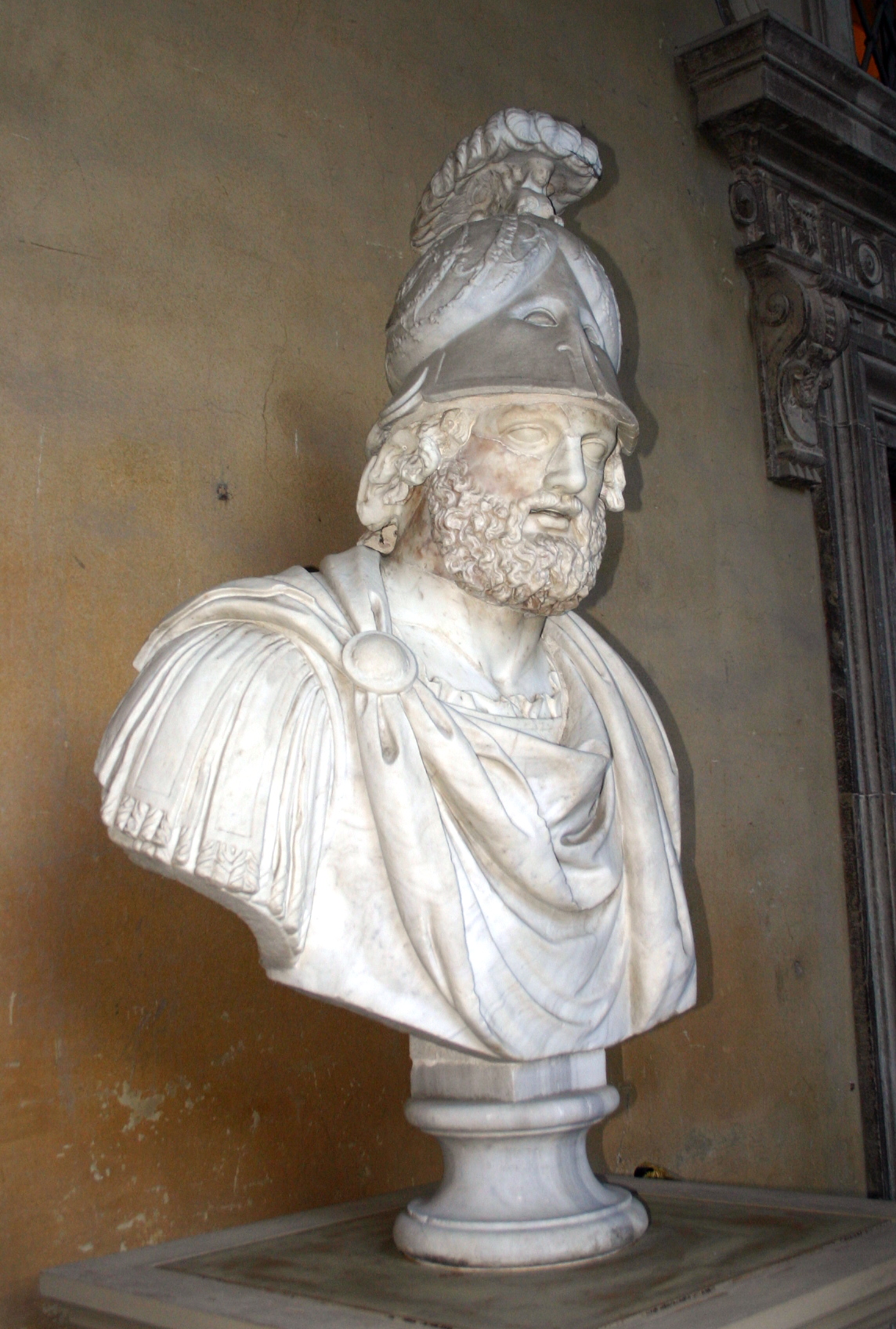
Pyrrhus bust, Palazzo Pitti courtyard, Florence
16th century
A photograph of a sculpture in the courtyard of the Palazzo Pitti in Florence, made from an ancient Roman fragment reworked in the 16th century into a bust of Pyrrhus.
Shows how Pyrrhus was pictured centuries later, as a Renaissance bust made from an ancient Roman fragment.
About this source
What it is
This is a photograph by Giovanni Dall'Orto, taken in 2007 and uploaded on 28 October 2007, of a sculpture in the arcades of the courtyard of the Palazzo Pitti in Florence. The sculpture is a fragment of an ancient Roman face of a god, which was completed in the 16th century so that it became a bust of Pyrrhus. It is a historic statue, not a true portrait of the king.
Why it matters
Later owners of ancient objects often reshaped them to show the famous figures they admired. This bust shows how Renaissance collectors used Roman fragments to display a king of the past. Because the head was remade in the 16th century, it tells us about how Pyrrhus was imagined in that period, not how he looked in his own lifetime.
Look closer
- Which parts of the head look ancient, and which parts look like later work?
- Why might a 16th-century owner choose to turn a face of a god into a bust of a king?
- How could you tell from a photograph whether a sculpture is a true portrait or a reconstruction?
This sculpture is part of the curated material that grounds the AI version of Pyrrhus of Epirus on Humy.ai — when students ask about related events, the AI can quote it and cite it.
More Pyrrhus of Epirus sources
Browse all 78 →
Ready when you are
Start chatting with Pyrrhus of Epirus now.
20 messages free · No credit card · Available in 50+ languages.