


Secondary sourcePainting1720
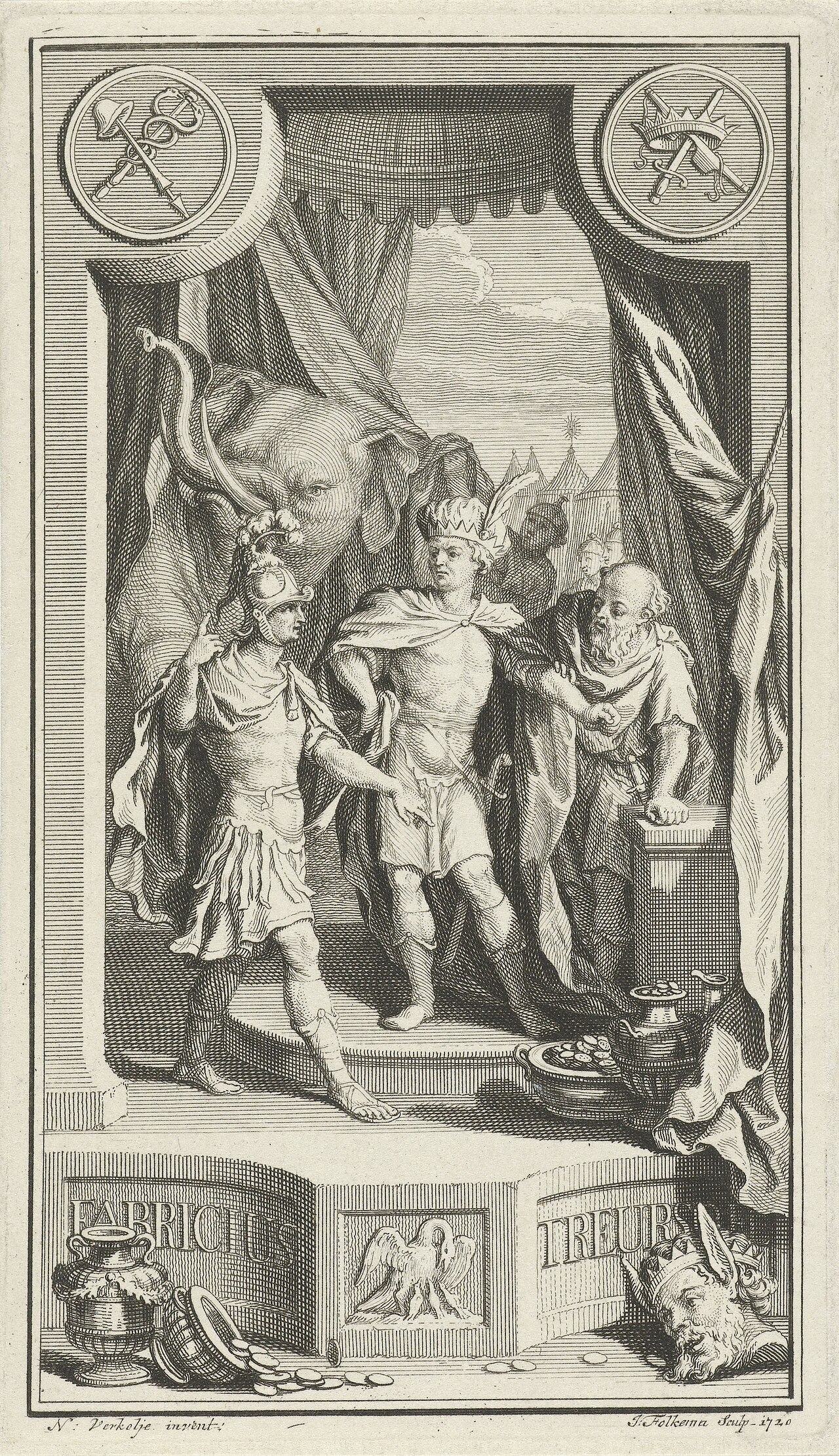
Pyrrhus toont Gaius Fabricius Luscinus een olifant
Jacob Folkema, after Nicolaas Verkolje · 1720
A 1720 engraving showing King Pyrrhus displaying an elephant to the Roman envoy Fabricius during peace talks.
Depicts Pyrrhus attempting to bribe the Roman envoy Fabricius with gifts and an elephant during peace talks.
About this source
What it is
This 1720 etching by Jacob Folkema, after a design by Nicolaas Verkolje, shows the Roman consul Gaius Fabricius Luscinus visiting King Pyrrhus for peace negotiations during their war. Pyrrhus stands centrally, trying to bribe Fabricius with gifts and even an elephant brought into the tent, but the Roman envoy appears unimpressed. The print is held in the Rijksmuseum.
Why it matters
This scene illustrates a famous story about Pyrrhus's war with Rome, highlighting both his wealth and failed attempts at diplomacy through bribery, and Fabricius's Roman reputation for incorruptibility. Later artists used this episode to contrast foreign extravagance with Roman virtue.
Look closer
- What does Pyrrhus's attempt to use an elephant and coins suggest about his strategy?
- How does the print show Fabricius's reaction?
- Why might this story have been popular in 18th-century Europe, long after the events it depicts?
This painting is part of the curated material that grounds the AI version of Pyrrhus of Epirus on Humy.ai — when students ask about related events, the AI can quote it and cite it.
More Pyrrhus of Epirus sources
Browse all 78 →
Ready when you are
Start chatting with Pyrrhus of Epirus now.
20 messages free · No credit card · Available in 50+ languages.