


Secondary sourcePaintingbetween 1677 and 1755
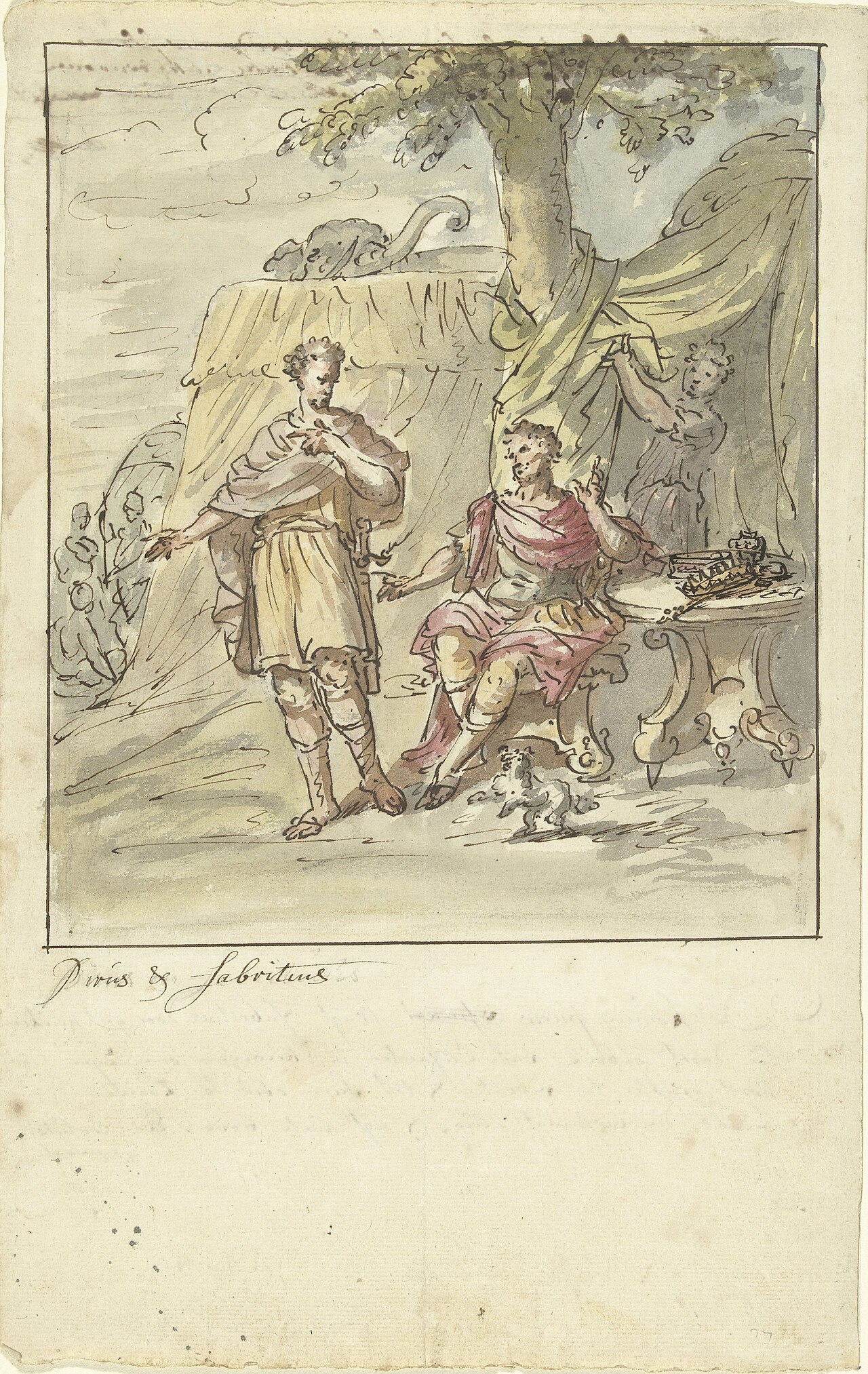
Pyrrhus tries to bribe Fabricius
Elias van Nijmegen · between 1677 and 1755
A pen and watercolour design for a painting showing Pyrrhus trying to bribe the Roman envoy Fabricius. It was made long after the king's death.
Shows Pyrrhus as the figure trying to bribe Fabricius, a scene from his career recalled by artists long after his death.
About this source
What it is
This is a pen and watercolour design drawing by Elias van Nijmegen, made between 1677 and 1755. It is a design for a painting, not the painting itself. It shows Gaius Fabricius Luscinus, a Roman ambassador in Pyrrhus's camp, standing firm as the king offers gold from a table. A woman stands behind a curtain, and the scene is drawn from an old story about an elephant hidden behind that curtain. The Rijksmuseum holds the drawing.
Why it matters
Pyrrhus fought the Romans in the 280s and 270s BCE. Ancient writers told the story of Fabricius refusing his bribe, and artists later returned to it as an example of honest public service. The drawing shows how people in the 1600s and 1700s picked up Pyrrhus's story and reshaped it for their own audiences. It reveals more about those later artists than about Pyrrhus.
Look closer
- Who looks strong and calm in the drawing, and what gestures show the tension between the men?
- Why might the artist have chosen to show the gold and the curtain so clearly?
- What does the drawing leave out about the war between Pyrrhus and Rome?
This painting is part of the curated material that grounds the AI version of Pyrrhus of Epirus on Humy.ai — when students ask about related events, the AI can quote it and cite it.
More Pyrrhus of Epirus sources
Browse all 78 →
Ready when you are
Start chatting with Pyrrhus of Epirus now.
20 messages free · No credit card · Available in 50+ languages.